Showing posts with label Chinatown. Show all posts

Monday, November 11, 2024

Movies Named After Place Names

I’m currently in Atlanta, and something that popped up on my TV was a show named after the city.


I don't love the show for reasons I'll discuss in the post-script*, but I can't help but be bothered by the
sheer brazenness in thinking that your little narrative defines an entire sitcom. The story is about a young man trying to break into hip-hop culture, and because Atlantans consider themselves the capital of hip-hop, it makes some degree of sense, to call a show Atlanta. It is also filmed in Atlanta, so there are recognizable landmarks.

Still, it’s kind of obnoxious to think that your TV show or movie speaks to an entire city. I’ve talked to a couple of locals who say that it’s more of the hip-hop experience than the Atlanta hip-hop experience. Why would a show even want the pressure of appealing to millions of residents of a city, each with their own idea of what Atlanta is?

This is an interesting subgenre of TV shows and films that have tenuous relationships to their place name titles.

Films have varying degrees to how much they use settings as character.
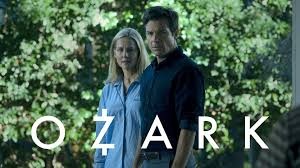

The serialized TV show Ozark has the location baked into the plot. A money launderer is held at gun point by a mobster and improvises a scheme in self-preservation to use the Ozarks as a base of operation. The Ozarks is a stand-in for a shady underworld, but the show goes beyond that. The degree to which the audience surrogates (Jason Bateman and Laura Linney) succeed in their new environment is based on the degree to which they understand the social complexities of this underworld.


In contrast, the 2020 film Arkansas is a dark comedy about two drug pushers on the bottom of the ladder who are forced to wait out the orders of drug kingpin. It takes place in the vague back country South. It’s in the category of films that could take place in the eponymous title, but could also take place anywhere.


Garden State (2004) and (although I'll probably get some fights here) Nebraska (2013) are two films that also fall in the “can happen anywhere” category, but they likely have place name titles because of what is says about their creators


Alexander Payne’s Nebraska, this can be a point of identity for the film maker more than the film. Alexander Payne is from Omaha and it is enough of a source of pride for him that he set his first three films in Nebraska. The film isn’t any sort of socio-economic essay on Nebraska. It’s not even set in Nebraska as it is a road trip through multiple states. But, it represents a director returning to his roots, which parallels a character returning to his roots.

Garden State, a breakthrough indie by then-Scrubs star Zach Braff, has little that can physically place the film in New Jersey. The film revolves around a marginally succesful actor returning from L.A.. to his hometown to reconnect with his friends, father, and fall in love with a manic pixie dream girl. If L.A. Is the big city that people go to to discover their dreams (case study: La La Land), New Jersey can be seen as the anti-LA. It's the densest state in the country, but it's almost entirely dominated by suburbs. In other, the kinds of boring white-bread ho-hum lives where people originate from before making a big move. The character finds enlightenment from returning to his roots.
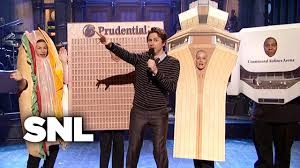
Does it work? Largely, because Braff made it well-known through his publicity tour and an SNL monologue (in which cast members danced as landmarks of Newark) that it's a love letter to his home state. Still, it's more a symbolic relationship than a real one.

On the other end of the spectrum, Fargo (1996), is a film that represents the Coen Brothers obfuscation of identity. For those that have read interviews with the brothers, they are trolling creators who like to poke fun at any psychoanalysis of their work. The film largely takes place in Minnesota and plays on Minnesota’s geographical tropes but the film’s identity is named Fargo almost as if it is a prank.

On this end, the epic 1973 film Chinatown has nothing to do with Chinatown. The title represents a bad memory and psychological block for the protagonist. It has little to do with the actual neighborhood in Los Angeles. This is a blessing in disguise because if they actually did show the Chinese population of the city as part of a villainous scheme to usurp city control, it wouldn’t be anything but racist.


The more I like into this, the more I find that films like Jim Jarmusch's Mystery Train (1989); the Coen Brothers' O Brother Where Art Thou (2000), Burn After Reading (2008), and A Serious Man (2009); and John Sayles Matewan (1987) and Sunshine State (2002) have the most to do with their settings. And they don't even have manipulative titles.


*I have a largely positive opinion of Donald Glover but the show turns me off in multiple ways. The characters are misogynistic, depressing, and don’t even treat each other well. I view it more as not my cup of tea, than problematic. My problem is more that the critics tend to rain hard on shows of White comedians under the “problematic” banner, whereas they view Black sitcoms as authentic cultural celebrations. In reality, they are both cultural artifacts to be played with and analyzed: Nothing more, nothing less.

Friday, April 03, 2020

Motherless Brooklyn vs Richard Jewell and conservative and liberal slants


I recently watched “Motherless Brooklyn” and “Richard Jewell” which are both hot off the red box and they are a stark reminder of the way two films can hint at the ideologies of their makers and my evolution in reading them.

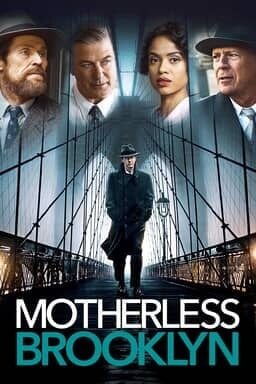
“Motherless Brooklyn” stands out primarily as a great film and showcase for Edward Norton who co-adapted the book and directed in addition to playing a starring role. Stylistically, the film takes its cues from film noir with a detective falling deeper and deeper into a well of obsession and that’s not an easy genre to re-capture, let alone put a spin on. On top of that, it’s a little “Chinatown” meets “Rain Man” as Norton’s character has tourette’s syndrome which takes guts: Imagine the potential this has to be disastrous both to film noir and the disabled community if handled sloppily.

Like one of the great neo-noirs, “Chinatown”, (the vast majority of noirs came out in the 40s and 50s and “Chinatown” was in the 70s, “Motherless Brooklyn” seeks to make infrastructure sexy. “Chinatown” explores how the city of Los Angeles was built through irrigation systems. “Motherless Brooklyn” derives from the story of Robert Moses who cut through a tremendous amount of red tape and created a series of bridges and highways that some say modernized New York and allowed connectivity between the five boroughs at an unprecedented level. 

At the same time, Moses wasn’t without his flaws: He bulldozed neighborhoods for urban-renewal projects and designed the highways on Long Island so that buses couldn’t travel. For those who are look at society and policy through the lens of racist verse not racist and want to disregard all the shades of blue in the middle, this makes him target for a certain negative revisionist history that’s becoming popular (even though classist doesn’t necessarily mean racist and a man’s views are a product of his time to some degree). Decisions to not build certain highways that could benefit poorer populations are now being characterized as racist because of the interchangeability of class and race.

Nonetheless, while there is room for critique about whether Moses or his policies were abnormally racist, as CityLab has artfully done, “Motherless Brooklyn” chooses to eliminate any nuance in the argument. By my tastes, it’s narrowly within the realm of artistic license, but the whole movie can definitely be classified as woke. The film has a black woman as a love interest for the character and celebrates intersectionality by suggesting the black community and disabled as fitting allies for one another. Additionally, the film’s moral universe might be seen as giving a bigger moral pass to the vices of the black community than the community to which Lionel comes from.

I generally argue that film makers have the right to tell the kind of story they want without getting politically skewered, so even if the film preaches a more woke philosophy than I generally subscribe to, I’m comfortable with the film though cautiously aware of its slant when comparing it to the real-life figures and times it is portraying.

The larger question, however,  is whether “Motherless Brooklyn” exists in a vacuum. If this didn’t exist alongside the Ava DuVernays and Spike Lees that see their mission as filmmakers to be synonymous with their activist views, I might be more ok with the film’s lean. Alternatively, the sphere of film critics out there lean heavily liberal and will take such messages about Robert Moses and use this film to write insufferable and likely factually incorrect essays.


On the other end of the spectrum, we have  film maker Clint Eastwood who is a popular figurehead for conservatism (especially around the time of the McCain and Romney campaigns).  His film “Richard Jewell” centers around the true story about a man who was accused of the Atlanta bombing he didn’t commit. Because the man was a cop and the FBI tries to latch onto the same aggressive tendencies any cop might have, the film aligns pretty heavily with the blue lives matter. The film’s implication (based pretty heavily on the facts) also is that Jewell was targeted because he was fat and ungainly so it also doubles as a weird kind of body-shaming PSA.

And here’s the odd thing: I’m not a conservative at all and I’d like to think my contempt for the current leadership of that party is well-documented. But in the cultural sphere? I’ve had a shift (also well-documented) and from where I’m standing it looks the more conservative of these two films is a more compassionate portrait of a historical event. Why? Eastwood’s film is about reconsidering preconceived notions towards a fairer view of reality. In contrast, “Motherless Brooklyn” is about finding comfort in sticking its protagonist (and audience) between familiar notions of good and evil even if they’re not particularly accurate. I never thought I’d live to see the day when I liked the film with the more conservative slant but there it is.

Friday, November 28, 2008

My favorite film for each letter of the alphabet: Alphabet Meme

This was started by a guy who runs the website blogcabins.blogspot.com/ and it's made it's way around the internet like chain mail. I was tagged by Dan Johnson at filmbabble.blogspot.com:

A is for Apollo 13 (1995), my favorite film from my childhood. It's an amazingly tight and exciting docudrama that even made me want to go to space camp and be an astronaut. Ron Howard has rarely ever been so good. There are a lot of good As, however: American Graffiti, the best coming-of-age film ever, in my opinion, as well as

B has a lot of good sci-fi flicks: Blade Runner, Brazil....but I'm going to go with Back to the Future (1985), another classic film that I grew up on and I find unforgettable.

C is for Roman Polanski's Chinatown (1973), neo-noir film and one of the greatest classics of all time. A great story of such emotional resonance and poetry. The dialogue and performances by John Huston and Faye Dunaway are to die for. Charade, Citizen Kane, City Lights, City of God, City Confidential, and a family film I really like called Cheaper by the Dozen were all ones I considered

Although, I was thinking of drawing attention to the old-school sci-film The Day the Earth Stood Still which is being remade, D is for Double Indemnity (1944). When we talk of good dialogue, the way Billy Wilder was superhuman in his ability to write sharp stylized dialogue, and there's no better example of this than the interplay between Fred MacMurray and Barbara Stanwyck's characters as they attempt to plan a perfect murder.

For E, I couldn't really think of too much, except the musical Evita (1996), which made a splash in the 90's but had a rather short shelf-life and only people who followed Madonna's career incessantly would even remember this. Perhaps, Alan Parker's dismal rep or the timing (musicals didn't really regain their steam until Moulan Rouge or Chicago, let alone operettas) sunk the film, but it was an interesting piece of work. The score was great, Antonio Banderas did his best work here, and the subtext is almost as detailed as a textbook on Latin American history.

F is for From Here to Eternity (1953) which stands as my favorite war film. Montgomery Clift plays a tragic antihero in an army private in Hawaii during World War II who refuses to play the bugle or box for his company, out of principle and Frank Sinatra won an Oscar as the man who befriends him and lives to tell the tale. Also famous for the make-out scene between Burt Lancaster and Deborah Kerr.

G is for Grand Hotel a Best Picture Oscar winner that doesn't get much credit for anything these days. It starred five of the biggest stars of the 1930's and was set in a hotel where the lives of five guests intertwine, it’s breezy, lively and light-hearted enough to rival an art deco musical in escapist value. At the same time, it is a very telling story of class conflict that resonates with a lot of weight when the five stories come together so serendipitously

H is for High Noon, socially powerful, tightly coiled, notable for its score, cinematography, social climate in which the film was made, the gun battle at the end, and its real-time gimmick that was the precursor to the TV show 24. I can't really think of too many other H's but House of Sand and Fog comes to mind, or from the same year (2003) Hollywood Homicide. In the latter, Harrison Ford sort of mails it in as a cop who doesn't care about his job and wants to sell real estate while on duty. Not many people got the joke but I did.

I could be for It's a Wonderful Life or another Frank Capra classic It Happened One Night, but I'll go with Indiana Jones and the Last Crusade (1989)

J is for Junebug (2005), the North Carolina-set family melodramedy (new word I just coined) that launched Amy Adams' career. The other ones that come to mind are the historic picture Jazz Singer, Sam Mendes' docudrama of an uneventful war Jarhead, and the recent It film Juno. However, Juno tried just a little too hard to be hip, and Junebug just let it all flow naturally.

K could easily be for King Kong, but I wasn't crazy about the old King Kong and have yet to see the new one, so I now have a choice between two older films, neither of which is regarded as a great classic but which I'm personally fond of. There's Vincente Minelli's musical Kismet which came at a later point in his career and he denounced as a failure in his autobiography. Don't be so hard on yourself, Mr. Minelli, I personally loved the musical take on the Arabian Nights tale with the enchanting songs including "Stranger in Paradise." However, in honor of my grandmother's birthday, I will go with the John Huston film Key Largo (1948) where the bar where much of the film was shot at, still stands on Key Largo. Modern-day gangster films need to show a lot of carnage to illustrate just how bad the gangster is, but Edward G. Robinson showed that all you need is some flair and style and a muggy facial expression.

L is for Last Samurai (2003). The art direction is superb and it stands out quite a bit from all the recent historical epics because of its sincerity. Ken Wattanabe gives a great performance that's deserving of that Oscar nomination and as an interesting footnote, it was Tom Cruise's last big successful role before Oprahgate derailed his career.

M is for Manchurian Candidate (1962), an amazing story, political thriller, mystery, and showcase of great acting. This movie had people worrying about ammending the constitution to include foreign-born citizens as eligible for the President and had me worrying about John McCain, a former P.O.W., as being President as well.

N was originally for Network, before I remembered that North by Northwest (1959) also begins with this letter. Thrilling, romantic, endearing, shot in great locations, everything a good film should be, and it's the epitome of Hitchcockian style

O is for On Golden Pond (1981), the story of a somewhat dysfunctional father-daughter relationship that a daughter attempts to fix in her father's last days, starring real-life father and daughter Jane and Henry Fonda. Katherine Hepburn was also in the film. To show that I don't completely dislike the Coen Brothers, I would have included their Mississippi-set epic Oh Brother Where Art Thou, and truth be told, it was pretty much a tie between these two great films.

P was one that I had the most difficult time with, I could think of three that I really liked: Prairie Home Companion, Pirates of the Carribean and Paths to Glory, but I chose Prairie Home Companion (2006) largely because I already have enough from the action/blockbuster genre on my list. PHC was Altman's swan song and was an eerie foreshadowing of his imminent death within a few months of the film being released. The movie is highly entertaining, quietly profound, and has all the strengths of an Altman film.

Q is for Quiz Show (1994), Rob Redford's gripping docudrama about the Game Show scandal of the 1950's with performances by John Turturro and Ralph Feinnes that make for two very interesting portrayals of real-life figures who everyone knew so little about beneath the surface (i.e. they are basically remembered as two guys who cheated on a game show but no one even knew why)

For R, I'm going to go a little foreign with Jean Renoir's Rules of the Game (1939), rated consistently near the top of the best films of all time by Sight and Sound's decennial poll.

S, like P, has a lot of options I consider of equal merit: Star Wars, Singing in the Rain, Swing Time, Stagecoach, Searchers, etc. To break this tie between musicals and Westerns, I'm going to go with a biopic, Billy Wilder's Spirit of St. Louis (1957), which I saw in 9th grade and absolutely loved. It was quite an achievement to be able to make us engaged to what was essentially a one-man show.

People will always remember Citizen Kane, but for me Orson Welles is a genius because of his last film (in America, at least) Touch of Evil (1958) which is my T.

The letter that took me the longest to think up a film is Undeclared (2006) for the U. Starring Justin Long, Jonah Hill, Lewis Black and Maria Thayer, the film is a spot-on comedy that brought me back to the days in high school where I was scared to death over not getting into my top choice college.

V is for Vertigo (1958). Just the story alone makes it a winner. Tell a three-line summary of this film to anyone and see if they're not intrigued. I imagine that there was the most consistency on this letter among the other lists without actually looking.

For W, I'll go with the culturally delicate and serene cop drama Witness (1985) in which Harrison Ford must hide an Amish boy from corrupt cops in an Amish community where he is a fish out of water. I was also strongly considering Wild Strawberries, just to prove that I've seen more than one foreign film, but no need.

X is for X-Men 2 (2003), the best in the trilogy although I will take a bold stand in saying that X-Men 3 is almost as good.

Y is for You Can Count on Me (2000), the brother-sister relationship piece which launched Laura Linney and Mark Ruffallo's careers. It almost won Kenneth Longorean an Oscar for screen-writing as well.

Z is for Zoolander (2001). To be clear I don't really like this movie and only find it mildly tolerable, but Z is a letter which gives me very little manuevering room