Showing posts with label Oh Brother Where Art Thou. Show all posts

Monday, November 11, 2024

Movies Named After Place Names

I’m currently in Atlanta, and something that popped up on my TV was a show named after the city.


I don't love the show for reasons I'll discuss in the post-script*, but I can't help but be bothered by the
sheer brazenness in thinking that your little narrative defines an entire sitcom. The story is about a young man trying to break into hip-hop culture, and because Atlantans consider themselves the capital of hip-hop, it makes some degree of sense, to call a show Atlanta. It is also filmed in Atlanta, so there are recognizable landmarks.

Still, it’s kind of obnoxious to think that your TV show or movie speaks to an entire city. I’ve talked to a couple of locals who say that it’s more of the hip-hop experience than the Atlanta hip-hop experience. Why would a show even want the pressure of appealing to millions of residents of a city, each with their own idea of what Atlanta is?

This is an interesting subgenre of TV shows and films that have tenuous relationships to their place name titles.

Films have varying degrees to how much they use settings as character.


The serialized TV show Ozark has the location baked into the plot. A money launderer is held at gun point by a mobster and improvises a scheme in self-preservation to use the Ozarks as a base of operation. The Ozarks is a stand-in for a shady underworld, but the show goes beyond that. The degree to which the audience surrogates (Jason Bateman and Laura Linney) succeed in their new environment is based on the degree to which they understand the social complexities of this underworld.


In contrast, the 2020 film Arkansas is a dark comedy about two drug pushers on the bottom of the ladder who are forced to wait out the orders of drug kingpin. It takes place in the vague back country South. It’s in the category of films that could take place in the eponymous title, but could also take place anywhere.


Garden State (2004) and (although I'll probably get some fights here) Nebraska (2013) are two films that also fall in the “can happen anywhere” category, but they likely have place name titles because of what is says about their creators


Alexander Payne’s Nebraska, this can be a point of identity for the film maker more than the film. Alexander Payne is from Omaha and it is enough of a source of pride for him that he set his first three films in Nebraska. The film isn’t any sort of socio-economic essay on Nebraska. It’s not even set in Nebraska as it is a road trip through multiple states. But, it represents a director returning to his roots, which parallels a character returning to his roots.

Garden State, a breakthrough indie by then-Scrubs star Zach Braff, has little that can physically place the film in New Jersey. The film revolves around a marginally succesful actor returning from L.A.. to his hometown to reconnect with his friends, father, and fall in love with a manic pixie dream girl. If L.A. Is the big city that people go to to discover their dreams (case study: La La Land), New Jersey can be seen as the anti-LA. It's the densest state in the country, but it's almost entirely dominated by suburbs. In other, the kinds of boring white-bread ho-hum lives where people originate from before making a big move. The character finds enlightenment from returning to his roots.

Does it work? Largely, because Braff made it well-known through his publicity tour and an SNL monologue (in which cast members danced as landmarks of Newark) that it's a love letter to his home state. Still, it's more a symbolic relationship than a real one.

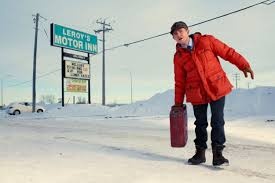
On the other end of the spectrum, Fargo (1996), is a film that represents the Coen Brothers obfuscation of identity. For those that have read interviews with the brothers, they are trolling creators who like to poke fun at any psychoanalysis of their work. The film largely takes place in Minnesota and plays on Minnesota’s geographical tropes but the film’s identity is named Fargo almost as if it is a prank.

On this end, the epic 1973 film Chinatown has nothing to do with Chinatown. The title represents a bad memory and psychological block for the protagonist. It has little to do with the actual neighborhood in Los Angeles. This is a blessing in disguise because if they actually did show the Chinese population of the city as part of a villainous scheme to usurp city control, it wouldn’t be anything but racist.


The more I like into this, the more I find that films like Jim Jarmusch's Mystery Train (1989); the Coen Brothers' O Brother Where Art Thou (2000), Burn After Reading (2008), and A Serious Man (2009); and John Sayles Matewan (1987) and Sunshine State (2002) have the most to do with their settings. And they don't even have manipulative titles.


*I have a largely positive opinion of Donald Glover but the show turns me off in multiple ways. The characters are misogynistic, depressing, and don’t even treat each other well. I view it more as not my cup of tea, than problematic. My problem is more that the critics tend to rain hard on shows of White comedians under the “problematic” banner, whereas they view Black sitcoms as authentic cultural celebrations. In reality, they are both cultural artifacts to be played with and analyzed: Nothing more, nothing less.

Friday, November 15, 2013

The Quintessential Alabama and Mississippi films

The Quintessential Alabama film: To Kill a Mockingbird
If being Southern before the Civil War is a bad thing and holding onto that Southerness after the Civil War is considered a very bad thing, then Alabama (along with Mississippi) is widely considered one of the two worst states in the nation. Whereas Mississippi has other points of pride that don't specifically bring up its racist history (the blues, aquaculture, the Mississippi Delta, some of the South's more ornate plantations), there's not as much for Alabama to do except own up to being the epitome of the Deep South which would explain the nickname Heart of Dixie. After all, Alabama today is a center of industry and manufacturing which is something present-day Alabama has in common with Alabama in antebellum days.

Candidates for the quintessential Alabama film ranges from dark films like Color Purple while a film like Tuskegee (or what I imagine Red Tails would be like) tries to simply portray heroism without its contrast. Talladega Nights and My Cousin Vinny also come to mind as films with a specific location but I associate NASCAR as being more of a Carolinas thing and My Cousin Vinny lacks a strong regional flavor. I first assumed it was in the Midwest or Not-So-Deep South before looking it up.

The quintessential Alabaman film, therefore, should be a film that negotiates Alabama's racist past with its progress. It should be a film that's unapologetic about the attitudes of its people back in the day. To Kill a Mockingbird has the quintessential hero in a fight for justice that results in his client not being exonerated. It's a bittersweet film in which the main protagonist (the book's narrator) is a young girl who learns that right and wrong are complicated where they live.

It's a good portrait of small-town Alabaman life as told first-hand by an Alabaman.  Although it's primarily known as a book, the film version is iconic enough to appear in the iconic AFI list: 100 Years...100 Movies.

The Quintessential Mississippi film: O Brother Where Art Thou
Mississippi, like Alabama, is known for being the extreme Deep South so we could go for a film that uses the state as a hotbed for hatred such as "Mississippi Burning" or "Ghosts of Mississippi" but look closer (as I did last year on a very touristy trip through the state while staying in Memphis) and you'll see other traits such as their blues heritage, the riverboat culture of the Mississippi Delta, the ornate plantations, and even the fact that they farm fish (aquaculture). Mississippi also has a natural beauty with its swampy magnolia and oak forests that's almost mystical.

The Coen brothers create a strong sense of place in their films and capture that natural beauty out of which tall tales could be spun, the likes of which appear in the travels of Everett, Delmar and Pete. Mississippi is the proud birthplace of the blues in their purest form (as in acoustic, unpolished recordings) which ties into the trademark sound of the inadvertent band formed by the trio known as the  Soggy Bottom Boys. In its early form, Blues was almost indistinguishable from something heard in churches which is why it's also appropriate that there's such elaborate religious mythology.

Remember the talk of elaborate ornate plantations Mississippi was famous for? We see that in the elaborate divide between rich and poor and the class-conscious ex-wife of Everett (Holly Hunter).

Lastly, when I was in Mississippi, a lot of the tourism centered on roads and corridors such as the Blues Highway (running through Clarksdale) or the Natchez Trace and the film emphasizes this geography as well as all the mythical and legendary stuff they encountered was along the road. The character who sold his soul to the devil (Tommy) is even based on a piece of Mississippi folklore about a famous blues guitarist (Robert Johnson) who sold his soul to the devil at the confluence of two major highways in Cleveland, Mississippi.

Tuesday, September 16, 2008

Burn After Reading review

I have now seen 8 Coen films to date and would not profess myself a major Coen fan. I was baffled by No Country for Old Men, I fell in love with Oh Brother Where Art Thou, I watched the cult status behind Big Lebowski and Fargo grow from the sidelines, I enjoyed Intolerable Cruelty, and I lost my faith in the brothers with Ladykillers and Man Who Wasn't There.

As you can see, it's an up and down relationship that I've had with their films, and was hesitant to log in an 8th Coen outing (I feel 7 is more than enough films to see of a director you're not crazy about) but couldn't resist the bizarre-sounding plot and the idea of seeing Brad Pitt go into full comic mode. And I thoroughly loved the film.

For one thing, I'm a native of D.C. and the Coens have a great sense of place in their films: the superficiality of sunny Hollywood in Intolerable Cruelty, the bible-belt-based bluegrass-churning populist Southern Charm in Oh Brother Where Art Thou, and the quirkiness of the Minnesota cold in Fargo.

I can't tell you how great the reception was in my theater in D.C. where we might not see these things as that far-fetched: beauracrats (in the form of JK Simmons) making decisions about what to do when people are getting killed and secrets are being spilt out to other nations on the basis of what takes the least paperwork and allocating $50,000 for a random lady's plastic surgery for virtually no reason at all.

The plot is truly screwball and does a far better job of past Coen films at raising the ante in the third act so that we're invested to see what deliciously improbable ways the screenwriters will tie up the loose ends. It also doesn't help that some of the protagonists are actually likable: Brad Pitt as the airhead exercise junkie who's as faithful a friend as they come, Frances McDormand as the gym worker who just wants to look pretty, Richard Jenkins as the poor schlub who likes her, etc.

Sunday, July 22, 2007

A look at the Coen Brothers (1996-2004)

I just saw Fargo so now I´ve seen 6 Coen brother films: Intolerable Cruelty, Ladykillers, and Man Who Wasn´t There are genre experiments of the sort you´d see as film school theses, while Fargo, Big Lebowski, and Oh Brother Where Art Thou bear a more distinct mark of the filmmakers:
-Epic-like narratives (this is more the case in Big Lebowski and Oh Brother Where Art Thou and Fargo to a lesser extent) with long winding storylines
-Vague references. I use the word vague here, because i think a little too much is made of their ability to work in their filmic references into their work. The Big Lebowski-Big Sleep connection is somewhat shady in my opinion.
-Characters who arrive at the ends of their story arcs through means in which they never planned themselves. For instance, George Clooney and company has no clue how he´s going to get out of being hanged when a humongous flood miraculously saves them. In Big Lebowski, Jeff Bridges is royally screwed when he loses that briefcase but in a stroke of luck: it turns out there was never money in that briefcase. In The Ladykillers, the characters´ fates aren´t really determined by anything but unfortunate luck.
-A strong sense of place (Minnesota in Fargo, the Deep South in Ladykillers and Oh Brother, California in Intolerable Cruelty)
-Sidekicks to the protagonists that do more harm than good (Steve Buscemi´s wanting to get laid at inopportune moments and panic under pressure in Fargo, John Goodman´s aggressive outbursts in Big Lebowski, the gay baron in Intolerable Cruelty, the guy with IBS in Ladykillers)

My impression of the three that remained popular is that:
-Fargo was an extreme critical hit garnering an oscar nomination and a place in AFI´s top 100 and made several lists of best films of the decade
-Big Lebowski was an extreme cult hit
-Oh Brother (my personanal favorite and the only one of the three to make my personal top 100 list and garner 4 stars) was somewhere in between. It made many top 10 films of the year list and earned an oscar screenplay nomination.

I was wondering why these three films were received this way. My theories:

-Fargo involves murder as a comic gag while big lebowski and oh brother only involve stealing and adding murder to a plot insantly makes things more serious. Oh Brother has characters like John Goodman die but they never really show his death so they never get as graphic as Fargo.

-I also think that Big Lebowski works as wish fullfillment. The protagonist goes through things and lives a life that young men would love to have: tell off some older authority figure and not have to have respect for your elders, smoke pot and get away with it, knock up a woman and not have to deal with the responsibility of fatherhood, hang out with your buddies all day, escape any negative repercussions when you mishandle large amounts of money, etc.