Tuesday, October 31, 2017

Haters Back Off Check-In Season 2


Based on the YouTube sensation Miranda Sings – musical theater alum Colleen Ballinger's parody of a talentless YouTube singer who is too coddled to know her faults- the show is one you might find yourself rooting for if you follow someone on YouTube and feel some pride as one their adopters (AKA YouTube groupies) when they hit it big.


But a simple caricature (and one that's mean spirited in origin at that) isn't much to base a show on without some massive expansion. The tv world of Miranda Sings populates her delusion with enablers in the form of a weak willed mom, an uncle who's all kinds of simple minded, and a long suffering crush. The control is the level headed sister, Emily, and when you (pretty instantly) become aware of
the pain Mirandas delusions inflict on Emily and others in her path, Miranda stops becoming likeable or remotely rootable. In this sense, the show was able to redeem itself by making Miranda's story a tragic one: she gets what she wants but at the loss of everyone around her.
The whole thing is augmented by a Tim Burton vibe the color scheme seems borrowed from Edward Scissorhands and the protagonist seems defined by a beautiful sense of weirdness (though her actions aren't beautiful, the hope is that she'll eventually get there).
Season two risks detracting from the ending if it resets everything back to normal, yet the cast had to get back together, and it walks that fine line relatively well. Miranda s ex boyfriend and her mom Bethany re-enter get life but with terms and conditions. mom has just gone to some bible-themed adventure land, and the suffering Christian imagery isn't lost (unless you want to ignore it, I’m fine with it if you are). Bethany might be the hero of the story, but as soon as the screentime reverts to sister Emily we’ll see that it’s really a story about a blossoming Cinderella with an evil step sister.
It's a delicate balancing act for the show to gain our sympathies once again just as it is for Miranda and her mother to reform a relationship. We also get a glimpse of daddy here (UCB's Matt Besser) and he's also a man child of sorts. The second and third episodes have Miranda raising red flags to society at large. She terrorizes an airport in the former, sneaks into an elementary school and kidnaps a child in the latter. Lord our father up in Heaven, let there be consequences.

My Liberal Centrist Principles as an Arts Writer and Blogger

This is a loose list of principles I've come to strongly believe that the liberal critical community is missing and want to devote written effort into countering through every avenue available. A failure to the binary thought of temper identity politics is disastrous for the Republican Party:

Race, Gender ,and Sexual Orientation  matter but they neither explain anything and everything nor is readjusting inequality along these lines the solution to anything and everything. 
In other words, these issues are capable of being exaggerated and no one should be considered an enemy to progress for being more exact with these degrees. To exaggerate is a loss in credibility. 
Examples: Geena Davis institute and like-minded institutions publishing numbers on women and film, the Cannes film festival insisting that the grand prize go to a woman director despite the quality of Sophia Copolla's film, the black lives matter reaction to the Oscars So White campaign, the black politce brutality

Being on the right side of history doesn't give you liberty to be a jerk.
Yes we know racism and other said evils are wrong, but there is nothing justified about harassing or demeaning other individuals you suspect of these behaviors in the manner you accuse them of doing
Examples: Attacks on liberal college professors, death threats to electors who were planning on voting for Trump,

The move for inclusivity of gender, race and sexual orientation must not be compromised with intellectual exclusivity
Examples: Many of the message board encounters I have, university atmospheres, ?, disinviting speakers

You must acknowledge things that people do well if you complain about them doing things wrong, you also don't get to dictate what your ally
If a conservative lawmaker or advocate actually makes progress on something you didn't think they'd do, you must give them credit or you have no credibility. Similarly, no one owes you anything. If someone wants to advance your cause, you can critique how they go about it but not before appreciating their help, that reeks of entitlement.

Examples: So so many: Various conservative lawmakers like John McCain or Jeff Flake who have done things against the party.... The NCAA for relocating their championships outside of North Carolina for the bathroom bill...People being hard on the academy awards in 2015/2016 when they bent over backwards with a black president, black host, and black honorary Oscar recipient just to appease a liberal base.... Even if the Trump administration occasionally does something right, like a decent response to Hurricane Harvey and Irma, or having the foresight not to push for the nomination of the corrupt drug czar or promoting a woman to homeland security, it has to be acknowledged... All the missives like "Dear White People: You don't get it"...Comments on message boards from women who hate guys who list "feminist" in their dating profile as if that's better than not being a feminist.... Countless instances of people saying that organizations are only half-modifying their efforts... Tom Hiddlestone gave a speech at the Golden Globes calling attention to doctors without borders in the Congo and people complained he was a "white savior"

We should listen and research other people's perspectives and if you are a policy maker or a cultural icon, you should get feedback from colored purple or women in making your decision, but your skin color shouldn't detract from an intellectual argument
In debate tournaments, judges don't deduct points based on skin color. Everyone is a stakeholder on policy, everyone gets a seat at the table. Besides, people are capable of researching what other people go through, it's not an industrial secret.

Don't be afraid of free speech and encourage fear of it. The solution to bad speech is simply counter speech. Don't shut it out, don't live in a bubble
Examples: Berkeley Campus, movements to make twitter be more stringent, reactions to try to categorize UVA as a hate crime, wanting to push for the TV show Confederate not to be made...

There are bad people who should be stopped, but stop labelling everyone as bad by association. I personally don't like most of the republican party platforms, but being Republican isn't a crime nor is having ever associated with a Republican a crime
Examples: Mozilla Firefox CEO ousted for donating to gay marriage, believing that all Trump voters are xenophobic and misogynistic, wanting to boycott Matthew McConaughey's movie because he said "Give Trump a Chance', holding it against anyone who once held views against gay people, (similarly Obama having had contact with Ayres isn't a cause for concern), not understanding that there's a dichotomy more complex than pro-gay vs anti-gay that shapes how people vote. Also, there's the idea that neutral technology somehow has to be pro-woman. Twitter is just an algorithm it's not pro or against anything. What is that??

Not all sex crimes are equal, people accused of sex crimes deserve to be heard, historical figures need to be taken in context
Examples: Realizing Thomas Jefferson and Andrew Jackson were products of their time. Treating sexual harassment or erring a bit on set in terms of creating a safe workspace as equivalent to rape as is the case with Casey Affleck, treating Woody Allen like he's guilty when there was never evidence outside of one person's testimony. Calling Joss Wheedon a sexual predator for having affairs. Labelling Travis Kalanick (Uber) and Kenneth Starr (Baylor U) with sexual deviants when they were merely the heads of companies that didn't have proper atmospheres. 
  
Realizing that "intersectionality" works both ways. If you expect people to have compassion as both a black person AND a woman, then be open to the possibility that someone can be both white AND poor or poor AND disabled, or born into a cycle of poverty AND have invested generationally in a dying industry
Examples: The lack of empathy for blue lives matter or people persecuted in red states


Tuesday, October 03, 2017

The Path TV Review Season 2

The Path centers around a cult in upstate New York known as the Meyerist movement. The most impressive thing about the show is the way Jessica Goldberg (who wrote about her creative process in an article entitled How I Lost My Religion and Created a New One) builds an impressively intricate religious world view for her characters from the ground up through weaving together a number of existing mythologies and religious practices. In Meyerism, there's a ladder and rungs and "the light" and a lot that seems hokey from an outside perspective. Then again, most religions seem pretty hokey to outsiders (part of the point here).

Those who might admire the complexity of the show's religious infrastructure might be disappointed by the fact that it's not really a show about religion and inner spiritualism. For that, you might want to get Frank Capra's "Lost Horizon" or "Razor's Edge" or Martin Scorsese's "Silence" or even the Robert Zemeckis sci-fi film "Contact".

The show might have started in that vein and does feature characters who are trying to find spiritualism, but it's primarily about the follies of the "kingdom of man" than the "kingdom of god" as some medieval saint I learned about in history class (and since have forgotten) put it. It's more interested about the politics of a religious organization that is already positioned as the antagonistic force. As a result, it's hard for the show to really enter into unbiased discourse about how to be spiritual when the characters that are evolving towards Meyerism are painted as either rubes or enablers of corruption from the start.

The show is also heavily about scandal with a capital "s" and three exclamation marks. There's a practice called unburdening where people confess everything to each other and are supposed to feel good about it. This is supposed to be ironic because nearly everyone on screen is having a lot of clandestine sex with people they're not supposed to be having sex with. There are more sex scenes here than nearly any other show I've seen in recent memory (even "Masters of Sex" didn't master having sex as frequently as these people). The camera is particularly interested in Michelle Monaghan getting hot and heavy, either to make some grand thematic statement or because some writer or producer just finds Monaghan hot and wants to see a lot of her. In short, it's a show that places A LOT of its eggs in the "Scandal!!!" basket.

At the center of the Meyerist movement is a family torn by various levels of devotion and a leader (Cal, played by Hugh Dancy) who ranks somewhere in the middle echelon of corrupt characters on TV. Part of the the theme is that corruption and shortcuts are hard to avoid when trying to build a big movement under the veneer of behaving with good morals. In this fashion, the show isn't just a political snipe at Scientology (that would be kind of easy) but a richer more universal commentary about all religious organizations and how they can blind people to abuse of power: If you stand for good, is it that wrong to throw a little bad into the mix in service of the end goal?

The family consists of Eddie (Aaron Paul, who throws himself into the role admirably) who's beginning to actively rebel against Meyerism, wife Sarah (Michelle Monaghan) who's veering closer to the center of the religious power structure, and son Hawk (Kyle Miller) who's oscillating between the two ends. They also have a daughter but as of yet (halfway through season 2) she serves no discernible function (maybe Ray Romano served as a producer here?). Again, it is a situation that can be topically applied to a great many religions where intermarriage is a problem.

The use of side characters is also pretty well-placed: Emma Greenwell plays a former drug addict who's going in a journey of the opposite direction of Eddie and trying to rediscover herself in cult life. Similarly, Ali Ahn stands out as Sarah's sister-in-law who slowly pushes for power for her husband in the second season because, supposedly, he's less scandalous.

I didn't find it in the upper echelon of the most engaging things on TV but, for me, it was certainly watchable enough to stick with (it gets significantly more exciting in the second season). Enough ingredients are in place that it could really be someone's cup of tea.

Tuesday, September 26, 2017

Wind River Review and Taylor Sheridan Retrospective to Hell or High Water and Sicario


On the heels of acclaimed films Sicario and Hell of High Water, screenwriter Taylor Sheridan’s latest film (this time he directs as well), Wind River, is a snowy noir that continues to solidify Sheridan’s brand. Despite the admirable placement of female leads in these films, Sheridan’s brand is one of rugged masculinity and a desire to explore different slices of Americana through a fine-tuning of the tropes collected from westerns, police thrillers and noirs. While Hell or High Water is his grandiose neo-Western, Sicario is his police thriller, and Wind River is his inversion of a noir, there’s a relative thinning of the walls between all three genres in these films.

Sheridan displays not just a strong penchant for vividly-painted settings but for arenas where the American dream is in danger of imploding from within. Sicario explores the threat to the integrity of American law enforcement when the pressure from violent cartels forces the good guys to play dirty. Hell or High Water re-frames the housing crisis as the classic American Western all over again with the Western ranch—an image ingrained in American iconography--seen as something under threat not by Injuns but by a loose regulatory system. The social commentary here is that the true “bad guys” are laws and infrastructures that undercut American integrity.

Similarly, Wind River is a fully immersive experience with a haunting sense of place but it’s also underlined by a social message, or at least an attempt of one. As revealed in the closing text scrawl before the credits (and interviews with Sheridan himself), the semi-autonomy of Indian reservations has the unintended side effect of lawlessness because all police below the federal level don’t have jurisdiction. A problem here is that this extremely specific message (more of an observation) is more on deep background than something that’s implicitly known to the viewer (at least this one).

Elizabeth Olsen plays an FBI agent who flies to Wyoming’s Wind River reservation to investigate a dead body found in the middle of the woods. Like a game of Mist, this is a story that’s nicely devoid of any hints. Was it a murder? Who even knows?  She’s extremely unprepared (the natural Hollywood inclination to cast an actress climbing her way up the A-list here doesn’t do this film any favors if it wanted to aim for realism and cast someone who reads at least 25) and relies on a hunter from the National Fish and Wildlife Service (I think?) played by Jeremy Renner and a police chief played by Graham Greene for help.

Through the investigation we see a bleak picture of a place where kids are more likely to get into drugs than go to college, the promise of a bed and warm meal makes jail comforting, and the loneliness of a drill job brings out the worst instincts in men. What’s even more telling is the expression on the faces of the local populance: In particular, Graham Greene and Gil Birmingham (two of only three Hollywood actors of Native American origin I can name offhand. If it threw in Adam Beach, we'd have the trifecta) go about their business with a cynical weariness. The latter is somewhat understandable because, well, he just lost his daughter, and his relationship with Renner’s character is the emotional centerpiece of the movie (and bonus points to the film for not pivoting it to a romance since, again, Olsen looks like she’s 20 and it’s a bit cradle-robbing).
Renner’s backstory is pretty standard (child killed, unsolved mystery, yada yada yada) but he’s a capable lead who fits nicely into the film’s meditative pace. What’s perhaps more interesting is he’s unabashedly Caucasian but identifies with the community because he married into it and has two Indian kids…ok, maybe it’s not that interesting after all (Score one for identity politics? Score one against identity politics? Is there a point in keeping track?).
Like Sicario, the film culminates in a massive release of violence. In that film, it made more sense since the death toll is so immense (at least in the public imagination) along the Rio Grande. In this case, there’s a Mexican stand-off which is a bit jarring. To expect that every single person at that rig would be comfortable not just covering up a murder as well as a rape is a bit much, but this is a film that asks us to believe they’d all casually decide “let’s kill a dozen more people”. Up until this point, it’s a filmic world that really puts a lot of care into realism of violence and the value of a life. The shoot-out gives us a sense that the screenwriter cared very little whether three or five or nine people died in that scene so much as guns were firing and people were falling down. 

On the whole, Wind River is ambitious, beautiful, and highly watchable. Despite a conclusion that left me unsettled (to be honest, Sicario didn’t end satisfyingly for me either), this is another one in the plus column for Taylor Sheridan.

Saturday, September 16, 2017

Best Film Ensembles of All Time Part II: 21-30

This is the second part of a series that was done in collaboration with Adam Spector of Adam's Rib in which we both ranked our top 50 films in terms of best ensemble. The first edition where we went over our picks from 31-50 are here and the 11-20 can be found here and here:


Orrin's Picks 21-30:

21. Airport (1970) 22. Charade (1963) 23. Royal Tenenbaums (2001) 24. A Face in the Crowd (1957) 25. All About Eve (1950) 26. Inherit the Wind (1960) 27. Stagecoach (1939) 28. Mr. Smith Goes to Washington (1939) 29. American Hustle (2013) 30. Love and Mercy (2015)

Adam's Response:
I need to admit I have not seen Airport, and mostly know it for inspiring Airplane.   Impressive cast, with Helen Hayes winning an Oscar, although it was generally considered to be more of a lifetime achievement one.  It’s hard to think of anyone besides Cary Grant and Audrey Hepburn in Charade, but Walter Matthau showed his range playing the villain.   By the same logic, while Bette Davis fills up the screen in what became her signature role All About Eve, the work of her supporting cast is very underrated, including Anne Baxter, Gary Merrill, Celeste Holm and an up-and-coming Marilyn Monroe.  But the two who really add spice to the movie are George Sanders and the great Thelma Ritter.  Both could deliver a snarky one-liner like few else.  Ritter in particular somehow was always the one who would say what the audience was thinking. 
You will see The Royal Tenenbaums later on my list, and I am glad you included it.  You mentioned great chemistry and the way certain stars bounce off each other.  Tenenbaums may be the perfect example.  As Gene Hackman, in his last iconic performance, goes through the movie, his rakish charm and scheming play off the other more straight laced actors to both comedic and dramatic effect.  His character of Royal Tenenbaum has done horrible things, but Hackman’s charisma, and his showing the love underneath, lets you forgive Royal and accept when the other characters do the same. 
Photo Source: Rotten Tomatoes

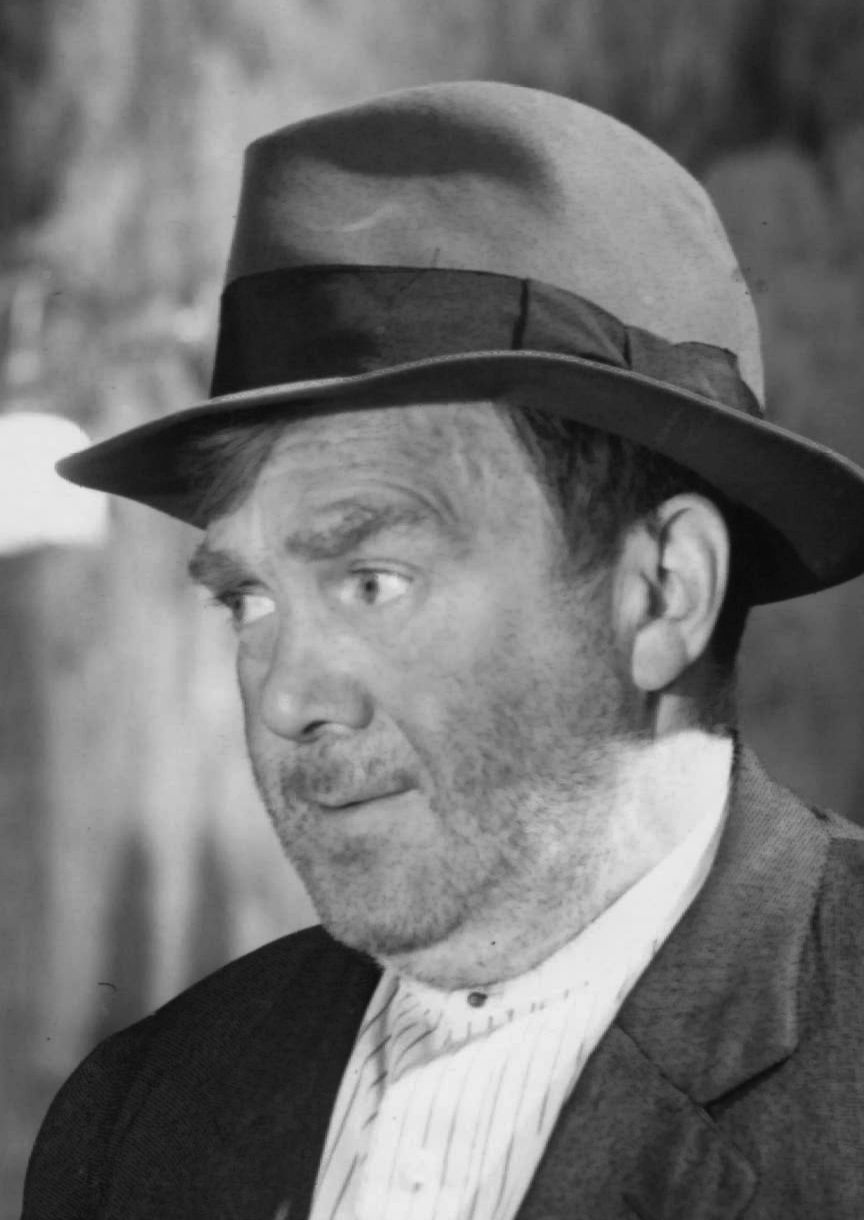
Numbers 27 and 28 on your list both feature one of the most unsung character actors from the studio era, Thomas Mitchell.  He never had the looks to become a star in the 30s, 40s and 50s, but always worked well playing off stars including John Wayne, Jimmy Stewart, Clark Gable, Cary Grant and Gary Cooper.  Like Ritter, he was someone audiences could identify with.  He won the Best Supporting Actor Oscar for Stagecoach and could have just as easily been nominated for many other films.  Just look at his filmography.  Mitchell is the perfect example of the actor you need to have a stellar ensemble, a versatile performer who could create memorable characters while allowing those around him to shine.
www.imdb.com
Thomas Mitchell, Actor: Gone with the Wind. Thomas Mitchell was one of the great American character actors, whose credits read like a list of the greatest films of ...

American Hustle shows how far David O. Russell has come.  His early career was filled with [editorial note: if you want to trust the rumors] stories of him being a terror on the set, getting into fights with his actors.   Now he has become one of the most accomplished ensemble directors, with The Fighter, Joy, and Silver Linings Playbook.  Actors such as Jennifer Lawrence and Bradley Cooper work with him multiple times.  Both Lawrence and Cooper go against type in Hustle and seem to have much fun doing so.  Cooper goes under the surface of his scheming, sleazy FBI agent, showing the insecurity and desperation that really drive him.  Christian Bale again displays his extraordinary range, while Jeremy Renner makes his doomed mayor a tragic figure.   Robert De Niro and Michael Pena make a lasting impact despite limited screen time.  Terrific choice.  
Orrin's Response:
What’s funny about Helen Hayes's Oscar nomination (and apparently, she eventually won) is that it’s eerily similar to Melissa McCarthy’s nomination 41 years later in Bridesmaids and equally baffling. Both played comic characters who broke the tension by tearing through every norm and social custom of airline etiquette and each traded on a physical trait for shock value (the former being old, the latter being fat).


To think of Airport solely as “the film where Helen Hayes won an Oscar” is a gross disservice to the variety and caliber of performances in this  great disaster film. I remember having a discussion on a message board over which of the four leading ladies of this film—Jacqueline Bisset as a pregnant stewardess in peril, Maureen Stapleton, as a worried housewife, Jean Seberg as a level-headed executive assistant or Hayes—deserved Oscar nominations and everyone had different answers. Personally, I think Seberg was the stand-out. Her sly face-off against Hayes’ character showed a quiet don’t-mess-with-me demeanor and her undefined thing for hard-nosed superior Burt Lancaster reminds me of the Betty Hutton-Charlton Heston romance in Greatest Show on Earth. Throw in Dean Martin as a dashing pilot, George Kennedy as a blue collar fix-it- man, and Oscar-winning actor Van Heflin as an especially unhinged passenger, and this is a great cast.


Due to the fact that the genre is linked with generally unpopular directors today-- Roland Emmerich, Michael Bay—the disaster film doesn’t get a lot of respect, but back in 1970, a film like Airport could be appreciated (as evidenced by its Best Picture nomination) as a way to tell a rich tapestry of stories with a sense of impending urgency and it was largely because of the power of its cast being taken seriously.


I’m surprised you praise the supporting work of Charade without mentioning the best part: George Kennedy, James Coburn, and Ned Glass as the deliciously mismatched trio of ex-GIs trying to extort Audrey Hepburn out of her late husband’s war loot. One’s bulky and physically imposing; one’s wiry and slick; one’s nebbishy and prone to sneezing fits: Those three are like the living embodiment of those Interpol cops (editorial note: it was extremely hard to find an online image of the three cops from that 1986 DOS game but take my word, they looked like the three guys in Charade) that used to run across the screen chasing Carmen Sandiego in my old 8-bit computer game.  But yes, it’s also tempting to mark the pairing of the king and queen of the romantic comedy (even though their self-referenced age difference on screen is indicative that they were of two different eras) with an inclusion on my list.


Yes, Thomas Mitchell was a great character actors but Stagecoach was essentially all character actors.  In 1939, John Wayne was pretty much a B-list actor who got the part in Stagecoach because he was director John Ford’s golfing body. John Carradine, Andy Devine, future Oscar winner Claire Trevor, Louise Platt, and Donald Meek were all part of the cast and it’s very much a group effort. Thanks to DoctorMacro, you can see a great picture of them below with John Ford's fine framing. 

Photo Source: DoctorMacro.com

I included  Mr. Smith Goes to Washington mostly because of its supporting cast. Jimmy Stewart is great, but why should we be surprised that he would be anything but for the part of a naïve junior senator going against the system. It’s like being surprised that Clint Eastwood did a good job in a film titled “the man who delivered soliloquies while squinting and shooting a gun.” In particular, Claude Rains is pretty extraordinary as a man who goes from ally to villain onto the side of good yet again. I also wanted to throw a bone to Jean Arthur (pictured below on the left) who stepped in the shoes of Barbara Stanwyck (this is really a pseudo-sequel to Meet John Doe) which is a shadow that’s not particularly easy to escape from.


Adam: Orrin, I was in no way trying to shortchange the all-around work of the Mr. Smith or Stagecoach casts.  Rather I was using them being next to each other in your list to illustrate how ensemble films need the type of character work that Thomas Mitchell did so well.  Other examples are Only Angels Have Wings, It’s a Wonderful Life, and High Noon.  He played key characters in a way that did not draw attention to himself but served the story – the true definition of “supporting.”

Adam's List
21. Spotlight (2015) 22. The Dirty Dozen (1967) 23. The Manchurian Candidate (1962) 24. Tombstone (1993) 25. This is Spinal Tap (1984) 26. Eve's Bayou (1997) 27. United 93 (2006) 28. Goodfellas (1990) 29. True Romance (1993) 30. Best in Show (2000)

Orrin's turn at bat: Goodfellas is a solid choice. Ray Liotta is the audience surrogate, Pesci is the stand-out performance, and DeNiro is the glue. Loretta Brasci is understated here. I noticed as I was writing this that when comparing a simple film like Goodfellas to Scorsese’s 21st century films that his later casts are often bloated by a number of superfluous characters. In The Departed, doesn’t Mark Wahlberg make Alec Baldwin’s character obsolete? Did Wolf of Wall Street require a banker character that has one scene to be played by Jean DuJardin and was Jon Favreau really necessary? Does anyone remember what Patricia Clarkson or Emily Mortimer did in Shutter Island (the screen credits certainly don’t)? What was all the hype about for Jude Law as Errol Flynn in Aviator if he was on screen for 10 seconds? Perhaps as Scorsese has become such a bona fide legend and his releases have been more hyped, he (or his producers) have responded by thinking that more marquee names in the cast is better.

You often talk about how ensembles are about the hidden gems that support the talent. I think the work done by Lawrence Harvey, Frank Sinatra and Angela Lansbury are all tremendous in Manchurian Candidate and I especially enjoy the chemistry in the Harvey-Sinatra and Harvey-Lansbury pairings, but I don’t really have any memory of any other performance sin the movie. Perhaps you can fill me in?


Spotlight was one of my two favorite films of 2015 and I think there were some great acting performances, but in thinking about how the performances bounce off each other if or if the performers are more than the sum of their parts, I’m not sure if it fits that criteria well. I kind of think if you substituted those actors for other great actors, you would get the same result.

The Christopher Guest films you mentioned are entirely different however in that it’s hard to imagine those films being made with different people. I disagree with Christopher Guest’s generous assertion that no one can do what his actors can do (the improv troupes that gave us Eugene Levy and Catherine O’Hara have produced many more alumni) but the way those guys approach characters is very unique and produces an entirely different brand of comedy. I know that for the Christopher Guest films, they generally write an outline of their characters, an outline of the storyline and leave it entirely up to improv when the camera starts rolling. Since This is Spinal Tap was directed by Rob Reiner, I wonder if the prep work was significantly different.

Photo Source: Do512family.com


I think United 93 shows you’re drawn to films that can do a lot with no star power like Slackers and Salt of the Earth. I can see that logic.

You’ll have to fill me in on Eve’s Bayou, True Romance, and Tombstone. Perhaps as people are generally hesitant to explore the 70’s disaster genre as I previously mentioned, I don’t think Westerns in the 90’s (outside of Unforgiven) were treated as more than blockbuster genre fare. If I remember correctly (and I was a child when these films were airing on TV), there was Wyatt Earp, Broken Arrow, Gunfight at the OK Corral, and Young Guns and I don’t think any of them really have that great of a reputation.  Is that perhaps why Tombstone gets lost?

Adam:  You make an interesting point about Scorsese.  Some of his more recent films tend to have all-star casts, which are not always needed.  I think big-name actors want to work with him, so from his perspective, Why not?  Goodfellas certainly had its share of stars, such as De Niro and Pesci.  But Ray Liotta was still an up and coming actor, as was Bracco.  To steal your question, could you imagine any other actors in those parts?   Scorsese also had a knack with the smaller parts.  In Tommy (Pesci’s) famous “What’s so funny about me?” speech, it works in part because Pesci plays off the restaurant owner, beautifully played by Tony Darrow, who combines just the right amount of annoyance and hesitancy.  Same too with Frank Vincent as Billy Batts, who gives the gangster a playful antagonism in taunting Pesci.  You believe how the man is pushing Tommy’s buttons, which we know will not end well.   


With The Manchurian Candidate, it can be hard to look past Lansbury’s perfect embodiment of motherly evil.  But look deeper and you will see James Gregory as Sen. Iselin, the pompous send-up of Joe McCarthy.   Gregory works well with Lansbury, as Ms. Iselin lets the Senator think he is in charge when it’s her plan all along.  You will also find Henry Silva as Chunjin, who opposite Frank Sinatra, had one of the more underrated fight scenes.  Finally, there’s Khigh Dhiegh as the head brainwasher, who has such fun with the role that you almost don’t mind all of the horrible acts his character does.

We disagree about Spotlight.  Michael Keaton’s performance is so low-key compared to his other work, but it fits his role as a veteran reporter, always observing and building the story in his head.  He feigns detachment, but slowly lets you see the determination underneath.  His cool helps further emphasizes the fire that Mark Ruffalo brings.   Re-watch the scene where Ruffalo’s character argues for running the story immediately, while Keaton calmly explains that the paper will run it when it’s ready.  Also, think about the actors playing the abuse victims.  Those roles can easily come off as forced or melodramatic, but they never do. 

Eve’s Bayou is so stunning visually that you can almost overlook the fine performances.  Samuel J. Jackson is the headliner as the patriarch of a wealthy Louisiana family, but he is used sparingly.  In the title role Jurnee Smolett who, at 10 years old, had more talent and depth than most older actors.   The chemistry between her and other actors, in particular Meagan Good as Eve’s sister and Debbi Morgan as her aunt, make the film work.  Lynn Whitfield, Diahann Carroll, and Vondie Curtis-Hall also distinguish themselves.


If all True Romance had was the pantheon scene of Christopher Walken squaring off against Dennis Hopper that would have been enough.   The intensity each actor brings to their scene builds off each other. It’s not just when their characters are speaking, but when they are listening, learning about each other.  But the movie boasts so much more.   You can see a little of Tony Soprano in one of James Gandolfini’s first breakout roles.  Gary Oldman is virtually unrecognizable as a white rasta gangster.  Saul Rubinek shines as a Joel Silver-type producer.  Pre-stardom Brad Pitt steals every scene he is in as the ultimate stoner.  And I haven’t even mentioned the fine work of Christian Slater and Patricia Arquette as the two leads.  An embarrassment of riches.

Tombstone was supposed to be “the other Wyatt Earp movie” ahead of the more prestigious Wyatt Earp.  Even though it switched directors midstream, Tombstone vastly outshone its counterpart.  Kurt Russell gives his typical, steady work as Wyatt Earp, but it’s Val Kilmer who makes the most impact as the dying gunslinger Doc Holliday.  Kilmer plays Holliday as a wounded animal, dangerous until the moment he dies.   The chemistry between him and Russell form the crux of the second half of the story.  Sam Elliot fits perfectly in any Western, while the late, great Bill Paxton makes the most of his limited screen time.  Michael Biehn and Powers Boothe (another actor who passed too soon), personify sociopathic greed as the villains. 


Saturday, August 12, 2017

My Response to 6 AV Club Q & A Prompts

The pop-culture website AV Club has a fun Friday feature where they ask their writers a broad question and have them riff on pop culture with differing answers and writing styles. I noticed that I have some pretty detailed answers from the comments section, so I thought I'd elaborate a little and paste some of them over here. 

What Pop Culture Screams 1997 to You?


The summer of 1997 reflects a time when the Summer blockbuster was trying to transition into the tent pole (so called because they hold up the profit line from all the riskier projects) industry we know today. Natural disaster films like “Volcano” and “Anaconda” and the annual film starring Harrison Ford as a gruff hero of sorts (i.e. "Clear and Present Danger", "The Fugitive", "Patriot Games"), “Air Force One” took up their spaces on the calendar. Efforts to sequalize big hits were burning into the ground with epic failures like “Lost World” and “Batman and Robin.”

It was at this time when the formula was more of a prototype than a sure thing that Barry Sonnenfeld released "Men in Black" from a comic book that was not a well-known existing property. Carrying the biggest budget of the year on a movie this (for lack of a better word) weird might not make sense in retrospect, but it was on the heels of a time when visually idiosyncratic film makers Terry Gilliam and Tim Burton had their biggest commercial successes ("12 Monkeys" for the former;  Batman series and "Edward Scissorhands" for the latter). It was as good a time an effort in the vacuum of a working formula to try a blockbuster that was visually weird and stylistically unique. It also had Will Smith and Tommy Lee Jones who always seem to epitomize the 90s for me. 


I like to think of myself as a reluctant extrovert, although I am likely not the only person with a duality between getting energy from personal interactions and being exhausted by all the complications therein. As a human-interest journalist, I love the opportunity to dive into unique subcultures what's the luxury of not having to declare myself a part of any of them. That's why being a caterer on the "Party Down" crew seems like a perfect fit. Every gig I take will, at the very least, be eventful for starters. I will be at liberty to partake in the event (the show's in-universe rules will find a way to stretch my fifteen-minute break into full-on party mode) should I desire, but if I'm feeling reticent, my uniform will allow me to stay in wallflower/observer mode without fully committing to being part of the scene. I would also get a lot of enjoyment out of watching my slightly depressed coworkers alternate between flirting with each other and destroying one another's egos.


Credit: Rogerebert.com


Romantic comedies are a viable genre when handled with care, but there is no narrative trope that is more sorely in need of reexamination than the penchant to romantically pair off any two characters who make googly eyes at each other as the standard happy ending. Aside from how it bears little  resemblance to real life and encourages unhealthy expectations, it really dilutes the magic of a romantic ever after if it’s already a foregone conclusion. Nowhere does this seem more of an egregious mistake than the 2012 indie film “Safety Not Guaranteed.” Aubrey Plaza plays emotionally detached young adult Darius (in other words, Aubrey Plaza in full snark mode), on a quest with two other journalists to uncover the truth behind a strange man (Mark Duplass as Kenneth) who thinks he can time travel. Darius’s casual cynicism gets put through the blender, as she makes her way into Kenneth's circle of trust only through empathizing with him. In and of itself, this should be enough to make a great story. Furthermore, because it’s an indie film, it would have been a great opportunity to buck the oldest trend in the book and not pair the characters up. After all, they have no chemistry, the age difference between the two characters borders on gross, and it’s quite possible that Kenneth is mentally ill. Instead, the predictable end result takes down the movie a couple pegs to forgettable.


The easiest way to answer this question is to scroll down my all-time list of favorite films, cross-reference with the proper time period, and voila! But watching a brilliant movie I know will be brilliant and that I also know (with a few exceptions) my fellow movie watchers will also appreciate, will be a foregone conclusion.
Therefore, my criteria has to be brilliant yet baffling: Trying to predict audiences’ conflicting reactions to something as full of raw anger and as adeptly staged as “Who’s Afraid of Virginia Wolff” would be a hoot. Films like “Five Easy Pieces” or “The Graduate” are great films I have trouble fully grasping the thematic context of because of my distance from the counter-culture movement and experiencing these films during their times could be enlightening.

The one that keeps sticking in my head is “Brazil." Terry Gilliam’s dedication to visual purity often overshadows his extremely inventive storylines and this is one where the balance between the two really shine. Opinions will vary, but this is his first film which could be considered a classic and I would enjoy seeing people discover the idiosyncratic storyteller ascending to a new level of coherence, appeal and complexity in his work. It’s also a film that takes a while to get so the post-film discussion would consist of a lot of “huh”s but it would be a lot of fun piecing the puzzles and symbolism of the film together.


I get confronted with this question every time I desire some comfort TV and tune in to find “Seinfeld” and “The Simpsons” (who the Gods of syndication have been eternally kind to) are pretty much always on. While this wouldn’t be an unpleasant use of a half-hour,  I have some strange resistance to revisiting either of the series that came to culturally define the decade in which I came of age. Maybe, it’s an act of rebellion against the perceived quality of these shows: While I tend to rail against hipsterish attitudes of consciously defining your tastes against the mainstream, I can’t help admitting that the high placement of both these shows on best-of-all-time lists drives me to want to define my tastes from this decade differently.

Beyond that, there’s plenty of pedestrian reasons to resent these shows. How can I not resent The Simpsons like a privileged child for being cancellation-free when every other show (including superior sister show “Futurama”) has to contend with the axe? How can I not blame the show’s success for Jerry Seinfeld’s leverage to get away with passive-aggressive behavior or Julia Louis-Dreyfus’s frustrating lockhold on lead actress awards in the present day? There’s a myriad web of reasons not to like these shows and while I find it difficult to put my finger on exactly what keeps me from turning to channel five, I know that I’ve been able to resist the urge for a decade.

What Pop Culture Becomes More Meaningful as You Get Older?

 Credit: Readthespirit.com


I've gradually gone from liking "Dead Poets Society” but not understanding the ending, to thinking it is a perfectly realized film. As a child, Robin Williams’ character of John Keating was so right and the stuffy administration so wrong that I found the film’s “Oh Captain, My Captain” scene to not make up for all the tragedy that had been happening in the third act. As I’ve grown into adulthood and learned firsthand the myriad of ways in which an employer can screw you over (including some not particularly well-received stints in the education sector), I’ve come to appreciate the “Oh Captain My Captain” scene as a pretty solid outcome for an anti-establishment type in an employment landscape that discourages such free thinking and isn’t necessarily fair. Besides, what is the job of a teacher other than to impart a lesson onto his students? He might not have stayed until the end of the school year, but he can rightfully say "Mission Accomplished".

Thursday, August 10, 2017

A professional review of my writings and stuff for 2017 so far

-I've judged the 2017 Arlington Film Festival in an expanded role.

-I wrote two articles on the Titanic for How Do You Know and Top Tenz for the 105th anniversary of the sinking, a long-time interest of mine
http://www.toptenz.net/10-incredible-stories-people-survived-titanic.php

-I've been writing long-form essays on television and film culture for the American Conesrvatives involving a lot of synthesis and research that has enabled me to get a voice in the cultural conversation that is occurring now

http://www.theamericanconservative.com/author/orrinkonheim/
-I've started working for the Falls Church News Press and wrote five stories for them in the human interest vein. A particularly challenging one was to weave together the three stories of the three moms on City Council into one coherent thread. Another one was the delicate topic of a play about Alzheimer's featuring a speaker who had just lost her husband for Alzheimer's. The third story was about a restaurant that's evolved into a hub for veterans on Memorial and Veteran's day, and is possibly the oldest restaurant in Fairfax County as it has stood there for seven decades

https://fcnp.com/author/orrin-konheim/
https://fcnp.com/2017/05/26/kaleidoscope-nancy-scott-discusses-late-husbands-battle-alzheimers/
https://fcnp.com/2017/06/30/tysons-corner-residential-appeal-eludes-areas-commercial-hub/

-I'm reporting for the Skagit Valley Herald for the 3rd year in a row on the Scripps National Spelling Bee. This is one of the most fun events on my calendar. Reporters get the royal treatment (there's even a spread in the media room!) and it's so much fun watching these kids and their families be treated to a luxury weekend

http://www.goskagit.com/news/local_news/la-conner-girl-competes-at-national-spelling-bee/article_75959794-47ac-59fb-b75d-9da7c3cf7573.html
https://www.washingtonpost.com/lifestyle/magazine/in-va-a-shop-rooted-in-a-couples-global-policy/2017/06/20/79493486-40a4-11e7-adba-394ee67a7582_story.html
-I've been writing for a real estate firm in Tyson's Corner Virginia, and have contributed press releases and artists profiles to Agora Art Gallery in New York.

-I got an article into the Washington Post for their street scene
https://www.washingtonpost.com/lifestyle/magazine/in-va-a-shop-rooted-in-a-couples-global-policy/2017/06/20/79493486-40a4-11e7-adba-394ee67a7582_story.html

-I authored two articles for Cracked including one in which I wrote all of the entries. One of them was my first solo article.  I'm also working on two other articles at the moment that are making their way through the editorial rounds.
http://www.cracked.com/article_24743_the-5-most-cartoonishly-spoiled-moves-by-famous-billionaires.html
http://www.cracked.com/article_24725_5-cultural-icons-that-were-originally-just-advertisements.html

-Lastly I interviewed the world's greatest Olympic historian for RunBlogRun in advance of the 2017 World Track and Field Championships and in response to the 2016 Olympics for RunBlogRun.com. The written interview was actually composited from two oral interviews.
http://www.runblogrun.com/2017/07/-david-wallechinsky-speaking-to-the-best-selling-writer-of-the-history-of-the-summer-olympics-and-co.html

Sunday, August 06, 2017

Some Informally Scribbled Notes on Netflix's First Season of Glow

This is going to be in bullet form due to time constraints.

Credit: Netflix


-Allison Brie is proving an adept actress in so many projects lately but I can’t decide whether the show wants us to think that her character of Ruth is a good actress or not. It’s true that GLOW encourages over-the-top acting but Ruth generally comes across as among the over-the-toppiest in the bunch.

-It personally took a while to be sold on Ruth (Allison Brie) surviving some of the early bumps in the story. She got cut in the first week (not necessarily deservedly but by in-show logic), got beat up in the second week (I suppose she gets points for introducing him to Debbie?), and hasn't really shown herself to be a great fighter and lacks a working character. Did Sam forget he has the power to cut people? If her specialty is acting (even though she does so at inappropriate moments and comes off in-universe as a bit hammy), why doesn't he use her as an acting coach of sorts if this is sort of a performance thing?

-Why are there so many outdoor car-hop-like eateries in the 1980s? Not really an expert on the decade but the other times I've seen such dining arrangements were in "The Founder" "Guess Who's coming to Dinner" and "American Graffiti" and those were all well before the 1980s

-I'm not sure if it's a commentary on sexism or just plain sloppy that Ruth’s getting the blunt of the homewrecker label when Debbie's husband sought out Ruth. He snuck into her room and seduced her. It's also implied that he was the instigator the first time too, so this is at least a two-way street. Also, I'm not clear on what the Debbie-Ruth situation was before she was there. Did I also mention that I can't figure out if we're supposed to think that Ruth has discernable talent or if she's just scrappy and persistent? (edit: Yes, I did)


Credit: Popsugar
-Like Jenji Kohan’s other main work of the Netflix era, “Orange is the New Black,” there is much to appreciate in the diversity of characters on the show including the Indian and Cambodian women. They’re not just differences in ethnicity, but differences in personality (i.e. we have two different kinds of goth girls) and body type. Similarly this is a great ensemble work in that many of the figures in the background have the potential to be great characters and many are indeed given moments to carry the storyline. Justine, a goth girl that could easily fit into a John Hughes film, was a character that I was eying as someone with potential, and lo and behold, she really takes control of the story towards the end.

-The primary reason I didn't jump on board this show at first was that I have near-zero exposure to professional men's or women's wrestling, but I think I mostly like it as a time capsule of the 80s and the sort of team component of it. The way the women are bonding or fighting or otherwise figuring themselves out as a unit and going on escapades in a ramshackle motel as they try to approach a form of entertainment that sounds pretty unlike anything anyone else is trying seem to be the show's main attraction from my point of view

-While I’m weary of shows that are overly preachy on social-justice issues, there’s much to appreciate about how the show breaks out of a male gaze (scenes of female bonding, for example seems much more natural in the hands of female directors and writers). I don't think the show really works as any sort of major statement against sexism, because it's a period piece and “men back in the day were more sexist than men now” can be easily filed under “duh.” Still, the show encourages a healthy degree of self-reflection
-I can’t think of a character on television remotely like Bash. Sure, there are rich playboys who are so awash with privilege that their disconnect from reality makes them affable comic fodder. While Bash’s lack of experience in the real world means he’s never had to work in any traditional labor-inducing sense, he’s an anomaly because he has such die-hard persistence to make his idea work within his limited understanding of how to implement such ideas. A lot of credit goes to the show for making him such a rootable character.

-The final episode is pure cathartic smiles. Ruth comes through! Sam comes through (as a dad)! Then Sam comes through as an artist! Bash's mom comes through! Mark's head doesn't get bashed in, but at least Debbie breaks free of his clutches. Sam's usurpation of Ruth in the name of showmanship is the perfect blend of sentiment and tempered practicality and it even works as a meta-commentary on not giving the audience the happy ending they think they want.