Showing posts with label Journalism. Show all posts

Sunday, December 11, 2022

What I'm Watching December Edition: Derry Girls, Inside Job, Alaska Daily, Bumper Goes to Berlin, Shantaram


Inside Job (Netflix)-Created by one of the writers of Rick and Morty, this is an animated office comedy in a place akin to Section 31, where a group of rogue agents keeps the lid on all the conspiracies that control the universe. The cast of characters includes a half-marcho-general-half-dolphin and an anthropomorphized mushroom spore. The series centers around the main character, Regan (Lizzy Caplan), who has Asperger’s, so score one for representation, and her dad is a bitter mad scientist akin (a little gentler than Rick, though).

This season’s plots have been getting more efficient, and Regan gets a boyfriend, which shakes things up a little.

Derry Girls (BBC4 -à Netflix)-Slowly moving my way through the seven-episode arc of the show’s final season, I started this month with the episode where things changed majorly in a teeny melodrama way: [Cue the orchestral swelling] Two characters kiss! And since there’s only one guy in the group, you can only guess that one of them is James, and it’s neither his cousin, Michelle, nor the lesbian character, Claire, who does the mouth tango with him. Plus, Orla might be classified as mentally deficient, making seduction problematic. Uh oh! Considering none of this sexual tension was telegraphed in advance, I’m not loving this.

Almost reading my mind verbatim, Michelle comments that it would change the group dynamics a lot if they started dating, and it might not be a good plot direction. The two pause their romance, which is an excellent direction considering it’s refreshingly counter to every other teen show.

The next episode is one of the best this series has ever done. It takes place at a class reunion for the parents of Claire, Orla, and Erin, plus all the characters of that generation. Also, Erin’s grandpa is thrown in for good measure, and the mature adult's lot get into the same shenanigans they chide their children for being unable to avoid. The theme: Some things never change.

In the penultimate episode of the series, the Erin-James romantic tension is hand-waved, and the quintet goes on one of their trademark disaster episodes that exemplifies Murphy’s Law.

The show might not be the most adventurous, but it can change gears well.


Alaska Daily (ABC)-As a journalist for over a decade, it’s thrilling to see a show the heroic and exciting side of journalism. Hilary Swank stars as a tough-as-nails reporter who’s exiled to Alaska. There’s a lot of excellent scenery porn and a healthy dose of small-town charm here.

The show almost gets journalism right, but journalists aren’t cops, and there are clear lines over how much you can press a subject that the show could articulate better. But there is a truth that if you can get facts under most circumstances, they’re fair game. So suck it, naysayers! Also, FOIA (Freedom of Information Act) requests can be a bureaucratic nightmare.

To understand the show’s shortcomings is to also understand the constraints of network TV, where the cop/rogue doctor/hotshot lawyer is the most common archetype. Network TV viewers want a black-and-white rootable character.

Bumper Goes to Berlin (Peacock)-Of all the Pitch Perfect characters, I’d put Fat Amy and Chloe ahead of Bumper in terms of people I would have wanted to see in a spin-off. Would anyone really have Bumper as number one?

Still, the show kind of works. It’s silly and low-stakes enough that it’s popcorn watchable. Sarah Hyland (the vapid child on Modern Family) plays a plucky people-pleaser who balances out the cast well, and Flula Borg is a great comic talent. Part of me wonders if they set the whole thing in Germany because they wanted to build the project around Flula Borg.

The show captures the same themes that made the Pitch Perfect film a hit: Arrested development, a false sense of being elite, and people who take singing too seriously.


Shantaram (Apple TV)-This epic tells the story of an escaped Australian convict who gets caught up in the criminal underworld of Bombay. Only he can’t make a very good criminal because he seems too morally upright. In fact, he got in prison in the first place because he stopped mid-robbery to attempt triage on a cop trying to stop him.

Eventually, Lin (at least at the point where I am in this story) settles into an Indian village as a makeshift medic because the town needs him. He believes he has a moral debt because a fire happened on his watch, and he could not save a victim.

Lin’s story to find of finding redemption and do good in a lawless society echoes the narrative arcs of Buddha and Jesus. The symbolism is a bit more obvious when you consider that the title of the series takes its name from what the Hindu villagers give him: "Man of God's peace."

But if this is an elaborate religious allegory, it’s a very gritty and sexy one. Charlie Hunnam sports a man bun and a rugged build and always delivers smoldering looks to the camera. Similarly, there is a confident femme fatale (Antonio Desplat) and a prostitute (Elektra Kilbey) who ratchet up the heat. Although it was shot in Thailand during COVID, this is one of the most visually ambitious TV series I’ve ever seen in terms of exotic on-location shooting.

Inside Job (Netflix)-Created by one of the writers of Rick and Morty, this is an animated office comedy in a place akin to Section 31, where a group of rogue agents keeps the lid on all the conspiracies that control the universe. The cast of characters includes a half-marcho-general-half-dolphin and an anthropomorphized mushroom spore. The series centers around the main character, Regan (Lizzy Caplan), who has Asperger’s, so score one for representation, and her dad is a bitter mad scientist akin (a little gentler than Rick, though).

This season’s plots have been getting more efficient, and Regan gets a boyfriend, which shakes things up a little.

Thursday, March 31, 2022

The Art of the Interview in Journalism

 Interviewing:

When you interview a source, you have to be chummy and professional, but remember that they are not your customer or the person you are serving.

It generally is in your source’s best interest that they’re talking to you. The source could have something at stake in a number of ways: They could have something to promote (often more the case in soft journalism), they could have a message they want to get out, or they could use the publicity. On the other hand, they might just have time to kill and might find it polite to answer questions. 

If it’s someone with skin in the game, I find it best not to be overt about the transactional nature of this relationship. I can often smell from a mile away that they have an angle, but by not acknowledging it, I’m setting an expectation that I have my own job and it’s the same job I always do.

What if a source backs out?

The only exception is if someone’s the subject of my story where I might be completely screwed if they back out of my story.

To provide some more background, there are (for the purposes of this explanation) two types of sources: The subject of your story and secondary sources. The type of writing I do is largely human interest meaning that I l don’t have a story without the subjects’ cooperation. If, for example, the story is Joe Blow and Joe Blow doesn’t want to be interviewed for a story, then I’m SOL. The best thing to do is ascertain as early as possible if Joe Blow is down so I don’t waste my time. Now if Joe Blow is an exceptional cupboard maker and the story is about cupboard makers, I could potentially just go to someone who’s also a cupboard maker and make the story about them.

There can be complications to this. Once, I did a short pre-interview (letting someone know you’re interested in working with them and getting some initial questions in to ensure they fit the story I’m trying to write; they often come back with a request to clear it by some PR person before they talk back to me) with a mini-golf champion. I got her agreement and the story was approved. I never heard from her again. I once did about 75% of an interview with a rug owner and then when I got back from lunch, he said he was uninterested. I pulled out my hair trying to figure out a way to get back in his good graces.
 
For the most part, I don’t try to say “if you do this, I will promise you that” or latch onto their angles, but I make general overtures of how I would love to tell their story and talk about doing it in a way that will be as unintrusive on their time as possible.

In one case, I interviewed the son of a Salvadorian pupeseria owner in 2018 and there was sensitive material his father didn’t want to share (he was involved with the Civil War). At a certain point, the son capitulated to his dad. I wasn’t going to put the dad’s story in so I knew that the story addressed the dad’s needs and I just worked around the family to get the final pieces of information because various forces (economics, not letting down the editor) made it advantageous to get the article in. After the article was published, the son read it and he was very pleased.

Human Interest verse Hard-Hitting News

Note that I also say human interest, because that is different from hard hitting news. If say Joe Blow was a cupboard maker who was very controversial or affected the public in some other way, I can write a story about Joe Blow without his consent. It’s a free press and I could always write stories about people without their consent but alienating random cupboard makers who are just doing their own thing, isn’t really a good business model for local journalism. Now it’s worth noting that on a couple occasions, I finished articles about people without their consent.

How to Conduct the Interview

The largest thing to keep in mind is time. Your subject is not on the clock to answer questions so it’s sometimes good to let your subject know you’re at the halfway mark or have five or ten minutes left. If you’re on a time crunch and your subject is long-winded, you might even have to do something that might be a little rude in regular conversation which is explain as politely as possible that you don’t mean to be rude but in the interest of the interview, you would like to move the conversation in a different direction. I just let them know up front (and am socially awkward anyway) that this conversation might be different than a regular interview.

You should have a few questions that are important, but it’s best when it’s an unscripted process. I’ve entered interviews with instructions to write about someone with only a vague idea of who they were and why they were important and the subject informs me along the way of what the story is.

I follow my curiosity because I see curiosity as my gift. The interview is data collecting. You’re not sure what you’re looking for, but just ask as much as you can and don’t think too much what the final article is going to look like.

The Kicker: They’ll want to see the piece.

At the very end, there will often be the uncomfortable moment when someone asks if they can see the piece before it goes to publication. The answer is always no. But here’s the thing: You have the upper hand. You already have the answers and you are free to publish it. At that point, you can stop interviewing them and write your story. Remember, you are being chummy, but it is a transaction and they’re asking you to do something that will compromise your job.

At the same time, in most situations with regard to local journalism, you absolutely need to be diplomatic at the very least. Outright hostility is not going to go over well and if you get a complaint, it could even cost you standing or your job. But, again you are in the right here.    

The best thing to do is show them this: https://www.linkedin.com/pulse/why-you-cant-review-article-before-goes-print-craig-guillot/

What you can do is read quotes back to the source AT YOUR DISCRETION.

You also should mention that it’s not your final copy that goes into print because it goes through an editor anyway. I once interviewed a local stamp and coin store and the editor made the unusual decision not to have me to correspond with the stamp owner about areas of concern. I called the stamp store owner about it and he got very upset and I explained that my promises that I made to him were contingent upon an editor who had say over me. He got upset and I felt dragged in the middle. A few years later, I passed by his shop and I apologized about the whole thing and told him I didn’t like the situation any better than he did. It was a pleasant reunion. Often times, I play good-cop-bad-cop with my invisible editor as the bad cop if I have to explain rules.

Wrapping Up

You will have tons of information at your hands and then you’ll lay it out at some point in the future. Thank them profusely for their time. Tell them you might need follow-up questions. At this point, you wait until you write your entire story and see where the holes are.  Put blanks in the spaces where you don’t know the answer and put those follow-up questions on top of the text.

That way you only have to bother them once more and not persistently.

Any follow-up questions?

Wednesday, July 21, 2021

Six More Stories Behind the Stories


1. Savannah Connect Magazine- An ordinary art student with an interesting major https://lnkd.in/dPrz99n
This is a story for Savannah Connect—an alternative weekly in Georgia’s second biggest city-- about a college senior and her first professional art exhibit. My relationship with Savannah Connect is one in which I don’t have any choice over what I report. The stories I get are pretty standard. In this case, for instance, there wasn’t a lot I could initially discern on the surface about why this one artist is different than any other artist being featured in a gallery. It’s more of a challenge in Savannah because the city’s youth scene is dominated by alumni and students of the Savannah College of Art and Design.
So the challenge on me is often to take a pretty ordinary story and spruce it up. Oftentimes, I discover the angles I want to take along the way as I’m having the conversation. In this case, I thought her relationship with her father and her unusually transient childhood (she was born to 19-year-old college freshmen and lived in student housing) were interesting points. More importantly, she was actually not a traditional major of art but rather sequential design which is the study of making comic books. That was something I never heard about which meant I was onto something. The story had to be about her current paintings so I had to strike a balance 2. Podium Magazine- Perennial Fourth Place Finisher Achieves His Dream and Mysteriously Retires Before Olympics
https://lnkd.in/dkCEgMj This is one of the story's I'm most proud of this year. Andy Bayer was the unlucky 4th place finisher at both the 2012 and 2016 Olympic trials and finished 4th in two world champion trials, before finally making the team in 2019. This year, as his shoe company dropped his contract, he decided to retire right before the Olympic trials despite a high world ranking. I previously asked a quote from him for a story so I decided why not contact him and ask why he retired and maybe that’s a fascinating story. The story eventually got approved by podium magazine I love track and field, this was a joy but also because a retired athlete is WAY better to interview than an active athlete. No answers have to be softened to appease a coach, teammate, or PR company. It also helped that I ran track and watched it quite a lot, so I was able to talk shop with him with a lot more intimacy.
3. Zebra Magazine- Opening of Reagan National Airport’s New Terminal Feels Like an Ordinary Tuesday to Most This article happened because I heard about an event after it happened. My parents volunteer at Washington Reagan National Airport and they called me one day to tell me that members of the press were having a tour of the new terminal. I had just read an article about the significance of this new terminal by Dan Zak of the Washington Post: DCA airport's infamous Gate 35X is gone but not forgiven. Briefly, the story goes like this: In 1997, when the new DCA terminal came to be, there were plans to build a terminal for smaller regional planes that never came to fruition so far 24 years, passengers for those flights had to endure a crammed shuttle and long wait out on the tarmac. “Gate 35X didn’t qualify as a municipal quirk, like Washington’s lack of a J Street. Gate 35X was just a bus station. In an airport…..Even worse, these indignities weren’t bifurcated by class. On Capitol Hill, that upper class includes several congressmen whose home districts fall in those geographical cracks between the urban centers that are only served by regional routes. Congressmen weren’t the only wealthy people to feel the discomfort, but they did have a national microphone to air their grievances which is how Gate 35X got upheld as the epitome of air travel failure in congressional hearings,” wrote Zak in the aforementioned article.
So when I got a call, I thought this is a great idea. However, I got there too late. Still, the tour was done 3 days before the grand opening so I decided to pitch a scene piece where I’d report on opening day. I started a dialogue with an editor I had worked with before at Zebra Magazine. She was interested but we had to negotiate whether this was on spec (not guaranteed publication) and while I had the support of the media relations team behind the airport, they were unwilling to give me a first-hand tour. The article was also complicated by a partially true concern over whether people (most importantly, airline and airport employees) were willing to go on the record (newspapers traditionally like first and last names). I think scene pieces (a cross between traditional reporting and a tone poem describing a time and place) can generally be a whole other level of writing when done right. But there was some definite concern over this one. Fortunately the interweaving of Dan Zak’s wonderful article, statistics provided by the media team, and knowledge of a flight that was delayed and my observations and quotes gave an article that my editor was really pleased with.
Since watching the 1996 Atlanta Olympics, I’ve always been an enthusiast for the games. In fact I’m simultaneously excited for the Tokyo Olympics and dreading just how much my schedule will be upended by being glued to the television.
I did a number of pieces on the 2012 Olympics for Mental Floss after catching and pitching the editor on Twitter and that opened the door for this article for the 2016 Olympics on the very first US delegation to the inaugural Olympic Games in Athens in 1896. I’ve recently started to love deep historic research and a lot of times, I think back to a specific source of mine rather than just blindly google. In this case, there was a fascinating book I read years before I pitched the article at my local library. Because my local library didn’t carry it, I went to the Library of Congress reading room or as it is better known the Hogwarts of D.C.


5. Falls Church News Press- Apartment Safety Procedures Throughout Pandemic Has Limited Lifestyle Benefits
https://www.fcnp.com/2021/04/16/apartment-safety-procedures-throughout-pandemic-has-limited-lifestyles-benefits/ This article is a pretty weak product by any standard and I’m actually pretty proud of it. The reason is that while I consider journalism to be art, that doesn’t mean journalism doesn’t have constraints that a good journalist must abide by. Journalism isn’t novel writing or poetry. There’s an industrial component to it and it’s absolutely essential to the profession that something has to be produced by a deadline. Oftentimes, I make the mistake of treating every article I write like it must be held to a certain standard of quality when that is simply not necessary from the perspective of my editor who simply needs to fill some space with certain articles. When push comes to shove, sometimes it’s necessary to shut off the off the “I have to make this good” part of my brain if the deadline is approaching.
This is what happened on a Tuesday when both an initial assignment idea and a back-up assignment fell apart. The editor and I put our heads together and thought of something that was passable so that we could fill half a page and legitimately fulfill the promise to the paper’s advertisers of having real-estate related content (not something we ordinarily do). And trust me, racing around town and trying to find anyone to go on record within a five or six hour period, while not desirable, was an adrenaline rush. 6 The DC Line-Swimply Pool App
I read an article somewhere on a tech blog about a pool sharing app that worked like Uber in the way that the app facilitated the rental of pools as a third party. My article was written at the height of Summer in the pandemic so I felt as if I was vicariously living through the lives of Swimply users who got to explore the luxury of different pools as swimming access was so scarce. Although I did many interviews for this article, I greatly enjoyed my interview with the company founder because he did a really good job explaining the simplicity of his idea and its execution. He used Google Earth to look up backyard pools in the suburbs of Long Island and knocked on several doors to ask if the owners of those pools would be interested in renting out their pools through a new pilot app. Hundreds slammed the door on him but he had four takers and that’s all it took to start his business. Talk about entrepreneurship.

Saturday, January 23, 2021

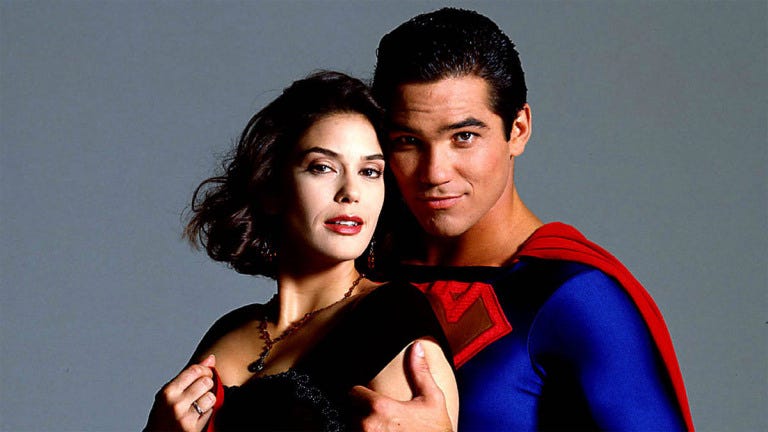
Lois and Clark: The Adventures of Superman, Kryptonie, Screwball Comedies, and Old-Timey Newspaper Tropes

 How can you make an invincible character work dramatically? A walking dues-ex-machina like Superman is much less dynamic then, say, the X-Men who have various strengths and weaknesses.

Ahh, but kryptonite, there’s the rub. So if correctly employed in a script, Superman would either be completely on or completely off. Still kind of clunky, no?

Image for post

That concern was on my mind when I decided to revisit Lois and Clark. The 1990s Superman reboot that focused on the budding romance between Superman and reporter Lois Lane was notable for one of my first celebrity crushes in Teri Hatcher and, I can’t remember much else, unfortunately.

What I found was a show in the very conscious mold of a screwball comedy. The genre solidified on stage and on screen during the Great Depression with a society reeling from the loss in wealth and class status. Status is key to the genre as both parts of the romantic coupling have a mix of higher and lower social statuses in relation to the other that must be bridged to make a more perfect union. For instance, in Bringing Up Baby, Katherine Hepburn’s character has the assets of having more inner confidence and being more fun than Cary Grant’s character while having the disadvantage of being a woman and having less of an actual job (she appears idle rich). In Ball of Fire, Barbara Stanwyck’s character has the assets of confidence, sexual experience, street smarts and quite possibly greater material wealth (she’s the sweetheart of a mobster), while her counterpart (Gary Cooper) has the assets of stability (he has a house which she needs), and a different sort of cultural status as a member of an academic aristocracy of sorts.

In Lois and Clark, Lois Lane is a whip-smart and well-connected reporter thriving in a man’s world. She’s literally the boss of Clark which is the clearest difference of status attainable. So what does Clark bring in return? Secret super powers! It also helps that their career as muckraking reporters (which almost involves more muckraking than would be permissible by modern standards) get them into a lot of trouble so that Clark can come in handy. Thus, Clark’s struggles as a man trying to create a life for himself often comes down to the decision over whether to use his super powers and how to do it subtly.

Like the most famous screwball comedy about reporters, His Girl Friday (or the play The Front Page from which it drew its inspiration), Lois and Clark also harkens to an earlier era of the newspaper industry.

Let’s talk about how Lois and Clark treats newspapers:

In this version of the Daily Herald newsroom, the boss, Perry White, has a hard-nosed management style might come across as cruel by modern day standards. His biggest concern is getting the scoop and he fosters a hyper-competitive environment dedicated to that aim. Reporters seem to be demotes or promotes reporters based on their ability to get him juicy information.

In a modern day newsroom, an editor would assign beats to reporters and work on building an audience across multiple platforms. He or she would have a team dedicated to what’s known as long-form journalism to take on big-issue stories such as government corruption or (in this universe) the dastardly deeds of super-villains. They wouldn’t switch reporters to whatever story is hot at the moment, because the editor would want to build brands. This would involve building a following among the the community for their crime reporter or reporter for the mayor’s office.

The function is different here for obvious logistical reasons. Lois Lane needs to be in every story, so she has to be covering every beat and be at the center or else the episodes are 1% as interesting. Additionally, Lane needs to have powers that are comparable to super powers in her ability to scoop out a story.

But more importantly, in the days of Hecht and MacArthur, scooping was everything. Rival newspapers in most major cities were fighting enormous circulation wars and newspapers would print two editions a day so that readers could be apprised of the latest news immediately. Think of it as the twelve-hour news cycle. In other words, customers made their choice between competing products twice a day and a big pay day could await if one newspaper if they could feature details about a story that another paper didn’t have.

Despite what this show wants you to think, life or death doesn’t depend on a news story being released so waiting on a story long enough to ensure accuracy or quality is generally a better thing.