Showing posts with label Royal Tannenbaums. Show all posts

Saturday, March 03, 2018

Looking back at 2001 in film

When film critics and like looked back at the year 2001 at their end of the decade retrospective lists (such lists from AV Club, Paste Magazine, IFC, Roger Ebert and compilation at Mubi.com) they found a year rich with great films including "Mullholland Drive", "Fellowship of the Ring", "Gosford Park", "Amelie", "Momento", "Moulin Rouge!", "Ghost World", "In the Bedroom", "The Royal Tanembaums" "Donnie Darko"
Whether I personally like those abovementioned films or not, I can appreciate that the above-mentioned films are all ambitious and well-respected pieces of work. At the same time, my personal experience from 2001 was that it was a terrible year and I distinctly remember an echo of similar sentiments. Within this paradox lies a pretty interesting set of examples of how films age in time.
The reason for this disconnect is that the above-mentioned list of films were not the films that were most anticipated. In many cases these were films that no one really saw when they came out and grew a cult over time. For example, if you've never heard of the film "Donnie Darko" until very recently, don't feel like you're out of the loop. Virtually no one saw it in theaters or even knew of its existence when the film actually came out. It played in just 58 theaters when it opened (for comaprison, your average movie opens in 3,000-4,000 theaters), grossed about $500,000 and was swept out of circulation in just 4 weeks. It was so slow to catch on that among the small number of awards it raked in for indepentent film were awards bodies that didn't get around to honoring the film until 2003.
The films that people were excited about at the time and actually saw in theaters were mostly disappointments. Do you remember any of these films today?
  • Hearts in Atlantis-Directed by Scott Hicks, starring Anthony Hopkins, adapted from Stephen King
  • Shipping News-Directed by Lasse Hallstrom (he had two Oscar-nominated films in a row in 1999 and 2000), starring Kevin Space and, Julianne Moore
  • Captain Corelli's Mandolin-Directed by John Madden, starring Nicolas Cage, Penelope Cruz
  • The Mexican-Directed by Gore Verbinski, starring Brad Pitt, Julia Roberts, Gene Hackman
  • All the Pretty Horses-Adapted from a Cormac McCarthy, starring Matt Damon and Penelope Cruz, released by Miramax (aka the Oscar Factory) on Christmas day
  • Vanilla Sky-Directed and written by Cameron Crowe, starring Tom Cruise, Cameron Diaz, Penelope Cruz
  • The Majestic-Directed by Frank Darabont ("Green Mile", "Shawshank Redemption"), starring Jim Carrey
  • The Man Who Wasn't There-Directed by Joel and Ethan Coen, starring Billy Bob Thornton, James Gandolfini
The directors of five of these films had been nominated for or won an Oscar within the three years prior to 2001, so the public understandably had great anticipation to their follow-up project. Although some people liked "The Man Who Wasn't There" (this particular author did not) and Jim Carrey still stands by his work in the "Majestic" (this particular author hasn't seen that one), a lot of these films were disappointing.
In the meantime, many of the films that are now classics weren't particularly loved back then with the exceptions of "Lord of the Rings" and "Royal Tenenbaums" Let's look at why the other films weren't well-received at the time:
  • "A.I." was awkwardly marketed as a summer blockbuster and audiences found it too thinky. 
  • Like the recent 2009 release "Precious," "In the Bedroom" seemed really depressing and had nothing else to market itself on. The only appeal of the film was that it was nominated for an Oscar prompting you to see it so you could join in the conversation. It's box-office take shows an unusually gross imbalance of people who saw it only after it was nominated. Context is also important. Melodramas have become more successful since this film came out such as "Far From Heaven", "Revolutionary Road", and "Little Children" which might have given this film more appeal.
  • In context, Christopher Nolan's "Momento" wasn't a very easy sell. Nolan was not a bankable filmmaker at the time and the concept sounds pretty convoluted on paper.
  • Moulin Rouge! was polarizing at the time. Some people think Baz Luhrrman was (and still is) all glitz and glamor. I really don't think people knew what to make of it. It was only after a lot of other musicals came out and the genre was revived (this literally was the first musical in years, not counting Evita, to be released in theaters) that critics looked back and said "You know, nothing quite had the energy and bold ambition of Moulin Rouge!" When critics see a lot of films (they usually see at least 200 films a calendar year*), they tend to be desnsetized to the ordinary and be attracted to films that stand out. 
  • Mullholland Drive was also incredibly polarizing. No one could understand the ending which invalidated the point of the entire film. I think that years later the film-watching community** gained a greater appreciation for this film because they realized that one of the few universal moments of movie-watching unity they all collectively felt was scratching their heads at the ending of Mullholland Drive. It also helps you appreciate the film when you have some plausible idea as to what the film is all about: I distinctly remember browsing the internet for answers and finding none after watching the film when it first came out on video.
  • Ghost World sounded too bizarre to even catch my attention at the time. It was based on a comic book but had no action scenes? I now consider it my favorite film from that calendar year, but I certainly wasn't racing to a theater when it came out. Considering that it grossed just $6.2 million, not much of the rest of America was either.
So there you have it: The landscape of film that was 2001 is an entirely different entity when look back at it ten years later than when we were looking at the previews of those films in movie theaters the year before. That, in and of itself, says a lot about film as a moving body.
*Calendar year means films released from January to December. Many films released in December are watched by most of the public in a movie theater the following year. By 200+ films a callender year, I mean a critic watches some 200 films a year released during that year. They might also watch older movies as well.
**By film-watching community, I mean the critical community but also anyone who posts on message boards or engages in film-watching to a degree that they're the kind of person who would be reading this article

Tuesday, November 07, 2017

Best Film Ensembles of All Time Part III: 11-20 Adam's List


This is Part III of a series in which Adam Spector of Adam's Rib and I count down out top 50 film ensembles of all time. Part I is here and Part II is here and the final ten are here. Because Adam and I went into so much detail, we split this entry into two with the other entry here. Part V is here.

Adam's List
11. The Sting 12. Dazed and Confused 13. Do the Right Thing 14. Eight Men Out 15. Fast Times at Tidgemont High 16. American Graffiti 17. Short Cuts 18. Glengarry Glen Ross 19. Prince of the City 20. The Royal Tenenbaums


 Orrin's Response:


In your attempts to disqualify certain films from my list for not being ensemble films, you make an interesting point. While we've both pointed to films with ensembles we admire (Dead Poets Society or Back to the Future fall into this category), the ensemble film itself is a genre of sorts both in how it's presented to the audiences and how those audiences look for familiar conventions (for example, the skillful spreading out of a narrative over several characters) within those films. 

Put in more commercial terms, an ensemble film is also how a movie is sold: Look at the posters to Grand Budapest Hotel or Emilio Estevez's Bobby and the main message is "look at how many stars we were able to get into one picture!"


I would argue that the "ensemble film" angle is pretty much the only reason anyone could possibly have gotten excited about the 2012 film The Avengers (or any of its subsequent sequels and pseudo-sequels) and why it's the fifth highest grossing film ever

Part of what we've applauded is bold ways of going about casting (in commercial terms, we can call this a gimmick although I don't think it deserves the pejorative connotation). Salt of the Earth used actual miners, The Taking of Pelham 1 2 3 used actual ex-convicts, Around the World in 80 Days loaded the cast with cameos, It's a Mad Mad Mad Mad World (and Stephen Soderbergh's Informant also tried this) used a who's who of comic actors, but as you point out in the latter case, just putting in those people on screen doesn't equal great results.

An example is Do the Right Thing. Spike Lee's bold approach (or gimmick) was having a full cast loaded with more black people than I imagine audiences even knew of at the time. I imagine it was just Denzel Washington, Lawrence Fishburne (who worked with Spike Lee on his last film), Ossie Davis, Morgan Freeman, and that guy who won an Oscar for An Officer and a Gentleman were the only black people audiences could name at the time, and he showed one could fill a great film with a dozen or so black actors all turning excellent performances. He even took a chance on his own sister and it worked! What's more, there's a lot of texture and color in all of the parts which must have been a game changer. And that's not to mention the humanizing turn of Danny Aiello.

Prince of the City, similarly, is a bold achievement in casting. It condensed a highly detailed police case with an incredibly dense source material, Robert Daley's 1978 account of an informant in the police department responsible for 52 indictments. The fact that the final screenplay has over 100 speaking parts must be a big deal as it's mentioned on both TCM and IMDB's trivia section (and pretty much any review of the movie if you google "over 100 speaking parts" "prince of the city"). But at the risk of offending the Sidney Lumet estate (and you for graciously lending me the DVD), this is another case where bold casting doesn't necessarily equal a great ensemble in my opinion. I don't really need to argue this through quantitative means because I got all the evidence I need when I went over to the IMDB page to write about the actors and couldn't remember any of them except for the ones I already knew (all three of them). All I remember about this film a mere three weeks after watching it is Jerry Orbauch has a sinister smile and that Bob Balaban is in the film with an inordinate amount of hair. And I'll go a step further and posit that because the ensemble fails, the film fails as a whole to justify its 3-hour running time (something that admittedly tries my patience more with home viewing). The film needed some of the color that say Danny Aiello or Ossie Davis bought to their parts.


A great example of a supporting role that adds color is in my favorite Coen Brothers film, O Brother Where Art Thou?, Charles Durning delivers a larger-than-life performance that plays on our imagination of Southern populist archetypes as Pappy O'Daniel. It was because of that performance that whenever I see Durning in a film's opening credits, I get a tinge of anticipation over what he will do. That's how character actors and ensemble pieces serve as gateways to other films. It's how Prince and the City (at least for me) failed to introduce me to a single intriguing actor, but how I started to get intrigued enough to decide to give The Sting a try. 

I'm glad I did because there are a million great things about both the film and its ensemble. Chief among them, Robert Shaw is a terrifying villain. His physical embodiment of the part was so masterful, that I half-believed he trained himself not to blink. It also helps that Charles Dierkop mirrors the gravity of his presence so well as a personal body guard. I also think it's interesting to note that Eileen Brennan is downright oozing with sexiness here and this is only seven years removed from her role in Private Benjamin where she's largely an asexual and menacing counterpoint to the happy-go-lucky troops under her command. There's also Robert Earl Jones in a part that treats race as such a non-issue, it almost feels like the part could have been written for a white person. I suppose that's good? But appropriately enough, this is largely about the lead and that's Robert Redford. I always found it odd that Paul Newman and Robert Redford are two actors of roughly equivalent caliber yet Paul Newman has nine Oscar nominations and Redford has one. I just looked it up and it's apparently this movie that Redford has his only Oscar nomination which is fitting since he really steals the show. His character is a guy who has to project confidence for a living, but Redford imbues the role with a definite sense of anxiety layered underneath and that adds a much needed sense of tension.

Lastly, Eight Men Out: I like this plenty as a movie, but I think I love it as an ensemble pick. It just looks so ridiculous on paper: Sherriff Pepper (the silliest character bar-none in the entire JamesBond series) as a baseball commissioner? You have rising stars Charlie Sheen and John Cusack in your cast but you're going to relegate them to supporting roles while having a nobody (D.B. Sweeney) as Shoeless Joe Jackson (the only character I knew of from this chapter in history)? Turns it out it's a far more interesting film to make Joe Jackson more of an uninteresting accessory and honing in on John Cusack as the main character because his character of Buck Weaver did actually have the free agency to at least decide something while Jackson sat on the fence. It's thematically appropriate to have the more charismatic actor steal the thunder. They don't have much Charlie Sheen here but after watching some episodes of Two and a Half Men, I don't mind never seeing that guy act again, though I found it a puzzling from a commercial perspective. Michael Rooker also is a striking image as first baseman Chick Gandil because he has the body type of a jock which is why it's understandable he might not have been cast in much else.

The other actor that I felt glued to here was David Strathairn who is perhaps best known for his Oscar-nominated turn in Good Night and Good Luck but who I have come to know on a weekly basis from the SyFy series Alphas (which made my top ten a few years ago) where he plays a Professor X type. It was really surreal to see him play a youthful athletic type and I was really impressed.
I didn't get around to watching Short Cuts, but, hey I've seen seven Robert Altman films at this point, and while I like his style just fine, I couldn't get myself to watch another one of his films because I know so much what to expect. To use a Passover reference, let me ask you the manishtana of movie questions (and feel free to imagine the voice of an 8-year old singing these words): "Why is this Robert Altman film different from all other Robert Altman films?, from all other Robert Altman films?"

The other film I never got around to watching was Dazed and Confused? Are you sure you're not confusing that with Slackers? They seem like the exact same thing?

Adam's response:
There’s nothing wrong with all-star casts in and of themselves, but like anything their worth depends on how they are used.  In 1974, Sidney Lumet directed Murder on the Orient Express, which came earlier on my list.  That worked because the actors although stars were right for their parts and served the story.  However, there were other films in that era, such as The Towering Inferno, The Poseidon Adventure, and other disaster movies, where as you noted the all-star cats didn’t really add much and were more of a marketing gimmick.  Some later Woody Allen films, such as To Rome with Love, felt the same way.   It can be used to mask a mediocre story or production.

By contrast, filling the screen with unknown actors, especially if they are indigenous to that area, can lend a film authenticity.  For example, I recently saw Tanna, set on the remote Pacific Coast Island of that name, where the roles were played by members of a local tribe.  That may be an extreme example, but for Matewan, also earlier on my list, John Sayles said that he cast many actors from areas of West Virginia similar to where the film was set.      

That brings us to Prince of the City, on which we will likely never agree. Lumet cast many unknown New York theater actors.  Many of them were not heard from again in any major way, but I don’t think that takes away from their performances.  For that movie and for those roles they succeeded.   Together, they all successfully portrayed an insular world gradually closing in.    Treat Williams didn’t become the major star he seemed destined to be at one point.   Still here he has both the cockiness and vulnerability to be the tragic hero the film needs.    And the film was not without standouts, including Orbach who fit as a tough sarcastic New York cop so well he would return to it often for the rest of his life, Lindsay Crouse, and the aforementioned James Tolkan.

So let me move to where we do agree.  The Coen Brothers are masters at finding the right actors to bring color to supporting roles.  It started with their first film, Blood Simple, with M. Emmet Walsh as the greedy private eye.    They worked with Steve Buscemi, John Turturro, John Carroll Lynch, Peter Stomare, Ben Gazzara, Jon Polito, Tim Blake Nelson, and so many other That Guy actors.  You could argue that they cast their films like no one else.  Charles Durning in O, Brother Where Art Thou?, as you noted, has fun with Southern archetypes.  He did the same thing in The Muppet Movie as the villain, Doc Hopper.   
Source: HelensDelicious.Blogspot.com

The truth is that Durning is a true supporting actor who made the leading men, and the films, better, whether it was George Clooney in O, Brother Where Art Thou?, Al Pacino in Dog Day Afternoon, Dustin Hoffman in Tootsie, or even the Muppets.  I am glad that he led you to The Sting, which was his big break.   Ironically, The Sting is often grouped together with Butch Cassidy and the Sundance Kid, as both were directed by Gorge Roy Hill, and of course featured Paul Newman and Robert Redford.  But those two films are very different.  Butch Cassidy is a true buddy movie centering on the two title characters.  The Sting, as you noted, has so much more than the two stars.  Someday I need to go back and see more of Robert Shaw’s films, as I have only seen him in four.  The physical embodiment you speak of is both Shaw’s talent and a happy accident.  Shortly before filming Shaw hurt his knee playing tennis.  With little alternative, Shaw made the limp part of the character, which somehow added to the menace.  Besides the actors you note, there’s also Harold Gould, who steals every scene as the elegant Kid Twist, and Ray Walston who performs verbal gymnastics as the fake race announcer.     You had an insightful take on Redford, projecting confidence but with anxiety layered underneath.  He did the same in The Candidate and All the President’s Men.  

John Sayles excelled at ensemble casting, and I could have included much more of his films than I did.  Eight Men Out was such a nuanced, complex take on the Black Sox scandal that it could have only worked with a wide range of talented actors.  Sayles has never relied on star power, and it’s no accident that he relegated Sheen to the background while Sweeney and Cusack did more of the heavy lifting. Before this Cusack had been doing mostly teen films.  Clearly Sayles saw something in him that others missed.  Cusack’s final monologue perfectly captures Buck Weaver’s love for the game and the bitterness at the way he was treated.  Sayles discovered Strathairn and cast him several times.  It looked like Strathairn might become a leading man after Good Night and Good Luck but you get the sense that he prefers to let others have the spotlight.  
Source: AMC.com
 
Let’s close with your two questions (we need two more to fully merit your Ma Nishtana reference, but there’s one more entry left).  Short Cuts certainly shared the ensemble DNA of many of Altman’s signature films, Nashville in particular.   I included this because each smaller story could have worked as its own film, largely on the strength of the acting.  Altman combines stars such as Jack Lemmon, some of his usual suspects, such as Lily Tomlin and Lyle Lovett, with character actors. Jennifer Jason Leigh pulls off playing a phone sex line worker getting a caller off while simultaneously taking care of her young kids which such aplomb that it should have gotten her an Oscar nomination 22 years before she finally got one.  

Finally, while Richard Linklater directed both Slacker and Dazed and Confused, both are set in the Austin era, and both feature excellent ensembles, they are not very similar. The former, as noted earlier, goes from one set of characters to the next, never to return.  The latter is more of an American Graffiti type ensemble film, where the characters have their own adventures but they all connect.  Dazed and Confused created the Matthew McConaughey persona while also providing an early showcase for Ben Affleck and Parker Posey.   Linklater filled out the cast with up-and-coming character actors, including Adam Goldberg, Anthony Rapp, Joey Lauren Adams, Rory Cochrane and Wiley Wiggins.    Give it a chance.
 

Saturday, September 16, 2017

Best Film Ensembles of All Time Part II: 21-30

This is the second part of a series that was done in collaboration with Adam Spector of Adam's Rib in which we both ranked our top 50 films in terms of best ensemble. The first edition where we went over our picks from 31-50 are here and the 11-20 can be found here and here:


Orrin's Picks 21-30:

21. Airport (1970) 22. Charade (1963) 23. Royal Tenenbaums (2001) 24. A Face in the Crowd (1957) 25. All About Eve (1950) 26. Inherit the Wind (1960) 27. Stagecoach (1939) 28. Mr. Smith Goes to Washington (1939) 29. American Hustle (2013) 30. Love and Mercy (2015)

Adam's Response:
I need to admit I have not seen Airport, and mostly know it for inspiring Airplane.   Impressive cast, with Helen Hayes winning an Oscar, although it was generally considered to be more of a lifetime achievement one.  It’s hard to think of anyone besides Cary Grant and Audrey Hepburn in Charade, but Walter Matthau showed his range playing the villain.   By the same logic, while Bette Davis fills up the screen in what became her signature role All About Eve, the work of her supporting cast is very underrated, including Anne Baxter, Gary Merrill, Celeste Holm and an up-and-coming Marilyn Monroe.  But the two who really add spice to the movie are George Sanders and the great Thelma Ritter.  Both could deliver a snarky one-liner like few else.  Ritter in particular somehow was always the one who would say what the audience was thinking. 
You will see The Royal Tenenbaums later on my list, and I am glad you included it.  You mentioned great chemistry and the way certain stars bounce off each other.  Tenenbaums may be the perfect example.  As Gene Hackman, in his last iconic performance, goes through the movie, his rakish charm and scheming play off the other more straight laced actors to both comedic and dramatic effect.  His character of Royal Tenenbaum has done horrible things, but Hackman’s charisma, and his showing the love underneath, lets you forgive Royal and accept when the other characters do the same. 
Photo Source: Rotten Tomatoes

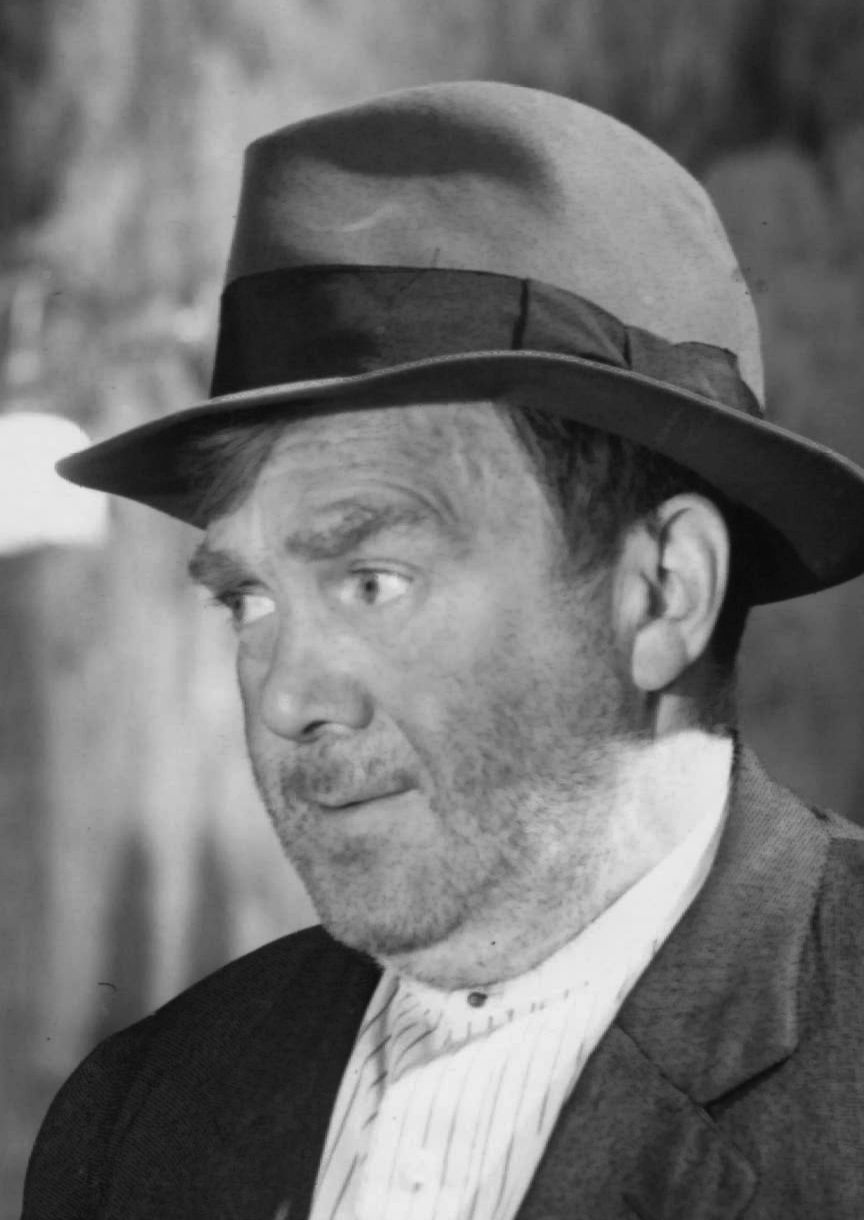
Numbers 27 and 28 on your list both feature one of the most unsung character actors from the studio era, Thomas Mitchell.  He never had the looks to become a star in the 30s, 40s and 50s, but always worked well playing off stars including John Wayne, Jimmy Stewart, Clark Gable, Cary Grant and Gary Cooper.  Like Ritter, he was someone audiences could identify with.  He won the Best Supporting Actor Oscar for Stagecoach and could have just as easily been nominated for many other films.  Just look at his filmography.  Mitchell is the perfect example of the actor you need to have a stellar ensemble, a versatile performer who could create memorable characters while allowing those around him to shine.
www.imdb.com
Thomas Mitchell, Actor: Gone with the Wind. Thomas Mitchell was one of the great American character actors, whose credits read like a list of the greatest films of ...

American Hustle shows how far David O. Russell has come.  His early career was filled with [editorial note: if you want to trust the rumors] stories of him being a terror on the set, getting into fights with his actors.   Now he has become one of the most accomplished ensemble directors, with The Fighter, Joy, and Silver Linings Playbook.  Actors such as Jennifer Lawrence and Bradley Cooper work with him multiple times.  Both Lawrence and Cooper go against type in Hustle and seem to have much fun doing so.  Cooper goes under the surface of his scheming, sleazy FBI agent, showing the insecurity and desperation that really drive him.  Christian Bale again displays his extraordinary range, while Jeremy Renner makes his doomed mayor a tragic figure.   Robert De Niro and Michael Pena make a lasting impact despite limited screen time.  Terrific choice.  
Orrin's Response:
What’s funny about Helen Hayes's Oscar nomination (and apparently, she eventually won) is that it’s eerily similar to Melissa McCarthy’s nomination 41 years later in Bridesmaids and equally baffling. Both played comic characters who broke the tension by tearing through every norm and social custom of airline etiquette and each traded on a physical trait for shock value (the former being old, the latter being fat).


To think of Airport solely as “the film where Helen Hayes won an Oscar” is a gross disservice to the variety and caliber of performances in this  great disaster film. I remember having a discussion on a message board over which of the four leading ladies of this film—Jacqueline Bisset as a pregnant stewardess in peril, Maureen Stapleton, as a worried housewife, Jean Seberg as a level-headed executive assistant or Hayes—deserved Oscar nominations and everyone had different answers. Personally, I think Seberg was the stand-out. Her sly face-off against Hayes’ character showed a quiet don’t-mess-with-me demeanor and her undefined thing for hard-nosed superior Burt Lancaster reminds me of the Betty Hutton-Charlton Heston romance in Greatest Show on Earth. Throw in Dean Martin as a dashing pilot, George Kennedy as a blue collar fix-it- man, and Oscar-winning actor Van Heflin as an especially unhinged passenger, and this is a great cast.


Due to the fact that the genre is linked with generally unpopular directors today-- Roland Emmerich, Michael Bay—the disaster film doesn’t get a lot of respect, but back in 1970, a film like Airport could be appreciated (as evidenced by its Best Picture nomination) as a way to tell a rich tapestry of stories with a sense of impending urgency and it was largely because of the power of its cast being taken seriously.


I’m surprised you praise the supporting work of Charade without mentioning the best part: George Kennedy, James Coburn, and Ned Glass as the deliciously mismatched trio of ex-GIs trying to extort Audrey Hepburn out of her late husband’s war loot. One’s bulky and physically imposing; one’s wiry and slick; one’s nebbishy and prone to sneezing fits: Those three are like the living embodiment of those Interpol cops (editorial note: it was extremely hard to find an online image of the three cops from that 1986 DOS game but take my word, they looked like the three guys in Charade) that used to run across the screen chasing Carmen Sandiego in my old 8-bit computer game.  But yes, it’s also tempting to mark the pairing of the king and queen of the romantic comedy (even though their self-referenced age difference on screen is indicative that they were of two different eras) with an inclusion on my list.


Yes, Thomas Mitchell was a great character actors but Stagecoach was essentially all character actors.  In 1939, John Wayne was pretty much a B-list actor who got the part in Stagecoach because he was director John Ford’s golfing body. John Carradine, Andy Devine, future Oscar winner Claire Trevor, Louise Platt, and Donald Meek were all part of the cast and it’s very much a group effort. Thanks to DoctorMacro, you can see a great picture of them below with John Ford's fine framing. 

Photo Source: DoctorMacro.com

I included  Mr. Smith Goes to Washington mostly because of its supporting cast. Jimmy Stewart is great, but why should we be surprised that he would be anything but for the part of a naïve junior senator going against the system. It’s like being surprised that Clint Eastwood did a good job in a film titled “the man who delivered soliloquies while squinting and shooting a gun.” In particular, Claude Rains is pretty extraordinary as a man who goes from ally to villain onto the side of good yet again. I also wanted to throw a bone to Jean Arthur (pictured below on the left) who stepped in the shoes of Barbara Stanwyck (this is really a pseudo-sequel to Meet John Doe) which is a shadow that’s not particularly easy to escape from.


Adam: Orrin, I was in no way trying to shortchange the all-around work of the Mr. Smith or Stagecoach casts.  Rather I was using them being next to each other in your list to illustrate how ensemble films need the type of character work that Thomas Mitchell did so well.  Other examples are Only Angels Have Wings, It’s a Wonderful Life, and High Noon.  He played key characters in a way that did not draw attention to himself but served the story – the true definition of “supporting.”

Adam's List
21. Spotlight (2015) 22. The Dirty Dozen (1967) 23. The Manchurian Candidate (1962) 24. Tombstone (1993) 25. This is Spinal Tap (1984) 26. Eve's Bayou (1997) 27. United 93 (2006) 28. Goodfellas (1990) 29. True Romance (1993) 30. Best in Show (2000)

Orrin's turn at bat: Goodfellas is a solid choice. Ray Liotta is the audience surrogate, Pesci is the stand-out performance, and DeNiro is the glue. Loretta Brasci is understated here. I noticed as I was writing this that when comparing a simple film like Goodfellas to Scorsese’s 21st century films that his later casts are often bloated by a number of superfluous characters. In The Departed, doesn’t Mark Wahlberg make Alec Baldwin’s character obsolete? Did Wolf of Wall Street require a banker character that has one scene to be played by Jean DuJardin and was Jon Favreau really necessary? Does anyone remember what Patricia Clarkson or Emily Mortimer did in Shutter Island (the screen credits certainly don’t)? What was all the hype about for Jude Law as Errol Flynn in Aviator if he was on screen for 10 seconds? Perhaps as Scorsese has become such a bona fide legend and his releases have been more hyped, he (or his producers) have responded by thinking that more marquee names in the cast is better.

You often talk about how ensembles are about the hidden gems that support the talent. I think the work done by Lawrence Harvey, Frank Sinatra and Angela Lansbury are all tremendous in Manchurian Candidate and I especially enjoy the chemistry in the Harvey-Sinatra and Harvey-Lansbury pairings, but I don’t really have any memory of any other performance sin the movie. Perhaps you can fill me in?


Spotlight was one of my two favorite films of 2015 and I think there were some great acting performances, but in thinking about how the performances bounce off each other if or if the performers are more than the sum of their parts, I’m not sure if it fits that criteria well. I kind of think if you substituted those actors for other great actors, you would get the same result.

The Christopher Guest films you mentioned are entirely different however in that it’s hard to imagine those films being made with different people. I disagree with Christopher Guest’s generous assertion that no one can do what his actors can do (the improv troupes that gave us Eugene Levy and Catherine O’Hara have produced many more alumni) but the way those guys approach characters is very unique and produces an entirely different brand of comedy. I know that for the Christopher Guest films, they generally write an outline of their characters, an outline of the storyline and leave it entirely up to improv when the camera starts rolling. Since This is Spinal Tap was directed by Rob Reiner, I wonder if the prep work was significantly different.

Photo Source: Do512family.com


I think United 93 shows you’re drawn to films that can do a lot with no star power like Slackers and Salt of the Earth. I can see that logic.

You’ll have to fill me in on Eve’s Bayou, True Romance, and Tombstone. Perhaps as people are generally hesitant to explore the 70’s disaster genre as I previously mentioned, I don’t think Westerns in the 90’s (outside of Unforgiven) were treated as more than blockbuster genre fare. If I remember correctly (and I was a child when these films were airing on TV), there was Wyatt Earp, Broken Arrow, Gunfight at the OK Corral, and Young Guns and I don’t think any of them really have that great of a reputation.  Is that perhaps why Tombstone gets lost?

Adam:  You make an interesting point about Scorsese.  Some of his more recent films tend to have all-star casts, which are not always needed.  I think big-name actors want to work with him, so from his perspective, Why not?  Goodfellas certainly had its share of stars, such as De Niro and Pesci.  But Ray Liotta was still an up and coming actor, as was Bracco.  To steal your question, could you imagine any other actors in those parts?   Scorsese also had a knack with the smaller parts.  In Tommy (Pesci’s) famous “What’s so funny about me?” speech, it works in part because Pesci plays off the restaurant owner, beautifully played by Tony Darrow, who combines just the right amount of annoyance and hesitancy.  Same too with Frank Vincent as Billy Batts, who gives the gangster a playful antagonism in taunting Pesci.  You believe how the man is pushing Tommy’s buttons, which we know will not end well.   


With The Manchurian Candidate, it can be hard to look past Lansbury’s perfect embodiment of motherly evil.  But look deeper and you will see James Gregory as Sen. Iselin, the pompous send-up of Joe McCarthy.   Gregory works well with Lansbury, as Ms. Iselin lets the Senator think he is in charge when it’s her plan all along.  You will also find Henry Silva as Chunjin, who opposite Frank Sinatra, had one of the more underrated fight scenes.  Finally, there’s Khigh Dhiegh as the head brainwasher, who has such fun with the role that you almost don’t mind all of the horrible acts his character does.

We disagree about Spotlight.  Michael Keaton’s performance is so low-key compared to his other work, but it fits his role as a veteran reporter, always observing and building the story in his head.  He feigns detachment, but slowly lets you see the determination underneath.  His cool helps further emphasizes the fire that Mark Ruffalo brings.   Re-watch the scene where Ruffalo’s character argues for running the story immediately, while Keaton calmly explains that the paper will run it when it’s ready.  Also, think about the actors playing the abuse victims.  Those roles can easily come off as forced or melodramatic, but they never do. 

Eve’s Bayou is so stunning visually that you can almost overlook the fine performances.  Samuel J. Jackson is the headliner as the patriarch of a wealthy Louisiana family, but he is used sparingly.  In the title role Jurnee Smolett who, at 10 years old, had more talent and depth than most older actors.   The chemistry between her and other actors, in particular Meagan Good as Eve’s sister and Debbi Morgan as her aunt, make the film work.  Lynn Whitfield, Diahann Carroll, and Vondie Curtis-Hall also distinguish themselves.


If all True Romance had was the pantheon scene of Christopher Walken squaring off against Dennis Hopper that would have been enough.   The intensity each actor brings to their scene builds off each other. It’s not just when their characters are speaking, but when they are listening, learning about each other.  But the movie boasts so much more.   You can see a little of Tony Soprano in one of James Gandolfini’s first breakout roles.  Gary Oldman is virtually unrecognizable as a white rasta gangster.  Saul Rubinek shines as a Joel Silver-type producer.  Pre-stardom Brad Pitt steals every scene he is in as the ultimate stoner.  And I haven’t even mentioned the fine work of Christian Slater and Patricia Arquette as the two leads.  An embarrassment of riches.

Tombstone was supposed to be “the other Wyatt Earp movie” ahead of the more prestigious Wyatt Earp.  Even though it switched directors midstream, Tombstone vastly outshone its counterpart.  Kurt Russell gives his typical, steady work as Wyatt Earp, but it’s Val Kilmer who makes the most impact as the dying gunslinger Doc Holliday.  Kilmer plays Holliday as a wounded animal, dangerous until the moment he dies.   The chemistry between him and Russell form the crux of the second half of the story.  Sam Elliot fits perfectly in any Western, while the late, great Bill Paxton makes the most of his limited screen time.  Michael Biehn and Powers Boothe (another actor who passed too soon), personify sociopathic greed as the villains.