This blog is sporadically maintained by freelance journalist Orrin Konheim (he regularly writes at http://www.patreon.com/okjournalist) who has been professionally published in over three dozen publications. Orrin was a kid who watched too much TV growing up but didn't discover the joy of film writing until 2003 when he posted his first IMDB user review and got hooked. Orrin runs adult education zoom courses on how to be published, as well as a film of the month club
Time Pegs Be Damned at this Blog! I'll React to the Oscars When I Want to React! In All Seriousness, Please Consider Raising Your Subscription From Free to Paid to Help Incentivize Me to Write In a More Timely Manner. It Takes a Decent Amount of Human Labor to Write This After All, and The Traditional Journalism Outlets to Publish These Pieces Are Dying.
Plus: A Great Year on the Whole
To people who aren’t film buffs, it seems like a blanket generality to say that one year was good and one year wasn’t, but it actually can be true. Certain trends — and especially the ripple waves of COVID — altered release dates to the point where some years were complete duds (looking at you, 2022!).
2024 only had four films I would unequivocally recommend — Here, Anora, Between the Temples, and Challengers. This past year? I’d classify somewhere between 15 and 20 films at that level of quality. So when it comes to Sinners and One Battle After Another, they are both extraordinary films in an extraordinary year.
Minus: The Back End of the Nominees
I found Frankenstein too gory and disturbing to be a positive experience. But I can accept that it’s not my cup of tea, and it fills a nice niche for a Best Picture slate.
What I wholeheartedly reject is the inclusion of F1 and Bugonia. Terrible movies must not be allowed to be nominated, troops! Just kidding — I know art is subjective — but I thought those were seriously unimpressive films. Yorgos Lanthimos is one of the most imaginative filmmakers out there, but he’s been nominated for far better films before. This one was a flat horror film with a half-baked twist, not something on par with his usual level of world-building.
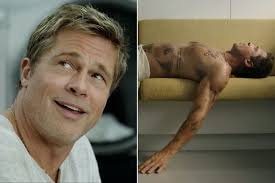
F1 was a clichéd sports film that saw Brad Pitt playing to the exact behavioral expectations I would have of a Hollywood star who has consistently been told he’s one of the sexiest men on the planet. Also, let’s be honest: Sentimental Value wasn’t that far off from the SNL sketch.
Plus: A Veteran Wins Supporting Actress
In the last few years, the Academy has been using the supporting categories to kowtow to groups that insist the Academy award a diverse set of winners. Everyone’s opinion will vary, but I found Da’Vine Joy Randolph, Zoë Saldaña, Lupita Nyong’o, Ariana DeBose, Ke Huy Quan, and Troy Kotsur all unworthy of the Oscar, and it’s difficult not to believe the race was altered to some degree because of the diversity narrative.
My friend told me, “Congratulations, you have the same view as Fox News,” and my hatred for the Republican Party is well documented, but that doesn’t mean I like seeing Oscar voting influenced by counterfactual pushes for diversity. Watching someone like Ariana DeBose campaign for the Oscar on the basis that she’s the more diverse choice — while ignoring that this benefits her in today’s socio-economic climate — and then hammering “the continued importance of diversity” in her speech the following year feels tone-deaf.
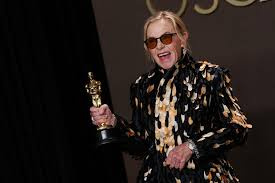
This year, I was impressed with Chaser Infiniti in One Battle After Another, and Regina King knocked it out of the park in the unnominated Darren Aronofsky film Caught Stealing, so I was pretty thrilled for Amy Madigan, although I should point out…
Minus: That veteran was Someone I Had Never Heard Of. Skarsgard Family Still Goes Unrewarded:
Although, I do have to ask: who the hell is Amy Madigan? Am I the only one who can’t remember her from Field of Dreams? Personally, I’ve only seen her in three films: Rules Don’t Apply, Pollock, and Field of Dreams. She’s also famous for Uncle Buck and the Oscar-nominated Places in the Heart. But that’s a pretty thin résumé.
It’s nice to see an older actor rewarded, but Stellan Skarsgård would have been a much nicer choice. Still, it’s the kind of bombastic supporting-character role that we don’t see too often.
Plus: Conan O’Brien Goes All In on Sketches
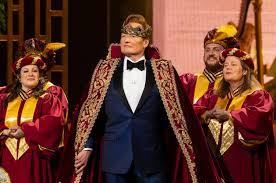
From 2002 to approximately the dawn of YouTube, I was a Conan obsessive. If you were up past midnight, this was the only game in town, and it was quite a game. His stand-up was pretty typical, and his Hollywood banter had a nice awareness that he was a small fish in a big pond, but he really shone brightest in sketch work.
With the aid of Brian Stack (who I am scheduled to interview this May), Brian McCann, Andy Blitz, Max Weinberg, Joel Goddard, a young Amy Poehler, and others, Conan presided over a gonzo theater of the absurd. He crammed in an especially high number of bits: imagining himself as an entitled Oscar winner being serenaded by Josh Groban; memeing Leonardo DiCaprio and duplicating Michael B. Jordan; a future Oscars overrun by product placement; a parody of Netflix’s habit of spelling out plot points mid-movie.
This is Conan at his best.
Minus: The Backlash to Sinners Losing
I’ve written plenty about how the Oscars continue to be a referendum on progressiveness by a bloc of critics, movie fans, and industry advocates who believe that lashing out at the minute shortcomings of one of the most progressive industries on the planet will make a ripple in fixing our messed-up society.
As Chris Rock once said, the Black community in the 1960s wasn’t protesting Sidney Poitier’s Oscar snubs because they were too busy getting lynched. In the past decade, I’ve witnessed mass calls for greater inclusiveness during Awards Season that are just plain intellectually insulting, and I’ve had to risk looking racist or sexist if I didn’t join that bandwagon.
On top of the slant toward people wanting to see Black nominees win, we have the additional backlash that inevitably comes from Sinners being such a highly nominated film. They are both incredible films but one has to be a winner. The problem is that both films will be defined forever in a debate that will go beyond the Oscars (expanded upon here)
Side note:
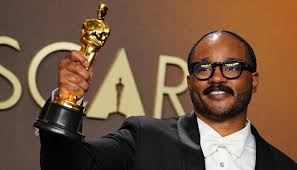
My biggest irritation here is that Ryan Coogler won an Oscar, but some people will claim it’s not the right Oscar. Try telling that to Ryan Coogler! You think he's not happy winning an Oscar or that an anti-Black Academy would really pick and choose which type of Oscar to give someone?
Plus: Writing Wins for One Battle After Another and Sinners
So much of what worked well with these movies happened at the writing level.
Sinners established great backstory for its characters without dragging (impressive for a 137‑minute movie) and pulled the wool over our eyes as it underwent a very smooth genre shift.
One Battle After Another walked the thin tightrope between being relevant but not preachy or specific. It built out an entire world that could be explored in sequels or spin-offs.
Minus: The Ceremony Started an Hour Early
Whose bright idea was this? Who exactly wants to start an Oscar party on the West Coast at 4 p.m.? It was a major schlep just to make it to my own party by 7 p.m., and I had the easiest time zone in the country.
There’s “starting early,” and then there’s “my Aunt Hilda insisting we eat at 4:30 because she doesn’t like driving in the dark.” The Oscars should not be taking scheduling cues from Aunt Hilda!
Plus: The Casting Oscar
The new casting award is a good start — a long‑overdue acknowledgment of a crucial part of filmmaking — but it remains to be seen whether the Academy will just copycat the Best Picture race (the way the SAG Ensemble award often does) or actually think creatively. Would a good ensemble film featuring risky choices like Bad Shabbos or the Knives Out sequel have made it in under ordinary circumstances? How about a foreign crossover like Rental Family, with an entirely fresh cast of Japanese actors alongside Brendan Frasier?
It’s a promising category, but the Academy has a long history of defaulting to the familiar. Let’s see if they can resist that gravitational pull.
Plus: The Bridesmaids Reunion
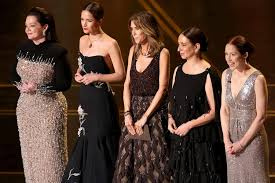
Probably the funniest non-host bit of the night. The forced improv element with the most random selection of audience members was killer. I was disappointed to see Wendi McLendon-Covey (unfortunately, the least famous of the sextet) absent on stage, but fortunately that was explained as a scheduling difficulty.
I went into this for a project I was doing on best supporting actress winners (Margaret Rutherford), but I stayed because I love a good ensemble film.
The film follows four storylines: A dramatic love triangle involving a woman (Elizabeth Taylor) who is planning on leaving her husband (Richard Burton) for an idle playboy (Louis Jordan) but wants to dodge confrontation through a Dear John note; a Yugoslavian director (Orson Welles) needing to leave England to dodge tax laws; an Australian magnate (Rod Taylor) with assistant (a not-yet-famous Maggie Smith) who needs to head to the board of directors before his company is bought out; and a loopy Duchess (Margaret Rutherford) who is trying to raise money to save her castle.
Unlike most ensemble dramas where there are a lot of intersecting characters, there's an urgent need for everyone to go in the same direction which is out of London's Heathrow airport which means the tension gets ratcheted up to 11 in one foul sweep, when a case of fog (this is a thing?!) delays all flights.
The film is at its most compelling when focusing on the Burton/Taylor/Jordan plot which has enough heft to support its own dramatic mid-century melodrama like the Douglas Sirk or Elia Kazan film.
Burton and Taylor were a tabloid phenomenon on screen and the pair had just come out of a film shoot where they just discovered each other's bodies (TCM reported that this film was rushed into production to capitalize on the tabloid). It was over the shoot of this film that an internally tortured Burton decided to leave his wife and marry Taylor: An idealized glamour that six other men had fallen under the spell of over the course of Taylor's life. It's not hard to imagine how viewers in 1963 felt watching the two act out a heated marriage spat felt like a glimpse of the tumultuous affair between two of the most beautiful and idolized people on the planet.
But the scene-stealer here is Louis Jordan. Referred to as a "gigolo" by a jealous Richard Burton, he's the kind of idle gentleman who casually walks through life bedding women and never thinking about his next meal. He's a gambler as if there's any profession cooler than that. He's properly vulnerable with Liz Taylor and he shows an intriguing splitting of the difference between empathy and verbal one-upmanship to the man whose wife he's stealing.
The Australian magnate plot is a solid B-story with the contrasting sense of gravity by Maggie Smith (another scene stealer) and the "Oh well, my life's over, might as well have champagne" attitude of Rod Taylor. There are a couple sweet twists and the story feels emotionally robust.
The Orson Welles and Margaret Rutherford plots are mostly filler. Welles dons an Eastern European accent and some fine character affectations and Rutherford shows a penchant for physical comedy as she constantly looks lost and fiddles with her hat a lot.
The upsetting thing is with the richness of the performances of Elizabeth Taylor, Richard Burton, Louis Jordan, and Maggie Smith, Rutherford walked away with the 1963 Best Supporting Actress Oscar. Still, I'm glad this film won an Oscar of some sort so I had the chance to discover it.
This is the final installment of a series in which Adam Spector of Adam's Riband I count down out top 50 film ensembles of all time. Part I ishereand Part II ishere and here you will find Parts III and IV. Thanks for reading everyone, it was a labor of love (Note: This post will be updated and edited as we go)
ORRIN'S TOP TEN:
Murder on the Orient Express
Finally, we arrive
at . . . THE TOP TEN. First your list
Orrin. You have some staples here, half of which are on my list,
while others made me rethink old assumptions. Unfortunately, I can’t
make a strong case against any of them.
10. Chicago (2002)
– Much of the media attention with Chicago focused
on how it was bringing back the musical. But it didn’t take too long for
the actors to garner the recognition they deserved. Catherine
Zeta-Jones won the Best Supporting Actress Oscar, while Renee Zellweger, Queen
Latifah and John C. Reilly all garnered nominations. Zeta-Jones’s
extensive background in musical theater shines through in her
numbers. Zellweger does not have the same chops as Zeta-Jones, but
holds attention by subverting her good girl persona. Latifah,
although she appears sparingly, makes the most of her brassy singing
voice. Reilly, as he often does, plays the everyman to
perfection. You will see him in my top ten. Richard Gere
was a disappointment, especially because the sleazy lawyer part was originally
offered to John Travolta. Not only would Travolta have fit the part
to a tee, but few actors in the last 40 years could dance onscreen as
thrillingly as he did. Gere nailed the shifty charm of the lawyer,
but you could see the director, Rob Marshall having to work around his limited
dancing ability.
Orrin’s response: An interesting alternative take with Travolta substituting for
Gere, but the part wasn’t about natural ability but rather razzle-dazzling your
way around it. To some degree, my favorite ensembles are coinciding with my
favorite films of all time, and Chicago certainly wouldn’t rank that high
(though it is a great film), but I do believe lightning really struck with this
ensemble all the way down to all the cell block tango girls (more Lucy Liu
please!) and Taye Diggs as the announcer. I also think it was no accident that
this film was credited with bringing the ensemble back because Zellweger really
conjures that kind of classic era leading lady spunk (albeit a little darker)
as do Zeta-Jones and Queen Latifah.
9. A
Prairie Home Companion -- #39 on my list. As we have
noted earlier, Robert Altman defined his work with wide and deep
ensembles. You will see another film of his on my top
How fitting that
Altman’s swan song, which hit theaters only a few months before his death, had
such a strong cast even by his high standards: Meryl Streep, Kevin
Kilne, Tommy Lee Jones, (Altman regular) Lily Tomlin, Woody Harrelson, John C.
Reilly (back-to-back on your list), and Virginia Madsen. And of
course Garrison Keillor playing himself. The ensemble succeeds not
through its star power but in the effortless way they all gel, as if they had
been a stock company working together for years. The radio series
succeeded through wit and warmth, but also through familiarity. Lake
Wobegon was a place we all felt we knew. Keillor’s screenplay,
Altman’s steady hand, and the immense group of actors carried over that
familiarity on screen.
Orrin’s Response: Honestly, Meryl Streep here was my favorite performances of the
entire year in any category, and it wasn’t even among her 20+ nominations. The
Streep-Tomlin-Lohan clan felt very authentically Minnesotan which went a long way
towards mixing in with the Garrison Keillor vibe. When
we discussed our first Robert Altman entry on the list (The Player), we discussed how he had a stock company of players
that served him well, but looking at how Prairie Home Companion and Nashville only have one actor in
common and how he’s made ensemble films work with entirely different cast
lists, it says a lot about how Altman can manage great ensembles regardless of
who’s in them. I wrote about Robert
Altman and the film as his last on ScreenPrism
8. From
Here to Eternity – Not on my list but it certainly could have
been. A very eclectic mix including actors with classical training
such as Deborah Kerr, largely self-taught actors such as Burt Lancaster and
Frank Sinatra, and Method-trained Montgomery Clift. Ernest Borgnine
steals every scene he’s in as the brutal Sgt. “Fatso.” Donna Reed played against
her wholesome image by portraying a “hostess” (a prostitute in the
book). One of a small number of films to get a nomination in all
four acting categories, with Sinatra and Reed winning for Supporting Actor and
Actress.
Orrin’s response: Like Grand Hotel, it certainly helps that From
Here to Eternity is among my dozen favorite films of all-time or so. Burt Lancaster and Montgomery Clift are among
the most magnetic stars of their generation, so this is a great introduction on
these two. Similarly, there’s a younger generation who probably only knows
Frank Sinatra as a singer or Deborah Kerr as the stuffy lady from The King and
I. They would do well to see this film as well.
7. Star
Wars – When I saw this on your list, I had to pause for a
second. Star Wars is
part of my DNA, having been my favorite film since I was four years
old. I have written about it extensively: (http://www.dcfilmsociety.org/adamstarwars.htm, http://www.dcfilmsociety.org/adam0705.htm,http://www.dcfilmsociety.org/adam1212.htm, http://www.dcfilmsociety.org/adam1601.htm,http://www.dcfilmsociety.org/adam1701.htm). Yet I
never considered it an ensemble piece, perhaps in part because I focused on the
story and the special effects. Perhaps it’s also because the cast
discussions would range from disdaining the film (Alec Guinness) to playfully
joking about the film (everyone else). When I did think about the
actors, it was often on one performance, such as Carrie
Fisher. You including Star Wars made me take a different look at a film I know so
well. Guinness gave Obi Wan Kenobi the gravitas needed to make you
believe in the Force and the Jedi. The interplay among Fisher,
Harrison Ford and Mark Hamill propel the film’s second
act. James Earl Jones’s deep, threatening voice fills the
screen as Darth Vader, complementing Peter Cushing as the more
traditional villain. You never see Anthony Daniels (C-3PO), Peter
Mayhew (Chewie) or Kenny Baker, but their physical performances should not
be overlooked. So, yes, this most certainly belongs on the
list.
Orrin’s Response:
I’ve had many debates with friends over whether Kenny Baker is an
actor or more of an earlier version of a motion capture stand-in, and I’m not
well-acquainted on Anthony Daniels’ involvement to know if it was just a human
with robot paint or a man in a costume, but those two do make a cute pair. But
I was really thinking about the actual live actors in the film here. I would
count Billy Dee Williams in this entry as well, but the main five or six
actors- Fisher, Guinness, Hamill, Ford, Cushing, and James Earl Jones-really
combine a great mix of old and new enthusiasm. The formula for the Star Wars
prequels and the JJ Abrams-led sequels copied the same formula-- combining
unknown and known, procuring talent on both sides of the pond—with varying
degrees of success.
6. Grand Hotel -- #34 on my
list. We noted this film earlier, which is arguably the signature
ensemble film of the classic studio era. Maybe someday we’ll get a
prequel to “Feud” about how Greta Garbo and Joan Crawford clashed on
set.
Part of the idea of a
great ensemble is the idea of balancing out the parts with a deft touch. I
think Grand Hotel is the epitome of such an effort. The storylines are all
beautifully told in their own way (whether tragic, tragicomic, or dramatic in a
life-affirming sense). It is a bit disorienting watching Joan Crawford in Feud
as a diva while watching her here as the counter-diva to Greta Garbo.
5. Singin’
in the Rain – Another film that I had to reconsider, as I
immediately think of Gene Kelly, Debbie Reynolds and Donald
O’Connor. But then I realized I was falling into an easy trap: just
thinking of the film as a musical, when it’s also a brilliant
comedy. Many of the laughs come from Jean Hagen as the tin-voiced
diva Lina Lamont. Not only was she very funny, but she actually dubbed her
singing voice for Reynolds who was playing the actress dubbing Lamont. Add
in Cyd Charisse and Rita Moreno (nine years before West Side Story),
and you have a strong ensemble. Maybe higher than I would rank it in
this category, but good choice.
Orrin’s Response: A good sign of your higher level of devotion to Star Wars than
me is your online post mourning Carrie Fisher’s passing whereas I felt the loss
of Debbie Reynolds significantly more. Going through her filmography or
watching her in interviews or just looking at backstage photos, Reynolds struck
me as someone who was specifically made for the MGM musical era. She struck me as a compulsive performer and I
couldn’t think of anything more fitting for her outsize personality than seeing
Singin' in the Rain become appreciated as the greatest American film musical in
history. It’s not just Reynolds but it’s a tribute to O’Connor, Kelly, and
Hagan as the archetypical sidekick, leading man, and villainess respectively.
Of course Cyd Charisse is just an added bonus.
4. Doubt (2008) –
We debated earlier about how many actors it takes to qualify as an
ensemble. If a film garners four acting nominations, it
qualifies. The best part is that many of the scenes are simple two
character dialogue. When Sister Aloysius and Father Flynn square off, you
can feel Meryl Streep and the late, great Philip Seymour Hoffman playing off
each other, making each other better. The same goes for the
brilliant, understated scene between Streep and Viola Davis. The
latter got one of the Oscar noms despite only ten minutes of screen time,
because she made those minutes count. There’s not much you know on
paper about Davis’s character. Davis fills in the backstory of a
woman who has had to make sacrifices and tough choices living in a segregated
world.
3. Glengarry
Glen Ross (1992) -- #18 on my list. This film had to
have a brilliant ensemble, or it would have failed
miserably. David Mamet’s script is like red meat for
actors, and boy do they chew on it. As with Doubt, the actors’ performances build
off each other. Al Pacino had the showier role, doing monologues in
a way only he could. Alec Baldwin’s cool contempt embodying
capitalism at its cruelest, made the “Always be closing” scene into an iconic
film moment. However, its Jack Lemmon’s haunting work, as the
has-been who doesn’t realize his time is up, that has the most staying
power. James Foley’s claustrophobic direction echoes Lumet’s work
in 12 Angry Men, a film
from earlier in your list, and squeezes the most out of one of the most
talented cats ever assembled.
Orrin’s Response: With Jack Lemmon and
Alan Arkin on one side and Ed Harris, Kevin Spacey and Al Pacino on the other,
this film feels like the best of two generations meeting in the middle. Also
worth noting, a poll on best ensembles I did reveals 12 Angry Men as the second best ensemble film of all time.
2. Murder on the Orient Express (1974) -- #36 on my
list. Very timely choice with the remake on the way. As
we have discussed earlier, this is one of the times where the “all-star” cast
succeeded. The stars fit their parts, not the other way
around. Sidney Lumet offered Ingrid Bergman the bigger part of
Princess Dragomiroff, but Bergman wisely insisted that she play the nanny, even
though she has little screen time. History proved Bergman
right as she won Best Supporting Actress. Bergman’s decision
exemplifies the focus on character among the whole cast. Kenneth
Branagh’s team has some massive shoes to fill.
Orrin’s Response: I honestly have no idea why Ingrid Bergman won an Oscar over Wendy
Hiller, Rachel Roberts or Lauren Bacall, but that’s part of what makes this
film a great ensemble. It’s full of scene stealers. On top of the very solid
reasoning you provide about how the cast fits their parts to a T, it’s a great
film to introduce anyone wanting to be introduced to the classics as so many
great actors of note come here. The
other thing I want to note here is that the ensemble isn’t just about fitting a
lot of actors under a single marquee and having them live up to their
performances. It’s also about a capable lead. We can talk about Hiller,
Roberts, Bacall, Sean Connery, Michael York, Vanessa Redgrave and all the other
stars BUT this film wouldn’t be considered a classic if Albert Finney didn’t
make the lead such an engaging character to follow. When Kenneth Branagh chewed
the scenery on the extremely recent release in some parts, you had more
appreciation of the way Finney did this literary character such justice.
1. Network --
#5 on my list. Sidney Lumet again. Maybe he never
received enough credit as an actor’s director. William Holden, who we have
discussed earlier, keeps the film grounded no matter how fantastical it gets by
the end. He and Faye Dunaway have very different styles, but
this works perfectly, as their characters come from opposite vantage
points. Their scenes together manage to be romantic, funny, and in
the end sad. We all remember Peter Finch as the “mad
prophet of the airwaves” Howard Beale, but Beale’s post breakdown mania works
because Finch was also convincing as the pre-breakdown Beale, a beaten-down
shell of a once principled newsman. Ned Beatty and
Beatrice Straight only have one scene apiece, but their riveting work
completely commands the screen. Straight won an Oscar despite
appearing for just five minutes. Like any great ensemble, the lesser
known actors also distinguish themselves, particularly Marlene Whitfield as the
underground revolutionary Lauren Hobbs, and Arthur Burghardt as the terrorist
leader “the Great” Ahmad Kahn. My #1 also happens to be a 70s film
starring Robert Duvall.
Beatrice Straight, Network
Orrin's Response: No disagreements here. You perfectly summarized everything I love about this film and it's cast. As I previously said, William Holden was arguably the most exciting actor of his era and this is his swan song.
ADAM'S TOP TEN:
1. The Godfather (1972)-I
was kind of hoping for a bold, original, and surprising choice from you but I
always had a feeling you might pick a classic and it’s hard to debate this
film. Marlon Brando’s role here has been caricatured quite a bit (several
characters from Analyze This, Dom Pigeon from Animaniacs’ Goodfeathers sketch
and the DomBot from Futurama all come to mind) so it’s hard to even remember
the original from the copycats. I don’t know which of the three sons struck you
the most, but watching James Caan in that film, you wished he had a better
career. Sure, he was great in Misery but it seems Kathy Bates got all the
credit. I’ll write a bit more in your sequel entry.
2. Pulp Fiction (1994)-Pulp
Fiction is quite possibly the definitive film of the 1990s and I’ve never seen
a poll of that decade in film that has Pulp Fiction lower than three. However,
I did a poll on best film ensembles that did rank Reservoir Dogs ahead of Pulp Fiction (as you recall, my only
Tarantino film in the top 50 is Django
Unchained for the way the characters and actors fit so perfectly) and that makes a lot more sense to me. Pulp
Fiction has pairings and concurrent stories whereas Reservoir Dogs really casts
the scrappiest of character actors while also having a tighter more theatrical
series of interactions between the same group of people throughout.
In
a recent Hollywood
Roundtable interview, Quentin Tarantino talked about
directing a theatrical version of The Hateful Eight when he retires from
directing, and that makes a lot of sense, because Tarantino’s stories are
highly theatrical and moving his narratives away from an arena that are defined
by special effects, would really do service to his dialogue. I feel like films
like Diner (ironically, Tarantino got early comparisons to Levinson when he was
starting out) or Who’s Afraid of Virginia Wolff with group scenes can really
thrive in an ensemble sense and that’s what Reservoir Dogs is.
I
suppose it also makes a difference for me that I’ve never particularly been
attached to any of the actors in the film. Uma Thurman seems cold and off-putting across
several genres (although to be fair, I hear she takes the badass babe trope to a
new level in Kill Bill).
John
Travolta seems a little weird and has significantly watered down his brand by
being in nearly every bad action film I saw in the late 90s and early 00s. This
is significant because by I first watched Pulp Fiction in a film class in 2002
after enduring some bad Travolta films so “Travolta in an action film again”
was not a great tagline.
Samuel
L. Jackson is widely respected as a great character and I like him but I don’t
love him the way I would, say Philip Seymour Hoffman or Paul Giamatti or
Lawrence Fishburne.
Lastly,
I have tons of appreciation for Bruce Willis for his taste in directors. When
it was easy for him to just act in action films, he took risks to work under
Terry Gilliam and M. Night Shyamalan. However, I think it’s only with Wes
Anderson and Moonrise Kingdom did I
feel like he was really doing something different and that was nearly two
decades after Pulp Fiction
As
I debated with you in Big Lebowski/Fargo and Citizen Kane/Magnificent
Ambersons, I wonder if you’re conflating the better film with the better
ensemble.
3. Airplane(1980)- You’re number one choice was disappointingly unoriginal but I have to
give you credit for surprising me quite a bit with your fondness for comedy and
Richard Linklater films in particular (I never hear you discussing that
director)
This
is ironic since I had extremely high placement for Airport which this film as a
parody of. When watching the recent John Lithgow television comedy Trial and Error, there was a woman with
a minor role (a psychic jury member) who I instantly recognized because she had
such a distinctive flalr: Apparently her name was Julie Hagerty and I remember
her well because she made a strong impression with Airplane. She was appealing
enough to make the love story work, but she also sold the absurdity like a
straight man (or woman in this case).
Honestly,
I can’t remember anyone else in the film (except Leslie Nielsen and Kareem
Abdul-Jabbar) but I invite you to educate me on all the other stand outs.
4, Nashville (1975)-Considering
no other director is as synonymous with the ensemble film, I think it’s fitting
to include an Altman film in the top 5, and this film is as rich as Murder on the Orient Express (the film
I consider the gold standard) with great
character actors which. I could see a
good argument for people calling it the greatest ensemble film ever. Is there a
single unheralded actor from that decade who isn’t in the film in a meaningful
way? A few people on my poll said this was the greatest ensemble film of all
time and I’m not surprised.
5, Network(1976)-I had it as my #1 and you articulated the film’s brilliance so well I
didn’t even feel a need to elaborate on it.
6, The Usual Suspects (1995)-This
is my favorite surprise of yours in the top 10. While this film currently ranks #27 all-time on IMDB,
I still feel like it’s often forgotten in the shuffle.
Like
a great ensemble film, it has a lot of group scenes and group interplay between
a number of actors who are all on relatively equal footing.
I
was too young to watch Kevin Spacey’s films in 1995 but Damien Bona’s essential
book Inside
Oscar 2 talked about Spacey being rewarded for the Oscar this year because
he was breaking out with four pretty high-profile roles in a single year. He
was either the lead or the one with the showiest role in Usual Suspects, The
Ref, Seven, and Swimming with the Sharks (similar to how Patricia Clarkson got
the National Board of Review award in 2003 not just for Pieces of April, but
Dogville and the Station Agent as well). Having watched all these films in
retrospect, I can only imagine the cumulative effect. Even a relatively unambitious film like The
Ref-in which Dennis Leary kidnaps a family and gets caught up in their
melodrama-seems like high theater in Kevin Spacey’s hands.
Still,
I think Spacey isn’t just part of part
of a whole in what gives “Usual Suspects” it’s status as a great ensemble film
and not. The late great Pete Postlethwaite does some great work here but I
think it’s the criminals- Kevin Pollack, Gabriel Bryne, Benicio Del Toro, one
of the other Baldwin brothers, and Spacey in flashbacks -- who does the heavy
lifting.
7. The Godfather, Part II
(1974) Godfather Part II stands
defiantly on many Best of Lists as the only sequel. It was the only sequel to
be included on AFI’s top 100 list despite the fact that Empire Strikes Back is
often considered one of the 4 or 5 best films of the 1980’s and the one that
really took the franchise to a deeper level. Perhaps, inclusion of The
Godfather II is a way of sending a message that sequels aren’t always
derivative. I’ve only seen the first and about half of the third, so I’m not in
a position to comment (and bring on the “You’ve Never Seen _____! How Dare you”
comments) but perhaps the best way to compare the two is to talk about the
differences in cast lists.
The
original has Marlon Brando and Al Pacino as the main characters with John
Cazale and James Caan as the two other sons with Talia Shire, Robert Duvall and
Diane Keaton in big roles. Other sizable parts go to Gianni Russo, Al Lettieri,
Tony Giorgio, and Abe Vigoda. The sequel’s biggest subtraction is Marlon Brando and greatest addition is
Robert De Niro as the biggest editions. Michael V Gazzo (no idea who he is) and
Lee Strasberg (perhaps the
best acting instructor of all time) also garnered academy award
nominations. Going down further on the list, we see the great Danny Aiello (who
had an extensive theater career and had scene-stealing performances in The Professional and Do The Right Thing) and Bruno Kirby who
is best known for comedic rules in the 80s including a lighter take on the mob
drama in The Freshman, which was ironically one of Marlon Brando’s last roles.
8. Boogie Nights(1997)-Never saw this one. But I’m about as familiar with it as one can be for
not having seen the film because the characters and lines have been referenced
so often. The scene in which Philip Seymour Hoffman tries to seduce Mark
Wahlberg’s character (and I even know his name: Dirk Diggler) because it was
played on a VH1 special and parodied by the CollegeHumor YouTube series. So as
someone who’s familiar with the film in one sense and not the more important
sense (having actually watched it), I can completely see the reasoning behind
it. Besides, all you have to do is look at the list of cast names. The two
greatest character actors of the 2000s, John C Reilly (whose comedic talents
were not really known to the public until 2006 with Talladega Nights) and Philip Seymour Hoffman along with Don Cheadle
and William H. Macy (who would probably land in most people’s top ten).
Julianne Moore is among the singularly most talented actresses of her
generation and Mark Wahlberg seems like what must have been quite a risk at the
time and it worked.
I
have little familiarity with Burt Reynolds movies from the 80s like Smokey and the Bandit but I’m aware he
had a sizeable niche in moviedom during that time period and it must also have
been a nice moment for his fans to see him get nominated for Oscar and BAFTA
that year and win a Golden Globe.
9. Casablanca(1942)-Since word space is at a premium, let’s skip this one since we know it’s
a classic.
10. Almost Famous(2000)-My favorite thing about this film’s ensemble is all of the hidden gems
you might not have realized on first viewing. Zooey Deschannel is underpromoted
here as the protagonist’s sister and, considering her reputation as the
reigning queen of quirkiness, it’s kind of odd seeing a film where the Manic
Pixie Dream Girl role goes to someone other than her in Kate Hudson. While
Hudson does very well with the part, I often wonder if Deschannel could have
run with it even more if she had the career clout to command a bigger role when
this film was cast. But if I was ever convinced that a director went back into
a time machine and snagged a bunch of actors who he wanted to work with before
their asking prices were too high, check out all the smaller parts: We have Noah
Taylor, Rain Wilson, and Jay Baruchel, Michael Angarano (The Knick), Jimmy Fallon, Eric Stonestreet (Modern Family), and even podcaster Marc Maron.My
favorite performance, however, is Frances McDormand and I would even argue
that, more than anyone else, she makes this film great in a way that Cameron
Crowe’s later works (I wrote an essay for this at ScreenPrism here)
were bogged down from accomplishing because he tends to write the same kinds of
characters over and over and that includes overly flighty female characters
(see Susan Sarandon’s bizarre yet forgettable performance in Elizabethtown for
evidence of how he writes mother characters).
As the film is semi-autobiographical, Crowe modelled the role after her mother
and when Crowe’s mother visited the set, Cameron tried to keep McDormand and Mrs. Crowe from
interacting so his actress wouldn’t be tainted by the real-life subject. He was
unsuccessful in preventing the two from lunching together, but I have a feeling
it didn’t matter, because McDormand had a pretty firm viewpoint of how she
wanted to play the character in a way that seems more McDormandesque than
Cameron Crowe
Lastly,
it’s worth noting that good ensembles often (but not always) are anchored by a
solid center. Patrick Fugit felt like much more than a child actor here and
while he didn’t follow any trajectoty from child actor to star, he’s still a
working actor. We could make a pun here and say he’s alrost famous, but I
believe that Fugit is doing what he wants to do.
ADAM'S BIG RESPONSE:
The
Godfatherat #1 might not be the most
original choice, but I stand by it. Like Network, your
#1 pick and my #5, The Godfather is a classic that’s remained
in the public discourse since its release. The Godfather remains
a master class of casting in both the larger and the smaller
roles. Brando’s performance has been parodied, even by himself
in The Freshman, but never equaled. Look past the
mannerisms and see how, as Don Corleone, Brando listens to the other actors. The
Don is constantly evaluating and sizing up who is talking to him.
The
other leads became stars from this movie, almost as a group. Coppola
believed in rehearsal and had the actors get to know each other and eat dinners
together before and during shooting. The cast has an ease and
naturalness with each other, particularly James Caan, John Cazale, Al Pacino
and Talia Shire as the Corleone sons and daughter. Pacino
gives Michael Corleone a consistent steeliness, while also evolving his
character from the outsider to the ruthless heir apparent. His
performance in the restaurant before Michael shoots Sollozzo and McCluskey is a
textbook example of conveying everything while saying nothing.
What
sets this film apart, is that every single actor who isn’t an extra makes an
impression. In the opening scene Salvatore Corsitto as Bonasera
grabs the audience just through him telling a story to the Don. The
hurt, anger and frustration illustrate why people came to the Don in the first
place. And Corsitto is only in one more scene. But he’s
not alone. Whether it’s Al Lettieri as the scheming Sollozzo, John
Marley as the crass Jack Woltz, or Alex Rocco as the doomed Moe Greene, they
all stand out. I could name ten other examples
easily. Maybe it’s not the most original choice, but it’s the
only choice for me.
I
could say many of the same things about The Godfather, Part II. Michael
V. Gazzo, G.D. Spradlin, and Lee Strasberg all create vivid characters that add
to the tapestry. Robert De Niro, as the younger Don Corleone,
somehow manages to echo Brando while also making the character his
own. John Cazale builds off what he started in the first
film. Cazale, who died young and only made five films, was so well
respected by his fellow actors largely because he was unafraid to play weak
men. Poor Fredo is not any stronger here, but Cazale explodes
with impotent rage. His “cards on the table scene” and attempted
reconciliation Michael becomes so heartbreaking mostly because Cazale finds the
humanity and even the sweetness in this pathetic character.
Your
initial criticism of Pulp Fiction was that it did not have the
same dynamic as Reservoir Dogs, or The Hateful Eight for
that matter, where you have a large group in a small space. I have
nothing against Reservoir Dogs, which could have easily been on my
list. Yes, having the same group of people interact with each other
most of the movie can certainly demonstrate an effective ensemble, but it’s far
from the only way. Pulp Fiction has many different
pairings, and while the whole cast may not be in the room at the same time, you
can say that about may other films on both our lists. Travolta may
not have had a great career for the past 15 years, but so
what? He has brilliant chemistry with both Samuel
L. Jackson and Uma Thurman, and the fact that he can dance plays
dividends in the iconic Jack Rabbit Slims scene. Christopher Walken
has one scene, which is just him telling a story into the camera, but you can’t
take your eyes off him. Tim Roth and Amanda Plummer are so much fun
as Pumpkin and Honey Bunny that you almost wish they had their own
movie. Harvey Keitel is the epitome of cool as the wolf, and you
already addressed Willis.
Still,
when my friends and I saw the film for the first time, we could not stop
talking about Jackson. He commands every scene he is in, with an
unrivaled power and intensity. As Jules, Jackson can be funny in a
conversational way. But when he has to “get in character” you can
see how Jules can dominate and intimidate through sheer
personality.
If
you do want to look at Pulp Fiction through an ensemble lens,
rewatch the Mexican standoff in the diner. The characters played by
Jackson, Travolta, Roth and Plummer are all in different places. Yet
the four actors gel perfectly, playing off each other and effortlessly guiding
the scene to where it needs to go while revealing something about each
person.
Source: DeathandTaxesMag.com
We
are on more common ground with Airplane!, and thankfully
so. The film remains one of the most relevant examples for how
fine ensemble work is not relegated to “serious” movies. You
noted Kareem Abdul-Jabbar and Leslie Nielsen. The latter completely
reinvented his career, paving the way for The Naked Gun. Many
others also played off their personas to great laughs. Robert Stack
and Lloyd Bridges played their roles completely straight, with Bridges laying
the groundwork for his work in the Hot Shots! movies. But
the capper is Barbara Billingsley, the mom from “Leave it to Beaver,” the
picture of white bread wholesomeness, announcing “I speak jive” and then doing
just that.
For
the sake of time and sanity, I’m not going to cover the films where we
essentially agree, although it’s interesting you focus on Deschanel in Almost
Famous. Reportedly she auditioned for the Penny Lane
role. It’s hard to argue with Crowe’s decision, given the fine work
that Kate Hudson turned in. And we could be thankful that Crowe
still saw something in Deschanel, who turned what could have been a stock big
sister character into a vibrant force. I just saw Frances McDormand
in Three Billboards outside Ebbing, Missouri. The
maternal ferocity she brought to her character there was as if she had taken
what she had done in Almost Famous and cranked it up to
11.
Orrin,
please see Boogie Nights. Right
now. Paul Thomas Anderson is a great admirer of Altman, which
is evident in the casting and performances here. You
touched on Reilly and Hoffman. I’ll add four other of our best
character actors, Don Cheadle, Luis Guzman, Melora Walters and Alfred
Molina. Anderson got Reynolds to go to depths he hasn’t been to
either before or since. I had hoped it would be the
start of a second act for Reynolds. While that wasn’t to be, it does
not take away from his work in this film. Wahlberg was a risk as you
noted, still known more for his underwear ads and “Marky Mark” than his acting,
but he had a strange innocence that lent itself to Dirk
Diggler. You’re right about Moore, who makes average films better
and good films phenomenal. You can’t be an authority on
ensembles and not see this film.
ADAM LEARNED SOMETHING. WHAT WAS IT? FIND OUT HERE!
You
asked me what I learned Orrin. Compiling my list, reviewing yours,
and our discussion helped me better understand that there’s no one formula for
a great film ensemble. Movies with a big sprawling cast certainly
lend themselves to being viewed through an ensemble lens. That’s
even truer with directors such as Robert Altman or Wes Anderson, for whom
ensembles are a calling card. Some of your picks in particular
illustrated that even a smaller group, if talented enough and in the right
hands, can be just as memorable. Together we also showed how ensembles
in genre pictures, including comedy sci-fi and fantasy should not be
overlooked. For example, you helped me reexamine two of my
favorites, Star Wars and Back to the Future, and
realize that, in addition to the storytelling and special effects, both
featured a fine cast of actors.
As we
have covered, an all-star cast does not always lead to fine ensemble work. The
determining factor is not how famous the actors are, but how they serve the
story and the characters and how they work with each other. So many
directors have said that casting is the toughest part about making movies, that
if you have the right actors for the right parts, the other work becomes so
much easier. Working on this project with you has given me a small
glimpse of how fragile the casting process is, how one wrong selection can
derail a movie. But when done with care and bravery casting can reap
untold dividends. Thank you Orrin. Until the next
time.
This is Part III of a series in which Adam Spector of Adam's Rib and I count down out top 50 film ensembles of all time. Part I is here and Part II is here and the final ten are here. Because Adam and I went into so much detail, we split this entry into two with the other entry here. Part V is here.
Adam's List 11. The Sting 12. Dazed and Confused 13. Do the Right Thing 14. Eight Men Out 15. Fast Times at Tidgemont High 16. American Graffiti 17. Short Cuts 18. Glengarry Glen Ross 19. Prince of the City 20. The Royal Tenenbaums
Orrin's Response:
In your attempts to disqualify certain films from my list
for not being ensemble films, you make an interesting point. While we've both
pointed to films with ensembles we admire (Dead Poets Society or Back
to the Future fall into this category), the ensemble film itself is a genre
of sorts both in how it's presented to the audiences and how those audiences
look for familiar conventions (for example, the skillful spreading out of a
narrative over several characters) within those films.
Put in more commercial
terms, an ensemble film is also how a movie is sold: Look at the posters to Grand
Budapest Hotel or Emilio Estevez's Bobby and the main message is
"look at how many stars we were able to get into one picture!"
I
would argue that the "ensemble film" angle is pretty much the only
reason anyone could possibly have gotten excited about the 2012 film The
Avengers (or any of its subsequent sequels and pseudo-sequels) and why it's
the fifth highest grossing film ever.
Part of what we've applauded is bold ways of going about
casting (in commercial terms, we can call this a gimmick although I don't think
it deserves the pejorative connotation). Salt of the Earth used actual
miners, The Taking of Pelham 1 2 3 used actual ex-convicts, Around
the World in 80 Days loaded the cast with cameos, It's a Mad Mad Mad Mad
World (and Stephen Soderbergh's Informant also tried this) used a who's who of
comic actors, but as you point out in the latter case, just putting in those
people on screen doesn't equal great results.
An example is Do the Right Thing. Spike Lee's bold
approach (or gimmick) was having a full cast loaded with more black people than
I imagine audiences even knew of at the time. I imagine it was just Denzel
Washington, Lawrence Fishburne (who worked with Spike Lee on his last film), Ossie
Davis, Morgan Freeman, and that guy who won an Oscar for An Officer and a Gentleman were the only black people audiences could
name at the time, and he showed one could fill a great film with a dozen or so
black actors all turning excellent performances. He even took a chance on his
own sister and it worked! What's more, there's a lot of texture and color in
all of the parts which must have been a game changer. And that's not to mention
the humanizing turn of Danny Aiello.
Prince of the City, similarly, is a bold achievement
in casting. It condensed a highly detailed police case with an incredibly dense
source material, Robert Daley's 1978 account of an informant in the police
department responsible for 52 indictments. The fact that the final screenplay
has over 100 speaking parts must be a big deal as it's mentioned on both TCM
and IMDB's trivia section (and pretty much any review of the movie if you
google "over 100 speaking parts" "prince of the city"). But
at the risk of offending the Sidney Lumet estate (and you for graciously
lending me the DVD), this is another case where bold casting doesn't
necessarily equal a great ensemble in my opinion. I don't really need to argue
this through quantitative means because I got all the evidence I need when I
went over to the IMDB page to write about the actors and couldn't remember any
of them except for the ones I already knew (all three of them). All I remember
about this film a mere three weeks after watching it is Jerry Orbauch has a
sinister smile and that Bob Balaban is in the film with an inordinate amount of
hair. And I'll go a step further and posit that because the ensemble fails, the
film fails as a whole to justify its 3-hour running time (something that
admittedly tries my patience more with home viewing). The film needed some of
the color that say Danny Aiello or Ossie Davis bought to their parts.
A great example of a supporting role that adds color is in
my favorite Coen Brothers film, O Brother Where Art Thou?, Charles
Durning delivers a larger-than-life performance that plays on our imagination
of Southern populist archetypes as Pappy O'Daniel. It was because of that
performance that whenever I see Durning in a film's opening credits, I get a
tinge of anticipation over what he will do. That's how character actors and
ensemble pieces serve as gateways to other films. It's how Prince and the
City (at least for me) failed to introduce me to a single intriguing actor,
but how I started to get intrigued enough to decide to give The Sting a
try.
I'm glad I did because there are a million great things
about both the film and its ensemble. Chief among them, Robert Shaw is a
terrifying villain. His physical embodiment of the part was so masterful, that
I half-believed he trained himself not to blink. It also helps that Charles
Dierkop mirrors the gravity of his presence so well as a personal body guard. I
also think it's interesting to note that Eileen Brennan is downright oozing
with sexiness here and this is only seven years removed from her role in Private
Benjamin where she's largely an asexual and menacing counterpoint to the
happy-go-lucky troops under her command. There's also Robert Earl Jones in a
part that treats race as such a non-issue, it almost feels like the part could
have been written for a white person. I suppose that's good? But appropriately
enough, this is largely about the lead and that's Robert Redford. I always
found it odd that Paul Newman and Robert Redford are two actors of roughly
equivalent caliber yet Paul Newman has nine Oscar nominations and Redford has
one. I just looked it up and it's apparently this movie that Redford has his
only Oscar nomination which is fitting since he really steals the show. His
character is a guy who has to project confidence for a living, but Redford imbues
the role with a definite sense of anxiety layered underneath and that adds
a much needed sense of tension.
Lastly, Eight Men Out: I like this plenty as a movie,
but I think I love it as an ensemble pick. It just looks so ridiculous on
paper: Sherriff Pepper (the silliest character bar-none in the entire JamesBond series) as a baseball commissioner? You have rising stars Charlie Sheen
and John Cusack in your cast but you're going to relegate them to supporting
roles while having a nobody (D.B. Sweeney) as Shoeless Joe Jackson (the only
character I knew of from this chapter in history)? Turns it out it's a far more
interesting film to make Joe Jackson more of an uninteresting accessory and
honing in on John Cusack as the main character because his character of Buck
Weaver did actually have the free agency to at least decide something while
Jackson sat on the fence. It's thematically appropriate to have the more
charismatic actor steal the thunder. They don't have much Charlie Sheen here
but after watching some episodes of Two and a Half Men, I don't mind never
seeing that guy act again, though I found it a puzzling from a commercial
perspective. Michael Rooker also is a striking image as first baseman Chick
Gandil because he has the body type of a jock which is why it's understandable
he might not have been cast in much else.
The other actor that I felt glued to here was David
Strathairn who is perhaps best known for his Oscar-nominated turn in Good
Night and Good Luck but who I have come to know on a weekly basis from the
SyFy series Alphas (which made my top ten a few years ago) where he plays a Professor X type. It was really surreal
to see him play a youthful athletic type and I was really impressed.
I didn't get around to watching Short Cuts, but, hey
I've seen seven Robert Altman films at this point, and while I like his style
just fine, I couldn't get myself to watch another one of his films because I
know so much what to expect. To use a Passover reference, let me ask you the
manishtana of movie questions (and feel free to imagine the voice of an 8-year
old singing these words): "Why is this Robert Altman film different from
all other Robert Altman films?, from all other Robert Altman films?"
The other film I never got around to watching was Dazed
and Confused? Are you sure you're not confusing that with Slackers?
They seem like the exact same thing?
Adam's response:
There’s nothing wrong with all-star casts in and of themselves, but like anything their worth depends on how they are
used.In 1974, Sidney Lumet directed Murder
on the Orient Express, which came earlier on my list.That worked because the actors although stars
were right for their parts and served the story.However, there were other films in that era,
such as The Towering Inferno, The Poseidon Adventure, and other
disaster movies, where as you noted the all-star cats didn’t really add much
and were more of a marketing gimmick.Some later Woody Allen films, such as To Rome with Love, felt the
same way.It can be used to mask a
mediocre story or production.
By contrast, filling the screen with unknown actors,
especially if they are indigenous to that area, can lend a film
authenticity.For example, I recently
saw Tanna, set on the remote Pacific Coast Island of that name, where
the roles were played by members of a local tribe.That may be an extreme example, but for Matewan,
also earlier on my list, John Sayles said that he cast many actors from areas
of West Virginia similar to where the film was set.
That brings us to Prince of the City, on which we
will likely never agree. Lumet cast many unknown New York theater actors.Many of them were not heard from again in any
major way, but I don’t think that takes away from their performances.For that movie and for those roles they
succeeded.Together, they all
successfully portrayed an insular world gradually closing in.Treat Williams didn’t become the major star
he seemed destined to be at one point.Still here he has both the cockiness and vulnerability to be the tragic
hero the film needs.And the film was
not without standouts, including Orbach who fit as a tough sarcastic New York
cop so well he would return to it often for the rest of his life, Lindsay
Crouse, and the aforementioned James Tolkan.
So let me move to where we do agree.The Coen Brothers are masters at finding the
right actors to bring color to supporting roles.It started with their first film, Blood
Simple, with M. Emmet Walsh as the greedy private eye.They worked with Steve Buscemi, John
Turturro, John Carroll Lynch, Peter Stomare, Ben Gazzara, Jon Polito, Tim Blake
Nelson, and so many other That Guy actors.You could argue that they cast their films like no one else.Charles Durning in O, Brother Where Art
Thou?, as you noted, has fun with Southern archetypes.He did the same thing in The Muppet Movie
as the villain, Doc Hopper.
Source: HelensDelicious.Blogspot.com
The truth is that Durning is a true supporting actor who
made the leading men, and the films, better, whether it was George Clooney in O,
Brother Where Art Thou?, Al Pacino in Dog Day Afternoon, Dustin
Hoffman in Tootsie, or even the Muppets.I am glad that he led you to The Sting, which was his big
break.Ironically, The Sting is
often grouped together with Butch Cassidy and the Sundance Kid, as both
were directed by Gorge Roy Hill, and of course featured Paul Newman and Robert Redford.But those two films are very
different.Butch Cassidy is a
true buddy movie centering on the two title characters.The Sting, as you noted, has so much
more than the two stars.Someday I need
to go back and see more of Robert Shaw’s films, as I have only seen him in
four.The physical embodiment you speak
of is both Shaw’s talent and a happy accident.Shortly before filming Shaw hurt his knee playing tennis.With little alternative, Shaw made the limp
part of the character, which somehow added to the menace.Besides the actors you note, there’s also
Harold Gould, who steals every scene as the elegant Kid Twist, and Ray Walston
who performs verbal gymnastics as the fake race announcer.You
had an insightful take on Redford, projecting confidence but with anxiety
layered underneath.He did the same in The
Candidate and All the President’s Men.
John Sayles excelled at ensemble
casting, and I could have included much more of his films than I did.Eight Men Out was such a nuanced,
complex take on the Black Sox scandal that it could have only worked with a
wide range of talented actors.Sayles
has never relied on star power, and it’s no accident that he relegated Sheen to
the background while Sweeney and Cusack did more of the heavy lifting. Before
this Cusack had been doing mostly teen films.Clearly Sayles saw something in him that others missed.Cusack’s final monologue perfectly captures
Buck Weaver’s love for the game and the bitterness at the way he was
treated.Sayles discovered Strathairn
and cast him several times.It looked
like Strathairn might become a leading man after Good Night and Good Luck
but you get the sense that he prefers to let others have the spotlight.
Source: AMC.com
Let’s close with your two questions (we need two more to
fully merit your Ma Nishtana reference, but there’s one more entry left).Short Cuts certainly shared the
ensemble DNA of many of Altman’s signature films, Nashville in
particular.I included this because
each smaller story could have worked as its own film, largely on the strength
of the acting.Altman combines stars
such as Jack Lemmon, some of his usual suspects, such as Lily Tomlin and Lyle
Lovett, with character actors. Jennifer Jason Leigh pulls off
playing a phone sex line worker getting a caller off while simultaneously
taking care of her young kids which such aplomb that it should have gotten her
an Oscar nomination 22 years before she finally got one.
Finally, while Richard Linklater directed both Slacker
and Dazed and Confused, both are set in the Austin era, and both feature
excellent ensembles, they are not very similar. The former, as noted earlier,
goes from one set of characters to the next, never to return.The latter is more of an American Graffiti
type ensemble film, where the characters have their own adventures but they all
connect.Dazed and Confused created
the Matthew McConaughey persona while also providing an early showcase for Ben
Affleck and Parker Posey.Linklater
filled out the cast with up-and-coming character actors, including Adam
Goldberg, Anthony Rapp, Joey Lauren Adams, Rory Cochrane and Wiley Wiggins.Give it a chance.