This blog is sporadically maintained by freelance journalist Orrin Konheim (he regularly writes at http://www.patreon.com/okjournalist) who has been professionally published in over three dozen publications. Orrin was a kid who watched too much TV growing up but didn't discover the joy of film writing until 2003 when he posted his first IMDB user review and got hooked. Orrin runs adult education zoom courses on how to be published, as well as a film of the month club
I have rich conversations about films every day. I figure today, I can just transpose one of them word for word here. I haven't yet checked with the friend over permission to use her name, so I'll just label her as friend. We used to write for the same publication.
Friend: Well, I watched Poor Things
Me: What'd you think?
Friend: I was disappointed
Me: Why?
Friend: It was too male gazey. Like some things shouldn't be lamp shaded.
Me: It definitely felt extremely voyeuristic. What did you mean by lamp shading
Friend: Like, it's bad these men want to exploit the "women-child" and then the director show it gratuitously. Basically, when a director or narrative says "I know I'm doing this thing, I am calling attention to it so we all know it's happening", that still doesn't chance that he's gratuitous.
Me: I can see that. I think it helps that Emma Stone was very enthusiastic about this acting exploration and seemed to be working with the director on this vision from interviews I've heard. Some guy I don't much care for said I don't trust straight males to shoot those scenes, and that's just plain discriminatory and disenfranchises the women and others who might have also been a partner in the art.
Friend: I think they could have gotten the poihnt across with much less gratuity. Sure, but women can be complicit in these things. I'm not erasing her involvement! She was there!
Me: And Emma hasn't historically been a nymphomaniac who loves to bear all in movies. I'd read interviews with her, she loved the acting challenge. I found Willem DeFoe's face and the metal bubbles he formed to be the grossest part.
Friend: No issues with her acting. She was very good, as was Ruffalo and the others. See, I'm usually worse with body horror but it wasn't that bad for me.
Me: What did you think of Ramy Yousef's attraction to her?
Friend: It was the most honest
Me: Do you think it was pedophilia? I thought it was shallow at the very least. But yeah, he was a good guy
Friend: Still gross. And he recognized that it was wrong.
Me: At the start of the movie, when he said he was in love with her or attracted to her. I was like "she has the IQ of a lower level primate." How can you be attracted to her other than her looks?
Friend: Yeah exactly. But that's like The Fifth Element or Splash or any of those born sexy yesterday movies. It's a squicky trope.
Me: So maybe he's insincere when he's like "I'm in love with her." Oooohhh, good connection!
Friend: But I liked that he seemed almost relieved at the end. Like, oh good, she's caught up. And he was happy to go along with whatever she wanted.
Me: I mean, I think if the movie has its disturbing elements, it's also what I'm looking for. I think the movie is a think-y one where we can debate a lot.
Friend: Yeah, like honestly removing the sex scenes would have made it a Top Ten for me, easy. Maybe even my fave of the year. And I'm not a prude, honestly!
Me: And it had some very funny moments. I loved the scene where Mark Ruffalo tried to push that woman off the edge of the ship. Whoever that actress was, who was just humorously going along with the man wanting to kill her, she was so enchanting.
Friend: Yes, the whole boat sequence was great. I think the Alexandria bit was too short though. I like that the movie (and book, I suppose) could have gone in such a different direction.
Me: I didn't like that element, because the shot of Alexandria was so CGI-heavy. Aesthetically, that was a part of the movie that took me out of it a lot.
Friend: I can see that. I mean more about what it was trying to say.
Me: How so?
Friend: Rich people are self-centered and they just throw money at poor people and then don't think about it anymore, like "my work here is done."
Me: And it was imperfect? I think that's where the film is great because it leaves room for debate. There is tremendous thematic depth over how to grow, how to be happy, how to give. You have to give credit for the film for being thematically ambitious. I think the film was also largely positive about prostitution, she was in control of the situations, she was voluntarily there, and learning and empowering herself from it.
Friend: I do appreciate the presentation of sex work and the reclamation of power in that regard.
Me: It's a rosy picture of prostitution outside of, say, Amsterdam. I'm curious if it's an overly rosy picture of prostitution in the period in which the film was taking place.
Friend: Thematically again very rich, but I think undermined itself with the gratuity and graphicness of the sex. Even if it had saved all the sex until that prostitution sequence, that would have been better.
Me: I agree a little too. I thought some of the sex was gross but I also heard it was supposed to be gross and unglamorous.
What's most revealing about what happens when the Oscar nominations are announced is what we were all thinking the night before. On Oscars Eve, Adam Spector and I discussed how strange it would be if J. Lo was nominated for "Hustlers" and how dismayed I'd be if "Two Popes" got snubbed (it didn't). The dramatic Adam Sandler snub didn't actually register with either of us and we both agreed that we'd be excited for Laura Dern.
This is the final installment of a series in which Adam Spector of Adam's Riband I count down out top 50 film ensembles of all time. Part I ishereand Part II ishere and here you will find Parts III and IV. Thanks for reading everyone, it was a labor of love (Note: This post will be updated and edited as we go)
ORRIN'S TOP TEN:
Murder on the Orient Express
Finally, we arrive
at . . . THE TOP TEN. First your list
Orrin. You have some staples here, half of which are on my list,
while others made me rethink old assumptions. Unfortunately, I can’t
make a strong case against any of them.
10. Chicago (2002)
– Much of the media attention with Chicago focused
on how it was bringing back the musical. But it didn’t take too long for
the actors to garner the recognition they deserved. Catherine
Zeta-Jones won the Best Supporting Actress Oscar, while Renee Zellweger, Queen
Latifah and John C. Reilly all garnered nominations. Zeta-Jones’s
extensive background in musical theater shines through in her
numbers. Zellweger does not have the same chops as Zeta-Jones, but
holds attention by subverting her good girl persona. Latifah,
although she appears sparingly, makes the most of her brassy singing
voice. Reilly, as he often does, plays the everyman to
perfection. You will see him in my top ten. Richard Gere
was a disappointment, especially because the sleazy lawyer part was originally
offered to John Travolta. Not only would Travolta have fit the part
to a tee, but few actors in the last 40 years could dance onscreen as
thrillingly as he did. Gere nailed the shifty charm of the lawyer,
but you could see the director, Rob Marshall having to work around his limited
dancing ability.
Orrin’s response: An interesting alternative take with Travolta substituting for
Gere, but the part wasn’t about natural ability but rather razzle-dazzling your
way around it. To some degree, my favorite ensembles are coinciding with my
favorite films of all time, and Chicago certainly wouldn’t rank that high
(though it is a great film), but I do believe lightning really struck with this
ensemble all the way down to all the cell block tango girls (more Lucy Liu
please!) and Taye Diggs as the announcer. I also think it was no accident that
this film was credited with bringing the ensemble back because Zellweger really
conjures that kind of classic era leading lady spunk (albeit a little darker)
as do Zeta-Jones and Queen Latifah.
9. A
Prairie Home Companion -- #39 on my list. As we have
noted earlier, Robert Altman defined his work with wide and deep
ensembles. You will see another film of his on my top
How fitting that
Altman’s swan song, which hit theaters only a few months before his death, had
such a strong cast even by his high standards: Meryl Streep, Kevin
Kilne, Tommy Lee Jones, (Altman regular) Lily Tomlin, Woody Harrelson, John C.
Reilly (back-to-back on your list), and Virginia Madsen. And of
course Garrison Keillor playing himself. The ensemble succeeds not
through its star power but in the effortless way they all gel, as if they had
been a stock company working together for years. The radio series
succeeded through wit and warmth, but also through familiarity. Lake
Wobegon was a place we all felt we knew. Keillor’s screenplay,
Altman’s steady hand, and the immense group of actors carried over that
familiarity on screen.
Orrin’s Response: Honestly, Meryl Streep here was my favorite performances of the
entire year in any category, and it wasn’t even among her 20+ nominations. The
Streep-Tomlin-Lohan clan felt very authentically Minnesotan which went a long way
towards mixing in with the Garrison Keillor vibe. When
we discussed our first Robert Altman entry on the list (The Player), we discussed how he had a stock company of players
that served him well, but looking at how Prairie Home Companion and Nashville only have one actor in
common and how he’s made ensemble films work with entirely different cast
lists, it says a lot about how Altman can manage great ensembles regardless of
who’s in them. I wrote about Robert
Altman and the film as his last on ScreenPrism
8. From
Here to Eternity – Not on my list but it certainly could have
been. A very eclectic mix including actors with classical training
such as Deborah Kerr, largely self-taught actors such as Burt Lancaster and
Frank Sinatra, and Method-trained Montgomery Clift. Ernest Borgnine
steals every scene he’s in as the brutal Sgt. “Fatso.” Donna Reed played against
her wholesome image by portraying a “hostess” (a prostitute in the
book). One of a small number of films to get a nomination in all
four acting categories, with Sinatra and Reed winning for Supporting Actor and
Actress.
Orrin’s response: Like Grand Hotel, it certainly helps that From
Here to Eternity is among my dozen favorite films of all-time or so. Burt Lancaster and Montgomery Clift are among
the most magnetic stars of their generation, so this is a great introduction on
these two. Similarly, there’s a younger generation who probably only knows
Frank Sinatra as a singer or Deborah Kerr as the stuffy lady from The King and
I. They would do well to see this film as well.
7. Star
Wars – When I saw this on your list, I had to pause for a
second. Star Wars is
part of my DNA, having been my favorite film since I was four years
old. I have written about it extensively: (http://www.dcfilmsociety.org/adamstarwars.htm, http://www.dcfilmsociety.org/adam0705.htm,http://www.dcfilmsociety.org/adam1212.htm, http://www.dcfilmsociety.org/adam1601.htm,http://www.dcfilmsociety.org/adam1701.htm). Yet I
never considered it an ensemble piece, perhaps in part because I focused on the
story and the special effects. Perhaps it’s also because the cast
discussions would range from disdaining the film (Alec Guinness) to playfully
joking about the film (everyone else). When I did think about the
actors, it was often on one performance, such as Carrie
Fisher. You including Star Wars made me take a different look at a film I know so
well. Guinness gave Obi Wan Kenobi the gravitas needed to make you
believe in the Force and the Jedi. The interplay among Fisher,
Harrison Ford and Mark Hamill propel the film’s second
act. James Earl Jones’s deep, threatening voice fills the
screen as Darth Vader, complementing Peter Cushing as the more
traditional villain. You never see Anthony Daniels (C-3PO), Peter
Mayhew (Chewie) or Kenny Baker, but their physical performances should not
be overlooked. So, yes, this most certainly belongs on the
list.
Orrin’s Response:
I’ve had many debates with friends over whether Kenny Baker is an
actor or more of an earlier version of a motion capture stand-in, and I’m not
well-acquainted on Anthony Daniels’ involvement to know if it was just a human
with robot paint or a man in a costume, but those two do make a cute pair. But
I was really thinking about the actual live actors in the film here. I would
count Billy Dee Williams in this entry as well, but the main five or six
actors- Fisher, Guinness, Hamill, Ford, Cushing, and James Earl Jones-really
combine a great mix of old and new enthusiasm. The formula for the Star Wars
prequels and the JJ Abrams-led sequels copied the same formula-- combining
unknown and known, procuring talent on both sides of the pond—with varying
degrees of success.
6. Grand Hotel -- #34 on my
list. We noted this film earlier, which is arguably the signature
ensemble film of the classic studio era. Maybe someday we’ll get a
prequel to “Feud” about how Greta Garbo and Joan Crawford clashed on
set.
Part of the idea of a
great ensemble is the idea of balancing out the parts with a deft touch. I
think Grand Hotel is the epitome of such an effort. The storylines are all
beautifully told in their own way (whether tragic, tragicomic, or dramatic in a
life-affirming sense). It is a bit disorienting watching Joan Crawford in Feud
as a diva while watching her here as the counter-diva to Greta Garbo.
5. Singin’
in the Rain – Another film that I had to reconsider, as I
immediately think of Gene Kelly, Debbie Reynolds and Donald
O’Connor. But then I realized I was falling into an easy trap: just
thinking of the film as a musical, when it’s also a brilliant
comedy. Many of the laughs come from Jean Hagen as the tin-voiced
diva Lina Lamont. Not only was she very funny, but she actually dubbed her
singing voice for Reynolds who was playing the actress dubbing Lamont. Add
in Cyd Charisse and Rita Moreno (nine years before West Side Story),
and you have a strong ensemble. Maybe higher than I would rank it in
this category, but good choice.
Orrin’s Response: A good sign of your higher level of devotion to Star Wars than
me is your online post mourning Carrie Fisher’s passing whereas I felt the loss
of Debbie Reynolds significantly more. Going through her filmography or
watching her in interviews or just looking at backstage photos, Reynolds struck
me as someone who was specifically made for the MGM musical era. She struck me as a compulsive performer and I
couldn’t think of anything more fitting for her outsize personality than seeing
Singin' in the Rain become appreciated as the greatest American film musical in
history. It’s not just Reynolds but it’s a tribute to O’Connor, Kelly, and
Hagan as the archetypical sidekick, leading man, and villainess respectively.
Of course Cyd Charisse is just an added bonus.
4. Doubt (2008) –
We debated earlier about how many actors it takes to qualify as an
ensemble. If a film garners four acting nominations, it
qualifies. The best part is that many of the scenes are simple two
character dialogue. When Sister Aloysius and Father Flynn square off, you
can feel Meryl Streep and the late, great Philip Seymour Hoffman playing off
each other, making each other better. The same goes for the
brilliant, understated scene between Streep and Viola Davis. The
latter got one of the Oscar noms despite only ten minutes of screen time,
because she made those minutes count. There’s not much you know on
paper about Davis’s character. Davis fills in the backstory of a
woman who has had to make sacrifices and tough choices living in a segregated
world.
3. Glengarry
Glen Ross (1992) -- #18 on my list. This film had to
have a brilliant ensemble, or it would have failed
miserably. David Mamet’s script is like red meat for
actors, and boy do they chew on it. As with Doubt, the actors’ performances build
off each other. Al Pacino had the showier role, doing monologues in
a way only he could. Alec Baldwin’s cool contempt embodying
capitalism at its cruelest, made the “Always be closing” scene into an iconic
film moment. However, its Jack Lemmon’s haunting work, as the
has-been who doesn’t realize his time is up, that has the most staying
power. James Foley’s claustrophobic direction echoes Lumet’s work
in 12 Angry Men, a film
from earlier in your list, and squeezes the most out of one of the most
talented cats ever assembled.
Orrin’s Response: With Jack Lemmon and
Alan Arkin on one side and Ed Harris, Kevin Spacey and Al Pacino on the other,
this film feels like the best of two generations meeting in the middle. Also
worth noting, a poll on best ensembles I did reveals 12 Angry Men as the second best ensemble film of all time.
2. Murder on the Orient Express (1974) -- #36 on my
list. Very timely choice with the remake on the way. As
we have discussed earlier, this is one of the times where the “all-star” cast
succeeded. The stars fit their parts, not the other way
around. Sidney Lumet offered Ingrid Bergman the bigger part of
Princess Dragomiroff, but Bergman wisely insisted that she play the nanny, even
though she has little screen time. History proved Bergman
right as she won Best Supporting Actress. Bergman’s decision
exemplifies the focus on character among the whole cast. Kenneth
Branagh’s team has some massive shoes to fill.
Orrin’s Response: I honestly have no idea why Ingrid Bergman won an Oscar over Wendy
Hiller, Rachel Roberts or Lauren Bacall, but that’s part of what makes this
film a great ensemble. It’s full of scene stealers. On top of the very solid
reasoning you provide about how the cast fits their parts to a T, it’s a great
film to introduce anyone wanting to be introduced to the classics as so many
great actors of note come here. The
other thing I want to note here is that the ensemble isn’t just about fitting a
lot of actors under a single marquee and having them live up to their
performances. It’s also about a capable lead. We can talk about Hiller,
Roberts, Bacall, Sean Connery, Michael York, Vanessa Redgrave and all the other
stars BUT this film wouldn’t be considered a classic if Albert Finney didn’t
make the lead such an engaging character to follow. When Kenneth Branagh chewed
the scenery on the extremely recent release in some parts, you had more
appreciation of the way Finney did this literary character such justice.
1. Network --
#5 on my list. Sidney Lumet again. Maybe he never
received enough credit as an actor’s director. William Holden, who we have
discussed earlier, keeps the film grounded no matter how fantastical it gets by
the end. He and Faye Dunaway have very different styles, but
this works perfectly, as their characters come from opposite vantage
points. Their scenes together manage to be romantic, funny, and in
the end sad. We all remember Peter Finch as the “mad
prophet of the airwaves” Howard Beale, but Beale’s post breakdown mania works
because Finch was also convincing as the pre-breakdown Beale, a beaten-down
shell of a once principled newsman. Ned Beatty and
Beatrice Straight only have one scene apiece, but their riveting work
completely commands the screen. Straight won an Oscar despite
appearing for just five minutes. Like any great ensemble, the lesser
known actors also distinguish themselves, particularly Marlene Whitfield as the
underground revolutionary Lauren Hobbs, and Arthur Burghardt as the terrorist
leader “the Great” Ahmad Kahn. My #1 also happens to be a 70s film
starring Robert Duvall.
Beatrice Straight, Network
Orrin's Response: No disagreements here. You perfectly summarized everything I love about this film and it's cast. As I previously said, William Holden was arguably the most exciting actor of his era and this is his swan song.
ADAM'S TOP TEN:
1. The Godfather (1972)-I
was kind of hoping for a bold, original, and surprising choice from you but I
always had a feeling you might pick a classic and it’s hard to debate this
film. Marlon Brando’s role here has been caricatured quite a bit (several
characters from Analyze This, Dom Pigeon from Animaniacs’ Goodfeathers sketch
and the DomBot from Futurama all come to mind) so it’s hard to even remember
the original from the copycats. I don’t know which of the three sons struck you
the most, but watching James Caan in that film, you wished he had a better
career. Sure, he was great in Misery but it seems Kathy Bates got all the
credit. I’ll write a bit more in your sequel entry.
2. Pulp Fiction (1994)-Pulp
Fiction is quite possibly the definitive film of the 1990s and I’ve never seen
a poll of that decade in film that has Pulp Fiction lower than three. However,
I did a poll on best film ensembles that did rank Reservoir Dogs ahead of Pulp Fiction (as you recall, my only
Tarantino film in the top 50 is Django
Unchained for the way the characters and actors fit so perfectly) and that makes a lot more sense to me. Pulp
Fiction has pairings and concurrent stories whereas Reservoir Dogs really casts
the scrappiest of character actors while also having a tighter more theatrical
series of interactions between the same group of people throughout.
In
a recent Hollywood
Roundtable interview, Quentin Tarantino talked about
directing a theatrical version of The Hateful Eight when he retires from
directing, and that makes a lot of sense, because Tarantino’s stories are
highly theatrical and moving his narratives away from an arena that are defined
by special effects, would really do service to his dialogue. I feel like films
like Diner (ironically, Tarantino got early comparisons to Levinson when he was
starting out) or Who’s Afraid of Virginia Wolff with group scenes can really
thrive in an ensemble sense and that’s what Reservoir Dogs is.
I
suppose it also makes a difference for me that I’ve never particularly been
attached to any of the actors in the film. Uma Thurman seems cold and off-putting across
several genres (although to be fair, I hear she takes the badass babe trope to a
new level in Kill Bill).
John
Travolta seems a little weird and has significantly watered down his brand by
being in nearly every bad action film I saw in the late 90s and early 00s. This
is significant because by I first watched Pulp Fiction in a film class in 2002
after enduring some bad Travolta films so “Travolta in an action film again”
was not a great tagline.
Samuel
L. Jackson is widely respected as a great character and I like him but I don’t
love him the way I would, say Philip Seymour Hoffman or Paul Giamatti or
Lawrence Fishburne.
Lastly,
I have tons of appreciation for Bruce Willis for his taste in directors. When
it was easy for him to just act in action films, he took risks to work under
Terry Gilliam and M. Night Shyamalan. However, I think it’s only with Wes
Anderson and Moonrise Kingdom did I
feel like he was really doing something different and that was nearly two
decades after Pulp Fiction
As
I debated with you in Big Lebowski/Fargo and Citizen Kane/Magnificent
Ambersons, I wonder if you’re conflating the better film with the better
ensemble.
3. Airplane(1980)- You’re number one choice was disappointingly unoriginal but I have to
give you credit for surprising me quite a bit with your fondness for comedy and
Richard Linklater films in particular (I never hear you discussing that
director)
This
is ironic since I had extremely high placement for Airport which this film as a
parody of. When watching the recent John Lithgow television comedy Trial and Error, there was a woman with
a minor role (a psychic jury member) who I instantly recognized because she had
such a distinctive flalr: Apparently her name was Julie Hagerty and I remember
her well because she made a strong impression with Airplane. She was appealing
enough to make the love story work, but she also sold the absurdity like a
straight man (or woman in this case).
Honestly,
I can’t remember anyone else in the film (except Leslie Nielsen and Kareem
Abdul-Jabbar) but I invite you to educate me on all the other stand outs.
4, Nashville (1975)-Considering
no other director is as synonymous with the ensemble film, I think it’s fitting
to include an Altman film in the top 5, and this film is as rich as Murder on the Orient Express (the film
I consider the gold standard) with great
character actors which. I could see a
good argument for people calling it the greatest ensemble film ever. Is there a
single unheralded actor from that decade who isn’t in the film in a meaningful
way? A few people on my poll said this was the greatest ensemble film of all
time and I’m not surprised.
5, Network(1976)-I had it as my #1 and you articulated the film’s brilliance so well I
didn’t even feel a need to elaborate on it.
6, The Usual Suspects (1995)-This
is my favorite surprise of yours in the top 10. While this film currently ranks #27 all-time on IMDB,
I still feel like it’s often forgotten in the shuffle.
Like
a great ensemble film, it has a lot of group scenes and group interplay between
a number of actors who are all on relatively equal footing.
I
was too young to watch Kevin Spacey’s films in 1995 but Damien Bona’s essential
book Inside
Oscar 2 talked about Spacey being rewarded for the Oscar this year because
he was breaking out with four pretty high-profile roles in a single year. He
was either the lead or the one with the showiest role in Usual Suspects, The
Ref, Seven, and Swimming with the Sharks (similar to how Patricia Clarkson got
the National Board of Review award in 2003 not just for Pieces of April, but
Dogville and the Station Agent as well). Having watched all these films in
retrospect, I can only imagine the cumulative effect. Even a relatively unambitious film like The
Ref-in which Dennis Leary kidnaps a family and gets caught up in their
melodrama-seems like high theater in Kevin Spacey’s hands.
Still,
I think Spacey isn’t just part of part
of a whole in what gives “Usual Suspects” it’s status as a great ensemble film
and not. The late great Pete Postlethwaite does some great work here but I
think it’s the criminals- Kevin Pollack, Gabriel Bryne, Benicio Del Toro, one
of the other Baldwin brothers, and Spacey in flashbacks -- who does the heavy
lifting.
7. The Godfather, Part II
(1974) Godfather Part II stands
defiantly on many Best of Lists as the only sequel. It was the only sequel to
be included on AFI’s top 100 list despite the fact that Empire Strikes Back is
often considered one of the 4 or 5 best films of the 1980’s and the one that
really took the franchise to a deeper level. Perhaps, inclusion of The
Godfather II is a way of sending a message that sequels aren’t always
derivative. I’ve only seen the first and about half of the third, so I’m not in
a position to comment (and bring on the “You’ve Never Seen _____! How Dare you”
comments) but perhaps the best way to compare the two is to talk about the
differences in cast lists.
The
original has Marlon Brando and Al Pacino as the main characters with John
Cazale and James Caan as the two other sons with Talia Shire, Robert Duvall and
Diane Keaton in big roles. Other sizable parts go to Gianni Russo, Al Lettieri,
Tony Giorgio, and Abe Vigoda. The sequel’s biggest subtraction is Marlon Brando and greatest addition is
Robert De Niro as the biggest editions. Michael V Gazzo (no idea who he is) and
Lee Strasberg (perhaps the
best acting instructor of all time) also garnered academy award
nominations. Going down further on the list, we see the great Danny Aiello (who
had an extensive theater career and had scene-stealing performances in The Professional and Do The Right Thing) and Bruno Kirby who
is best known for comedic rules in the 80s including a lighter take on the mob
drama in The Freshman, which was ironically one of Marlon Brando’s last roles.
8. Boogie Nights(1997)-Never saw this one. But I’m about as familiar with it as one can be for
not having seen the film because the characters and lines have been referenced
so often. The scene in which Philip Seymour Hoffman tries to seduce Mark
Wahlberg’s character (and I even know his name: Dirk Diggler) because it was
played on a VH1 special and parodied by the CollegeHumor YouTube series. So as
someone who’s familiar with the film in one sense and not the more important
sense (having actually watched it), I can completely see the reasoning behind
it. Besides, all you have to do is look at the list of cast names. The two
greatest character actors of the 2000s, John C Reilly (whose comedic talents
were not really known to the public until 2006 with Talladega Nights) and Philip Seymour Hoffman along with Don Cheadle
and William H. Macy (who would probably land in most people’s top ten).
Julianne Moore is among the singularly most talented actresses of her
generation and Mark Wahlberg seems like what must have been quite a risk at the
time and it worked.
I
have little familiarity with Burt Reynolds movies from the 80s like Smokey and the Bandit but I’m aware he
had a sizeable niche in moviedom during that time period and it must also have
been a nice moment for his fans to see him get nominated for Oscar and BAFTA
that year and win a Golden Globe.
9. Casablanca(1942)-Since word space is at a premium, let’s skip this one since we know it’s
a classic.
10. Almost Famous(2000)-My favorite thing about this film’s ensemble is all of the hidden gems
you might not have realized on first viewing. Zooey Deschannel is underpromoted
here as the protagonist’s sister and, considering her reputation as the
reigning queen of quirkiness, it’s kind of odd seeing a film where the Manic
Pixie Dream Girl role goes to someone other than her in Kate Hudson. While
Hudson does very well with the part, I often wonder if Deschannel could have
run with it even more if she had the career clout to command a bigger role when
this film was cast. But if I was ever convinced that a director went back into
a time machine and snagged a bunch of actors who he wanted to work with before
their asking prices were too high, check out all the smaller parts: We have Noah
Taylor, Rain Wilson, and Jay Baruchel, Michael Angarano (The Knick), Jimmy Fallon, Eric Stonestreet (Modern Family), and even podcaster Marc Maron.My
favorite performance, however, is Frances McDormand and I would even argue
that, more than anyone else, she makes this film great in a way that Cameron
Crowe’s later works (I wrote an essay for this at ScreenPrism here)
were bogged down from accomplishing because he tends to write the same kinds of
characters over and over and that includes overly flighty female characters
(see Susan Sarandon’s bizarre yet forgettable performance in Elizabethtown for
evidence of how he writes mother characters).
As the film is semi-autobiographical, Crowe modelled the role after her mother
and when Crowe’s mother visited the set, Cameron tried to keep McDormand and Mrs. Crowe from
interacting so his actress wouldn’t be tainted by the real-life subject. He was
unsuccessful in preventing the two from lunching together, but I have a feeling
it didn’t matter, because McDormand had a pretty firm viewpoint of how she
wanted to play the character in a way that seems more McDormandesque than
Cameron Crowe
Lastly,
it’s worth noting that good ensembles often (but not always) are anchored by a
solid center. Patrick Fugit felt like much more than a child actor here and
while he didn’t follow any trajectoty from child actor to star, he’s still a
working actor. We could make a pun here and say he’s alrost famous, but I
believe that Fugit is doing what he wants to do.
ADAM'S BIG RESPONSE:
The
Godfatherat #1 might not be the most
original choice, but I stand by it. Like Network, your
#1 pick and my #5, The Godfather is a classic that’s remained
in the public discourse since its release. The Godfather remains
a master class of casting in both the larger and the smaller
roles. Brando’s performance has been parodied, even by himself
in The Freshman, but never equaled. Look past the
mannerisms and see how, as Don Corleone, Brando listens to the other actors. The
Don is constantly evaluating and sizing up who is talking to him.
The
other leads became stars from this movie, almost as a group. Coppola
believed in rehearsal and had the actors get to know each other and eat dinners
together before and during shooting. The cast has an ease and
naturalness with each other, particularly James Caan, John Cazale, Al Pacino
and Talia Shire as the Corleone sons and daughter. Pacino
gives Michael Corleone a consistent steeliness, while also evolving his
character from the outsider to the ruthless heir apparent. His
performance in the restaurant before Michael shoots Sollozzo and McCluskey is a
textbook example of conveying everything while saying nothing.
What
sets this film apart, is that every single actor who isn’t an extra makes an
impression. In the opening scene Salvatore Corsitto as Bonasera
grabs the audience just through him telling a story to the Don. The
hurt, anger and frustration illustrate why people came to the Don in the first
place. And Corsitto is only in one more scene. But he’s
not alone. Whether it’s Al Lettieri as the scheming Sollozzo, John
Marley as the crass Jack Woltz, or Alex Rocco as the doomed Moe Greene, they
all stand out. I could name ten other examples
easily. Maybe it’s not the most original choice, but it’s the
only choice for me.
I
could say many of the same things about The Godfather, Part II. Michael
V. Gazzo, G.D. Spradlin, and Lee Strasberg all create vivid characters that add
to the tapestry. Robert De Niro, as the younger Don Corleone,
somehow manages to echo Brando while also making the character his
own. John Cazale builds off what he started in the first
film. Cazale, who died young and only made five films, was so well
respected by his fellow actors largely because he was unafraid to play weak
men. Poor Fredo is not any stronger here, but Cazale explodes
with impotent rage. His “cards on the table scene” and attempted
reconciliation Michael becomes so heartbreaking mostly because Cazale finds the
humanity and even the sweetness in this pathetic character.
Your
initial criticism of Pulp Fiction was that it did not have the
same dynamic as Reservoir Dogs, or The Hateful Eight for
that matter, where you have a large group in a small space. I have
nothing against Reservoir Dogs, which could have easily been on my
list. Yes, having the same group of people interact with each other
most of the movie can certainly demonstrate an effective ensemble, but it’s far
from the only way. Pulp Fiction has many different
pairings, and while the whole cast may not be in the room at the same time, you
can say that about may other films on both our lists. Travolta may
not have had a great career for the past 15 years, but so
what? He has brilliant chemistry with both Samuel
L. Jackson and Uma Thurman, and the fact that he can dance plays
dividends in the iconic Jack Rabbit Slims scene. Christopher Walken
has one scene, which is just him telling a story into the camera, but you can’t
take your eyes off him. Tim Roth and Amanda Plummer are so much fun
as Pumpkin and Honey Bunny that you almost wish they had their own
movie. Harvey Keitel is the epitome of cool as the wolf, and you
already addressed Willis.
Still,
when my friends and I saw the film for the first time, we could not stop
talking about Jackson. He commands every scene he is in, with an
unrivaled power and intensity. As Jules, Jackson can be funny in a
conversational way. But when he has to “get in character” you can
see how Jules can dominate and intimidate through sheer
personality.
If
you do want to look at Pulp Fiction through an ensemble lens,
rewatch the Mexican standoff in the diner. The characters played by
Jackson, Travolta, Roth and Plummer are all in different places. Yet
the four actors gel perfectly, playing off each other and effortlessly guiding
the scene to where it needs to go while revealing something about each
person.
Source: DeathandTaxesMag.com
We
are on more common ground with Airplane!, and thankfully
so. The film remains one of the most relevant examples for how
fine ensemble work is not relegated to “serious” movies. You
noted Kareem Abdul-Jabbar and Leslie Nielsen. The latter completely
reinvented his career, paving the way for The Naked Gun. Many
others also played off their personas to great laughs. Robert Stack
and Lloyd Bridges played their roles completely straight, with Bridges laying
the groundwork for his work in the Hot Shots! movies. But
the capper is Barbara Billingsley, the mom from “Leave it to Beaver,” the
picture of white bread wholesomeness, announcing “I speak jive” and then doing
just that.
For
the sake of time and sanity, I’m not going to cover the films where we
essentially agree, although it’s interesting you focus on Deschanel in Almost
Famous. Reportedly she auditioned for the Penny Lane
role. It’s hard to argue with Crowe’s decision, given the fine work
that Kate Hudson turned in. And we could be thankful that Crowe
still saw something in Deschanel, who turned what could have been a stock big
sister character into a vibrant force. I just saw Frances McDormand
in Three Billboards outside Ebbing, Missouri. The
maternal ferocity she brought to her character there was as if she had taken
what she had done in Almost Famous and cranked it up to
11.
Orrin,
please see Boogie Nights. Right
now. Paul Thomas Anderson is a great admirer of Altman, which
is evident in the casting and performances here. You
touched on Reilly and Hoffman. I’ll add four other of our best
character actors, Don Cheadle, Luis Guzman, Melora Walters and Alfred
Molina. Anderson got Reynolds to go to depths he hasn’t been to
either before or since. I had hoped it would be the
start of a second act for Reynolds. While that wasn’t to be, it does
not take away from his work in this film. Wahlberg was a risk as you
noted, still known more for his underwear ads and “Marky Mark” than his acting,
but he had a strange innocence that lent itself to Dirk
Diggler. You’re right about Moore, who makes average films better
and good films phenomenal. You can’t be an authority on
ensembles and not see this film.
ADAM LEARNED SOMETHING. WHAT WAS IT? FIND OUT HERE!
You
asked me what I learned Orrin. Compiling my list, reviewing yours,
and our discussion helped me better understand that there’s no one formula for
a great film ensemble. Movies with a big sprawling cast certainly
lend themselves to being viewed through an ensemble lens. That’s
even truer with directors such as Robert Altman or Wes Anderson, for whom
ensembles are a calling card. Some of your picks in particular
illustrated that even a smaller group, if talented enough and in the right
hands, can be just as memorable. Together we also showed how ensembles
in genre pictures, including comedy sci-fi and fantasy should not be
overlooked. For example, you helped me reexamine two of my
favorites, Star Wars and Back to the Future, and
realize that, in addition to the storytelling and special effects, both
featured a fine cast of actors.
As we
have covered, an all-star cast does not always lead to fine ensemble work. The
determining factor is not how famous the actors are, but how they serve the
story and the characters and how they work with each other. So many
directors have said that casting is the toughest part about making movies, that
if you have the right actors for the right parts, the other work becomes so
much easier. Working on this project with you has given me a small
glimpse of how fragile the casting process is, how one wrong selection can
derail a movie. But when done with care and bravery casting can reap
untold dividends. Thank you Orrin. Until the next
time.
This is the second part of a series that was done in collaboration with Adam Spector of Adam's Rib in which we both ranked our top 50 films in terms of best ensemble. The first edition where we went over our picks from 31-50 are here and the 11-20 can be found here and here:
Orrin's Picks 21-30:
21. Airport (1970) 22. Charade (1963) 23. Royal Tenenbaums (2001) 24. A Face in the Crowd (1957) 25. All About Eve (1950) 26. Inherit the Wind (1960) 27. Stagecoach (1939) 28. Mr. Smith Goes to Washington (1939) 29. American Hustle (2013) 30. Love and Mercy (2015)
Adam's Response: I need to admit I have not seen
Airport, and mostly know it for inspiring
Airplane.Impressive
cast, with Helen Hayes winning an Oscar, although it was generally
considered to be more of a lifetime achievement one.It’s hard to think of anyone besides Cary Grant and Audrey Hepburn in
Charade, but Walter Matthau showed his range playing the villain.By the same logic, while Bette Davis fills up the screen in what became her signature role
All About Eve,
the work of her supporting cast is very underrated, including Anne
Baxter, Gary Merrill, Celeste Holm and an up-and-coming Marilyn Monroe.But the two who really add spice to the movie are George Sanders and the great Thelma Ritter.Both could deliver a snarky one-liner like few else.Ritter in particular somehow was always the one who would say what the audience was thinking.
You will see The Royal Tenenbaums later on my list, and I am glad you included it.You mentioned great chemistry and the way certain stars bounce off each other.Tenenbaums may be the perfect example.
As
Gene Hackman, in his last iconic performance, goes through the movie,
his rakish charm and scheming play off the other more straight laced
actors to both comedic and
dramatic effect.His
character of Royal Tenenbaum has done horrible things, but Hackman’s charisma, and
his showing the love underneath, lets you forgive Royal and accept when
the
other characters do the same.
Photo Source: Rotten Tomatoes
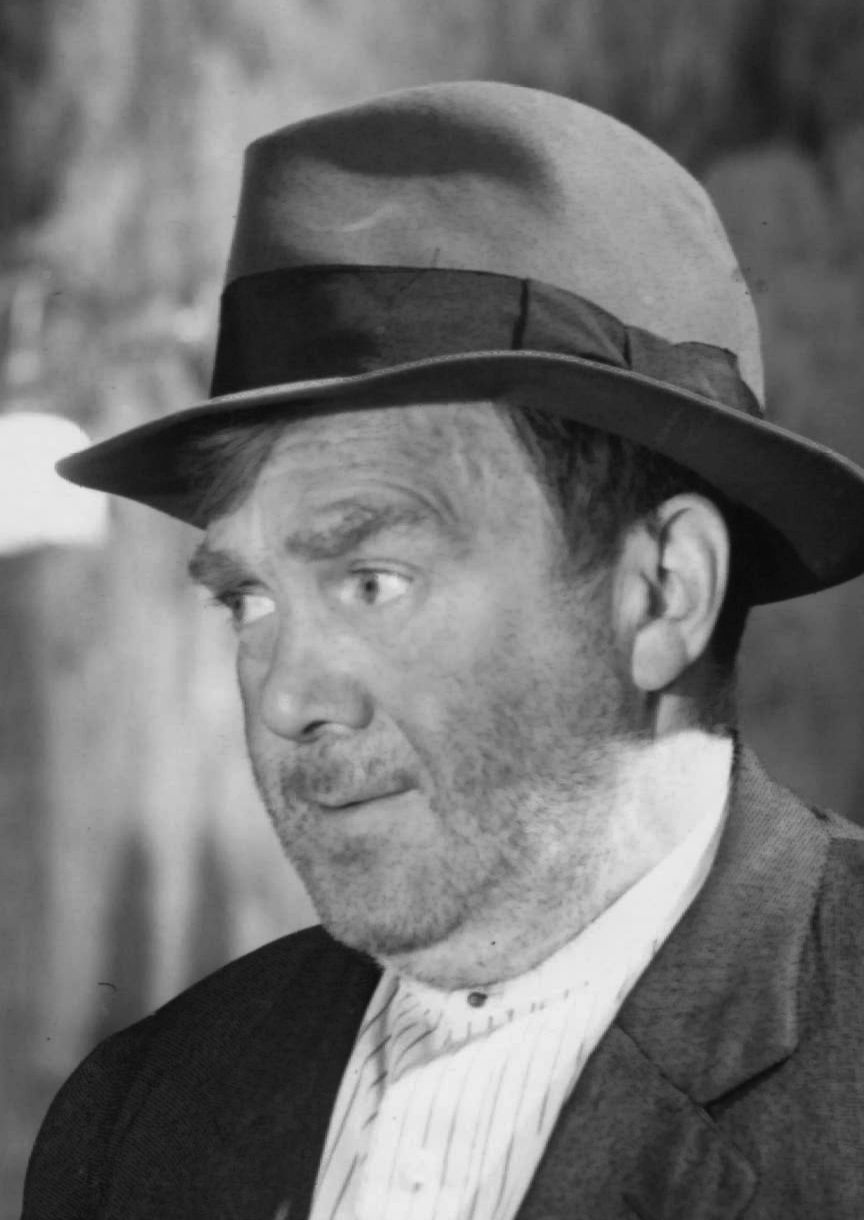
Numbers 27 and 28 on your list both feature one of the most unsung character actors from the studio era, Thomas Mitchell.He never had the looks to become a
star in the 30s, 40s and 50s, but always worked well playing off stars
including John Wayne, Jimmy Stewart, Clark Gable, Cary Grant and Gary
Cooper.Like Ritter, he was someone audiences could identify with.He won the Best Supporting Actor Oscar for Stagecoach and could have just as easily been nominated for many other films.
Just look at his filmography.Mitchell is the perfect example of
the actor you need to have a stellar ensemble, a versatile performer who
could create memorable characters while allowing those around him to
shine.
Thomas Mitchell, Actor: Gone with the Wind. Thomas Mitchell was one of
the great American character actors, whose credits read like a list of
the greatest films of ...
American Hustle shows how far David O. Russell has come.His early career was filled with [editorial note: if you want to trust the rumors] stories of him being a terror on the set, getting into fights with his actors.Now he has become one of the most accomplished ensemble directors, with
The Fighter, Joy, and Silver Linings Playbook.Actors such as Jennifer Lawrence and Bradley Cooper work with him multiple times.Both Lawrence and Cooper go against type in Hustle and seem to have much fun doing so.Cooper goes under the surface of his scheming, sleazy FBI agent, showing the insecurity and desperation that really drive him.Christian Bale again displays his extraordinary range, while Jeremy Renner makes his doomed mayor a tragic figure.Robert De Niro and Michael Pena make a lasting impact despite limited screen time.Terrific choice.
Orrin's Response:
What’s
funny about Helen Hayes's Oscar nomination (and apparently, she eventually won) is that it’s eerily similar to
Melissa McCarthy’s nomination 41 years later in Bridesmaids and
equally baffling. Both played
comic characters who broke the tension by tearing through every norm
and social custom of airline etiquette and each traded on a physical
trait for shock value (the former being old, the latter being fat).
To
think of Airport solely as “the film where Helen Hayes won an Oscar”
is a gross disservice to the variety and caliber of performances in this
great disaster film. I remember
having a discussion on a message board over which of the four leading
ladies of this film—Jacqueline Bisset as a pregnant stewardess in peril,
Maureen Stapleton, as a worried housewife, Jean
Seberg as a level-headed executive assistant
or Hayes—deserved Oscar nominations and everyone had different answers.
Personally, I think Seberg was the stand-out. Her sly face-off against
Hayes’ character showed a quiet don’t-mess-with-me demeanor and her
undefined thing for hard-nosed superior Burt
Lancaster reminds me of the Betty Hutton-Charlton Heston romance in Greatest Show on Earth. Throw in Dean Martin as a dashing pilot,
George Kennedy as a blue collar fix-it- man, and Oscar-winning actor Van
Heflin as an especially unhinged passenger, and
this is a great cast.
Due
to the fact that the genre is linked with generally unpopular
directors today-- Roland Emmerich, Michael Bay—the disaster film doesn’t get a
lot of respect, but back in 1970, a film
like Airport could be appreciated (as evidenced by its Best Picture
nomination) as a way to tell a rich tapestry of stories with a sense of
impending urgency and it was largely because of the power of its cast
being taken seriously.
I’m
surprised you praise the supporting work of Charade without
mentioning the best part: George Kennedy, James Coburn, and Ned Glass as
the deliciously mismatched trio of ex-GIs
trying to extort Audrey Hepburn out of her late husband’s war loot.
One’s bulky and physically imposing; one’s wiry and slick; one’s
nebbishy and prone to sneezing fits: Those three are like the living
embodiment of those Interpol cops (editorial note: it was extremely hard to find an online image of the three cops from that 1986 DOS game but take my word, they looked like the three guys in Charade) that used to run across
the screen chasing Carmen Sandiego in my old 8-bit computer game. But
yes, it’s also tempting to mark the pairing of the king and queen of the
romantic comedy (even though their self-referenced age difference on
screen is indicative that they were of two
different eras) with an inclusion on my list.
Yes,
Thomas Mitchell was a great character actors but Stagecoach was
essentially all character actors. In 1939, John Wayne was pretty much a
B-list actor who got the part in Stagecoach
because he was director John Ford’s golfing body. John Carradine, Andy
Devine, future Oscar winner Claire Trevor, Louise Platt, and Donald Meek
were all part of the cast and it’s very much a group effort. Thanks to DoctorMacro, you can see a great picture of them below with John Ford's fine framing.
Photo Source: DoctorMacro.com
I
included Mr. Smith Goes to Washington mostly because of its supporting cast.
Jimmy Stewart is great, but why should we be surprised that he would be
anything but for the part of a
naïve junior senator going against the system. It’s like being
surprised that Clint Eastwood did a good job in a film titled “the man
who delivered soliloquies while squinting and shooting a gun.” In
particular, Claude Rains is pretty extraordinary as a man
who goes from ally to villain onto the side of good yet again. I also
wanted to throw a bone to Jean Arthur (pictured below on the left) who stepped in the shoes of
Barbara Stanwyck (this is really a pseudo-sequel to Meet John Doe)
which is a shadow that’s not particularly easy to escape
from.
Adam: Orrin, I was in no way trying to shortchange the all-around work of the Mr. Smith or Stagecoach casts.Rather I was using them being next to each other in your list to illustrate how ensemble films need the type of character work that Thomas Mitchell did so well.Other examples are Only Angels Have Wings, It’s a Wonderful Life, and High Noon.He played key characters in a way that did not draw attention to himself but served the story – the true definition of “supporting.” Adam's List
21. Spotlight (2015) 22. The Dirty Dozen (1967) 23. The Manchurian Candidate (1962) 24. Tombstone (1993) 25. This is Spinal Tap (1984) 26. Eve's Bayou (1997) 27. United 93 (2006) 28. Goodfellas (1990) 29. True Romance (1993) 30. Best in Show (2000)
Orrin's turn at bat: Goodfellas
is a solid choice. Ray Liotta is the audience surrogate, Pesci is the
stand-out performance, and DeNiro is the glue. Loretta Brasci is
understated here. I noticed as
I was writing this that when comparing a simple film like Goodfellas to
Scorsese’s 21st century films that his later casts are often
bloated by a number of superfluous characters. In The Departed, doesn’t
Mark Wahlberg make Alec Baldwin’s character
obsolete? Did Wolf of Wall Street require a banker character that has
one scene to be played by Jean DuJardin and was Jon Favreau really
necessary? Does anyone remember what Patricia Clarkson or Emily Mortimer
did in Shutter Island (the
screen credits certainly don’t)? What was all the hype about for
Jude Law as Errol Flynn in Aviator if he was on screen for 10 seconds?
Perhaps as Scorsese has become such a bona fide legend and his releases
have been more hyped, he (or his producers)
have responded by thinking that more marquee names in the cast is
better.
You
often talk about how ensembles are about the hidden gems that support
the talent. I think the work done by Lawrence Harvey, Frank Sinatra and
Angela Lansbury are all tremendous
in Manchurian Candidate and I especially enjoy the chemistry in the
Harvey-Sinatra and Harvey-Lansbury pairings, but I don’t really have any
memory of any other performance sin the movie. Perhaps you can fill me
in?
Spotlight
was one of my two favorite films of 2015 and I think there were some
great acting performances, but in thinking about how the performances
bounce off each other if or if
the performers are more than the sum of their parts, I’m not sure if it
fits that criteria well. I kind of think if you substituted those
actors for other great actors, you would get the same result.
The
Christopher Guest films you mentioned are entirely different however in
that it’s hard to imagine those films being made with different people.
I disagree with Christopher Guest’s
generous assertion that no one can do what his actors can do (the
improv troupes that gave us Eugene Levy and Catherine O’Hara have
produced many more alumni) but the way those guys approach characters is
very unique and produces an entirely different brand
of comedy. I know that for the Christopher Guest films, they generally
write an outline of their characters, an outline of the storyline and
leave it entirely up to improv when the camera starts rolling. Since This is Spinal Tap wasdirected by Rob Reiner,
I wonder if the prep work was significantly different.
Photo Source: Do512family.com
I
think United 93 shows you’re drawn to films that can do a lot with no
star power like Slackers and Salt of the Earth. I can see that
logic.
You’ll
have to fill me in on Eve’s Bayou, True Romance, and Tombstone. Perhaps
as people are generally hesitant to explore the 70’s disaster genre as I
previously mentioned, I don’t
think Westerns in the 90’s (outside of Unforgiven) were treated as more
than blockbuster genre fare. If I remember correctly (and I was a child
when these films were airing on TV), there was Wyatt Earp, Broken
Arrow, Gunfight at the OK Corral, and Young Guns
and I don’t think any of them really have that great of a reputation.
Is that perhaps why Tombstone gets lost?
Adam: You make an interesting point about Scorsese.Some of his more recent films tend to have all-star casts, which are not always needed.I think big-name actors want to work with him, so from his perspective, Why not?Goodfellas certainly had its share of stars, such as De Niro and Pesci.But Ray Liotta was still an up and coming actor, as was Bracco.To steal your question, could you imagine any other actors in those parts?Scorsese also had a knack with the smaller parts.In Tommy (Pesci’s) famous “What’s so
funny about me?” speech, it works in part because Pesci plays off the
restaurant owner, beautifully played by Tony Darrow, who combines just
the right amount of annoyance and hesitancy.Same too with Frank Vincent as Billy Batts, who gives the gangster a playful antagonism in taunting Pesci.You believe how the man is pushing Tommy’s buttons, which we know will not end well.
With The Manchurian Candidate, it can be hard to look past Lansbury’s perfect embodiment of motherly evil.But look deeper and you will see James Gregory as Sen. Iselin, the pompous send-up of Joe McCarthy.Gregory works well with Lansbury, as Ms. Iselin lets the Senator think he is in charge when it’s her plan all along.You will also find Henry Silva as Chunjin, who opposite Frank Sinatra, had one of the more underrated fight scenes.Finally, there’s Khigh Dhiegh as the
head brainwasher, who has such fun with the role that you almost don’t
mind all of the horrible acts his character does.
We disagree about Spotlight.Michael Keaton’s performance is so
low-key compared to his other work, but it fits his role as a veteran
reporter, always observing and building the story in his head.He feigns detachment, but slowly lets you see the determination underneath.His cool helps further emphasizes the fire that Mark Ruffalo brings.Re-watch
the scene where Ruffalo’s character argues for running the story
immediately, while Keaton calmly explains that the paper will run it
when it’s ready.Also, think about the actors playing the abuse victims.Those roles can easily come off as forced or melodramatic, but they never do.
Eve’s Bayou is so stunning visually that you can almost overlook the fine performances.Samuel J. Jackson is the headliner as the patriarch of a wealthy Louisiana family, but he is used sparingly.In the title role Jurnee Smolett who, at 10 years old, had more talent and depth than most older actors.The
chemistry between her and other actors, in particular Meagan Good as
Eve’s sister and Debbi Morgan as her aunt, make the film work.Lynn Whitfield, Diahann Carroll, and Vondie Curtis-Hall also distinguish themselves.
If all True Romance had was the pantheon scene of Christopher Walken squaring off against Dennis Hopper that would have been enough.
The
intensity each actor brings to their scene builds off each other. It’s
not just when their characters are speaking, but when they are
listening, learning about each
other.But the movie boasts so much more.You can see a little of Tony Soprano in one of James Gandolfini’s first breakout roles.Gary Oldman is virtually unrecognizable as a white rasta gangster.Saul Rubinek shines as a Joel Silver-type producer.Pre-stardom Brad Pitt steals every scene he is in as the ultimate stoner.And I haven’t even mentioned the fine work of Christian Slater and Patricia Arquette as the two leads.An embarrassment of riches.
Tombstone was supposed to be “the other Wyatt Earp movie” ahead of the more prestigious
Wyatt Earp.Even though it switched directors midstream, Tombstone vastly outshone its counterpart.Kurt Russell gives his typical,
steady work as Wyatt Earp, but it’s Val Kilmer who makes the most impact
as the dying gunslinger Doc Holliday.Kilmer plays Holliday as a wounded animal, dangerous until the moment he dies.The chemistry between him and Russell form the crux of the second half of the story.Sam Elliot fits perfectly in any Western, while the late, great Bill Paxton makes the most of his limited screen time.Michael Biehn and Powers Boothe (another actor who passed too soon), personify sociopathic greed as the villains.