Showing posts with label Film Critics. Show all posts

Friday, April 03, 2020

Motherless Brooklyn vs Richard Jewell and conservative and liberal slants


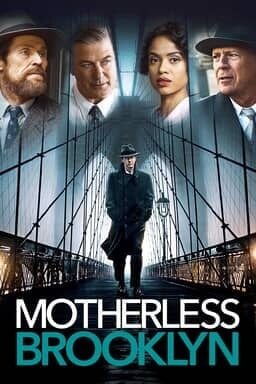
I recently watched “Motherless Brooklyn” and “Richard Jewell” which are both hot off the red box and they are a stark reminder of the way two films can hint at the ideologies of their makers and my evolution in reading them.

“Motherless Brooklyn” stands out primarily as a great film and showcase for Edward Norton who co-adapted the book and directed in addition to playing a starring role. Stylistically, the film takes its cues from film noir with a detective falling deeper and deeper into a well of obsession and that’s not an easy genre to re-capture, let alone put a spin on. On top of that, it’s a little “Chinatown” meets “Rain Man” as Norton’s character has tourette’s syndrome which takes guts: Imagine the potential this has to be disastrous both to film noir and the disabled community if handled sloppily.

Like one of the great neo-noirs, “Chinatown”, (the vast majority of noirs came out in the 40s and 50s and “Chinatown” was in the 70s, “Motherless Brooklyn” seeks to make infrastructure sexy. “Chinatown” explores how the city of Los Angeles was built through irrigation systems. “Motherless Brooklyn” derives from the story of Robert Moses who cut through a tremendous amount of red tape and created a series of bridges and highways that some say modernized New York and allowed connectivity between the five boroughs at an unprecedented level. 

At the same time, Moses wasn’t without his flaws: He bulldozed neighborhoods for urban-renewal projects and designed the highways on Long Island so that buses couldn’t travel. For those who are look at society and policy through the lens of racist verse not racist and want to disregard all the shades of blue in the middle, this makes him target for a certain negative revisionist history that’s becoming popular (even though classist doesn’t necessarily mean racist and a man’s views are a product of his time to some degree). Decisions to not build certain highways that could benefit poorer populations are now being characterized as racist because of the interchangeability of class and race.

Nonetheless, while there is room for critique about whether Moses or his policies were abnormally racist, as CityLab has artfully done, “Motherless Brooklyn” chooses to eliminate any nuance in the argument. By my tastes, it’s narrowly within the realm of artistic license, but the whole movie can definitely be classified as woke. The film has a black woman as a love interest for the character and celebrates intersectionality by suggesting the black community and disabled as fitting allies for one another. Additionally, the film’s moral universe might be seen as giving a bigger moral pass to the vices of the black community than the community to which Lionel comes from.

I generally argue that film makers have the right to tell the kind of story they want without getting politically skewered, so even if the film preaches a more woke philosophy than I generally subscribe to, I’m comfortable with the film though cautiously aware of its slant when comparing it to the real-life figures and times it is portraying.

The larger question, however,  is whether “Motherless Brooklyn” exists in a vacuum. If this didn’t exist alongside the Ava DuVernays and Spike Lees that see their mission as filmmakers to be synonymous with their activist views, I might be more ok with the film’s lean. Alternatively, the sphere of film critics out there lean heavily liberal and will take such messages about Robert Moses and use this film to write insufferable and likely factually incorrect essays.


On the other end of the spectrum, we have  film maker Clint Eastwood who is a popular figurehead for conservatism (especially around the time of the McCain and Romney campaigns).  His film “Richard Jewell” centers around the true story about a man who was accused of the Atlanta bombing he didn’t commit. Because the man was a cop and the FBI tries to latch onto the same aggressive tendencies any cop might have, the film aligns pretty heavily with the blue lives matter. The film’s implication (based pretty heavily on the facts) also is that Jewell was targeted because he was fat and ungainly so it also doubles as a weird kind of body-shaming PSA.

And here’s the odd thing: I’m not a conservative at all and I’d like to think my contempt for the current leadership of that party is well-documented. But in the cultural sphere? I’ve had a shift (also well-documented) and from where I’m standing it looks the more conservative of these two films is a more compassionate portrait of a historical event. Why? Eastwood’s film is about reconsidering preconceived notions towards a fairer view of reality. In contrast, “Motherless Brooklyn” is about finding comfort in sticking its protagonist (and audience) between familiar notions of good and evil even if they’re not particularly accurate. I never thought I’d live to see the day when I liked the film with the more conservative slant but there it is.

Tuesday, February 25, 2020

The 2019-2020 Oscars season needed better headlines

Within an hour of the Oscar nominations the following Monday, The Hollywood Reporter had two stories commenting on the lack of diversity at the Oscars (herehere) and commented on it in a third while highlighting the general theme all day on their blog and Deadline took 75 minutes to indict the Oscars for the same thing. The Daily Show did a piece on it the issue that night and The LA Times released a house editorial that the Oscars are still white and male the next day. Since the counterfactual #Oscarsowhite campaign in the 2015-2016 Oscar cycle, the Oscars have become one of the most hyper-policed litmus tests of whether Hollywood is meeting arbitrary benchmarks set from by an entertainment media that’s rampantly consumed with identity politics. The movie industry and these Oscars deserve better headlines than this.

The predominant story line among this school of cultural writers whose take on film criticism can no longer be divorced from activism is that Hollywood has had a long history of failing three groups: racial minorities (defined arbitrarily as “people of color”), women, and people on the LGBQT+ spectrum. As such they owe it to three groups in the present to rectify decades of injustice.

This year there was one Hispanic actor (if you want to classify him as European because nominee Antonio Banderas is from Spain, try telling that to his agent and look at how pigeonholed he has been in his career) and one black actor among the twenty nominees. The other chief complaint was that Greta Gerwig was not nominated for “Little Women” in the directing category.
What many of these #oscarssowhite activists are guilty of doing is taking on a microscopic view when convenient to their data. In the last 20 years of Oscar, 16.5% of the acting nominees have been people of color and & 11.75% of the acting winners have been black. The black population in the US according to the Census is 12.1% which is within less than half a percentage. In other words, any claims that the Academy hasn’t done justice to the black acting community is largely moot unless you’re going out of your way to erroneously read data.

Today’s brand of armchair activist point to extreme spikes in an oscillating cycle rather than present an accurate picture of progress. These intersectional activists conveniently ignore that 6 of the past 7 Best Director winners are people of color which is surely a cause they champion as well as women directors. Additionally, the number of films with black themes has gone up each year with “Green Book”, “Black Panther”, “BlacKKKlansmen”, “Fences”, “Hidden Figures”, and “Moonlight” nominated for best picture the past three years and several more--"Birth of a Nation" "Mudbound" "Race" Loving" "Free State of Jones" "Sorry to Bother You" "Little" "Blindspotting", "United Kingdom" and "Last Black Man in San Francisco"—popping up as well. If these activists don’t acknowledge these gains, where’s there credibility?

Furthermore, what is the incentive of studios to pander to such a group of activists that is most likely to make negative noise? To blanketly call Hollywood unfairly liberal is an overstatement, but the Academy Awards in their current form are producing the kind of films that Black Lives Matter activists can’t possibly be dissatisfied with. Last year’s slate alone had 7 of 8 films with intersectionalist liberal themes: “Vice” was critical of the Bush administration, “Roma” was a female-centered film set in Latin America, “Bohemian Rhapsody” had a queer lead character, “Favorite” was female-centered, and “Green Book”, “Black Panther” and “BlacKKKlansman” had black themes.

This isn’t to suggest that there is nothing to advocate for in terms of visibility. As the low number of female directoral nominees and East Asian and Hispanic actors over the years dictates, there are valid arguments for the marginalization of these subgroups. However, these activists need to concede the grand intersectional argument—that its white men as a whole that are seeking to exclude everyone else in a cabal of sorts—before they can seriously advocate for specific issues in cinema.

At the end of the day, the activists have to ask themselves what they’re even fighting for.

Are they asking for a mandatory quota? Considering the long history of the Oscars and the price of upsetting longstanding traditions, few people in the Academy (even the people sympathetic to the cause) would want that. We can even look at how this happened in practice just one year ago when the Academy attempted to burnish images of elitism by instituting a popular film category a year ago. The producers and fans of films like “Black Panther” and “The Avengers” protested the new designation because they knew it would lead to those films being ghettoized. Any quotas for disenfranchised groups will be seen as a de facto statement against such labels.

Besides, the current rules are the current rules. They could be subject to change but members are explicitly asked to vote for the best. This seems like a simple enough directive, but the current level of noise by the new class of film critics and their advocates on twitter seem to show a lack of consensus.The week after the controversy erupted, Stephen King, a known liberal, tweeted on twitter that he was following the rules as stated and he got attacked so heavily on twitter that he briefly garnered bad press before he back-tracked and apologized. How can a proper discussion of what the rules should be take place when the conversation is so muddled that people can’t speak up?

If this is the case, why should this voting body have to shoulder the headlines of these (not necessarily accurate) imbalances? Why should the film makers, actors, and craftsmen have to endure complaints that their crowning moments of being selected as the best in their field are not signs of progress because they’re the wrong skin color, sexual orientation or gender? 

The bottom line is that if there are any issues with film visibility, micro-policing the Academy on a year-by-year basis is not a solution. Rather the industry needs to be specific and exact about what the representative problems are in the industry and place it in the context of bigger headlines in the movie industry. People looking for a true dissection of what's affecting film deserve better headlines than this.

Thursday, October 11, 2018

Fun Summer Movies are No Longer an Option, Are They?

For all the evidence you need that the days of leaving identity politics out of movie reviews are over, look no further than the critical treatment of two of the most care-free popcorn comedies of the summer over at Rogerebert.com. Film critic Matt Zoller Seitz laments on “Set It Up”, “We never gain a sense of what it means for these two to be in charge of—and yet isolated within—a predominantly white workplace and the film” while “Tag” gets called out by Glenn Kenny as “a lazy, vulgar celebration of White Male American Dumbness.” That the films’ racial politics are prioritized over their aesthetic appeal or even their apolitical contexts shouldn’t surprise any casual consumers of movie reviews lately. 

What was originally intended as a movement for greater inclusivity has made way for a brand of hyper-specific criticism leveled against perceived offenders of progress that has come to dominate entertainment writing. What is desperately needed for consumers and writers in the industry is to consider the effects of having so many critics cluster together on the political spectrum.

In 2007, Ebert himself reviewed the Wes Anderson film “Darjeeling Limited” and praised the film’s “Indian context” noting,“ Anderson and his co-writers Schwartzman and Roman Coppola made a trip through India while they were writing the screenplay. It avoids obvious temptations to exoticism by surprising us.” Anderson’s quirky visual style and life-affirming themes of belonging, however, don’t really register to film critics in 2018 as his potential for creating offense has now been prioritized.

Odie Henderson, writing on the same website writes about his 2018 film:

“Unlike that Roald Dahl adaptation, “Isle of Dogs” does not have a compelling story, and even worse, it has the most egregious examples of its director’s privilege since “The Darjeeling Limited.” .."But as entertaining as it is to look at “Isle of Dogs,” I couldn’t get past Anderson’s usual clumsiness when dealing with minorities. This is a film where a character is literally whitewashed, an act that makes him more agreeable afterwards. “Isle of Dogs” treats this as a sight gag. It plays more like a confession."

Each of these three aforementioned film reviews has a problematic dichotomy that begs for a critical examination of its own.

When Seitz notes in his review on “Set it Up,” that the “film plays differently on characters who are African-American and Chinese-American, and therefore had to fight their way into a corporate workplace that welcomed most white people of a certain social class” he either egregiously assumes that all African-Americans and Chinese-Americans followed the same path of struggle or erroneously posits that every film must represent the quintessential member of the minority they depict on screen. This flies in the face of decades of cultural writing that advocates for putting people of color in leadership positions without portraying it as a big deal.

“Tag”, is a similarly innocent comedy about a group of adult friends who have played the playground game continuously for 30 years. Kenny writes: “No one should be surprised, I think, to learn that the actual group of men on which this movie is based are in fact all white. It’s not so much that I’m under the impression that tag is a game most sensible persons of color might consider corny. It’s more that, well, try to imagine a group of African American men feeling safe enough to play "adult" tag at their places of work or various other public spaces. You get the idea?" Kenny is now calling any film that features white people on screen having fun without overtly commenting on racial relations in the U.S. racially insensitive. By that same logic, is Ed Helms’ character required to comment on the Flint Water crisis or the lack of drinking water in the Third World when he gets thrown into a pool?

Henderson’s review of “Isle of Dogs” first and foremost attempts to posit Wes Anderson as a controversial figure when no such controversy existed. In addition to Roger Ebert’s neutral review on the film’s cultural context, a glance at Rotten Tomatoes shows a general critical consensus that took issue with the film’s redundancy but had no such issue with Wes Anderson’s whiteness. In contrast, Henderson never gives Wes Anderson the wiggle room to safely delve into the territory of the Japanese director he’s trying to pay homage to in the film. His review echoes those accusing Anderson of sloppy cultural appropriation which is part of the newfound trend of narrowly defining cultural appropriation as a red flag signaling malicious intentions despite the fact that many have pointed out cultural appropriation has been a necessary ingredient of cultural development that has rarely discriminated between oppressor or oppressed.

This is just the tip of the ice berg for some essays I'm trying to write at the moment following my publication last year film criticism being overly based on identity politics. I look forward to continuing to publish more. 

Saturday, March 03, 2018

Looking back at 2001 in film

When film critics and like looked back at the year 2001 at their end of the decade retrospective lists (such lists from AV Club, Paste Magazine, IFC, Roger Ebert and compilation at Mubi.com) they found a year rich with great films including "Mullholland Drive", "Fellowship of the Ring", "Gosford Park", "Amelie", "Momento", "Moulin Rouge!", "Ghost World", "In the Bedroom", "The Royal Tanembaums" "Donnie Darko"
Whether I personally like those abovementioned films or not, I can appreciate that the above-mentioned films are all ambitious and well-respected pieces of work. At the same time, my personal experience from 2001 was that it was a terrible year and I distinctly remember an echo of similar sentiments. Within this paradox lies a pretty interesting set of examples of how films age in time.
The reason for this disconnect is that the above-mentioned list of films were not the films that were most anticipated. In many cases these were films that no one really saw when they came out and grew a cult over time. For example, if you've never heard of the film "Donnie Darko" until very recently, don't feel like you're out of the loop. Virtually no one saw it in theaters or even knew of its existence when the film actually came out. It played in just 58 theaters when it opened (for comaprison, your average movie opens in 3,000-4,000 theaters), grossed about $500,000 and was swept out of circulation in just 4 weeks. It was so slow to catch on that among the small number of awards it raked in for indepentent film were awards bodies that didn't get around to honoring the film until 2003.
The films that people were excited about at the time and actually saw in theaters were mostly disappointments. Do you remember any of these films today?
  • Hearts in Atlantis-Directed by Scott Hicks, starring Anthony Hopkins, adapted from Stephen King
  • Shipping News-Directed by Lasse Hallstrom (he had two Oscar-nominated films in a row in 1999 and 2000), starring Kevin Space and, Julianne Moore
  • Captain Corelli's Mandolin-Directed by John Madden, starring Nicolas Cage, Penelope Cruz
  • The Mexican-Directed by Gore Verbinski, starring Brad Pitt, Julia Roberts, Gene Hackman
  • All the Pretty Horses-Adapted from a Cormac McCarthy, starring Matt Damon and Penelope Cruz, released by Miramax (aka the Oscar Factory) on Christmas day
  • Vanilla Sky-Directed and written by Cameron Crowe, starring Tom Cruise, Cameron Diaz, Penelope Cruz
  • The Majestic-Directed by Frank Darabont ("Green Mile", "Shawshank Redemption"), starring Jim Carrey
  • The Man Who Wasn't There-Directed by Joel and Ethan Coen, starring Billy Bob Thornton, James Gandolfini
The directors of five of these films had been nominated for or won an Oscar within the three years prior to 2001, so the public understandably had great anticipation to their follow-up project. Although some people liked "The Man Who Wasn't There" (this particular author did not) and Jim Carrey still stands by his work in the "Majestic" (this particular author hasn't seen that one), a lot of these films were disappointing.
In the meantime, many of the films that are now classics weren't particularly loved back then with the exceptions of "Lord of the Rings" and "Royal Tenenbaums" Let's look at why the other films weren't well-received at the time:
  • "A.I." was awkwardly marketed as a summer blockbuster and audiences found it too thinky. 
  • Like the recent 2009 release "Precious," "In the Bedroom" seemed really depressing and had nothing else to market itself on. The only appeal of the film was that it was nominated for an Oscar prompting you to see it so you could join in the conversation. It's box-office take shows an unusually gross imbalance of people who saw it only after it was nominated. Context is also important. Melodramas have become more successful since this film came out such as "Far From Heaven", "Revolutionary Road", and "Little Children" which might have given this film more appeal.
  • In context, Christopher Nolan's "Momento" wasn't a very easy sell. Nolan was not a bankable filmmaker at the time and the concept sounds pretty convoluted on paper.
  • Moulin Rouge! was polarizing at the time. Some people think Baz Luhrrman was (and still is) all glitz and glamor. I really don't think people knew what to make of it. It was only after a lot of other musicals came out and the genre was revived (this literally was the first musical in years, not counting Evita, to be released in theaters) that critics looked back and said "You know, nothing quite had the energy and bold ambition of Moulin Rouge!" When critics see a lot of films (they usually see at least 200 films a calendar year*), they tend to be desnsetized to the ordinary and be attracted to films that stand out. 
  • Mullholland Drive was also incredibly polarizing. No one could understand the ending which invalidated the point of the entire film. I think that years later the film-watching community** gained a greater appreciation for this film because they realized that one of the few universal moments of movie-watching unity they all collectively felt was scratching their heads at the ending of Mullholland Drive. It also helps you appreciate the film when you have some plausible idea as to what the film is all about: I distinctly remember browsing the internet for answers and finding none after watching the film when it first came out on video.
  • Ghost World sounded too bizarre to even catch my attention at the time. It was based on a comic book but had no action scenes? I now consider it my favorite film from that calendar year, but I certainly wasn't racing to a theater when it came out. Considering that it grossed just $6.2 million, not much of the rest of America was either.
So there you have it: The landscape of film that was 2001 is an entirely different entity when look back at it ten years later than when we were looking at the previews of those films in movie theaters the year before. That, in and of itself, says a lot about film as a moving body.
*Calendar year means films released from January to December. Many films released in December are watched by most of the public in a movie theater the following year. By 200+ films a callender year, I mean a critic watches some 200 films a year released during that year. They might also watch older movies as well.
**By film-watching community, I mean the critical community but also anyone who posts on message boards or engages in film-watching to a degree that they're the kind of person who would be reading this article

Monday, February 10, 2014

Bedazzled and Marathon Man Reviews

Bedazzled
This 1967 Stanley Donen comedy pulls off the feat of centering around a truly miserable character without ever feeling like a downer of a film. Stanley Moon (Dudley Moore) is a lonely short-order cook with a crush on a waitress at his diner who he's too shy to approach. The devil (or at least some vague devil incarnate) comes along, introduces himself (his name's George and he's played by Peter Cook) and grants him seven wishes in exchange for his soul.


Stanley promptly uses up one wish after another on Margaret and, because the devil is a trickster who can't be taken at face value, they all backfire. That's OK because Bedazzled isn't really a love story. Instead it's a meandering meditation of love, death, good and evil, and religious dogma that's imbued with an absurdist wry humor that only British comedy can do. In other words, the film feels a little aimless but that's part of the charm: Delving too deeply into romantic comedy territory would make the film feel hackneyed while delving entirely into religious politics would make the film feel preachy.


Marathon Man
Marathon Man is a Dustin Hoffman vehicle that stands as one of the best-known thrillers of the 1970's. Fitting into 1970's conventions to minimize on back story and to emphasize action (Brad Pitt, Bennett Miller, Ben Affleck, and George Clooney were all attracted to this style when they made Moneyball, Argo and Good Night and Good Luck respectively), the film is centered around the evolution of a relatively complex character but is primarily action-driven.
 
That relatively complex character is graduate student Thomas "Babe" Levy (Hoffman) whose remains haunted by his father's persecution and subsequent suicide as a result of the Red Scare. Seeking to enter into the same field of study as his father, Levy hopes to exonerate his father's work. The title of the film derives from the fact that "Babe" is a long-distance runner but if you assume that this is the "Prefontaine" or "Chariots of Fire" of the 1970's, be warned that this is not a running movie at all and a suspiciously minor plot point. The running scenes are reminiscent of the way French New Wave films juxtapose motifs (I'm thinking specifically of Breathless where the guy is shown looking at a picture and smoking a cigarette like the matinee idol he's trying to emulate) as an avant-garde way of providing characterization.


In the film's first hour, there's a twin narrative occurring alongside a love story between Babe and a fellow grad student that turns out to be nothing more than a red herring. In the other story, Roy Scheider plays "Doc" who turns out to be Babe's brother (apparently, the Levy clan had terrible taste in nicknames) and he's tracking an ex-Nazi dentist played by Laurence Olivier. Olivier's role and the presence he brings to that role (it was the final of his 10 Oscar nominations) provide the film with its most memorable moments. People might not know the plot details of Marathon Man but many are familiar with the dentist's torture scene as well as his "is it safe?" monologue.


Similarly, that's how I felt about the film: I'll remember the film's overall tone (very dark for a Dustin Hoffman film) and a handful of moments such as Olivier's torture scene, the sewer scene, the drag race, and the reveal that Doc is Babe's brother (Scheider's character is a very enigmatic figure and his involvement in the story goes without an explanation for what I'm guessing is an hour). The plot is highly dense and takes a couple of viewings to really grasp and even then there's a feeling of discomfort of blanks left unfilled. You might call them plot holes (i.e. how exactly did a traffic hold-up turn into a drag race filled with murderous rage and what are the odds that a tanker would be there?) but it seems like a certain story convention that's seemingly being emulated by the biggest names in Hollywood today. I felt a similar disconnect from The French Connection which is another film of great praise that I seem to be in the minority on.


Rather than end this review with a conclusive statement on what was wrong or right about the film, I'll ask other people who have seen it to explain the film's appeal.


Thursday, May 16, 2013

Good bye to The Office but Not Yet


The Office is leaving the airwaves today and I'll try my best to be happy in a state of denial. I haven't watched the 30 Rock finale because, to me, if I haven't watched the end of a series, it technically hasn't happened. I will do the same  for The Office because I'm not ready to say goodbye to that show.

I first saw the British version in the Fall of 2004 when I had transferred to James Madison University as a junior and a suitemate showed me the DVDs. I instantly recognized it as a sharp piece of TV writing that could only exist in the world of British TV. Still at 12 episodes and a holiday special, it was a flash in the pan. Many might argue otherwise but I think that truly great TV coincides with longevity to some extent.

At this time, comedy on TV was in a little bit of a transitional wasteland as Frasier and Friends, the backbones of 90's comedy, had just concluded 10-year runs the past Spring and if you were female (or were unlucky enough to be romantically involved with a female who made you watch) you might also remember the Summer of 2004 as the year Sex and the City ended.

The two most popular shows left were Will and Grace and Everybody Loves Raymond. In other words, a nebbish sportswriter being bossed around by his adult parents and catty gay people (in comparison to Modern Family and Glee's more well-rounded portrayals of gays on TV)  were considered the two best options for entertainment. The next generation of shows like Entourage, Weeds and Curb Your Enthusiasm were starting to gain traction but were relegated to expensive pay-per-view channels. Arrested Development (aka the once and future savior of comedy television) was on but it was being aired at weird times (Friday nights) and it was actively being killed off by Fox. NBC clearly had so little optimism in the future of television that they're main push that Fall was the repackaged spin-off "Joey" and their only other show they had was a cheesy cartoon about lions called "Father of the Pride."

The biggest thing my friends watched was The Cartoon Network's Adult Swim which showed reruns of the newly cancelled shows Family Guy and Futurama. The biggest announcement of the year, in fact, was that that Family Guy was about to be resurrected because of it's Adult Swim popularity. Thus, the biggest TV news was a show being resurrected from the dead and not anything new.

One of the few shows I watched regularly during the 2004-2005 season was 8 Simple Rules for Dating My Teenage Daughter, not because it was novel but because it was one of the last remaining vestiges of the kind of family-oriented sitcoms I watched in my youth (plus who would have thought David Spade and James Garner would make a convincing comic duo)

When "The Office" premiered a few months later, my curiosity was piqued by Anchorman's scene-stealing Brick Tamland playing the Ricky Gervais role. The first season felt awkward, however, as Dwight was far more exaggerated than MacKenzie Crook's Garreth and Carrell's portrayal of Michael Scott came off as obnoxious. Michael Scott was wonderfully awkward but he was just too sad of a figure and the disconnect between him and The Office, who would generally shrug him off and snicker behind his back, was too great.

A couple moments showed promise and because it literally was one of the only halfway decent things on TV, I tuned into the second season the next fall. That's when something magical happened.

The plot of the second season premiere had Michael Scott giving the Dundee Awards at the local Chili's. Go back and watch the scene and it's cringe-inducingly awkward. Michael is telling jokes that no one's laughing at, he pisses off Stanley by announcing that the meals aren't comped, poor Ryan's feeling sexually harassed after winning the "sexy temp" award, Kelly isn't laughing (she would later be flanderized to be able to laugh at anything) at the inherent racism at being awarded the spicy curry award. In the first time anyone seriously stands up to Michael, Angela flat-out refuses to accept her  "the tight-ass" award, but the moment seems overly dramatic in context.

To make matters worse, Michael is getting heckled by bar patrons and some of the warehouse guys (including Pam's fiancee Roy) decide the awards are lame and take off. In a moment of poignantly sad self-awareness, Michael realizes when to hang them up and decides to prematurely end the ceremony before things get worse. He gives his last award and just when he's about to sit down in resignation, Pam feels for her boss (who she chastised for being a jerk in the pilot episode) and comes to his rescue. Maybe it's because she's inebriated or because she feels newly liberated from standing up to Roy, but she starts cheering Kevin and egging on Michael to give more awards. The crowd follows suit and even grumpy Stanley cracks a little joke when being awarded. Pam and Jim end the night exclaiming to the documentary crew that this was the best Dundees ever.

The Office had succeeded in being awkward but that was the first time, it succeeded at having heart. It showed Michael Scott had some meaning in the lives of his underlings and that would be the core of the show.  That was when I was hooked and, even as a busy college student, treated the show as must-see viewing each week.
 

The Office changed the way I and all of us viewed TV. Instead of analyzing the show, we would analyze the characters as if they were real people.When I wrote up this ranking of emotional intelligence of the Office characters in my early blog days and posted it to an IMDB message board, it was a subject of endless debate. We weren't debating whether the characters were written well but the actual characters and how well off they were. Psychology students said to me on more than one occasion that they liked to discuss the show's characters because they were so real.

The Office was also visceral. It wasn't just cringeworthy but physiologically affected you: My heart raced, I tensed up, I yelled at the screen, I jumped up and down in anticipation.

As I graduated college after the second season of the show, Dunder-Mifflin shaped my expectations for what I would hope for in a real world office setting. I was hoping for a place where you might be able to loosely call your coworkers your family.

When I got my first office job, I went out to lunch with my new coworkers on the first day and asked "Is this like the Office?" They reacted as if they'd heard that question before and immediately started joking about who would be Jim, who would be Kevin, who would be Dwight, and who would be Kelly Kapur (not the first or last time I've played this parlor game). One of the most welcoming signs that my new job would be at least partially grounded in my experiences watching the Dunder-Mifflin gang was that the head of the payroll had a Dwight Bobble Head doll on her desk.

Like any series, The Office has had its low and high points but I've never seen a show recover from the doldrums so well as when it gave us the Michael Scott Paper Company arc in the 5th season. At the time, Michael's leaps and bounds out of social awkwardness were getting smaller and less interesting, and if ever Michael did do something stupid, it felt somewhat cyclical and contrived because he had likely already made that same mistake before. That's when the show decided to push Michael down and hard out of his comfort zone by having him hastily quit his job and take Ryan and Pam with him. In a world lacking job security, Michael suddenly became relatable.

It was around this time that I started becoming disillusioned at the idea of the 9 to 5 job itself. I transitioned to part-time work and eventually become a freelancer (writing took off about a year later) in some form of other. Watching the Michael Scott Paper Company arc was a suddle reminder that the world needn't be constrained by the ideas of what a job was before I entered into the professional world.

Even in its blandest seasons (the Robert California one comes to mind), the show has always been capable of surprise which is why there was always good reason to keep watching after Michael Scott left. As film school rejects pointed out, the new developments this season as the Dunder-Mifflin staff learned about its fame made for good commentary about reality TV.
 
The internet and a number of major critics have been abuzz that The Office is not what it once was and its popularity has been greatly eclipsed by Parks and Recreations which has turned into somewhat of a critical darling. I'm thrilled that another Greg Daniels creation is finding an audience but I wouldn't call one ultimately better than the other.

Parks and Recreation and a number of great comedies have taken the airwaves at this point and many of them owe a debt to The Office. That doesn't make it easier to say goodbye to The Office. So enjoy the finale tonight, folks, I'm going to hold off a bit.  

Sunday, April 28, 2013

The longest response I've ever written to a comment on the Internet.

I wrote an article at toptenz.net on Top Ten Film Directors who Inserted Themselves in Their Own Films in Secondary Roles. It's admittedly not a perfect title as I've included two show runners (Mike Schur and Michael White) but that's more on the editor then me. While it's generally best to avoid the comments section for writers, I relish it (partially because no one comments here) and feel it's a great way to enhance the site by interacting with the readers.
 
I recently wrote the longest response comment I've ever written and thought it would make an entertaining read on the blog, so enjoy:
 
THE LEADUP:
bodymaster says:
Most of these aren’t even secondary roles, they’re cameos. Given that, how can you justify having Kevin Smith (who has made arguably one good movie) on this list and not having Martin Scorcese on a list of “top 10 directors…”? What’s the measure of success here? Though I guess we should be thankful Peter Jackson isn’t on the list.
  • Orrin K (article's author) says:
    I’ve seen 10 Scorsese films (which I think is a decent number) and he was in zero of those films I saw. I start from my own experiences as a viewer to devise ideas for names on the list. If Scorsese was in none of the films I saw, why would even put his name through imdb to see how many of his own films he’s starred in.
    When I think of Scorsese’s acting career, the first two things that pop in my head are Akira Kurosawa’s film and Shark Tale, neither of which he directed.
    • Bodymaster says:
      Taxi Driver is a pretty well regarded, famous film. I assumed somebody writing an article on popular film would have seen it. I guess not.

AND MY BIG RESPONSE:

Not that your criticism is invalid, but this is generally the kind of comment that makes me regret breaking from the standard internet writer practice of not going into the comment section.

As for you, I’d recommend making less assumptions and you’ll enjoy these lists (or at least this specific one) more or make your own list.

I could argue that Kevin Smith would be more deserving of Marty Scorsese.  That’s not an implication that Smith is a better director but it IS possible to make a top ten list on film that Kevin Smith would be on and Scorsese wouldn’t be on. I think Smith’s insertion into his own films is pretty clever: Especially the irony that he’s a loudmouth in real life and he barely ever talks in his films, not to mention the couple times he does talk, he sounds highly intelligent which I think makes for a nice twist.


The criteria for this list is two fold: 1) people who impressively inserted themselves into their movies (for me Shyamalan fits that bill because he either failed or succeeded spectacularly) and 2) if they make an interesting story. My goal, above all, is to be interesting and informative.

That’s why Dennis Dugan (whom I thought you would have taken an issue before Kevin Smith), who by all accounts is an awful director, is on this list. I felt there was a narrative there about how he failed as an actor and stumbled into directing.

Upon checking imdb, I have now learned that Scorsese is indeed in a number of his films in uncredited roles I’ve seen but I don’t see anything particularly impressive about most of Scorsese’s roles that I can directly remember like doing the voiceovers on Color of Money or on Aviator and I see Gangs of New York practically every time it pops up on TV because I love that film TV and have NEVER noticed Martin Scorsese’s role as an uncredited “wealthy land owner.”

I will say this:
If I magically went back in time and redid this list, Tarantino would be a glaring omission that I would fix. Scorsese’s somewhere in the realm of "I’ll look into it more and consider it."

As for Taxi Driver, congratulations, you have uncovered the dark secret that TopTenz does not screen out all writers who have not seen Taxi Driver, the 52nd greatest film in the history of America cinema according to a massive poll conducted by the American Film Institue, before selecting contributors. I would say that I’m qualified to write articles on film becuase I’m familiar with Taxi Driver and its historical context and every other notable film in American cinema (filmsite.org, for example, published a list of top 300 films and I’m familiar with all of them) so that if I were to make any of the following lists, I would be aware that Taxi Driver belongs on it: Top ten Jodi Foster movies, top ten Robert De Niro movies, top ten movies featuring child actors, top ten Marty Scorsese movies, top 1 Cybill Shephard movie, top ten counterculture films of 1976, top ten films featuring taxi drivers, top ten films written by Paul Schrader, top ten lines delivered by Robert De Niro talking to a mirror, etc etc etc.

Congrats on evoking the longest comment I’ve ever written in response to a comment on one of my articles


Wednesday, April 17, 2013

Open question: Does a novelization of a film count as a novel?

On a recent episode of "The Mindy Project" (note to self: make sure your next blog post does not accidentally relate to The Mindy Project), Mindy is making small talk with an intelligent teenage girl in her apartment building and asks her what she's reading. The teenage girl is reading Jonathan Franzen (my outsider status to the literary world is apparent here as I have to ask Jonathan who?) while Mindy sheepishly replies that she's reading a novelization of the book "Iron Man." The implied joke here is that novelizations are a cheap form of literature.

I just found myself in the same conundrum. After feeling so proud of myself for finishing the novel "The Paperboy" (and blogging about it here), I went in search of another novel for all the same grandiose reasons that anyone has when they decide to turn off the TV and try reading instead: I wanted to be cultured, I wanted a greater intellectual challenge, and I wanted to lengthen my attention span.

The book "Proof of Life," based on a 2000 film about the kidnapping and ransom industry in South America, was already on my bookshelf and looked immensely promising: It was based on a film I'd seen and it was about something interesting. The book was riveting until I discovered halfway through that this wasn't the novel that the film was based on. Instead, this was a novelization of the movie. The front of the book reads "A novel by David Robbins...Based on the Screenplay by Tony Gilroy." Am I an idiot or what?


So the big question is: Are the intellectual riches I would have gotten from reading a novel still valid now that I know I'm reading a novelization? Am I still reading a novel?

Responses when I asked this on the IMDB Message Board:
  • "Counts as a novel, just not necessarily a good one." -BloodVVank
  • "Technically, yes. Intellectually, no." -Shantytown1212
  • "If film adaptations of novels count as films, then novel adaptations of films count as novels." -GrimlocksNewBrain
  • "Someone wrote it to the best of their ability - I say yes!" -Chason_S
  • "They may not be great works of literature, but it's still reading a novel. An author spent quite a bit of time writing it after all." -Unwantedaddress
  • "Sounds like you're reading for all the wrong reasons." -Dio52
  • "Does reading the Cliff Notes count as readng the book?" -Dolfanatic313
  • "I didn't even know those still existed, seemed like an 80's thing to me, but I don't see why it wouldn't count as reading a book. It probably won't count as reading a good book, and probably won't make you necessarily more "cultured", but " -Shagrroten


Tuesday, May 03, 2011

The "Pinky" Controversy and Race Theory

Thank you to all the new subscribers. I promised you all no more than 5 or 6 e-mails a month, but I'm just becoming more and more productive lately on the writing front. Click here for a Fun 10-Question Film Industry Quiz

I've read a couple books (Reel to Real by Bell Hooks and Toms, Coons, Mulattos, Mammies and Bucks by Donald Bogle) that examine movies from an African-American perspective and they spend the book finding a reason to criticize every single movie and be critical of absolutely everything.

According to one book, Whoopi Goldberg did a lot for the image of black people by showing strong empowered characters on screen, but oh no, she was usually not romantically paired with anyone in films, which sends the message that empowered African-Americans can't find love. The other book doesn't take exception to whether Goldberg's characters were paired romantically, but said the opposite of the first: Whoopi Goldberg bowed to white expectations by infusing too much colloquial dialogue into her films. And I kid you not: another book says that the dance scene between Goldberg and Demi Moore being switched for Patrick Swayzee in "Ghost" was a crack at how uncomfortable whites are at depicting blacks in lesbian relationships.

I absolutely applaud looking at films from a racially critical perspective, but a lot of these African-American critics are so damned-if-you-do, damned-if-you-don't with anything, that why even try to make a racially conscious film if you're not Spike Lee?

I look at this great Elia Kazan film I just recently watched from a damned-if-you-do damned-if-you-don't perspective. The film features the trials and tribulations of a light-skinned half-black woman (known as Patricia in the North and Pinky back home) as she goes back to her only surviving relative (her black grandmother) after graduating from nursing school in the North.

Complaints about the movie center around the fact that Pinky is played by an entirely white woman and that the filmmakers were too cowardly to cast a woman of color.

I choose to applaud the fact that the film was more progressive than films of its era.
By Jeannie Crain playing the part of the white character, it helped make the film marketable to white audiences. White people would see the film because Jeannie Crain was starring in it and the message would be spread to them whether they liked it or not. There were plenty of films showing black people being abused and they never reached mainstream white America, and I think the subset of the population that would have been enlightened by seeing the film, is also the same subset of the population that wouldn't bother seeing the film if it just starred Ethel Walters and Lena Horne. Why go through all that expense to make a socially conscious film if you're just preaching to the choir?


I also think seeing Jeannie Crain as a black person really drives the point home about how inane racism is. As Julian Bond, NAACP president once said race is a political construct, you often have more in common with someone of a different race genetically than you do of someone in your own race. I've already seen movies of black people being abused, but I've never seen a film of a person of Jeannie Crain's color being abused like a black person.

I admit, I wish they put her in a tanning salon or made some effort to make her a little bit darker, but there are probably some half-black people of her level of pigmentation out there. Putting in an actual mulatto woman who wasn't as famous as Jeannie Crain and couldn't draw in as many people would have been counter-productive, don't you think?

Friday, January 28, 2011

Ebert and Roeper Version 4.0


Ebert at the movies was cancelled but Roger Ebert made the wise decision that with the right backing, there's no reason why the show couldn't work. I agree: The audience of people wanting to read and delve into film criticism is much greater now than it was decades ago when Ebert and Siskel started. I have a hunch that even if the blogosphere existed when Ebert and Siskel first came on the air, there would be a lot fewer film blogs. The idea of caring what film critics had to say was novel back then.

Seeking to resurrect his program, Roger Ebert hand-picked his successors: Christy Lemire from the Associated Press and the world's luckiest internet film critic in 24-year old Ignatiy Vishnevetsky who was plucked from obscurity.

A little background on Ignatiy: He immigrated to the USA from Russia at the age of 9. Went to film school and dropped out after two semesters to watch three movies a day, so he could learn everything there was to learn about film. Aside from doing some translation work, he blogs on two or three websites and co-manages a video store in Chicago which charges one dollar per film which isn't exactly a powerhouse.

It's a safe bet that he would have had a career indistinguishable from every other film blogger if Roger Ebert hadn't actively looked for a new and different voice. For that, both Ebert and Vishnevtsky are now cult heroes as far as I'm concerned.

Lest you think that Vishnevtsky has no social life because he watches movies all day, he's very well-connected to people in his field in Chicago, he's very charming and articulate, and he recently proposed marriage to his girlfriend and then impulsively got married two days before the first show aired.

So I tuned into this show very excited at what was being awaited. Everything worked very well. Both hosts are photogenic (read: easy on the eyes), knowledgable and able to compress their opinions into informative one-minute discussions.

There was just one little glitch to the first episode: The way they voted.
Vishnevtsky and Lemire both voted the exact same way every time. He liked absolutely everything. Lemire absolutely disliked everything. Thumbs up thumbs down to eveyrhting.

They shouldn't have been dishonest but they should have at least picked a film where someone had a change of opinion. It looks like one's a softy and one's a massive cynic so far, and they would have been better served by picking a film where they meet in the middle. Hope, it changes next week.

Tuesday, October 12, 2010

50 Different Ways to criticize a show + Me: Studio 60

I recently came across a great article in the Los Angeles Times about three years ago concerning the sharp and rather open criticism the comic community was throwing at TV show "Studio 60 on the Sunset Strip" (2006 to 2007).

If you've ever seen this TV show that detailed the backstage workings of a fictional version of Saturday Night Live, it was simultaneously one of the best and worst things you've ever seen. The acting was impassioned and there was a palpable drama to it but there were a number of jarring problems with the show as well. It was such a delight to know that people shared the same level of frustration with me at watching this show three years ago. Considering TV critics were in the sack for it at the time and Aaron Sorkin continues to have a career in Hollywood (he wrote the biggest film of this past weekend: "The Social Network"), who'd have thought.

It appears that there was a tremendous amount of very creative Studio 60-hate when the show was on. There was a comedic sketch troupe in Los Angeles who would reenact the truly awful sketches within the show. There was also a live blog in which a rotating group of panelists would critique Studio 60 episode-by-episode and talk about why this show was not good. That I absolutely loved reading every single guest blogger's take either says something about the nature of criticism when done well or the power of that one show to invoke such a large volume of insighftful criticism.

I thought I'd add my own unique voice on why this particular show was such an abomination of TV. Here are five completely original reasons why I didn't like Studio 60:
1. The characters all sounded like the exact same person. That should be the first rule of screenwriting: Don't make every single character in the movie sound like yourself. They were all highly intelligent, impassioned and could easily quote various sources of knowledge which they would throw out in conversation as if they were constantly at the world's most pretentious cocktail party. More than anything else, I wanted to see the introduction of some character in a scene who had an IQ under 150 and just go "huh?" to whatever the other characters were saying.

The characters also had a terrible habit of going on tangents when they spoke, but what was even worse was that the other participant in the conversation would willfully follow them. Two executives would be walking down a hallway talking about how the ratings have taken a turn and all of a sudden one of them would talk about the critical concensus on Dutch filmmaker Theo van Gough. How many business executives would willingly want to hire people who all of a sudden start breaking out into tangents like that? Fortunately the guy who likes to start talking about Dutch filmmakers lucked out by being surrounded almost entirely by people who have the same problem as him, so they all willingly participate in each other's tangents.

2. The laugh track of a show that isn't funny-One of the biggest complaints was that the show-within-a-show wasn't funny. I completely agree. It is interesting to note that the real SNL used the same premise as one of Studio 60s sketches "Science Schmience" to pretty good effect in the Michael Phelps episode. The way that the show suddenly stops becoming realistic and/or entertaining lack of has been covered pretty excessively, but I'm going to add something new to the conversation: How about that obnoxious laugh track? To me, the most obnoxious thing a sitcom can do is to have more laughter than the show's humor merits. Everybody Loves Raymond, Will and Grace and The Cosby Show all dissapointed me on this level. They were funny shows at one point but oftentimes the audience was laughing just because Bill Cosby or Ray's mom entered a room and the audience was just familiar with how funny that character was. It was an unearned laugh.

An overused laugh track stings far worse here because the show was never even funny in the first place. It was excrutiating, however, in scenes set in dress rehearsals or the writer's room where the characters are cracking up at each other's jokes. Because the jokes aren't there, if the characters are laughing at those non-funny things then you stop beleiving that they are competenet.

3. The idea that Harriett Hayes' religion would be an issue for anyone beyond Matt Alvey. Two of the most universally agreed upon flaws of the show were that Sara Paulson was terribly miscast as the show's star comedienne and that the show practically turned itself into a dysfunctional romantic comedy with all the attention between Matthew Perry's Matt Alvey and Paulson's Harriet Hayes.

For reference purposes, Matt used to date Sara but it didn't work out because they had religious differences and they are now awkwardly working together.

It was a pretty dysfunctional relationship which understandably might consume a lot of Matt's thoughts for a variety of reasons, but the show's flaw is assuming that anyone else would care about it. First of all, no one should care about Sara Paulson's Harriett Hayes because she was uninteresting, broody and not geared to be the star of a comedy show. But more to the point, the personal hang-ups that Matt has about Harriett shouldn't be an issue to other cast members (in an opening episode, a fellow cast member teases her for praying to God), the press or the show's viewing audience. The very idea that you could use a joke in a sketch (the episode where they did a Gilbert and Sullivan cold open) wish a verse of that song focusing on Harriett's religious beliefs is rediculous. What makes this worse is that Aaron Sorkin used his real-life break-up with actress Kristin Chenowith as inspiration for that plot so he basically thinks on both a show and a show-within-a-show level that his romantic hang-ups are something that a TV-viewing audience should know.

4. Nate Curddroy-There was a lot of talk about how obnoxious Harriet Hayes was but how about Nate Curddroy as Tom Jeter (he played another one of the actors on the show-within-a-show)? He was also not particularly funny on camera or off-camera either. At best, his comedic instincts might make him a somewhat decent character in a dramedy by Wes Anderson, Sophia Coppolla or Noah Bombauch.

Needless time was also consumed on a secondary romantic pairing between Tom and one of the show's writers that had no believable chemistry. Did the two have anything in common? Was there any reason for the writer to ask him out other than that he was the same height as her or famous?

One of the most rediculous attempts the show ever made to try to imbue serious themes was an episode in which Tom's parents came to visit the set and they tried to link one of thse oft-used "Dealing with Daddy's Dissapointment" subplots in a context that didn't makes sense. The dad's all grouchy throughout the episode and it's revealed that he doesn't think much of his son because he's not in the military. Seriously. That's his dad's big thing. He finds the idea of someone not being in the military distasteful. He basically wants the U.S. to be Ancient Sparta where every single able-bodied man must fight.

5. How obnoxious is the nickname "Big Three"? Coming up with this nickname for the three cast members who are also members on the show-within-a-show was an effort by the show to explain to the audience why the producers and directors would spend so much time talking to and talking about just three of the SWIAS's seven character and neglect the other seven so heavily. It was because these guys were the core of the show? But honestly, what lazy journalistic outlet would come up with such a dumb generalized nickname and what do these three performers have in common? The only people who get nicknames on Saturday Night Live would be like "The Women of SNL" because they're all...you know..female or "The Lonely Island guys" because they were on the Lonely Island before. The "Big 3" is a weekend update anchor and two disparate performers. Plus it assumes the show is that important with such a catch-all nickname.


On another note, please oblige me by checking out my columns

Monday, July 26, 2010

Squaring Off Against a Hater on the Message Boards

I encountered this post on the internet movie database message boards on imdb.com and decided to take on this guy point-by-point. I won't say he comes off as idiotic and that I wanted to put him in his place. We all have opinions and a message board, as opposed to a blog is a good place to just throw opinions out there without thinking too much about him. Nevertheless, he does present his case as if it were an essay and I found it slightly true in a couple places, but mostly unfounded.

His post is displayed in quotes and my point by point rebuttal has bullet points to it.

"1. You have only to watch a few YouTube videos to find Cruise's personality utterly repulsive."
-Just like anything else, the experience of watching it in a movie theater is superior to Youtube.
-There is a coherent story here
-Also, if Youtube and the film's studio/promotion people were properly doing their job, the film wouldn't (or at least shouldn't) be on Youtube anyway.
"2. Cruise is WAY WAY WAY too old for playing pretty boy action star."
He plays it well. When his hair gets gray, he becomes fatter and forms wrinkles (i.e. Sean Connery in Never Say Never Again or Entrapment), then he's too old for the part but he's clearly capable of being an action star.
-Um, hello? Are you not aware that Cruise does stunts himself. Considering, it's highly publicized that he's literally performing the action, there shouldn't be a question of whether he's believable to pretend to be a character who does action scenes
3. Boring and Forgettable is reserved for DVD.
That's begging the question....we're debating whether the film itself is boring and forgettable, this isn't an argument.

"We are burned out on these boring action thriller buddy/romance shoot em up, car chase, explosion movies. EVERYTHING HAS BEEN DONE...AND DONE BETTER AND MORE ORIGINALLY IN the 1990's when our parents forced us to go to this crap."
-Well, it depends on what you look for. Shakespeare said there are only 12 story lines. If you look for the basics, yes, but this had a whole number of things I'd never seen before. I could go down the list but I found the relationship between kidnapper and kidnapped fairly original, I felt it was a convincing arc with which the two developed a relationship, I've never seen the backwards plotline slowly unravelling about his childhood, etc.. It was a genre film so it followed (or parodied, at certain places) the formula but the film tweaked it when appropriate.

"What does Generation Y like?

Hello? Is anyone paying attention? At all???

What do Vampires, Lord of the Rings, and Avatar have in common?

Not just special effects, fantasy and interesting plotlines (ok, Avatar not so much on the good writing--but MAN! those special effects!)"
-Not really: Star Wars was very story heavy and it failed. Vampires and Lord of the Rings have popular source material in common.
-Avatar, we both agree was weak on story (actually, I don't personally agree because I'm still the only person on the planet not to have seen it) but I know enough about it to argue that from what I've heard it's a weak story but great special effects.
-I think the main trend that you mentioned with the successful stories of the last few years is not so much good storylines but source material. Both Twilight and Lord of the Rings had strong followings because of books and the same formula has worked with Bourne Identity and a number of other works. It's not a new thing either. Wizard of Oz and Gone with the Wind, the first two blockbusters, were books first.

"Here's the BIG ONE that no one seems to be GETTING when they crank out this action thriller crap.

Generation Y HAS MORE RESPECT FOR LIFE. Our heroes are not mindless killers. Our heroes don't shoot entire rooms full of people and call it comedy. Our heroes are conflicted and complicated and introspective. If our heroes have to kill, they feel tortured and have no alternative.

Spraying bullets everywhere is not "cool" to generation Yers. We've gone to school afraid of someone going nuts and spraying bullets everywhere because we've seen it happen."
-That's a very good point and I will give you that. Bourne, X-Men, Spiderman, Iron Man, and Bond have all been pretty critical about life-taking in respect to the heroes and take that old convention of the Clint Eastwood-type figure who shoots a hundreds of people without much thought.
I think that Night and Day as well as a couple others (Jonny English and Get Smart, for example) are not in the mold of Rambo or one of Pierce Brosnam's Bonds. It's clearly tongue-and-cheek and somewhat of a satire of those earlier films. We don't really believe that Tom Cruise killed all those people. It's too absurdist to be taken seriously. It's like Steve Carrell being able to outgun a room full of 12 people or hold his own in hand-to-hand combat against Dwayne Johnson. It's so absurdist, you don't take it at face value.

"Generation Y HAS MORE RESPECT FOR THE PLANET. Our heroes don't blow up cars and helicopters and airplanes and WASTE resources constantly."
-I don't think being green carries over to movie watching. I don't think even Ed Begley Junior or Leonardo DiCaprio are turned off by movie heroes who use up a big carbon footprint.

"Generation Yers are more romantic than gratuitously sexual. We're not into gratuitous sex as much as we are into ideals of loyalty and intimacy and friendship. We are the kids of divorce. We want relationships with substance that last. Complexity is HUGE for Generation Y."
I agree (although that's a little bit of a stretch). But what does that have to do with this film? There was no sex in this movie. The characters didn't consumate their relationship at any point and they didn't do it during the closing credits. There's good reason to believe that possibly in their road trip, they'll do it, but maybe the car will blow up.

"Bottom line--older film makers need to grow up and get smarter if they want to sell movie tickets to the under 30 set."

-No, boys under 14 are as immature and loving of violence as they've always been. In fact, even if American culture has changed and has been affected by Columbine shootings or the Virginia Tech shootings or Orange alerts and Blackwayer or whatever else, the American share of the box office is smaller than the international potential and one of the only things that translates across all markets is audiences like seeing stuff get blown up and they might not have those hang-ups with violence that your specific age group does.

-Also, James Mangold is a good filmmaker and is nothing like what you're talking about. 3:10 to Yuma was a classic character study of a film. Long stretches of the film went by without a single bullet being fired. He also did Walk the Line which has very heeavy characters. Mangold has range.

"Movies like this---that have all the substance and depth of a Marshmellow Peep are obsolete."

Bottom line: I agree that Rambo or Charles Bronson are obsolete, except this movie isn't as bad as you say it is.

Tuesday, December 29, 2009

Being familiar with old music vs. old movies

This is a great article:
[url]http://sports.espn.go.com/espn/thelife/news/story?id=4474313[/url]
Also, great articles can be found here so please click (which gives me my revenue):
[url]http://www.examiner.com/x-3877-dc-film-industry-examiner[/url]

The article is by Paul Shirley. If no one knows who he is, he spent the last 6 or 7 years on 15 different professional basketball temas ranging from defunct minor league basketball teams in Bismark, North Dakota and Idaho to Siberia, Greece, and 3 or 4 s...tints on professional basketball teams as the 12th man where he's scored a total of 37 pointsin his entire career. he started blogging from the bench out of boredom about 4 years ago and became an instant internet sensation and has his own best-selling book about being on the fringes of fame. anyway, that's a long intro and he's not talking about basketball, but check out paul shirley sometime for some interesting reading.

In the above-mentioned article he talks about music (he's been writing about that a lot lately) and makes the case that the Beatles can't possibly be experienced by today's generation the same way as it was for people who grew up during that time, simply because we didn't experience it historically. He says that therefore: "I understand that The Beatles are culturally significant and important in the historical progression of rock music. And I understand that they're talented. But unless you were locked in a time capsule like Brendan Fraser in "Blast From the Past," they cannot be your favorite band. If you're younger than 50 and you do make such a claim, you're either (A) trying to impress someone with what you think will be received as good taste, or (B) woefully behind in your consumption of music. If it's A, I'm disappointed in you. If it's B, there's hope -- we only have to help you find the good stuff"

I think this is absolutely true. One example that comes to mind is that a lot of people in the 7th grade went through a sudden Beatles phase because the "cool kids" liked the Beatles and 7th grade is a most contagious time for peer pressure. I think with music, it is culturally unacceptable to be unfamiliar with a number of bands that have been around since before we were born. I didn't know who Niel Young was once when I was about 20 and people found that very strange. A couple years later I got blank stares from my friends when I expressed to them as we came across the Val Kilmer biobic "The Doors" on TV, that I had no idea who that band was. In the meantime, I am moderately sure I have never listened to anything by the Rolling Stones, if only by accident and I know only a handful of songs by Bob Dylan, mostly through the TV or music soundtracks they have appeared on. In the meantime, my head is full with bands that are currently on the radio.

At the same time, I think with movies it's the exact opposite. There's absolutely no shame in not seeing any film before 1970 and most people are very loosely familiar with films before 1960. I wonder why that is.

Sunday, August 31, 2008

Critical Temperature of films and The Dark Knight....

It's amusing to watch how the response and enthusiasm Dark Knight has shaped since the film's release. Part of these proclamations that this film suddenly deserves a place next to the best films of all time and can even rival Citizen Kane might have to do with where we are in terms of Web 2.0 and the state of film criticism.

Many moviegoers have long been aware of the massive expanse of film history. Ten years ago, the thought that for approximately 100 years, masterpieces have been coming out and the average moviegoer hasn't even seen or heard of a great number of them, prevented the moviegoer from thinking that that amazing picture he just saw must have been the greatest film of all time or close to it. When a film comes out that people think is great, they are generally aware that as great as this film was, the odds are that a number of films they haven't seen were better, simply because there are so many.

The increase of film retrospectives (the AFI 100, for example) and distinguished film historians, successfully solidified that amorphous category of "great films from the old days that i haven't seen" into a concrete, slightly flexible block of films with names and faces like Rebel Without a Cause, On the Waterfront, Graduate, Citizen Kane, All About Eve, etc. which continue to be solidified by subsequent "Greatest Films Ever" lists produced by every major publication (Entertainment Weekly, Time Out, Guinness, Premiere, Rolling Stone) that deals remotely with films that echoes the original choices.

At the same time, this community of people doing the film retrospectives and putting in the thought about what the great films are has become far more interactive. In the past five years there has been a major growth of people with film blogs, registrations on websites like imdb.com and flicker. This might be why there is some sort of shift and enthusiasm to challenging the notion that a recent film is better than all the classics, because as one of the people proclaiming its praises, you are taking some small degree of ownership over that film. I think the Dark Knight's brief appearance on top of the imdb.com's 250 and it's potential chances to knock off Titanic (the last time this sort of phenomenon happened) at the box office, alerted the film community that they could seize this film and proclaim their own "Citizen Kane."

The truth, however, aside from whether the film is Citizen Kane is not (it is not because it doesn't really revolutionize the way filming is done unless you count shooting it in IMAX or the marketing, which is coincidentally what all the people who are proclaiming it so great are slightly influenced by) is it's, by definition, impossible to tell if a film is worthy of being a classic until years down the road. That's why The Searchers, Hitchkock's best work, Citizen Kane, Nashville, and 2001: A Space Odyssey, and Raging Bull all failed at the Oscars: because their historical value wasn't apparent at the time, and why would it have been?

To people watching Citizen Kane at the time, the way it's cinematography and story telling methods would be used later by so many other film makers would not have been known in 1941.