Showing posts with label geography. Show all posts

Monday, November 11, 2024

Movies Named After Place Names

I’m currently in Atlanta, and something that popped up on my TV was a show named after the city.


I don't love the show for reasons I'll discuss in the post-script*, but I can't help but be bothered by the
sheer brazenness in thinking that your little narrative defines an entire sitcom. The story is about a young man trying to break into hip-hop culture, and because Atlantans consider themselves the capital of hip-hop, it makes some degree of sense, to call a show Atlanta. It is also filmed in Atlanta, so there are recognizable landmarks.

Still, it’s kind of obnoxious to think that your TV show or movie speaks to an entire city. I’ve talked to a couple of locals who say that it’s more of the hip-hop experience than the Atlanta hip-hop experience. Why would a show even want the pressure of appealing to millions of residents of a city, each with their own idea of what Atlanta is?

This is an interesting subgenre of TV shows and films that have tenuous relationships to their place name titles.

Films have varying degrees to how much they use settings as character.
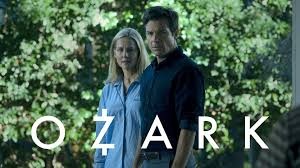

The serialized TV show Ozark has the location baked into the plot. A money launderer is held at gun point by a mobster and improvises a scheme in self-preservation to use the Ozarks as a base of operation. The Ozarks is a stand-in for a shady underworld, but the show goes beyond that. The degree to which the audience surrogates (Jason Bateman and Laura Linney) succeed in their new environment is based on the degree to which they understand the social complexities of this underworld.


In contrast, the 2020 film Arkansas is a dark comedy about two drug pushers on the bottom of the ladder who are forced to wait out the orders of drug kingpin. It takes place in the vague back country South. It’s in the category of films that could take place in the eponymous title, but could also take place anywhere.


Garden State (2004) and (although I'll probably get some fights here) Nebraska (2013) are two films that also fall in the “can happen anywhere” category, but they likely have place name titles because of what is says about their creators


Alexander Payne’s Nebraska, this can be a point of identity for the film maker more than the film. Alexander Payne is from Omaha and it is enough of a source of pride for him that he set his first three films in Nebraska. The film isn’t any sort of socio-economic essay on Nebraska. It’s not even set in Nebraska as it is a road trip through multiple states. But, it represents a director returning to his roots, which parallels a character returning to his roots.

Garden State, a breakthrough indie by then-Scrubs star Zach Braff, has little that can physically place the film in New Jersey. The film revolves around a marginally succesful actor returning from L.A.. to his hometown to reconnect with his friends, father, and fall in love with a manic pixie dream girl. If L.A. Is the big city that people go to to discover their dreams (case study: La La Land), New Jersey can be seen as the anti-LA. It's the densest state in the country, but it's almost entirely dominated by suburbs. In other, the kinds of boring white-bread ho-hum lives where people originate from before making a big move. The character finds enlightenment from returning to his roots.
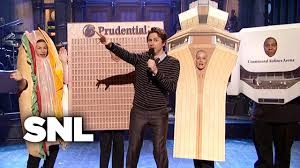
Does it work? Largely, because Braff made it well-known through his publicity tour and an SNL monologue (in which cast members danced as landmarks of Newark) that it's a love letter to his home state. Still, it's more a symbolic relationship than a real one.

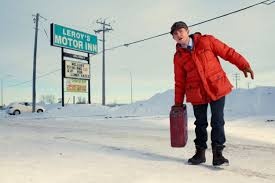
On the other end of the spectrum, Fargo (1996), is a film that represents the Coen Brothers obfuscation of identity. For those that have read interviews with the brothers, they are trolling creators who like to poke fun at any psychoanalysis of their work. The film largely takes place in Minnesota and plays on Minnesota’s geographical tropes but the film’s identity is named Fargo almost as if it is a prank.

On this end, the epic 1973 film Chinatown has nothing to do with Chinatown. The title represents a bad memory and psychological block for the protagonist. It has little to do with the actual neighborhood in Los Angeles. This is a blessing in disguise because if they actually did show the Chinese population of the city as part of a villainous scheme to usurp city control, it wouldn’t be anything but racist.


The more I like into this, the more I find that films like Jim Jarmusch's Mystery Train (1989); the Coen Brothers' O Brother Where Art Thou (2000), Burn After Reading (2008), and A Serious Man (2009); and John Sayles Matewan (1987) and Sunshine State (2002) have the most to do with their settings. And they don't even have manipulative titles.


*I have a largely positive opinion of Donald Glover but the show turns me off in multiple ways. The characters are misogynistic, depressing, and don’t even treat each other well. I view it more as not my cup of tea, than problematic. My problem is more that the critics tend to rain hard on shows of White comedians under the “problematic” banner, whereas they view Black sitcoms as authentic cultural celebrations. In reality, they are both cultural artifacts to be played with and analyzed: Nothing more, nothing less.

Wednesday, July 10, 2024

Introducing Sunshine State

 The Quintessential Florida film: Sunshine State

When I first saw this film, I was not yet a film person but had likely just declared my major in geography: the study of humanity through looking at regional characteristics, definitions and groupings; the flow of people; the shaping of landscapes; and the flow of people.

One rule of geographic landscape reading is that no inhabited place is uninteresting. There’s something of value in studying the landscape of Allentown, Pennsylvania, even if you’re brain would be stimulated into overdrive trying to figure out how the hell Las Vegas ended up the way it did.

Still, Florida is more like a swampy Las Vegas with much richer news stories and even the non-geographically minded can get fascinated by it. It has spurned the Seth Meyers segment "Fake or Florida" and, in the age of the meme, the popular website Florida Man.


So where does it all begin?

Due to a combination of lack of valuable gems, inhospitable weather, and difficulty of developing on top of swampland (improbably turned into tourism), Florida was settled after the West.

However, air conditioning was invented and people like Henry Flagler provided the infrastructure, Florida paved the way for some of the early trends of vacationing, retirement, and winter snowbirds started appearing here.

Florida was heavily sold to tourists in the same manner of the first European to lay eyes on it: The Fountain of Youth. But every group that used Florida as its dream seemingly ran over the other: The Russian mob, the Quebecois, the Black population, New York snowbirds, and the Hispanic migrants.

National Geographic once described Miami as the modern-day Venice: Where art, wealth, and vice meet and sometimes produce spectacular results. One interesting factoid: When Joel Gurreau published the Nine Nations of North America in the 1980s, he divided North America into nine formal and functional regions, suggesting that state boundaries isn't really how things work. He suggested that South Florida was a unique Latin American bastion that wasn't really operated like America. At the time he wrote the book, Gareau noted nine deposed Latin American dictators were all living in South Florida. Indeed, a small group of Cuban ex-pats in South Florida wanting to save the cigar industry had enough lobbying power to persuade the US to get involved in the Bay of Pigs.


Florida has been mythologized a lot more through writing with the books of Dave Barry, Carl Hiassen, and Elmore Leonard who have ripped their stories from the headlines (the predecessor to Florida Man). Part of this is because Florida has the most lenient FOIA laws with regard to crimes, so crazy headlines are much more likely to make it to the front pages.

There are a lot of great examples of Florida films covering all those different views of Floridian life: Off the top of my head, there's the dysfunctional urban landscape of Miami in Barry Sonnenfeld's adaptation of the Dave Barry book "Big Trouble," the mob film "Scarface" (few know that Al Capone ran much of his Chicago mob operations from Florida), the portrait of Florida as an lavish 50's vacation spot for snowboards in "Some Like it Hot" and "Palm Beach Story," Miami as a happening singles scene in "Hitch," and the more backwater view of Florida as a small-town haven of eccentric characters in "Because of Winn Dixie."

"Sunshine State", mostly somber in tone, stands out to me as the quintessential Florida film, because it is the intersection of multiple Floridian versions in one Altmanesque whirlwind.

The underrated gem by John Sayles flew under the radar when it was released in 2002 (it grossed but it's worth a second look. Starring an ensemble that includes Mary Steenburgen, Edie Falco, Angela Bassett, Timothy Hutton, Alan King, James McDaniel, and Jane Alexander, the film centers around seaside town whose tranquil existence is threatened by an encroaching real estate developer.

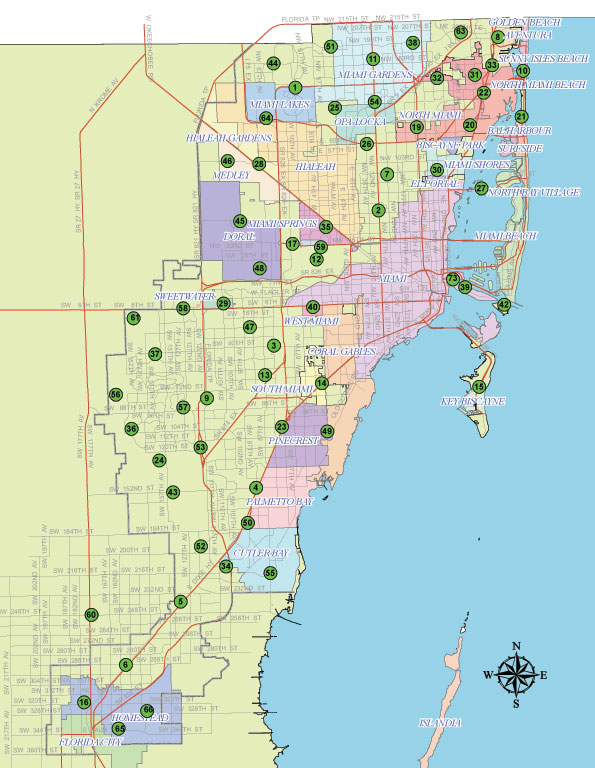
Florida is largely a state where real estate development is the rule of the land. The city of Miami, for example, is no longer home to the Miami Dolphins, Miami Beach, University of Miami, Key Biscayne, or even Miami airport. As seen below, all those places broke off from the main city proper as the municipalities became dominated by gated communities and developments that encouraged voters to need the city less. Miami, in fact, survived a vote to dissolve the city entirely in 1997.


Steenburgen stars as a chamber of commerce head and overanxious real estate developer who is trying so hard to sell her latest development she doesn't even notice that her husband (King) is suicidal. In my years of local reporting, I have come across these Chamber of Commerce types and these jobs typically require very perky people who speak about wherever they live like it's shangri-la.


Bassett stars as former town pariah Desiree Perry who got pregnant by the local football star (McDaniel) before he made it big and is now returning to her hometown. She's deciding on behalf of her family whether to sell the land or preserve the special piece of her town. The theme here is Florida being a dream for so many conflicting groups of people is represented here.

For Bassett's character and her neighbors, the town represented the opportunity for blacks to have their little piece of the beach. The town also highlights the pockets of poverty found in many a Florida coastal town. or most traditional tourist traps.

Lastly, we have Edie Falco as Marley Temple who represents the state's evolving tourist industry. Temple, a sixth generation Floridian, used to be a mermaid in one of the seaside attractions that lined the highways before the corporate megaliths of Sea World and Disney World took over. What Temple is referencing, when she talks about her past life as a mermaid, is a real tourist attraction: The mermaids at Weeki Wachi Springs.

 
This is also a Florida thing, as the mermaid shows or the alligator shows that still populate the land today pose all sorts of questions as to how to promote nature, myth, and how not to step on past or future waves of progress in the tourist industry.  Falco is now an owner of the family motel who's sick of where she's living. Her tryst with a landscape architect hired (Timothy Hutton) by the prospective land developer. It's a metaphor for the past Florida going the way of the future.

As a tapestry of intersecting lives, Sunshine State works as a great scene piece that has aged well and will likely continue to be relevant.

It has a running time of 2:20 but it's a film that moves at a great pace. It can be found on Tubi.

The event can be found here. If you need, I can get you a code to reduce the price:
Film Talk and Discussion: John Sayles and Sunshine State (2002) Tickets, Tue, Jul 16, 2024 at 9:00 PM | Eventbrite

Sunday, November 17, 2013

The Quintessential Hawaii film

The Quintessential Hawaii film: Blue Hawaii

Hawaii is widely seen as America's slice of exotic paradise. It's one of the nine states I haven't been to but my image of it is well-formed by the friends I have who take their once-in-a-lifetime vacations there and by all the sitcom specials (Saved by the Bell, My Wife and Kids, Step by Step, Full House) where the family or gang takes a trip to Hawaii.

A popular choice is Fred Zinnemann's From Here to Eternity.

The 1953 Best Picture Oscar winner, set in a military barracks on the eve of Pearl Harbor, is famous for that makeout scene on the Beach, Montgomery Clift's broody performance, and Frank Sinatra winning an Oscar for a character dressed in tacky Hawaiian shirts. 


From Here to Eternity did lead to an increased resurgence in Hawaiian aloha shirts but the problem with the film is that Pearl Harbor doesn't define Hawaii. It's one of the two most disastrous homeland attacks ever to occur on American soil, but that's more of an anomaly and that anomaly is far overshadowed by the ensuing years of Polynesian-tinted sunniness.


Courtesy: Fox Searchlight Pictures
Another option is Alexander Payne's 2011 film The Descendants (an Oscar nominee and winner in the screenplay category) which (like Sunshine State) seeks to crack the facade of a tourism mecca and show struggling ordinary people underneath. The film delves into the social hierarchy between Hawaiian land owners, natives, and new blood in the real estate market, but this all falls into the B-story that's overshadowed by an A-plot about a disheveled middle-aged man struggling to cope with the pending loss of his unfaithful wife. In short, it's largely a film about a disheveled George Clooney in tacky Hawaiian wear. 

Descendants is a worthy runner-up, but my pick is going to be the 1961 film Blue Hawaii because it's pure kitschy, fun escapism. 

Elvis Presley stars as the quintessential all-American looking to have a good time after getting out of the Army. His father wants him to work at the Great Southern Hawaiian Fruit Company but Chad decides to work at his girlfriend's tourist agency instead as a guide. 

It's not really about any sort of grand socio-economic conflict. The film's tag line was:
"Ecstatic romance...exotic dances...exciting music in the world's lushest paradise of song!"

Also of note: A lot of the glamour of Hawaii was first spread through military men stationed in Hawaii during the war reporting back to the homeland on how glamorous the islands were, so it's fitting that Presley plays an ex-GI, although his journey is in reverse. 

In short, the film features Elvis (an honorary Hawaiian) wearing an aloha shirt and playing a uke. What better image could Hawaii want than that?


Friday, November 15, 2013

The quintessential Florida film: Sunshine State


The Quintessential Florida film: Sunshine State


Since Ponce de Leon came to Florida looking for his fountain of youth, the state of Florida has historically been a land of opportunity with vastly different groups of dream seekers -- the tourist industry, Russian arms dealers, Cuban emigres, Latino power players, Northeastern snowbirds, adherents of the philosophy/religion of Jimmy Buffet -- intersecting to make a vast socio-economic web that includes the moderately dysfunctional government we often read about.


There are a lot of great examples of Florida films covering all those different views of Floridian life: Off the top of my head, there's the dysfunctional urban landscape of Miami in Barry Sonnenfeld's adaptation of the Dave Barry book "Big Trouble," the mob film "Scarface" (few know that Al Capone ran much of his Chicago mob operations from Florida), the portrait of Florida as an lavish 50's vacation spot for snowboards in "Some Like it Hot" and "Palm Beach Story," Miami as a happening singles scene in "Hitch," and the more backwater view of Florida as a small-town haven of eccentric characters in "Because of Winn Dixie."

Rather than pick and choose any one specific version of Florida for the quintessential Florida film, I've chosen "Sunshine State" because it includes the intersection of multiple Floridian versions in one Altmanesque whirlwind.

The underrated gem by John Sayles flew under the radar when it was released in 2002 but it's worth a second look. Starring an ensemble that includes Mary Steenburgen, Edie Falco, Angela Bassett, Timothy Hutton, Alan King, James McDaniel, and Jane Alexander, the film centers around seaside town whose tranquil existence is threatened by an enroaching real estate developer.

Florida is largely a state where real estate development is the rule of the land. The city of Miami, for example, is no longer home to the Miami Dolphins, Miami Beach, University of Miami, Key Biscayne, or even Miami airport. As seen below, all those places broke off from the main city proper as the municipalities became dominated by gated communities and developments that encouraged voters to need the city less. Miami, in fact, survived a vote to dissolve the city entirely in 1997.


Steenburgen stars as a chamber of commerce head and overanxious real estate developer who is trying so hard to sell her latest development she doesn't even notice that her husband (King) is suicidal. In my years of local reporting, I have come across these Chamber of Commerce types and these jobs typically require very perky people who speak about where they live like it's shangri-la.

The only reason there isn't enough sprawl to connect the East and West coasts of Florida is through the tireless work of wetland preservationists (what ultimately dooms this real estate venture). The Everglades saved through the championing of Majority Stoneman Douglas who now has a number of streets, statues, and parks named after her in South Florida.

Bassett stars as former town pariah Desiree Perry who got pregnant by the local football star (McDaniel) before he made it big and is now returning to her hometown. She's deciding on behalf of her family whether to sell the land or preserve the special piece of her town. The theme here is Florida being a dream for so many conflicting groups of people is represented here. For Bassett's character and her neighbors, the town represented the opportunity for blacks to have their little piece of the beach. The town also highlights the pockets of poverty found in many a Florida coastal town.

Lastly, we have Edie Falco as Marley Temple who represents the state's evolving tourist industry. Temple, a sixth generation Floridian, used to be a mermaid in one of the seaside attractions that lined the highways before the corporate megaliths of Sea World and Disney World took over. What Temple is referencing, when she talks about her past life as a mermaid, is a real tourist attraction: The mermaids at Weeki Wachi Springs.


This is also a Florida thing, as the mermaid shows or the alligator shows that still populate the land today pose all sorts of questions as to how to promote nature, myth, and how not to step on past or future waves of progress in the tourist industry.  

Falco is now an owner of the family motel who's sick of where she's living. Her tryst with a landscape architect hired (Timothy Hutton) by the prospective land developer. It's a metaphor for the past Florida going the way of the future.

As a tapestry of intersecting lives, Sunshine State works as a great scene piece that has aged well and will likely continue to be relevant.

Saturday, September 20, 2008

Japanese Game Show imports

I remember when I first saw a link to "Japanese Tetris" where various contestants try to fit through various shapes or risk landing in a pool of urine (according to this source, it is urine they land into http://www.cracked.com/article_15804_p2.html), I thought it was a pretty cool idea for a show and judging by how popular these clips were.

So when they decided to build an American game show out of this Japanese game show, in Fox's new game show "Hole in the Wall," why is it all of a sudden pegged as one of this Fall TV season's most likely failures?

Well, in truth, even though the American version is mostly the same as the Japanese version, there is a slight difference: The Japanese videos are exotic. They're doing something completely out of the ordinary and they're also acting in ways that seem unusual to us. The Japanese participants are being slapped around and falling into vats of urine and are still laughing and having a good time which is somewhat odd. Wierd music is playing in the background and of course, everyone is speaking in a language you don't understand. This enables you to use your imagination a little bit to figure out what everyone is talking about.

When you Americanize it, you take away the mysteriousness of this outside culture. You also feel the fakeness of the whole thing. Sportscasters are giving commentary on what's taking place as if this is a sport that's been around as long as baseball, when in fact, only 24 Americans have played this game in history (4 episodes of 6 contestants each). The contestants on the Japanese shows play the game as if they're taking it seriously and because the average American doesn't know much about Japanese culture, for all we know, this is as much a part of the Japanese way of life as Samurais, origami, and bullet trains are. Therefore we think we're peering into Japanese culture. In America, there's now cultural foundation for this game, the contestants' enthusiasm is not an enthusiam for this game....they just want to make money and the only reason they want to make money through squeezing themselves through enroaching shapes is because that's the avenue laid out for them by American TV executives hoping to artificially create a cultural phenomeon by cashing in on a Japanese trend. It's all too transparent.

So in this case, the exoticness makes all the difference

Friday, March 07, 2008

Classses I enjoyed taking

Here are classes I enjoyed taking:

1. Anthropology-The Washington Post quotes a student from 1935 who said that anthropology was a complete waste of time better situated to the 1890s than the 1930's. Well, it's the 2000's and I think it's back. I got a C in this course because the questions on the tests were so arbitrary and vague but on the flipside, I had an enormously entertaining and funny professor, who did things like do Austin Powers impressions (it was the summer after Austin Powers: Goldmembers) and stick a finger into an electric socket to note the difference between science and religion. There are a lot of disciplines like sociology, psychology, media culture, philosophy, etc. that challenges our way of looking at things, but personally, I feel that the other ones involve a little bit of common sense

2. Urban Geography-I learned the history of the D.C. area and all kinds of fascinating things about how suburbs first came to be formed. Since this course was taught an hour away Mary Washington, where I first attended college; a good amount of our focus was the Washington D.C. area, so we learned about how Tyson's Corner was once upon a time (not too long ago, 30 years ago) just a soda shop, and now it's the 13th biggest economic center in the country. We learned all kinds of things like how traffic in 2000 in Manhattan goes almost twice as slow when horse drawn carraiges were going through the streets in 1900; how parking lots are set up because people are unwilling to walk more than 600 feet at a time which is also why malls are set up so that people can't see from one end to the other with plants in place and all; how glass elevators were designed to protect against rape; how the names of many suburban housing complexes like Pheasant Run, East Meadows, The Woods at Fairfax, etc. reflect the English and later-American traditional dream of owning a little piece of the countryside, even though ironically, the housing complexes are tearing those very same countrysides down. I also did a project with two other guys, both of whom I made good friends with and continue to keep in touch with, where we went into a Salvadorean pocket of immigrants in Bailey's Crossroads and learned about the community.

3. Cultural Geography-I was a geography major and didn't regret it at all because that was full of mostly very interesting classes. In cultural geography, we learned about the spread of culture and the class was full of interesting material, such as how music spreads along geographic lines (i.e. rap is found in cities, jazz started in New Orleans and spread along the Mississippi River), how gang culture is exported to Guatemala, how you can mathematically tell about the culture of a place just by looking in a phone book, how different languages can be created by barriers like mountain ranges and oceans.

4. Energy and Transportation-I transferred to James Madison after two years and in order to graduate in two years, I didn't have room for a single elective, but my senior year, I decided to take this course and postponed graduation for another month anyways. It was the year of Hurricane Katrina and when gas prices started to spike up for the first time, and I thought it would be interesting to understand how it all worked, plus it complimented my urban geography class. The course gave me a C+ (most of these cool classes, unfortunately, resulted in low grades for some reason, often because the "cool" teachers might not have had standardized tests and things which I do better on) and the teachers relied too heavily on google and wikipedia, but we did a lot of interesting experiments, like make our own biodiesel, melt wax, and grow our own ethanol-producing plants. The class taught me where oil came from, how it was running out, and generally scared us to death about how bad the state of our energy resources are

5. Kinesiology-Kind of like an advanced version of P.E./Health at the college level. Two days a week we played sports, so who can complain about that. Being forced to exercise twice a week was definitely a good way to make sure I kept in shape. One day a week, we'd have health but it wasn't the kind of lame health classes we had in grade school which serve the purpose of warning us of the dangers of drugs and sex. These classes taught us about exercising in ways that won't result in us getting hurt, dealing with stress and eating nutritiously.

6. Film Courses-Offered at most colleges, these courses helped make up for the difficulty that I had transferring. I met a number of people with like interests, and spent time watching films. These weren't electives because I ammassed enough film courses to make a minor. Aside from being exposed to some of the best and most influential films in history and getting college credit for it, films can also teaches you a lot about society and history.

7. Band-In between Mary Washington and James Madison, I took a course from George Mason University and thought I might try to do something social while I was there, so I joined the concert band for half of a semester and it was a lot of fun. I was in the band in middle school and a year of high school and I enjoyed it but there was also a lot of pressure to be good and subsequent feelings of rejection for not being that good. When I joined the band at George Mason, I felt liberated from the pressure and didn't care that I was last chair in my section. That was probably the most fun I had with music.