Showing posts with label Florida. Show all posts

Wednesday, July 10, 2024

Introducing Sunshine State

 The Quintessential Florida film: Sunshine State

When I first saw this film, I was not yet a film person but had likely just declared my major in geography: the study of humanity through looking at regional characteristics, definitions and groupings; the flow of people; the shaping of landscapes; and the flow of people.

One rule of geographic landscape reading is that no inhabited place is uninteresting. There’s something of value in studying the landscape of Allentown, Pennsylvania, even if you’re brain would be stimulated into overdrive trying to figure out how the hell Las Vegas ended up the way it did.

Still, Florida is more like a swampy Las Vegas with much richer news stories and even the non-geographically minded can get fascinated by it. It has spurned the Seth Meyers segment "Fake or Florida" and, in the age of the meme, the popular website Florida Man.


So where does it all begin?

Due to a combination of lack of valuable gems, inhospitable weather, and difficulty of developing on top of swampland (improbably turned into tourism), Florida was settled after the West.

However, air conditioning was invented and people like Henry Flagler provided the infrastructure, Florida paved the way for some of the early trends of vacationing, retirement, and winter snowbirds started appearing here.

Florida was heavily sold to tourists in the same manner of the first European to lay eyes on it: The Fountain of Youth. But every group that used Florida as its dream seemingly ran over the other: The Russian mob, the Quebecois, the Black population, New York snowbirds, and the Hispanic migrants.

National Geographic once described Miami as the modern-day Venice: Where art, wealth, and vice meet and sometimes produce spectacular results. One interesting factoid: When Joel Gurreau published the Nine Nations of North America in the 1980s, he divided North America into nine formal and functional regions, suggesting that state boundaries isn't really how things work. He suggested that South Florida was a unique Latin American bastion that wasn't really operated like America. At the time he wrote the book, Gareau noted nine deposed Latin American dictators were all living in South Florida. Indeed, a small group of Cuban ex-pats in South Florida wanting to save the cigar industry had enough lobbying power to persuade the US to get involved in the Bay of Pigs.


Florida has been mythologized a lot more through writing with the books of Dave Barry, Carl Hiassen, and Elmore Leonard who have ripped their stories from the headlines (the predecessor to Florida Man). Part of this is because Florida has the most lenient FOIA laws with regard to crimes, so crazy headlines are much more likely to make it to the front pages.

There are a lot of great examples of Florida films covering all those different views of Floridian life: Off the top of my head, there's the dysfunctional urban landscape of Miami in Barry Sonnenfeld's adaptation of the Dave Barry book "Big Trouble," the mob film "Scarface" (few know that Al Capone ran much of his Chicago mob operations from Florida), the portrait of Florida as an lavish 50's vacation spot for snowboards in "Some Like it Hot" and "Palm Beach Story," Miami as a happening singles scene in "Hitch," and the more backwater view of Florida as a small-town haven of eccentric characters in "Because of Winn Dixie."

"Sunshine State", mostly somber in tone, stands out to me as the quintessential Florida film, because it is the intersection of multiple Floridian versions in one Altmanesque whirlwind.

The underrated gem by John Sayles flew under the radar when it was released in 2002 (it grossed but it's worth a second look. Starring an ensemble that includes Mary Steenburgen, Edie Falco, Angela Bassett, Timothy Hutton, Alan King, James McDaniel, and Jane Alexander, the film centers around seaside town whose tranquil existence is threatened by an encroaching real estate developer.

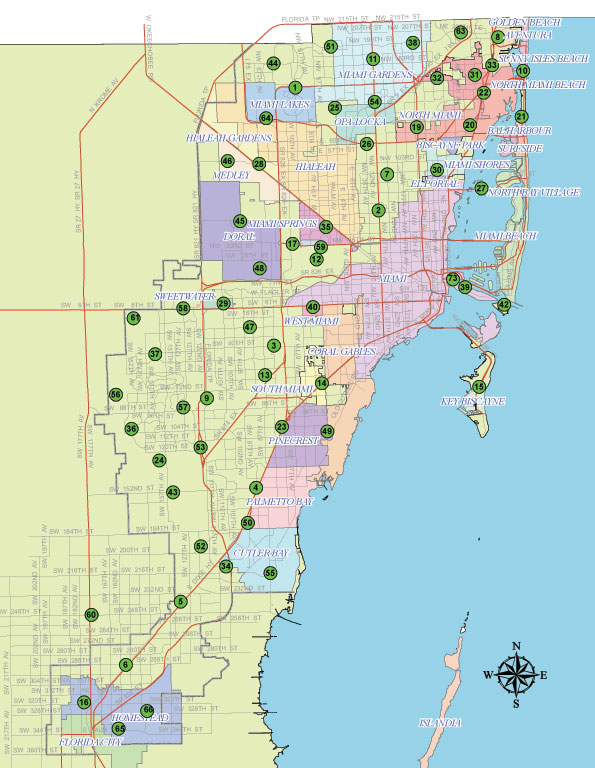
Florida is largely a state where real estate development is the rule of the land. The city of Miami, for example, is no longer home to the Miami Dolphins, Miami Beach, University of Miami, Key Biscayne, or even Miami airport. As seen below, all those places broke off from the main city proper as the municipalities became dominated by gated communities and developments that encouraged voters to need the city less. Miami, in fact, survived a vote to dissolve the city entirely in 1997.

Steenburgen stars as a chamber of commerce head and overanxious real estate developer who is trying so hard to sell her latest development she doesn't even notice that her husband (King) is suicidal. In my years of local reporting, I have come across these Chamber of Commerce types and these jobs typically require very perky people who speak about wherever they live like it's shangri-la.


Bassett stars as former town pariah Desiree Perry who got pregnant by the local football star (McDaniel) before he made it big and is now returning to her hometown. She's deciding on behalf of her family whether to sell the land or preserve the special piece of her town. The theme here is Florida being a dream for so many conflicting groups of people is represented here.

For Bassett's character and her neighbors, the town represented the opportunity for blacks to have their little piece of the beach. The town also highlights the pockets of poverty found in many a Florida coastal town. or most traditional tourist traps.

Lastly, we have Edie Falco as Marley Temple who represents the state's evolving tourist industry. Temple, a sixth generation Floridian, used to be a mermaid in one of the seaside attractions that lined the highways before the corporate megaliths of Sea World and Disney World took over. What Temple is referencing, when she talks about her past life as a mermaid, is a real tourist attraction: The mermaids at Weeki Wachi Springs.

 
This is also a Florida thing, as the mermaid shows or the alligator shows that still populate the land today pose all sorts of questions as to how to promote nature, myth, and how not to step on past or future waves of progress in the tourist industry.  Falco is now an owner of the family motel who's sick of where she's living. Her tryst with a landscape architect hired (Timothy Hutton) by the prospective land developer. It's a metaphor for the past Florida going the way of the future.

As a tapestry of intersecting lives, Sunshine State works as a great scene piece that has aged well and will likely continue to be relevant.

It has a running time of 2:20 but it's a film that moves at a great pace. It can be found on Tubi.

The event can be found here. If you need, I can get you a code to reduce the price:
Film Talk and Discussion: John Sayles and Sunshine State (2002) Tickets, Tue, Jul 16, 2024 at 9:00 PM | Eventbrite

Monday, June 06, 2022

TV Recommendation: Peacock's Killing It

Two broke Floridians, Craig (Craig Robinson) and Jillian (Claudia O’Doherty), team up for a contest to kill an invasive species of snakes. As the season goes on, the plot places its two protagonists within a web of the type of opportunist Floridian characters that originally showed up in Carl Hiassen or Dave Barry novels, and have now become meme-worthy.

Initially, the show seems like a pedestrian odd couple comedy with a standard hook, albeit one a bit squicky (fortunately, the serpentine death blows are mostly off screen). However, there’s a lot to appreciate with this show as the stakes increase.

Like “Superstore” or “Raising Hope”, the show aims to tell a story of the lower class, and does a superb job of translating the disparity between the haves and have-nots to solid comedy. Jillian, for instance, is an uber driver, task rabbit, snake killer, web cam star (she caters to perverts who want to watch her eat exotic foods), and rents out her cab for billboards while also helping control the snake population. In the premiere episode’s go-big-or-go-home comic set piece, Jillian tries to fulfill her Ubering and snake murdering duties at the same time while Craig is her passenger.

We also come to meet Brock (Scott MacArthur), who’s snake hunting is a side hustle to his main dream of getting YouTube famous in a Jackass sort of way.

The basis of crazy Florida stories is people getting creative in how they try to eke out a living, but perhaps there’s a deeper factor at play: These characters are painted into a corner and maybe that inequality is also the Florida way. A cursory look at the landscape when I’m in South Florida (half my family lives there) and my knowledge of the state’s tax structure, indicates a pretty individualistic society where capitalism reigns supreme.

Perhaps, the greatest strength of the series is how well the stars’ screen personas fit the story. Craig Robinson has always had a deadpan weariness that has been best exemplified in Judd Apatow comedies and “The Office” but takes it to the next level here. Despite being a little of a slacker, Daryl was someone to root for because the series splattered moments of the character’s thoughtfulness. This Craig Robinson is someone who you desperately want to give a hug.

The cleverest thing about Jillian is that she’s initially presented as so incompetent at life that she’d be classified by TV Tropes as The Load: A character that doesn’t provide any useful assets to their partners in crime like Carl Showalter in Fargo, Jar Jar Binks in Star Wars, Willie in Indiana Jones and the Temple of Doom, Buttercup in the Princess Bride, or Zaphod in The Hitchhiker’s Guide to the Galaxy. She’s entirely unfocused on the task at hand and generally has terrible instincts. However, she comes to be a sympathetic character and even a useful person without ever appearing to fundamentally transform. A lot of it has to do with how O’Doherty simply shows us different sides of the same character.  

Friday, November 15, 2013

The quintessential Florida film: Sunshine State


The Quintessential Florida film: Sunshine State


Since Ponce de Leon came to Florida looking for his fountain of youth, the state of Florida has historically been a land of opportunity with vastly different groups of dream seekers -- the tourist industry, Russian arms dealers, Cuban emigres, Latino power players, Northeastern snowbirds, adherents of the philosophy/religion of Jimmy Buffet -- intersecting to make a vast socio-economic web that includes the moderately dysfunctional government we often read about.


There are a lot of great examples of Florida films covering all those different views of Floridian life: Off the top of my head, there's the dysfunctional urban landscape of Miami in Barry Sonnenfeld's adaptation of the Dave Barry book "Big Trouble," the mob film "Scarface" (few know that Al Capone ran much of his Chicago mob operations from Florida), the portrait of Florida as an lavish 50's vacation spot for snowboards in "Some Like it Hot" and "Palm Beach Story," Miami as a happening singles scene in "Hitch," and the more backwater view of Florida as a small-town haven of eccentric characters in "Because of Winn Dixie."

Rather than pick and choose any one specific version of Florida for the quintessential Florida film, I've chosen "Sunshine State" because it includes the intersection of multiple Floridian versions in one Altmanesque whirlwind.

The underrated gem by John Sayles flew under the radar when it was released in 2002 but it's worth a second look. Starring an ensemble that includes Mary Steenburgen, Edie Falco, Angela Bassett, Timothy Hutton, Alan King, James McDaniel, and Jane Alexander, the film centers around seaside town whose tranquil existence is threatened by an enroaching real estate developer.

Florida is largely a state where real estate development is the rule of the land. The city of Miami, for example, is no longer home to the Miami Dolphins, Miami Beach, University of Miami, Key Biscayne, or even Miami airport. As seen below, all those places broke off from the main city proper as the municipalities became dominated by gated communities and developments that encouraged voters to need the city less. Miami, in fact, survived a vote to dissolve the city entirely in 1997.


Steenburgen stars as a chamber of commerce head and overanxious real estate developer who is trying so hard to sell her latest development she doesn't even notice that her husband (King) is suicidal. In my years of local reporting, I have come across these Chamber of Commerce types and these jobs typically require very perky people who speak about where they live like it's shangri-la.

The only reason there isn't enough sprawl to connect the East and West coasts of Florida is through the tireless work of wetland preservationists (what ultimately dooms this real estate venture). The Everglades saved through the championing of Majority Stoneman Douglas who now has a number of streets, statues, and parks named after her in South Florida.

Bassett stars as former town pariah Desiree Perry who got pregnant by the local football star (McDaniel) before he made it big and is now returning to her hometown. She's deciding on behalf of her family whether to sell the land or preserve the special piece of her town. The theme here is Florida being a dream for so many conflicting groups of people is represented here. For Bassett's character and her neighbors, the town represented the opportunity for blacks to have their little piece of the beach. The town also highlights the pockets of poverty found in many a Florida coastal town.

Lastly, we have Edie Falco as Marley Temple who represents the state's evolving tourist industry. Temple, a sixth generation Floridian, used to be a mermaid in one of the seaside attractions that lined the highways before the corporate megaliths of Sea World and Disney World took over. What Temple is referencing, when she talks about her past life as a mermaid, is a real tourist attraction: The mermaids at Weeki Wachi Springs.


This is also a Florida thing, as the mermaid shows or the alligator shows that still populate the land today pose all sorts of questions as to how to promote nature, myth, and how not to step on past or future waves of progress in the tourist industry.  

Falco is now an owner of the family motel who's sick of where she's living. Her tryst with a landscape architect hired (Timothy Hutton) by the prospective land developer. It's a metaphor for the past Florida going the way of the future.

As a tapestry of intersecting lives, Sunshine State works as a great scene piece that has aged well and will likely continue to be relevant.

Monday, July 08, 2013

Key Largo, Identity Thief, and Jack-of-all-Genres Movies


Key Largo (1948):
Starring Humphrey Bogart, Edward G. Robinson, Lauren Bacall, Lionel Barrymore, Claire Trevor, directed by John Huston, based on a play by Maxwell Anderson

Identity Thief (2013):
Starring Melissa McCarthy, Jason Bateman, John Cho, Amanda Peet, T.I., Genesis Rodriguez, Eric Stonestreet, Robert Patrick


I've always had a fondness for this John Huston semi-classic due to the fact that it features my favorite place on Earth. My grandparents retired to a spot in the upper Florida Keys (approximately three miles below the southern tip of Key Largo) and being in the Keys has always been a calming happiness-inducing experience for me so it's fitting that the film is thematically centered around the redemptive powers of Key Largo. If you think about it, there's no overt romance between Bacall and Bogart's characters, and his resolution comes through finding peace with his new place.

The story follows a World War II veteran Frank McCloud (Bogart) as he travels to a hotel in Key Largo to meet the father, Mr. Temple (a wheelchair-bound Barrymore), and widow, Nora (Bacall), of a fallen comrade in the Italian theater. Warm feelings are shared between the three and it's established that Mr. Temple is a beloved community advocate of the Indians.

Since the film can't be entirely about three people reminiscing, drama eventually happens when it's revealed that all of the hotel guests hanging around the lobby are employed by notorious gangster Johnny Rocco (Robinson) and in a sudden flash, the jovial atmosphere turns into a hostage situation. If you're watching the film blind (having no knowledge of  the plot), as is often the case when you're watching TCM, that split second where everything turns topsy-turvy is a very effective moment.

The film is adapted from a play so it's fitting that it takes on a meditative tone. As various characters point guns at and try to outmaneuver each other, there's a lot of philosophical discussion. At the core, the film is about Frank and his lost sense of idealism. Does he believe only in self-preservation or heroism? There's also a parallel sentiment among the gangsters who mourn the glory days of the prohibition. A number of these thematic undercurrents, however, are left dangling. One gets the sense that the remiss gangster who keeps muttering to himself that prohibition will be back again, or the relationship between Temple and the Indians are remnants of the stage version that dealt more fully with these issues.

In the third act, the film goes back to full-on action mode as McCloud becomes a man of action on the high seas. Many of Huston's films have an adventurous tone, and this is no exception. Although, Key Largo isn't as acclaimed as Huston's films African Queen or Treasure of the Sierra Madre, it has a lot of strengths relative to those films. It's more tightly scripted, succeeds better at creating suspense, and the final set piece tops any scene  from either of those two films. The film also won an Oscar for Claire Trevor


Ironically, anyone who's spent any time on Key Largo knows that the island's most famous classic movie landmark comes from another John Huston film: At the Holiday Isle resort, the boat from the African Queen is on display and visitors can even take a tour on it.  While most of the film was shot in Los Angles, the exterior shots of Key Largo were shot at the Caribbean Club and while the property still exists today, much of the old exterior was destroyed in a pair of fires.


In thinking about how Key Largo combines action, staged drama, meditative dialogue, quasi-romance and the gangster genre, I was thinking about a recent article I read that said that Hollywood is pressing movies to include as many genres as possible.

This is why the latest buddy films (i.e. Hangover, Horrible Bosses) and romcoms (i.e. Date Night) often have a few action scenes added in and why the super hero genre is being infused with massive amounts of buddy action (Green Hornet), humor (Iron Man), or light-hearted romance (Spiderman).

The latest example of this is The Identity Thief starring Jason Bateman and Melissa McCarthy which would be a perfectly substantial film if the characters' lives were never in danger. Rain Man; Planes Trains and Automobiles; Trial and Error, Every Which Way But Loose, and the very recent Due Date all work as road trip buddy films without needing to double as double as action films.

Nonetheless, Identity Thief works and it's hard to argue that the action scenes detract from it. The film is paced well, genuinely sentimental at times, and features surprisingly good chemistry between Bateman and McCarthy. I didn't jump on board the McCarthy bandwagon when she was unexpectedly nominated for an Oscar for Bridesmaids, but she won me over here. As great of a script as Bridesmaids was script, the humor serves McCarthy even better in this one (read: far fewer fat jokes).

It's also interesting in the wake of his slightly darker turn in Arrested Development's Season 4,  Bateman plays a guy who's unapologetically an asshole if he needs to be. It would be even more interesting if I saw Arrested Development and this film in the order they came out, but still.


Sunday, March 11, 2007

My new March Madness method

Here's my new system of doing the tournament. Treat seeds as irrelevant and treat them as such, i'm going to rank the teams as i see their chances and i throw in a little bit of randomness just like how when you predict the tournament. When these teams meet on whatever the bracket may be that's released this afternoon, i will go by who's higher on my list:
1. Kansas-I just have them pegged to win this year. It's been a while since they've won and I just like the success story of Brandon Rush trying to right his brother's wrongs.
2. UCLA-I feel like even more than Florida, they'll be hungry to get back there and depth is big
3. Ohio State-I'm basing some of my picks off the Carmelo Anthony rule: A talented NBA-level freshman can change the course of the entire tournament and I think that's Greg Oden. He shouldn't even be in the tournament except for the new rule
4. Florida-They're my favorite team but conventional wisdom says that they're vulnerable and won't repeat. Still, it's such a talented group of players who show strong resolve and teamwork. I like Noah as a person but i don't think he can repeat his performance and i don't think he's really a star player that can carry his team. Perhaps Humphrey or Horford can
5. Wisconsin-With the senior trying to do carry his team (see Mateen Cleaves) possibilities are big, but I'm usually not used to linking Wisconsin and final four team in the same words. It was done once before on an extreme fluke.
6. Pittsburgh-They were my dark horse final four team. They've been a 2 or 3 seeded team with somewhere around Sweet 16 credentials for about 5 or 6 years now, the law of averages shows that like Louisville in 2005, Texas in 2003, Indiana in 2002, Stanford in 1998, that if you keep finishing the season in the 10 or 12 teams, sooner or later you'll make the final four
7. Washington State-I don't know, they'd just make a good story
8. Memphis-Haven't been tested that much, it's some of the same strong group that put on a good performance last year
9. UNC-Not placing much stock in the ACC this year, all those talented freshman though, could do good but they also could do bad
10. Texas-Subscribing to the Law of Carmelo Anthony with Kevin Durant, i'm putting them high
11. Oregon-Aaron Brooks is one of those talented players who could turn on
12. Oklahoma State-They'll be ranked incredibly low which means only that they've had a few bad weeks down the stretch, but they've also had some good moments and have hung with the best of them. They have a penchant for doing well at the tournament and i'm inclined to pick them to do well
13. Air Force-They were once really good, and i don't think injuries or anything have changed them significantly. I'd like to see a team representing the Armed Forces do well in the tournament for once. It's a hopeful, wishful thinking sort of thing
14. USC-OJ Mayo isn't there yet, which will be the irony. Karma will reward USC for it's dissapointing football season with a good basketball season
15. Nevada-Of the mid-majors hoping to do well in the tournament, i have the most faith in Nevada. It's conference doesn't suck as much as Butler's or Creighton's
16. Vanderbilt-A sleeper in the SEC. They've done devestating stuff to Florida
17. Marquette-I don't know, there recent losses never convinced me that they were a bad team. Big East is a tough conference, i feel.
18. Stanford-Has had a lot of losses, but some quality wins. They're also a team that has had a lot of bad luck in the tournament since their 1998 final four run. Karma will be generous with them
19. Duke-Tradition of winning is too powerful to ignore
20. Kentucky-Same for this program as well
21. Southern Illinois-I'll put them around here. Normally a Missouri Valley Team is an underdog making an upset but with a 3 or 4 seed, it'll be reverse as they'll be waiting to be taken down
22. Maryland-Star power is what gets a team to the final four. They have at least a little bit of it
23. Texas A & M-Congratulations to the Aggies on their unusually good season but this post-season, i see you as one of the unlucky beneficiaries of a Cinderella
24. Indiana-It's the Hoosiers, come on. Give them some love.
25. Boston College-Jared Dudley might make the difference.
26. Kansas State-Bob Huggins is desperate to prove critics wrong, and this team almost hung with Kansas
27. Louisville-I love the Cardinals, usually, but they weren't ranked in the preseason and I think it's generally a rebuilding team. They're only hot as of late.
28. Arkansas-They've beaten all those teams in the SEC like Alabama, Vanderbilt and Tennessee. And look at them in this tournament.
29. Georgetown-As with people who predict upsets, i'm predicting a bit of randomness in Georgetown's losing. Like Louisville they haven't been good the whole season and just the flavor of the moment. I also just never really liked the school and am rooting against them. I'm from Washington D.C. and I don't know why locals here like the University. I think Georgetown is a snobby and secluded college (and neighborhood) that really doesn't interact or organically blend that much wiht the rest of Washington.
30. WVU-Since WVU made the elite eight, i'm always rooting for that WVU magic as someone who went to college 13 miles from the West Virginia Border
31. VCU-I think statistically, it might be unlikely that the tournament's big Cinderella will come from the same conference twice, but as a Cinderella this team has proved resillient and reliable and has stayed atop a conference that is getting better and better.
32. UNLV-I'm placing them low, i concede but just don't have any confidence in them even though they won the SEC tournament
33. Creighton-They’re in the Missourri Valley which has a tradition for upsets
34. Notre Dame-A solid team, not entirely upset-resistant
35. Virginia Tech-They have no experience whatsoever playing in the NCAA tournament and haven’t had any in years
36. UNLV-I'm placing them low, i concede but just don't have any confidence in them even though they won the SEC tournament
37. Syracuse-Jim Boheim has NCAA experience
38. Texas Tech-Bob Knight and Company usually have a lot to prove
39. UVA-I’m a Virginian, and even I concede that we rarely are ever good. Do we have any really good players?
40. Davidson-For getting the league bid over Applachian State
41. Butler-Hello?! It’s the horizon league. They’re not nor were they ever that good