Friday, May 14, 2021

What I'm Watching: Mosquito Coast, Girls5Eva, Mighty Ducks, New Girl, The Monkees, Psych


Mosquito Coast (Apple TV) (through two episodes)-Based on a novel in the 1980s that was adapted into a Peter Weir film starring Harrison Ford, Helen Mirren, and River Phoenix. The protagonist, Allie, was inspired by novelist Paul Thoreaux's self-reliant father (who would often take his kids dumpster diving) along with American cult leaders like Jim Jones and Joseph Smith (father of Mormonism and all-around wild and kooky guy) who wanted to take what they viewed as the American ideal and create that utopia with it somewhere else. 

Fortunately, Allie does not want to kool-aid a thousand people to their deaths or marry dozens of women. He has a family and just wants to live off the grid in Central America where he can test new societal theories or something or other. That's all in the book, which I didn't really read or in the faithful film adaptation (which, coincidentally, I haven't watched yet).

In this series, Allie (played by Paul's nephew Justin coincidentally) isn't so much wanting to leave as he happens to be the most wanted man in America based on how many federal agencies are after him. Why he and his wife are on the run isn't revealed, which is perhaps the smartest adaptational move. We're left guessing how severe their transgression must have been if cops and feds must care about them so much. In the tradition of "Lost", it's always nice leave the audience piecing a puzzle together. The series is well-paced and the family dynamic keeps this story above the level of a standard narrative thriller.  

Girls5Eva (Peacock)-This is more in the "what I'm giving a chance to" thread but will soon quit if I don't see some results. This take on 90s girls groups juxtaposed with current times is well below the level of the Fey/Carlock creations Unbreakable Kimmy Schmidt, 30 Rock, Mr. Mayor. I'm trying but it's not grabbing me even though it's kind of an interesting cast (Paula Pell, pop singer Sara Bareilles, Eliza from Hamilton, Busy Phillips). Perhaps, it's just that shows about entertainers making a comeback are stale.

Also, maybe it's time that Tina Fey stop leaning so heavily on Fey's husband music director Jeff Richmond for his trademark boinkiness. It's ok, Tina, let him down gently. 

I instead recommend the Comedy Central Show "The Other Two." 

Mighty Ducks (Disney Plus) -It's in the tone of the 90s film and it's more of a pre-teen drama than a teen drama which is an interesting dynamic that evoked nostalgia for the 10 year old me who watched this in the movie theater. In other words, it's a capable reboot if you can put yourself in the shoes of the audience. The show mostly works on the dynamic between Lauren Graham and Emilio Estevez. As original coach Gordon Bombay, Estevez begins his narrative arc pretty far down at the bottom of the well. He appears to have PTSD'ed out of the sport. Graham, like Zooey Deschanel or Kristen Bell, is all-purpose sitcom gold. She brings a spunk and energy that has worked in everything she's been in so she's a welcome infusion here.

The End of the F***ing World (Netflix)-A British high-concept show about two teenagers who are both uniquely disturbed. James considers himself a psychopath who feels like he needs to kill someone to come of age. Alyssa's the epitome of a goth girl. What she lacks in outer appearance (eye shadow, black ensemble, ripped stockings, etc.) she makes up for in top-notch bluntness and a vocal timbre that's as varied as a barnyard cow. Alyssa wants to run away and takes James with him and the two form an awkwardly pubescent Bonnie and Clyde with no real idea where they're going or what they're doing.  Highly recommend.

New Girl-(Originally ABC, now Netflix)-I've been re-watching the first season and impressed how the show is so low-concept. Jess Day being "new" or a "girl" isn't really much to build a show around. The concept is basically "let Zooey Deschannel go full Zooey Deschannel" and her outlandish personality is hilarious enough  in an absurdist way to carry the show. The three other leads--Jake Johnson, Max Greenfield, and Lamorne Morris--all got a big boost visibilitty-wise from this show but they are mostly replaceable archetypes of fun-loving single guys. Although the show has a different creator (Elizabeth Merriweather), this show seems to be a commercial successor to "How I Met Your Mother" in that some of the humor comes from the characters inside jokes (or at least that's what the dialogue aims for).

The Monkees (originally NBC, then MTV, now YouTube)-This is an extremely charming 60s series that was made to emulate the success of the Beatles 1964 film "A Hard Day's Night" (a comic film in which the Beatles played themselves getting into exaggerated hijinks at a tour stop) with four goofy guys trying to make a living as a rock band. As someone who has seen "A Hard Day's Night", I can certifiably say this improves on the original. Rater than have the band just be naturally goofy in a cute "they don't take themselves too seriously" winky way, the Monkees are full-throttle anarchy akin to the Marx Brothers. Being defiant of authority and order is intrinsic to who they are, far more than being handsome me who want to seem relatable. Reality-breaking tricks like fast-forwards a la Keystone Cops, over-the-top musical cues and the gang breaking into song (the reason that the group existed) cements the comic climate that this is a world where anything goes. It also helps that A) the band was not famous in-universe or at the start of the series and B) the four have distinct personalities. Davy is the love-struck front man, Peter is most child-like, Mike is aloof, and Mickey is the silly one.

Psych (USA now Peacock)-I remember watching one episode when it came out and thinking it was over the top and ridiculous. It's in the mold of other USA shows at the time about exiled geniuses who worked outside the system (sidenote: it's incredible that the network built an entire slate of shows with the same exact premise). The protagonist is a guy with a militaristic dad  who, for reasons beyond me (possibly OCD), wanted to imbue his son with the gift of being able to notice things really well when he was young. As an adult, Shawn pretends to be psychic so he can be hired as a police consultant and he drags his friend, Gus (Dule Hill) along for the ride.  I've heard people cite the pair as a great example of BFFs but Hill often comes off as a pushover in relation to Shawn and while the character is supposedly anti-authoritarian in a fun way, he often comes across as annoying. This especially the case when he's theatrically pretending he solved the case. If not for the chemistry between Shawn (James Roday Rodriguez) and Juliet (Maggie Lawson), this show is still terribly over-the-top. I could however see the outline of a better show if James Roday Rodriguez was just given some network notes to dial it back 10-20%.

Bless the Harts (Fox)-As good as always. I've reviewed this plenty of times before. The show is on the brink of cancellation so now's a great time to support it and get in on the letter-writing campaigns. 

Sunday, May 02, 2021

15 Best Scenes at the Movies 2020

 Out of about 46 movies I saw this year, this list was surprisingly easy to make owing to the fact that there are some great movies I saw that I can’t remember a stand-out scene from months later. Not every film here is among my favorites but I have a clear memory of the scene and continue to look back on these film moments fondly.

  1. Borat 2-Rudy Giuliani gets caught with his pants down

Perhaps as an effort to differentiate himself as one of the good guys, Sasha Baron Cohen opted for more staged scenes than trickery with his subjects that could be construed as mean-spirited. One walloping exception? Rudy Giuliani, one of the most hated politicians of 2020, got caught in a compromising position. It was authentic, true to what we’d come to expect of Giuliani, hilarious and damn cathartic.

2. Trial of the Chicago Seven-The List of Fallen

Sorkin’s latest courtroom drama represents a drastic improvement in self-constraint for the bombastic screen writer. Rather than deliver a big soliloquy to close out this nonsensical court case, the Chicago Seven fights nonsense with the perfect counterdose of nonsense. As a closing statement, Tom Hayden (Eddie Redmayne) reads a list of names of fallen soldiers rather than save his neck for a lighter sentence. In reality, the list of names was read throughout the trial but it’s an acceptable break from history

3. 7500-Lifeboat ethics pushed to the limit

With Trial of the Chicago Seven, Project Power and this tightly scripted thriller, JGL batted three for three and elevated a typical genre picture to a visceral film about the difficulty of lifeboat ethics at certain points. Gordon-Levitt plays a pilot who has to face down the demands of a hijacked plane and decide between placating terrorists or letting his pregnant girlfriend perish.

4. Palm Springs-Montage of Hijinks

Palm Springs spoke to where I was this year as it spoke to the fun you can have out of static circumstances (yes, I’m talking to you Covid). Andy Samberg has always been more goofball than actor but it was a joy to which Christine Milioti go toe for toe with him on such fun adventures like stealing a plane and upstaging the bride at a wedding by pretending to be Russian spies.

5. Project Power-Surviving a Bullet to the face

Never underestimate the potential for a good action scene when you have a clever enough concept. In Project Power, a street drug enables the user to have superpowers for exactly one minute. An undercover cop (Joseph Gordon-Levitt) takes the drug that gives him bulletproof abilities and sets the timer on his watch down from 60 before pursuing a couple of enhanced criminals. When a trigger-happy perp shoots him, he falls to the ground right as his superpower expires and the bullet bounces off his face. Behind the scenes, Gordon-Levitt endured having his face air blasted.

6. Promising Young Woman-“What are you doing?”

If there’s a case for screenwriter Emerald Fennell to get the Oscar (which she won), it’s her knack for throwing twist after twist that shakes up the direction of the story all over the tonal spectrum. None is as killer as the first one where Carey Mulligan’s character, Cassie, looks as if she’s about to be raped before she turns the tables on her assaulter. All Cassie needs to do to establish control of the situation is to add a dash of inflection to her voice.

7. Seberg-A Sincere Apology Too Late

Several films this year entailed roughly the same plot: Marginalized historic figures (most often black) in the mid-20th Century being horrifically conspired against by powerful institutional forces comprised mostly of white men in suits that are governed by wrong-headed beliefs. United States vs Billie Holiday, Ma Rainey’s Black Bottom, Trial of the Chicago 7, Seberg and (from what I hear) Judas and the Black Messiah make up this list. Additionally, they all have an upright figure caught in the middle who’s morally conflicted about it. I wouldn’t call Seberg the best of these films. However, the covert conversation between G-Man Jack Solomon (Jack O’Connell) and actress Jean Seberg (Kristen Stewart) at an anonymous hotel bar where he issues a fruitless apology (her life has already been ruined) is certainly a poignant scene.

8. Trial of the Chicago 7-Quote of the Year

Yes, Aaron Sorkin gets blabby as stated earlier but a good courtroom drama needs great dialogue. The characters are lightning quick in expressing their thoughts in ways that the screenwriters get some leeway with since these are characters who have been schooled on how to best use the spoken word. Anyway, this is a doozy:

Judge Julius Hoffman: Mr. Kunstler, I have lived a a very long time, sir, and you’re the first person ever to suggest that I have discriminated against a black man!

Leonard Weinglass: Then let the record show that I am the second.

9. The Father-Antony shows a little more kindness to Laura

Just as a film based around a first-person look at dementia is constructed like an enigma, so is Antony. He’s charming one minute and fiercely defensive the next and at one point he’s downright cruel to his new nurse (Imogen Poots). The next day, the two meet for their first session and it’s a sweet moment of connection combined with a deserved apology. This scene also sets up a casting shift later on as Poots is replaced by Olivia Williams.

10. Tenet-Crashing a plane into an airplane hanger

Making no compromises in terms of stunts or production, Christopher Nolan ran up a bill of over $200 million (his second most expensive film) and had the misfortune of having it released during the pandemic. Poor guy. If he’s willing to crash a freaking plane into an airplane hangar for our enjoyment, I’ll give him a slot in the top ten.

11. Troop Zero-Two old comrades share a cigarette

This Southern-fried tragi-dramedy of a spunky girl’s (McKenna Grace) dream to enter a Girl Scout contest and win contact with astronauts isn’t about a triumph of the underdog or the joy of achieving your dreams. It’s a bittersweet slice-of-life drip about the noble struggle in almost making it. Viola Davis plays a beleaguered legal assistant, Miss Rayleen, to Grace’s father who begrudgingly takes over troop leader duties when no one else will take the job and she finds herself dealing with a rigged playing field by a scout administrator (Miss Massey, Allison Janney) who happens to be a childhood friend. A certain amount of racism or classicism is coming into play over what’s holding the pair back but this isn’t a film about the evil of racism as it is just a portrait of what is. At the end of the film, the two colleagues share a cigarette and Miss Massey tells her she should go off to law school implying that she knows life’s unfair in this town and there’s a place where she’ll be more appreciated.

12. Bill and Ted Face the Music-Bill and Ted create the most elaborate avant-garde song yet

One of the best gags of this much-anticipated laugh fest is seeing Bill and Ted going “bigger is better” with an increasingly elaborate song for Missy’s wedding dance. It starts with the traditional guitar and drum set-up before jumping into steel drums, throat singing, bagpipes, and poorly played jazz trumpet while the newlyweds have to figure out how to dance to this atonal arrhythmic mess. Eventually, Ted’s dad pulls the plug on the atonal mess which is a shame because I wanted to know where the song went next. Fun fact, Keanu Reeves learned to play the bagpipes for this scene.

13. My Octopus Teacher-Our eight-legged friend survives shark attack #2

Whether the octopus or shark survives is all part of the food chain — either one goes hungry or one becomes dinner — but this documentary created an unshakable bond between the octopus and audience at the expense of his predator. After losing a couple limbs in round one, the octopus swung around and latched himself onto the shark’s back when it came for him in the second round.

14. I Care a Lot-Two enemies agree to a compromise

For much of its running time, I Care a Lot is a brutally insensitive film that asks us to root for a heroine who commits the horrific act of elder abuse. Her only saving grace is that she’s going up against the mob but it’s a pretty close call who’s worse. I’ve rarely seen a film save itself in the past few minutes, however. When the two bad guys form an alliance at the end, the film morphs from being a misguided fable to a black comedy in which everyone has blood on their hands.

15. Prom-The “Love Thy Neighbor” number

Thank god for the against-type casting for this Broadway adaptation which saw James Corden play the flamboyant gay Midwesterner and Andrew Rannell (a gay actor who often gets cast that way) playing a non-descript Julliard graduate who shines as one of the film’s side characters. His “You Pick and Choose” number shows off Rannell’s effortless showmanship as he dances around a mall food court in a musical number that’s reminiscent of a modern day flash mob (they all take place at malls, don’t they?). His number echoes what most biblical scholars already know: That any condemnations of divorce, homosexuality, or marriage out of wedlock are pretty selective readings of the Christian bible.

Honorable Mention:

Blow the Man Down-Margo Martindale faces down three of her peers who object to her vice

Borat 2-Borat convincing Tutar that every women with a driver’s license they encounter is secretly a man

Borat 2-Borat’s encounter with a Holocaust survivor

The Dig-Lily James and Johnny Flynn get it amidst the psychological ruins

The Dig-Carey Mulligan goes to bat for Ralph Fiennes

Hillbilliy Elegy-Amy Adams cutting through the hospital on roller skates

Kajillionaire-Gina Rodriguez taking Evan Rachel Wood up on her offer of $1000 to say “I love you” and whisking her away from her abusive parents

I’m Thinking of Ending Things-Cut to a janitor who might or might not be Jesse Plemons

News of the World-Tom Hanks’s unusual ammunition

Palm Springs-Andy Sambergs cuts through the dance floor with perfect precision en route to impressing Cristin Milioti

Promising Young Woman-Cassie’s posthumous fail-safe mechanism

Soul-Our first view of the Great Beyond in its multi-chromatic splendor

Unhinged-Russell Crowe making mincemeat of Jimmi Simpson at a diner counter

United States verse Billie Holiday-“God Bless the Child”

Tuesday, April 27, 2021

The baffling failure of Rutherford Falls


Once upon a time, Greg Daniels and his writer Mike Schur set out to adapt a show around a stubborn protagonist who lived in his own reality. That was Michael Scott and within six episodes, he was retooled into a more self-aware character. The show instantly became better when the character at its center was more empathic and relatable.


So why do they keep repeating the same mistake. Leslie Knope was nauseating in the first season of Parks and Recreation before they righted the shop and General Mark Naird suffers from much the same problem in the inaugural season of Space Force. Apparently, they haven’t learned their lesson with the character of Nathan Rutherford.  Played be Ed Helms, he’s a proprietor of a historical museum, a mayor (the kind that has no actual power), and descendant of a town’s first settler who is obsessed with his place in history. 

He’s seen as a harmless rube until a proposal comes up to move a statue of Rutherford’s namesake and town founder from a traffic circle where it is causing traffic accidents. When Nathan attempts to defend his position, he puts his foot in his mouth and shows an entitlement and privilege large enough to get him cancelled on an epic scale. Before one thing leads to another, Rutherford invokes the wrath of the local Native American tribe and gets his family embroiled in a law suit that tears through the town.


In an age where the country is sharply divided over the issue of whether any statues of white people should stand at all barring a demanding purity test, this seems like extremely risky territory to wade in to. It helps that the wide spectrum of attitudes of a statue (“I think they should make a statue about my grandmother instead”, “statues are boring”, “it’s a traffic hazard” etc.) beyond the typical “statues as symbols of hatred” are on display. But it’s an odd next project for as progressive a show runner as Michael Schur (who does enlist a Native American show-runner to be fair). I haven’t read any critics’ reviews but I watched the first episode thinking of all the ways that self-righteous bunch would be waiting to anoint this show with the Scarlett P (for “problematic”), even if the philosophy of the show hews more towards their values.

 
The show initially seems determined to make a strawman out of Rutherford—he’s exceedingly stubborn and so utterly resistant to change – that he’s basically what you’d get if Andy Bernard got educated by the Daughters of the Confederacy instead of Cornell. At the same time, the show is concurrently woke in almost every aspect outside of Nathan’s blindspot for protecting his heritage.  Nathan’s best friend is a Native American history obsessive and the two bond over shared history and he displays the appropriate sensitivity to microaggressions and intersectionality. When the two want to disqualify a white history fair candidate because he’s caught on tape using a patois, it’s the kind of societal overcorrection I wouldn’t be behind in real life but it might hit the social justice sweet spot for these viewers.

Similarly, Nathan’s intern/assistant/lackey is a Southeast Asian gay teen who he has a relationship based on mutual respect to the degree that doing drudge work for school credit isn’t considered exploitation for a high schooler of any race.

The problem again, is just the sheer oblivious of Nathan and the lack of character development until, perhaps, the last two episodes of the season.

This series dramatizes several issues like the value and profitability of nostalgia, how different oppressed peoples work together in the present, whether casinos are helpful or hurtful to Native tribes, if grievance is enough currency alone to accomplish objectives and more. These issues can spur thought-provoking conversations only if they involve characters that can be taken seriously.

The show has the potential to be better in the second season as things stand, but why take so long to set such elementary things into motion?


Thursday, April 08, 2021

La Bamba (1987): Can a Rock God be Sweet?


Can a rock god be a sweet angelic boy — someone wants nothing more than to buy his mother a house and do right by his high school sweetheart and extended family?

My experience with rock and roll biopics (Ray, Walk the Line, Dreamgirls, Bohemian Rhapsody, The Doors, Almost Famous) has taught me otherwise. If the movies (and the occasional Rolling Stone article) has taught me anything, it’s that rock is a corrupting influence. It’s only a matter of time before your head gets big, you abandon your friends and business partners, you succumb to groupies (or in the case of Bohemian Rhapsody, a strangely evil form of gaydom) and drugs get the better of you.

In Bohemian Rhapsody, for instance, Freddie Mercury was far more a uniting force than a dividing force and there’s little evidence of him taking his band mates for granted. Contrary to what the movie states, they all started solo careers around the same time.

I’m not enough of an expert to comment on whether reality serves the story in these cases or the other way around, but I wouldn’t be surprised if some exaggeration was necessary.

Then again, a well-behaved rock and roller is not only a boring story, it seems antithetical to the spirit of rock and roll or any of its variants. Whether the country stylings of Johnny Cash or the sounds of Motown, it seems like music in the last 70 years wouldn’t be what it is if its creators weren’t driven by a rebellious streak.

This isn’t so in the case of Richie Valens. Or at least the version played by Lou Diamond Phillips in the 1987 film La Bamba was pure and angelic. Born Ricky Venezuela to a single Chicano mother, Venezuela was true to his high school sweetheart, forgiving of his abusive brother, and he never had a desire to do anything but earn enough money to buy his mother a house. Valens’ life came to an end in a plane crash along with Buddy Holly and J.P. Richardson in an event that served as a humongous blow to the burgeoning rock and roll movement. It was most famously catalogued in Don McLean’s hit “American Pie” where the term “The Day the Music Died” was coined.

You might say that Richie Valens was a paragon of virtue is giving him an awful lot of the benefit of the doubt considering he died at the age of 17. It’s possible that in an alternative reality, Valens would have knocked up seven girls and killed a cat had he survived to 18. In fact, one of the smarter things the film does is hint at that rock-and-roll-infused destruction and what might have been with Valens’ doppelganger in the form of his wreckless brother Bob who occupies a large role in the film. But 17-year-old Ritchie is rock solid. The film is pretty convincing that this is a man who would have stayed true to himself no matter what happened.

But just like my knowledge of what Johnny Cash or Ray Charles is limited, I don’t really know what the future of Ritchie Vallens held, and in a way it doesn’t matter. Rock stars have always been and always will be legends. In any given point in American history, there have been thousands of people who play the guitar and write songs but through some combination of marketing, luck, and talent, a few become symbols that are part of something larger than themselves.

Valens was immortalized by Don McLean who wanted to use his passing as a metaphor for lost innocence. American culture tended to get pretty metaphorical in that way as it came out the other end of Vietnam. The film chooses to symbolize Valens that way. I’ll take it.

Tuesday, March 30, 2021

Resident Alien Review (SyFy)


A pretty stereotypical alien (Alan Tyduk) crashes in Colorado and is diverted from his original plan of destroying the Earth. In the opening scene, he kills doctor Harry Vanderspiegle and morphs his unseemly-looking body (closely resembling 1950s serials) into an alien. His plan? Patiently wait it out in Vanderspiegle's isolated cabin while retrieving the parts needed to repair his ship. He even watches Law and Order for months on end to learn English in case he needs to interact with anyone. 

The glitch? Because Vanderspiegle was a doctor, he's summoned for an emergency forensic call when the local doctor gets murdered and he has to fill in. Before long, he is forced to take up the position full-time (until a new doctor can be hired) and must survive social interaction with the locals while trying to cover his tracks for murder and fixing his original ship. Also on his to do list: Show up on time for work and blow up the Earth.

More than anything else, Harry resembles Chance from the novel 1979 film "Being There" in that he's a complete blank slate. One couple with marital issues thinks that he's not a murderous alien but rather a key to saving their marriage, the mayor (one half of the aforementioned couple) thinks he's a trusted therapist, the nurse takes him to be a trusted friend, a libidinous bartender looking for Mr. Right thinks it could be him and the lost goes on. 

Even Vanderspiegle's ex-wife doesn't realize her ex-husband is much different in character and wants to give their marriage another chance. The mystery over whether he is moved by his new friendships and encounters with the humans of Patience, Colorado enough to not destroy humanity? This is a question that keeps us wanting because Harry's character arc is as rough as sandpaper. There's a great use of the unreliable narrator trope in that his words are frequently juxtaposed with his actions on camera. Similar to the way the characters in Patience might see him, he's not particularly easy to gauge. 

The show takes a few episodes to pick up but it has a really strong expanded universe and takes on a number of issues with admirable subtlety There's a Native American nurse (Sara Tomko) who touches upon First Nations issues (her father is played by Gary Farmer who is from the Cayuga nation); a former Olympian (Alice Wetterlund) who has battled the depression that often comes when an athletic career at the highest levels comes to a close; and a lonely sheriff (Corey Reynolds) who learns to appreciate his (Elizabeth Bowen) deputy the way one would a significant other. There's also a couple (Levi Fisher and Meredith Garrelson) that has marital issues that are played with impressively subtle tones. Their marriage is portrayed with such nuance that the audience sees it the way a friend might see a crumbling marriage from the outside. 

Most importantly, the show is never limited by its science fiction roots. It aims to entertain on a deeper level.

Friday, March 05, 2021

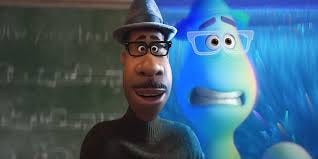
Of course Soul is now racist: This is why we can't have nice things

I have been doing a lot of writing on the topic of wokeness gone awry and cancel culture at Medium.com

Here is one of my latest:

Brandee Blocker Anderson, is an Ivy-League-educated lawyer, teacher, and activist preaching anti-black bias in Disney and posted a video that made me pull my hair out on first viewing.

Her video concluding that “Soul” — a well-meaning effort by a film studio to show inclusion by hiring a black writer, promoting him to co-director and consulting with several black musicians — is racist goes a long way to diluting the concept of racism.

I too was exposed to critical race theory in my film courses in college but it’s not supposed to be a tool to damn anyone that doesn’t make films along a narrow definition of wokeness. Before anyone criticizes a film like “Soul” without recognizing the context in which the film was made, they should try to re-write a basic plot outline of what you would rather see in a film and forecast how others would see it  without giving the benefit of the doubt to your intentions.

At the same time, there’s nothing particularly wrong with presenting possible readings to a film and presenting a personal take. I also want to be mindful that the author of the video has dealt with negative experiences of representation as a black person. My problem in this case is preaching that a film is something it isn’t and not being aware of their own biases.


So here’s the film and I will address each contention by point:

For starters:

Each of these points assumes that Disney has an actual malicious agenda. To suggest even a subconscious subtext to the efforts of Pixar’s first black co-director and head writer of a script should be backed with evidence. Furthermore, it’s not hard to find examples of Disney being guilty of perpetuating those stereotypes in the past, but nearly the entire media landscape in 1950 was racist by today’s standards. Sure you can praise today’s film makers like Steve McQueen or Lee Daniels for avoiding those tropes but they’re not burdened by the original sin of being century-old brands.

Now let’s go point-by-point:

Contention: “Disney doesn’t believe that audiences will connect with a black character in non-human form”

Case in point: Tiana spends much of the screen time as a frog and Jamie Foxx spends much of his time as a ghost here.

My response: This is reaching for straws. Pocahontas and Mulan are easy counter-examples.

Tiana was a frog because it was following the template of the original story. Does the author legitimately believe that people are not aware that Tiana is a black character for the portion of the story that she is a frog?

Jamie Foxx was clearly distinguishable as Jamie Foxx. His voice didn’t become less authentically black.

Contention: Joe decides to literally die to to allow Tina Fey’s character to live.

“He decides that that’s not good enough and opts to literally die to allow Tina Fey’s character to live. The idea that a black character should or would die for a white character is racist. According to the plot, Tina Fey’s character didn’t need someone to sacrifice their live for her to live. Yet the film gaslights Joe into thinking that Joe’s a monster for thinking that the only reason she got her spark for thinking that she was in his body.”

My response:

The author completely misses the plot of the movie. Pay attention here! Joe doesn’t “decide to die.” He IS ALREADY DEAD. In fact, he selfishly cheats death and his character arc is about accepting his fate and balancing his own tunnel vision focus with the needs of others. Furthermore, Tina Fey’s character deserves to live because she is a symbolic stand-in for an unborn baby and that’s what people in the before-life are meant for.

Joe Gardener turning into a monster wasn’t meant as a form of damnation but part of a character arc that showed he has to have less tunnel vision and think about his effects on others. He ultimately ends up a better person. Are character acts not permissible and can black characters never do anything wrong by this author’s standards?

Contention: Any film in which a black character dies so that a white character can live is racist

This is a charge known as the white savior complex and it’s been used to erroneously damn half of all stories with white and black characters in them. The gist of this criticism is that white characters helping black characters out makes black characters seem incapable. On the other hand, a black character helping a white character falls under the magic negro trope, so in order to make a movie that please Brandee Blocker Anderson, no character should ever help one another.

(see: The ridiculous backlash to “Green Book” and the ultimate awarding of an Academy Award because actual people and not internet trolls like seeing people come together in times of division)

There’s nothing inherently racist (remember the definition) with a film that has white characters helping black characters out or the other way around. To preach otherwise is to call for a weird economically unprofitable form of film segregation. Emma Stone’s presence in a movie like “The Help” undoubtedly increases the box office and audience potential for a niche story about maids in the South. True, maybe in 2020, white guilt can get people in those seats about exclusively black stories but it’s not inherent that the insertion of a white story taints the development of black characters in that story (except perhaps a sacrifice in screen time)

The coiner of the magic negro term, Spike Lee, spoke about it in 2000 doing press to “Bamboozled” in response to films like “Legend of Bagger Vance” where the Will Smith character had no other purpose than to help Matt Damon. Many films with black and white characters together do not have that template.

A true critical reading would take note that not all tropes are presented the same way.

Contention: Joe doesn’t see the value in teaching and performing

Again, that’s not correctly reading the film’s plot. Joe will likely continue to do one or both of those things. He just will appreciate life more.

Contention: The film reeks of misogyny because the two black women are difficult and rude. Tina Fey is the only nice person.

This is inconsistent with the way the black community tends to praise tough black women role models.

Jamie Foxx himself won an Oscar for Ray and gave a speech in which he praised his grandmother for beating him. Did anyone bat an eye lash. How did the black community react then?

(2) Jamie Foxx Wins Best Actor: 2005 Oscars — YouTube

Additionally, Ray’s mother in the film (Sharon Warren) was a tough-love role model and was praised for the role.

August Wilson’s plays, the adoptive parents in Fresh Prince of Bel-Air, the characters of Precious, the support system of Earn in Atlanta are not friendly characters.

Anyone who would be softer than, say, Audra Day’s version of Billie Holliday, would get lambasted by critics like you for being embodiments of respectability politics.

Contention: The film is racist because the death fairy (Terry) recognizes another guy for Joe

Terry goes after Joe because films need bad guys.

Contention: The film is racist because it only pays lip service to structural inequality and racism rather than making it the central point of the entire film. A black character, Paul, is eating potato chips and the film is portraying it without commenting about the entirety of food deserts in black communities and the structural sources of black problems in inequality.

A film subtly commenting on inequality. Nice! How about this: Any time a massive film studio chasing profits goes out of its way to make social commentary, you at least acknowledge the gesture. I’m not asking

Did you really expect a film to be about food deserts or inequalities in education and still be a film people want to watch?

Contention: When Terry (the death fairy) goes after Joe, he’s doing it with the intensity of a cop which is bad optics.

Actually, this is a reasonable point. Still, bad optics, and intentional (or even unintentional) racism are two entirely different things. The film could have potentially curbed the scene but it might have been written before the eruptions of Black Lives Matter which significantly changed the narrative (contrary to statistics) of how the greatest problem facing the nation was the relationship police have with black people. This change occurred in a matter of weeks.

Conclusion:

The funny thing is I read critical race theory text books like Bell Hooks in film class. I appreciated these takes but if these critics are damning every film that don’t meet a narrow bar of wokeness, than they’re not that different than the culture police of the 1980s dating from Tipper Gore to Pat Robertson to Sarah Palin. Critical race theory isn’t meant to be used as a damning tool and prevent the the free expression of ideas that film represents.

Recently the popcorn comedy “Tag” was crucified on Roger Ebert’s namesake website for being ignorant of white privilege (apparently, showing white adult men having fun is now a sin), the LGBT story about a gay man accepting family “Uncle Frank” was crucified for not being hard on his family in 1969 when they didn’t accept him (he technically never came out to them), and “Isle of Dogs” can’t be accepted because of white washing.