This blog is sporadically maintained by freelance journalist Orrin Konheim (he regularly writes at http://www.patreon.com/okjournalist) who has been professionally published in over three dozen publications. Orrin was a kid who watched too much TV growing up but didn't discover the joy of film writing until 2003 when he posted his first IMDB user review and got hooked. Orrin runs adult education zoom courses on how to be published, as well as a film of the month club
A pretty stereotypical alien (Alan Tyduk) crashes in Colorado and is diverted from his original plan of destroying the Earth. In the opening scene, he kills doctor Harry Vanderspiegle and morphs his unseemly-looking body (closely resembling 1950s serials) into an alien. His plan? Patiently wait it out in Vanderspiegle's isolated cabin while retrieving the parts needed to repair his ship. He even watches Law and Order for months on end to learn English in case he needs to interact with anyone.
The glitch? Because Vanderspiegle was a doctor, he's summoned for an emergency forensic call when the local doctor gets murdered and he has to fill in. Before long, he is forced to take up the position full-time (until a new doctor can be hired) and must survive social interaction with the locals while trying to cover his tracks for murder and fixing his original ship. Also on his to do list: Show up on time for work and blow up the Earth.
More than anything else, Harry resembles Chance from the novel 1979 film "Being There" in that he's a complete blank slate.
One couple with marital issues thinks that he's not a murderous alien but rather a key to saving their marriage, the mayor (one half of the aforementioned couple) thinks he's a trusted therapist, the nurse takes him to be a trusted friend, a libidinous bartender looking for Mr. Right thinks it could be him and the lost goes on.
Even Vanderspiegle's ex-wife doesn't realize her ex-husband is much different in character and wants to give their marriage another chance.
The mystery over whether he is moved by his new friendships and encounters with the humans of Patience, Colorado enough to not destroy humanity? This is a question that keeps us wanting because Harry's character arc is as rough as sandpaper. There's a great use of the unreliable narrator trope in that his words are frequently juxtaposed with his actions on camera. Similar to the way the characters in Patience might see him, he's not particularly easy to gauge.
The show takes a few episodes to pick up but it has a really strong expanded universe and takes on a number of issues with admirable subtlety
There's a Native American nurse (Sara Tomko) who touches upon First Nations issues (her father is played by Gary Farmer who is from the Cayuga nation); a former Olympian (Alice Wetterlund) who has battled the depression that often comes when an athletic career at the highest levels comes to a close; and a lonely sheriff (Corey Reynolds) who learns to appreciate his (Elizabeth Bowen) deputy the way one would a significant other. There's also a couple (Levi Fisher and Meredith Garrelson) that has marital issues that are played with impressively subtle tones. Their marriage is portrayed with such nuance that the audience sees it the way a friend might see a crumbling marriage from the outside.
Most importantly, the show is never limited by its science fiction roots. It aims to entertain on a deeper level.
I have been doing a lot of writing on the topic of wokeness gone awry and cancel culture at Medium.com
Here is one of my latest:
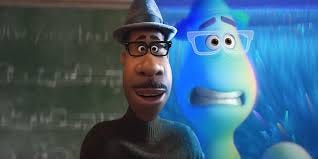
Brandee Blocker Anderson, is an Ivy-League-educated lawyer, teacher, and activist preaching anti-black bias in Disney and posted a video that made me pull my hair out on first viewing.
Her video concluding that “Soul” — a well-meaning effort by a film studio to show inclusion by hiring a black writer, promoting him to co-director and consulting with several black musicians — is racist goes a long way to diluting the concept of racism.
I too was exposed to critical race theory in my film courses in college but it’s not supposed to be a tool to damn anyone that doesn’t make films along a narrow definition of wokeness. Before anyone criticizes a film like “Soul” without recognizing the context in which the film was made, they should try to re-write a basic plot outline of what you would rather see in a film and forecast how others would see it without giving the benefit of the doubt to your intentions.
At the same time, there’s nothing particularly wrong with presenting possible readings to a film and presenting a personal take. I also want to be mindful that the author of the video has dealt with negative experiences of representation as a black person. My problem in this case is preaching that a film is something it isn’t and not being aware of their own biases.
So here’s the film and I will address each contention by point:
For starters:
Each of these points assumes that Disney has an actual malicious agenda. To suggest even a subconscious subtext to the efforts of Pixar’s first black co-director and head writer of a script should be backed with evidence. Furthermore, it’s not hard to find examples of Disney being guilty of perpetuating those stereotypes in the past, but nearly the entire media landscape in 1950 was racist by today’s standards. Sure you can praise today’s film makers like Steve McQueen or Lee Daniels for avoiding those tropes but they’re not burdened by the original sin of being century-old brands.
Now let’s go point-by-point:
Contention: “Disney doesn’t believe that audiences will connect with a black character in non-human form”
Case in point: Tiana spends much of the screen time as a frog and Jamie Foxx spends much of his time as a ghost here.
My response: This is reaching for straws. Pocahontas and Mulan are easy counter-examples.
Tiana was a frog because it was following the template of the original story. Does the author legitimately believe that people are not aware that Tiana is a black character for the portion of the story that she is a frog?
Jamie Foxx was clearly distinguishable as Jamie Foxx. His voice didn’t become less authentically black.
Contention: Joe decides to literally die to to allow Tina Fey’s character to live.
“He decides that that’s not good enough and opts to literally die to allow Tina Fey’s character to live. The idea that a black character should or would die for a white character is racist. According to the plot, Tina Fey’s character didn’t need someone to sacrifice their live for her to live. Yet the film gaslights Joe into thinking that Joe’s a monster for thinking that the only reason she got her spark for thinking that she was in his body.”
My response:
The author completely misses the plot of the movie. Pay attention here! Joe doesn’t “decide to die.” He IS ALREADY DEAD. In fact, he selfishly cheats death and his character arc is about accepting his fate and balancing his own tunnel vision focus with the needs of others. Furthermore, Tina Fey’s character deserves to live because she is a symbolic stand-in for an unborn baby and that’s what people in the before-life are meant for.
Joe Gardener turning into a monster wasn’t meant as a form of damnation but part of a character arc that showed he has to have less tunnel vision and think about his effects on others. He ultimately ends up a better person. Are character acts not permissible and can black characters never do anything wrong by this author’s standards?
Contention: Any film in which a black character dies so that a white character can live is racist
This is a charge known as the white savior complex and it’s been used to erroneously damn half of all stories with white and black characters in them. The gist of this criticism is that white characters helping black characters out makes black characters seem incapable. On the other hand, a black character helping a white character falls under the magic negro trope, so in order to make a movie that please Brandee Blocker Anderson, no character should ever help one another.
(see: The ridiculous backlash to “Green Book” and the ultimate awarding of an Academy Award because actual people and not internet trolls like seeing people come together in times of division)
There’s nothing inherently racist (remember the definition) with a film that has white characters helping black characters out or the other way around. To preach otherwise is to call for a weird economically unprofitable form of film segregation. Emma Stone’s presence in a movie like “The Help” undoubtedly increases the box office and audience potential for a niche story about maids in the South. True, maybe in 2020, white guilt can get people in those seats about exclusively black stories but it’s not inherent that the insertion of a white story taints the development of black characters in that story (except perhaps a sacrifice in screen time)
The coiner of the magic negro term, Spike Lee, spoke about it in 2000 doing press to “Bamboozled” in response to films like “Legend of Bagger Vance” where the Will Smith character had no other purpose than to help Matt Damon. Many films with black and white characters together do not have that template.
A true critical reading would take note that not all tropes are presented the same way.
Contention: Joe doesn’t see the value in teaching and performing
Again, that’s not correctly reading the film’s plot. Joe will likely continue to do one or both of those things. He just will appreciate life more.
Contention: The film reeks of misogyny because the two black women are difficult and rude. Tina Fey is the only nice person.
This is inconsistent with the way the black community tends to praise tough black women role models.
Jamie Foxx himself won an Oscar for Ray and gave a speech in which he praised his grandmother for beating him. Did anyone bat an eye lash. How did the black community react then?
Additionally, Ray’s mother in the film (Sharon Warren) was a tough-love role model and was praised for the role.
August Wilson’s plays, the adoptive parents in Fresh Prince of Bel-Air, the characters of Precious, the support system of Earn in Atlanta are not friendly characters.
Anyone who would be softer than, say, Audra Day’s version of Billie Holliday, would get lambasted by critics like you for being embodiments of respectability politics.
Contention: The film is racist because the death fairy (Terry) recognizes another guy for Joe
Terry goes after Joe because films need bad guys.
Contention: The film is racist because it only pays lip service to structural inequality and racism rather than making it the central point of the entire film. A black character, Paul, is eating potato chips and the film is portraying it without commenting about the entirety of food deserts in black communities and the structural sources of black problems in inequality.
A film subtly commenting on inequality. Nice! How about this: Any time a massive film studio chasing profits goes out of its way to make social commentary, you at least acknowledge the gesture. I’m not asking
Did you really expect a film to be about food deserts or inequalities in education and still be a film people want to watch?
Contention: When Terry (the death fairy) goes after Joe, he’s doing it with the intensity of a cop which is bad optics.
Actually, this is a reasonable point. Still, bad optics, and intentional (or even unintentional) racism are two entirely different things. The film could have potentially curbed the scene but it might have been written before the eruptions of Black Lives Matter which significantly changed the narrative (contrary to statistics) of how the greatest problem facing the nation was the relationship police have with black people. This change occurred in a matter of weeks.
Conclusion:
The funny thing is I read critical race theory text books like Bell Hooks in film class. I appreciated these takes but if these critics are damning every film that don’t meet a narrow bar of wokeness, than they’re not that different than the culture police of the 1980s dating from Tipper Gore to Pat Robertson to Sarah Palin. Critical race theory isn’t meant to be used as a damning tool and prevent the the free expression of ideas that film represents.
Recently the popcorn comedy “Tag” was crucified on Roger Ebert’s namesake website for being ignorant of white privilege (apparently, showing white adult men having fun is now a sin), the LGBT story about a gay man accepting family “Uncle Frank” was crucified for not being hard on his family in 1969 when they didn’t accept him (he technically never came out to them), and “Isle of Dogs” can’t be accepted because of white washing.
Wanda Vision (Disney Plus)-With
such mind-boggling layers of symbolism, this is as if the world's best
escape room writers were tasked with writing a sitcom that entrusts viewers to be active rather than passive participants in decryption. The
series takes the viewer on a journey through various sitcom tropes on a decade-by-decade journey with underlying storylines dealing with grief, manipulation, and escapism as a form of evil. With all the painstaking detail that the prodution team implants its easter eggs, this is a sure contender for the most intricate show on television if not its most ambitious. I have little familiarity with the MCU but was able to peace most details together.
Great North (Fox)-It’s hard to tell much through two episodes, but the show isn’t off to a great start. It seems like it has the same boundless potential that any animated show begins with in the post-MacFarland/Groening era with the added pedigree of the cast (Will Forte, Nick Offerman, Jenny Slate) and the allure of a cool setting. But part of the problem is I’m not a Nick Offerman fan. Different stars have different comedic personas and the effectiveness of those personas is somewhat subjective. To me, he’s generally a manly man with no comment on any modern image of masculinity. When he sings the theme song dedicated to hard work, or espouses the value of waking up ridiculously early, and having birthdays devoid of emotion, there are characters who serve as reluctant foils to those plans but Offerman’s character (much like his trademark P & R character) doesn’t have that much commentary. One nice detail is the interracial marriage between Offerman's adult son (Forte) and an import from California (Dulce Sloane).
Call Your Mother (ABC)-Starring Kyra Sedgwick as Jean, it’s an old-school multi-cam sitcom that strives so hard to squeeze a peg into an outdated sitcom format of a round hole that it‘s almost adorable. The show is about an empty nest mother who moves to LA to be closer to her kids and simultaneously rediscover her identity aside from her kids.
If you paid close attention, the two parts of that last sentence were complete opposites and that sort of clash of premises is rearing its ugly head quite haphazardly so far. In one episode daughter Jackie tells her mom Jean she feels neglected, and in every other episode Jackie is trying to get space from Jean like a cloying mother. Anywho, this is like Mary Tyler Moore if Moore found her Mr. Right, had kids, spent 18+ years tending to that whole thing, and came out on the other end looking for her new purpose in a spunky way. Based mostly on Sedgwick's charm, the show is mildly passable on the whole and has the occasional moment for an emotional payoff.
Call Me Kat (Fox)-A successor to "New Girl" in that it's a celebration of a woman owning up to her quirkiness and (by extension) her singleness. The problem is this character (Mayim Bialik) is written as over-the-top quirky for the sake of being quirky and the inauthenticity makes her, for lack of a better word, uncool. The show's breaking of the fourth wall
Mr. Mayor (NBC)-Another entry in the canon of Tina Fey and Robert Carlock that's a little more "30 Rock" than "Unbreakable Kimmy Schmidt." The humor is clever but skin-deep. Don't expect pathos-driven growth with the narrative highs of Kimmy, Titus and Jaqueline. At the same time, the show, set in the Mayor's office of L.A., has much less of an insider vibe. Show biz types celebrating the ordeals of being millionaires and running into network standards has gotten tired. As it's mostly episodic, the show lives or dies by the episode but it's hard to deny that the show hit a lot of home runs in the back half of the season.
Young Rock (NBC)-Dwayne "The Rock" Johnson has cemented his status over the past couple decades as a lovable guy. He's a self-aware hunk of beefcake and he's been relegated to action roles but his public persona has been that of an ideal celebrity. He's often talked about running for president and, while I'm sure his reasons are more noble than Trump, the last thing I want to meditate on is another celebrity president. Unfortunately, the show unironically posits that Johnson (as himself) is the 2032 candidate for president and it reeks of of self-congratulations. There's a difference between most of us liking The Rock and The Rock making a show about how he got to be so likeable. The show is also only slightly self-aware to be effective enough commentary on the relationship between celebrity and cultural/political clout.
Fortunately, that's just the framing device. Through two episodes, it's basically just a typical adolescent comedy that could easily be called "It's not easy being a jock" as the 15-year-old Dwayne Johnson is twice the side of his peers. It's moderately charming.
1. The
Great (Hulu) -Fans of the 2018 film “The Favourite” will
appreciate the way writer Tony McNamara portrays idle pleasures and high drama
as two sides of the same coin—ultimately a game that the nobility must play to
curry favor with those more powerful than them. As in “The Favourite” the
hierarchy leads upward to a monarch (Nicholas Hoult) with absolute power. That’s
where the show presents a stark contrast between the villain and heroine (Elle
Fanning) Catherine the Great who history tells us will come to modernize Russia
with her rule. The question is when and finding the answer has been quite a
ride so far.
2. Dead
to Me (Netflix)-Newly widowed Jen Hardy (Christina
Applegate) attends a grief group where she makes the acquaintance of a
strangely eager Judy (Linda Cardinelli). Judy chips away at Jen’s veneer until
she forms a makeshift friendship. Or at least that’s how it seems. Within the
first few episodes of the inaugural season of “Dead To Me”, it’s revealed that
Judy isn’t a fellow griever but someone involved in the death of Judy’s husband
and that her guilt is driving her to make it up in some karmic fashion. It’s a
premise Hitchcock or Fincher would have killed for, playing out in a slow
burning series. The second season expands the scale of twists--the introduction
of an identical twin to the deceased is deliciously soapish (a cheap excuse to
keep James Marsden employed)--but more importantly, it heightens the emotional
stakes.
3. Brockmire
(IFC) -A
lot of TV in the #metoo era is about men getting consumed by dark pasts and no
one seemed more hopeless than the superhumanly aloof baseball broadcaster
Jim Brockmire in the first season, but his redemptive arc that gelled in
the final season makes such a light out of the tunnel not only seem possible
but easy-peasy. That’s really an “It’s a Wonderful Life” scale miracle worth
celebrating. In the final season, the show leapt over a decade into the future
in the midst of a technocratic dystopia. Our loose-lipped hero is charged not
just with personal rehabilitation but saving baseball as we know it. Pretty
ambitious for a show that, remember, originated out of a “Funny or Die” sketch.
4. Ramy (Hulu)- The titular Ramy (Ramy
Yousef) is a Muslim-American who walks the walk, but with his backwards cap and
scruffy beard, he might be too far out of place on a season of Jersey Shore. Or
at least, that’s the Ramy at the start of season 1. In the show’s second
season, Ramy seeks a spiritual mentor (Mahershala Ali) in Sheik Malik and the
show’s central relationship maintains an air of enigma. Malik projects nothing
but warmth but never gives Ramy easy answers. Whereas most shows about single
guys are about wanting to get laid, this is a show about a guy who wants to veer
away from sexual temptation to attain spiritual enlightenment. How refreshing
is that? The show also has a penchant for experimentation along the lines of “Louie”
or “Master of None” (though way better) as it shifts the spotlight around.
5. What
We Do in the Shadows (FX) - One of my serendipitous discoveries
last year, this adaptation of New Zealand legends Jermaine Clement and Taiki
Wahiti shows no signs of losing its edge. With Laszlo assuming the alternate
persona of Jackie Daytona just to escape a fight, Colin Robinson becoming
omnipotent through an office promotion, and Nadja gaslighting an octogenarian
just to get back a necklace, this is one of the most consistently brilliantly
plotted out TV shows on a per episode basis. As a quartet of vampires who have
lived hundreds of years longer than the average human, they’ve largely been set
in their ways like your creaky grandmother who can’t understand e-mail. Which
is why the contrasts with Colin Robinson holding an office job work so well on
a humor level or why Guillermo’s character development works so well in pathos.
6. The
Boys (Amazon) –“The Boys” reached a new level of gripping
as the evil guys became eviler, the good guys got their shit together, and
everyone in the middle was forced to make a choice. Not only is this show not
some hyper-merchandised part of the MCU, it’s technically not a super hero
show. In this universe, super heroes are really a façade controlled by an evil
company (although an evil façade is probably an accurate description of Marvel
Studios, I’m guessing) in which children buy and inject a chemical. The show is
allegorical to all a plethora of wrongs stemming from celebrity culture. In the
second season, however, the show took on a darker tone which came with its own
set of ups and downs but it was never easy to peel your eyes away. “The Boys”
also deserves credit in its second season for pushing Hughie to the side and
becoming a true ensemble show.
7. Upload
(Amazon)-Greg Daniels’ meditation on a class-based afterlife in
which only those who pay can get their minds transferred to a lakeside resort
after their body gives up on them, is sure to be classified as a comedy based
on the pedigree of the creator (Daniels is most famous for “The Office”). But
this is inaccurate. I rarely laughed and there’s nothing wrong with that.
“Upload” is a thoughtful sci-fi piece that poses harder questions in a
light-hearted way about our ideal reality and class. The show also has parallel
mystery and romance story lines that pace along well under the main arc.
8. The
Circle (Netflix)-Before the virus caused such
massive shifts to our world, the American version of this show was already
among the buzziest on television. The central gimmick-- isolated strangers
tasked with growing bonds over social media and sussing out each other’s
authenticity — surreptitiously became one of the most prescient mirrors of our
era is we were forced to quarantine in pretty much the same way. But while the
contestants were quarantined, that didn’t get them down. They danced for no one
but themselves (in one of the most bizarre and best sequences of the show),
kept themselves happy and busy, made incredible friendships, and occasionally
fell for one another. Through four different countries, the show endured as a
fascinating social experiment, because it reflected how online spaces allow us
the freedom to present ourselves in a society with challenges therein.
9. AP
Bio (Peacock)-From outré comedy writer Mike Patrick O’Brien
(responsible for some of SNL’s weirder sketches of the decade), “A.P. Bio” was
miraculously rescued from cancellation-land in its third season by NBC’s spin-off
paywall network. The show’s anti-hero, Jack Griffin, started out as a take on
the bad teacher trope, ratcheted up to absurdium: He wasn’t just apathetic
about not teaching biology, he actively avoided it to the point of logistical
inefficiency. After a few episodes the show found a strange groove and morphed
into an anti-sitcom sitcom in which Jack does indeed bond with his students
(partially through guilt) while retaining his bitter apathetic ways. The ending
of the second season promised an escalation as Helen DeMarco (Paula Pell) was
enrolled in Jack’s class which meant an end to his charade. Unfortunately, the
show reneged on this direction in the first episode which meant more
predictable shenanigans. Fortunately, the show’s shenanigans are still sublime
with one of the best ensembles on TV.
10. Fargo (FX)-Told in exquisite visual detail, this crime saga of two
competing factions -- the Italians and African-American mob families in the
1950s— is one of the best educations for how and why mobs are formed that this
reviewer has seen (and, mind you, this is a pretty saturated genre). “Fargo”
postulates that mobs are disenfranchised groups shut out of the mainstream
economy who must combine a hierarchy with muscle to claim their space among
rival disenfranchised herds. The more you know, kids! In its fourth season, the
series is an anthology that’s spiritually tied to the Coens 1996 film and
nothing is more Coenesque than rich, eccentric characters. On both sides of the
Fatta/Cannon feud, there was an ample amount of iconic larger-than-life figures
(congrats Chris Rock on finding a role) and eccentric scatterbrains to make
Joel and Ethan would be proud.
11. Star Trek: Lower Decks (CBS All-Access)-Until
this year, Star Trek had aired a combined 732 episodes and (as far as I know)
only two have ever focused exclusively on the lower ranks of the ship. While
TNG’s “Lower Decks” and Voyager’s “The Good Shephard” were a start, there are
still so many holes in Star Trek's supposed post-capitalist society:Wouldn’t there be any slackers or rebels?
Fortunately, Beckett Mariner (Tawny Newsome) has traits of both. This is a show
that is deeply in tune with the subject that it’s parodying. If you’ve ever
wanted the “Next Generation” characters to loosen up beyond a boring jazz
trombone open mic or a poker game that no one mysteriously goes all in on (both
tropes that “Lower Decks” lampshades with glee), this is the show for you.
12. Bless the Harts (Fox)- The endearing portrait of
small-town Carolina life is rarely condescending and when it is, it comes from
the perspective of a native daughter (“Up All Night” show runner Emily Spivey)
poking fun at her own friends. Each of the four main characters is extremely endearing and
there’s been a lot of world building towards some of the lesser characters (including
the high-pitched Randy and the cheery news lady whose mouth is glued into a
smile ala the Jack Nicholson Batman film). The show centers around a lower
class North Carolina family and a waitress with modest aspirations to rise above
her station; her sly mother (whose primary motivations in life are besting her
rival Crystal Lynn, feeling young enough that she can flirt with construction
workers, and pulling off semi-fraudulent schemes), her boyfriend (a trucker persona
who’s openly a teddy bear underneath), and her dead-panning daughter.
Cobra Kai
(YouTube/Netflix), Middleditch and Schwartz (Netflix), Miracle Workers: Dark
Ages (TBS), Never Have I Ever (Netflix), Nora from Queens (Comedy Central), Solar
Opposites (Hulu), Space Force (Netflix), Teenage Bounty Hunters (Netflix),
Unorthodox (Netflix), We Are the Champions (Netflix)
Everything else
I watched:
American Dad (TBS)*, Archer (FX), Animaniacs (Hulu), Black Monday
(Showtime), BoJack Horseman (Netflix), Broke (CBS), Carnival Row (Amazon), Comedy IQ (BYU TV), Connected
(Netflix)*. Crossing Swords (Hulu), Everything’s Gonna be OK (Freeform), Explained
(Netflix), Five Apartments (Peacock), Fresh off the Boat (ABC), Duncanville
(Fox)*, Good Girls (NBC), Good Place (NBC), Joe Pera Talks to You (Adult Swim),
Holey Moley (ABC), Hollywood (Netflix), Hoops (Netflix), Intelligence (Peacock),
Kidding (Showtime), Last Week Tonight with John Oliver (HBO), Loafy (Comedy
Central), Medical Police (Netflix), New Pope (HBO)*, Ozark (Netflix)*, Pen15
(Hulu), Politician (Netflix), Queen’s Gambit (Netflix), Quiz (AMC) , Saved by
the Bell (Peacock), Sex Education (Netflix), Schooled (ABC), Schitt’s Creek
(Pop TV), Simpsons (Fox)*, Solar Opposites (Hulu), Some Good News (Youtube), Space
Force (Netflix), Stumptown (ABC), Studio C (BYU TV), Tales from the Loop
(Amazon), A Teacher (FX), Tiger King* (Netflix), Transplant (NBC), Twilight
Zone (CBS All Access), Unbreakable Kimmy Schmidt (Netflix), Umbrella Academy
(Netflix), Unorthodox (Netfflix), Upload (Amazon), Utopia (Amazon), Waco
(Netflix), Where’s Waldo (Peacock), White Lines (Netflix), Zoey’s Infinite
Playlist (NBC)
Cobra Kai (YouTube Red/Netflix)-The catharsis of landing a
devastating flying kick at your bully is at the core of the Cobra Kai
experience. The bully-bullied relationship took on added complexity in the
show’s second season as it seemed like everyone had an axe to grind based on
their socio-economic status or lack of a father figure or the classic “you
kissed my boyfriend, prepare to die” scenario. Yes, it was a soapish season but
it was one that built the world and developed a lot of solid supporting
characters
.
Miracle
Workers: The Dark Ages (TBS)-This would likely be my tenth pick and I was prepared to write it off, but upon rewatch,
however, this show is too darn clever. Show runner Simon Rich wrote the show
“Man Seeking Woman” and the short story “What in God’s Name”, upon which the
first season is based on, and he is a comic genius. His story of extremely
unlikely upward mobility in an era where doing anything other than dying of the
plague is virtually impossible.
Middleditch
and Schwartz (Netflix)-A live special of Thomas
Middleditch ("Silicon Valley") and Ben Schwartz ("Sonic the Hedgehog") are geniuses at this art form. They
effortlessly switch characters; incorporate comic tics very early on so you're
laughing sooner than later; and think several steps ahead to where the story
should go. It's not too far-fetched to think that they could write a sitcom
pilot on the spot. Jesse David Fox wrote an excellent article about how this
could resurrect the
often maligned form of improv, but the problem is that most improv shows you
see don't feature people with these abilities. The only problem is
that Middleditch and Schwartz only have three episodes.
Never Have I Ever (Netflix)-Co-created by Mindy Kaling, this teen comedy
centers on an American-Indian teenager and gleefully subverts the stereotype
that a South Asian teenager is obedient and primarily focused on academics.
Sure, Dev is smart but she uses her good grades to shove it in her frenemy’s
face and begins her sophomore year making a beeline straight for Boyfriend City
(or at least sloppily attempting to land there). “Never Have I Ever” dramatizes
the dichotomy between immigrant norms and assimilation in a very funny package
and won me over quite a bit by zigging where I expected it to zag. The first
season closed on one hell of a rewarding tear-jerker.
Nora from Queens (Comedy Central)-Awkwafina
broke out in “Crazy Rich Asians” and has had a number of notable roles on
screen in an astonishingly short time but nothing is as pure a form of her
comic gifts as this show. Awkwafina is a developmentally stunted late
twenty-something with minimal job credentials who lives at home and completely
owns her mediocrity in all its glory.
Solar
Opposites (Hulu)-The sophomore effort behind the team that bought
us “Rick and Morty” (Mike McMahon and Justin Roliand) brings us a similar
playground of extreme high-tech humor without the nihilism or needlessly
complex mythology that the former has. The concept of the show—aliens have to
present some semblance of normalcy--has been done many times ranging from “Mork
and Mindy” to “Third Rock from the sun”, but the jokes fly at a faster pace
than even by 21st century standards. The show casually throws out a
very wide range of concepts
Space
Force (Netflix)-I get the backlash about how lazy it is to rip a show premise
from the most bizarre thing in the news. At the same time, both TV insiders and
critics know the premise of a TV show is often what gets the show greenlit and
is a very incomplete measure of a show’s worth. Yes, the show has plot holes
the size of swiss cheese but the solid writing of sitcom pros is on display.
Like “The Office” (of which Greg Daniels, Brent Forrester and Paul Lieberstein
are also writers here), the characters all have strong comic foundations and
there are some very intriguing character pairings. Humorwise, the show splits
the balance between poignant satire and throw-away absurdity.
Teenage Bounty Hunters (Netflix)-Call
it the “13 Reasons Why” effect. Netflix has developed a wide ilk of teenage
shows and this one hits the mark really well. Bounty Hunters hones in on the
hypocrisies and occasionally progressive homely vibes in the culture of
Christian boarding schools. Pre-marital sex is the opposite of brag-worthy here
and group prayer is in. Our heroes are twins Sterling and Blair and they’re
juggling a little bit of everything:
juicy sex triangles, a secret side gig as bounty hunters (think Nancy
Drew, but a bit more hard-core), family troubles, and a refreshingly honest
look at navigating religious ethics.
Unorthodox (Netflix)-As someone who has spent time on the fringes
of an Orthodox community in Richmond, Virginia, I have seen modern Orthodox
Judaism up close, and have often heard horror stories about some communities in
the Northeast and this is what this show is about: The entrapment that
countless individuals face growing up in such a religious state of insularity
where they’re kept from even knowing there’s any other way of life. The
magnitude of this knowledge differential is ripe for drama and this miniseries
goes a long way to telling that story from a well-researched perspective.
We Are the Champions (Netflix)-As
someone who’s been fascinated with some of the world’s most bizarre sports (Bog
snorkeling, chess boxing, canal jumping are a few of my favorites), this is my
bread and butter. At its height, Rainn Wilson’s narration and
Nature-Channel-style storytelling captures the glorious spectacle of something
I was already enthusiastic like cheese rolling. Things like hair styling or dog
dancing weren’t things I ever felt I’d be caught up in, but the format of the
show with its the gradual balancing of storylines and exposition made pretty
much any absurd competition watchable.
TV has had an amazing year which has been a blessing during the quarantine. There are a number of shows that would have made honorable mention status in most other years: Animaniacs (Hulu), Archer (FX), Five Apartments (Peacock), Medical Police (Netflix), Studio C (BYU TV), Twilight Zone (CBS All Access), White Lines (Netflix)
How can you make an invincible character work dramatically? A walking dues-ex-machina like Superman is much less dynamic then, say, the X-Men who have various strengths and weaknesses.
Ahh, but kryptonite, there’s the rub. So if correctly employed in a script, Superman would either be completely on or completely off. Still kind of clunky, no?
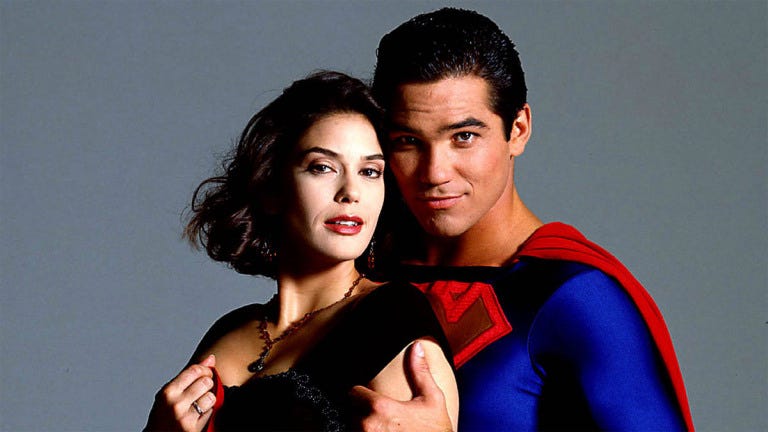
That concern was on my mind when I decided torevisit Lois and Clark. The 1990s Superman reboot that focused on the budding romance between Superman and reporter Lois Lane was notable for one of my first celebrity crushes in Teri Hatcher and, I can’t remember much else, unfortunately.
What I found was a show in the very conscious mold of a screwball comedy. The genre solidified on stage and on screen during the Great Depression with a society reeling from the loss in wealth and class status. Status is key to the genre as both parts of the romantic coupling have a mix of higher and lower social statuses in relation to the other that must be bridged to make a more perfect union. For instance, in Bringing Up Baby, Katherine Hepburn’s character has the assets of having more inner confidence and being more fun than Cary Grant’s character while having the disadvantage of being a woman and having less of an actual job (she appears idle rich). In Ball of Fire, Barbara Stanwyck’s character has the assets of confidence, sexual experience, street smarts and quite possibly greater material wealth (she’s the sweetheart of a mobster), while her counterpart (Gary Cooper) has the assets of stability (he has a house which she needs), and a different sort of cultural status as a member of an academic aristocracy of sorts.
In Lois and Clark, Lois Lane is a whip-smart and well-connected reporter thriving in a man’s world. She’s literally the boss of Clark which is the clearest difference of status attainable. So what does Clark bring in return? Secret super powers! It also helps that their career as muckraking reporters (which almost involves more muckraking than would be permissible by modern standards) get them into a lot of trouble so that Clark can come in handy. Thus, Clark’s struggles as a man trying to create a life for himself often comes down to the decision over whether to use his super powers and how to do it subtly.
Like the most famous screwball comedy about reporters, His Girl Friday (or the play The Front Page from which it drew its inspiration), Lois and Clark also harkens to an earlier era of the newspaper industry.
Let’s talk about how Lois and Clark treats newspapers:
In this version of the Daily Herald newsroom, the boss, Perry White, has a hard-nosed management style might come across as cruel by modern day standards. His biggest concern is getting the scoop and he fosters a hyper-competitive environment dedicated to that aim. Reporters seem to be demotes or promotes reporters based on their ability to get him juicy information.
In a modern day newsroom, an editor would assign beats to reporters and work on building an audience across multiple platforms. He or she would have a team dedicated to what’s known as long-form journalism to take on big-issue stories such as government corruption or (in this universe) the dastardly deeds of super-villains. They wouldn’t switch reporters to whatever story is hot at the moment, because the editor would want to build brands. This would involve building a following among the the community for their crime reporter or reporter for the mayor’s office.
The function is different here for obvious logistical reasons. Lois Lane needs to be in every story, so she has to be covering every beat and be at the center or else the episodes are 1% as interesting. Additionally, Lane needs to have powers that are comparable to super powers in her ability to scoop out a story.
But more importantly, in the days of Hecht and MacArthur, scooping was everything. Rival newspapers in most major cities were fighting enormous circulation wars and newspapers would print two editions a day so that readers could be apprised of the latest news immediately. Think of it as the twelve-hour news cycle. In other words, customers made their choice between competing products twice a day and a big pay day could await if one newspaper if they could feature details about a story that another paper didn’t have.
Despite what this show wants you to think, life or death doesn’t depend on a news story being released so waiting on a story long enough to ensure accuracy or quality is generally a better thing.