Showing posts with label racial politics. Show all posts

Wednesday, August 04, 2021

My Take on the Critical Race Theory Controversy in Schools

I met an extremely lovely person last night named Laura who said she'd read my stuff and though I normally post to Medium and Patreon these days, I thought I'd add one of my more complex pieces on critical race theory to give her (and whatever audience I have left here) some fuel for banter. 

While I have been vocal of wokeness (which I would define as the overapplication of critical race theory as a weapon), the early 2000s version of Orrin Konheim was an enthusiast of critical race theory.

I went to the University of Mary Washington for two years and everything from English 101 to Urban Geography to Film Studies had elements of CRT in them. One of the big four civil rights figures (Congress of Racial Equality co-founder), James Farmer, had a teaching post at Mary Washington when he died and the James Farmer Multicultural Institute bought over several speakers and so I heard Julian Bond and Roger Wilkins. I gobbled all of these lessons up and enjoyed talking about generational wealth and redlining to my peers.

But times have changed. Somewhere around 2015, pop culture writers and twitter activists felt that the easiest way to see the world and ways to fix it through the narrow dichotomy of racist or not racist. What’s more they thrive off oversimplification and have built a cottage industry around exploiting racial grievance.

Despite all that, I can more reasonably make conclusions on where I feel CRT is used tenuously after having studied it in the first place. I also have the credibility to argue against its overuse having known where the bounds are.

The idea of outlawing it for cheap political points with an ignorant base as the Republican party is doing in Texas and Florida can be just as bad. The problem is that Governors Ron DeSantis and Greg Abbott are groveling yes men to Trumpism which discredits any sincerity they have might have in the present and reaffirms the Left’s position that these movements are racist.

But that doesn’t mean that every criticism of Critical Race Theory in schools is invalid. In a Seth Meyers monologue, the late night show host was taking down Senator Ted Cruz’s anti-CRT race theory rant with the defense that CRT was only taught at the college levels so therefore the idea that CRT is invading secondary schools is a classic strawman theory. In other words, Ted Cruz is an imbecile who’s arguing against something that doesn’t exist. I completely agree with the first part that Cruz’s continued presence in Congress is an insult to democracy. However, the latter point fits the (often true) narrative of how the Right often takes up dumb crusades against bogeyman (socialism, the unborn, rock lyrics). But in this case, the left is wrong because if we didn’t teach CRT in secondary schools than there wouldn’t be any battle over these bills in the first place.

This also comes eerily close to the lack of any productive discourse about cancel culture that can be had when someone on the left says “Cancel Culture isn’t real.” Let’s start by acknowledging something exists before we can tackle the questions over whether it’s a good or bad thing.

What’s also interesting to note is that if you look at the Idaho bill, it’s not rallying against CRT at all despite Wonkette’s equally spurrious argument.

Take a look at the text:

That individuals should be adversely treated on the basis of their sex, race, ethnicity, religion, color, or national origin.

That individuals, by virtue of sex, race, ethnicity, religion, color, or national origin, are inherently responsible for actions committed in the past by other members of the same sex, race, ethnicity, religion, color, or national origin

The new Idaho law is simply against people misusing CRT in the wrong ways. Are any of the proponents of CRT wanting to use critical race theory to make white students feel inferior to their classmates or rack them with guilt over their status? In principle, CRT isn’t designed to do these things but there are certainly many advocates of it who do use it in those ways, so I fail to see any red flags here.

Furthermore, the Left is calling bogeymen of their own when they act like the entire history curriculum is a white supremacy vehicle. There is no way to pass the AP US history or history SOLs without being aware of the horrors of slavery, the treaties we broke with the Indians, and Japanese internment camps.

Besides, to add more content about the evils of slavery would probably detract from other chapters in what is already a tight schedule. If proponents of critical race theory want to add more content about inequality to the curriculum, I’m not opposed.

However, it does seem that a lot of the media that has been coming out that focus on the black experience does tell us how we should be emotionally processing our nation’s sins, and I feel like some proponents of CRT feel that the job of infusing content about inequality in our country in lesson plans is only complete if we get kids angry that slavery happened.

In the same manner that I lose respect for films that are too preachy about the historic or modern picture they present, the point of history education (or at least good history education) isn’t to get kids emotionally angry about a tragedy like slavery. To simply present what happened accurately will do the job without embellishment or commentary.


Monday, November 09, 2020

Post-election 2020 reactions and resolutions in the Post-Trump era

I have been hoping to get back to writing about films and I am working on something but I wrote this on the night of the election and want to post some of my political thoughts

I've been tuning out the news because it's so stressful. I'm praying that this country did the right thing and put in a president who respects the law and his fellow human beings.

I believe there generally can be a silver lining to every tragedy, but the universe simply has to even out this way if it makes sense.  There's really no silver lining to more years of Trump: It doesn't mobilize good people more than they've been mobilized and it doesn't serve more people in a good way. I've been begging to see how exactly this makes sense.
 
Additionally, I'm not much of a futurist and sadly so little of what people do every four years matters that our voice really only matters every two or four years in this system. 
 
I accept that some people might be better served by a Trump administration, but there are a lot of people who aren't and campaign strategists consciously misled those people into thinking that Biden represented socialism which was the root of all evils and used every smear in the book. I welcome Arizona and Wisconsin and hopefully Michigan and Pennsylvania to the side of reason, while several  other states have let us down as a nation.
 
However, this is also a wake-up call for us that democratic messaging isn't well-received by many in this country for some legitimate reasons. and that sense we had in the immediate aftermath of 2016 of outreach was lost by some of the more extreme fringes of the left in the years after 2020.

We've spent a lot of the last four years not just fighting for the rights of the "disenfranchised" but turning into bullies ourselves. It's one thing to advocate for transgender or gay rights, but it's another to want to destroy anyone who attends a church or has advocated for people on both sides to speak up about these issues. It's one thing to want to uplift black people, but it's another thing to actively rail against anyone who doesn't share your platform on affirmative action. I've been banned from forums on movies simply for having the views of a white male or for having a view on the merits of Thomas Jefferson that differed from the people in my board.

People talk about the disenfranchised in historical terms as if they're permanently affixed labels that work 100% of the time on a macroscopic level when every interaction and inequality needs to be taken in context. The terms "People of Color" and the "Patriarchy" are inherently alienating terms to disenfranchised white people and for a few years, the language of liberal people in certain self-segregated spaces has posited the world through an over-simplistic "white straight men verses everyone else" as if the source of Hispanic, South Asian, diaspora African and African-American struggles in this county are all traceable to the same root causes and consciously created by white people who wanted to maintain supremacy. 

A lot of these people think my problem is with the "disenfranchised" but it's really against jerks. Being a caped crusader for your narrow definition of the "disenfranchised" does not give one liberty or recuse from being a jerk. It was my treatment in this spaces that caused me to contribute roughly eight or nine articles to right-wing publications (alongside people I don't agree with politically) on the topics of intellectual exclusivity and misunderstandings of racism: https://thefederalist.com/2019/02/20/wont-solve-racism-blacklisting-liam-neeson/

This does not mean in any way it is acceptable to vote for someone who ignores facts, demonizes immigrants, never accepts personal responsibility, promotes incivility, and acts like he's above the law.

But it does mean that the responsibility still falls on us as the disenfranchised or as Democrats to explain our views to others if we want them to be convinced, even if that constitutes a micro-aggression or two. It also means that civility and allowing a climate of free speech still applies.

I wrote this a couple days later on how much I'm willing to forgive and forget
 
For the last four years, if you voted for Trump in 2016, I didn't hold it against you as long as you weren't still riding the Trump train. If you weren't calling out a dishonest lawbreaker who was scapegoating Americans for being dishonest, breaking rules, and scapegoating Americans, than that was a problem with me. 
 
Now, whatever you feel about Trump doesn't matter. You don't have power, so I don't have a grudge anymore. You just held some batty ideas during an incredibly unnecessarily dark period of our national history. 
 
Unless you are going to be excessive in not respecting power now (in an extreme version: hatch plots to kidnap Democratic governors or whine about how you feel scared under an administration that I'm guessing won't deport you, defy UN laws to not accept your rightful refugee status, or institute a religion-based ban, I'm not going to care about you until maybe 2024.
 
Yeah, you can tea party all over the place, and I won't like your views, but I don't think the government is in a place of existential crisis. 
 
However, if you were a politician who directly enabled this reign of terror, I will hold it against you. 
 
Every senator, representative, cabinet member, governor, campaign advisor (looking at you Chris Christie, Newt Gingrich and Rudy Giuliani) and especially white house spokesperson who enabled Trump or didn't oppose him loudly enough is responsible for turning us into a third world country.
Mitt Romney, Susan Collins, Lisa Murkowski, Jeff Flake, Bob Corker, Rod Rosenstein, the McCain family, Jerome Mattis, Sally Yates, James Comey, Michael Cohen, Rex Tillerson, and Justin Amash get passes. There might be a couple others I'm forgetting but the rest don't deserve to hold public office.


Tuesday, September 11, 2018

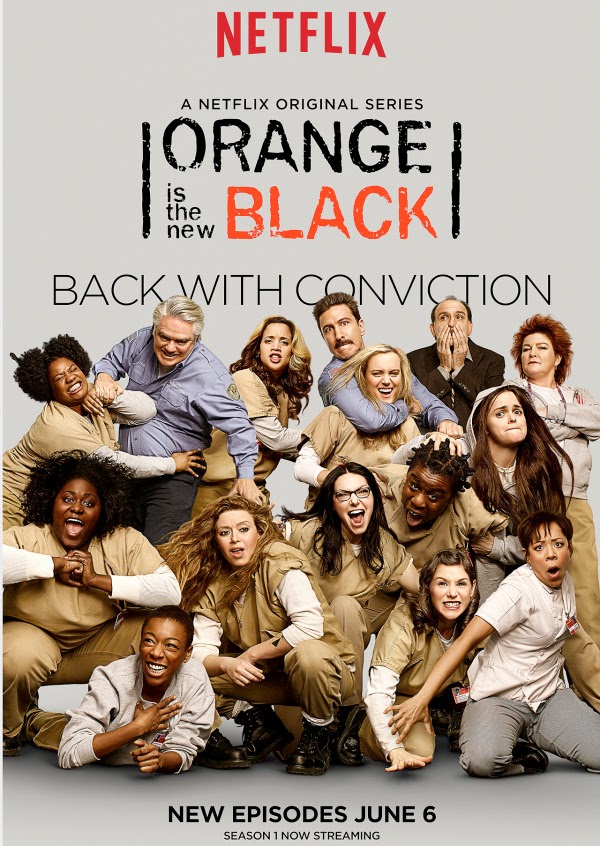
Orange is the New Black Season 5 (aka the one where they riot)


I was hesitant to watch the fifth season (AKA the one with the prison riot) of Orange is the New Black because I was worried about the way the show’s thematic messages were being read by a critical sphere that I’ve made no secret in knowing I have issues with. To review, the show’s fourth season ends with the cruel reign of MCC culminating in a revolt. Poussey Washington, one of the show’s many breakout characters, is accidentally killed by one of Litchfield’s greenest  officers, Bailey Baxter, in the ensuing chaos. The ideas being floated around in response to this episode – that Baxter was representative of the recent wave of newsworthy police brutality against the black population or that death of Washington was analogous to some sort of in-show racism – seemed antithetical to the spirit of the show itself. 


Through its first four seasons, OitNB has been an extremely illuminating show that teaches empathy for people at all ranks of society. Villains and heroes emerge from every rank and position, regardless of race or sexual orientation and regardless of whether one is a correctional officer or prisoner (although we find ourselves having a surprising amount of sympathy for the prisoner). The idea that the Litchfield experience has been less fair to the black population is simply not true although that’s not to deny that the backstories illustrate those inequalities outside of Litchfield quite well.


This is a show that, for the most part, has never told its viewers what path it should take in terms of differentiating wrong from right. This is why it’s somewhat upsetting that it never makes much differentiation between manslaughter and murder in terms of Bailey. Another move that doesn’t move discourse forward is filling Bailey with no emotions but guilt. The narrative has no interest in giving Bailey a man with any forward path to redemption or even sound restoration of mental health. The narrative is geared towards its viewers  who are upset about the persecution of blacks in the U.S. but don’t have the effort to think about the logistics about anything else. In other words, Bailey is a projection of what Black Lives Matter must want for the purveyors of black violence to do and think, and he’s just as easily a projection of their lack of anticipation that someone like Bailey could be anything else. 


The fact is Piscatella was clearly the villain of the fourth season whereas Baxter was one of the more humane members of his guard. Taystee and her fellow negotiators could be forgiven to some degree for having imperfect information,  but by how much? People more invested in the Black Lives Matter movement than myself will find nobility in her cause. 


I, on the other hand, spent my time thinking about how counter-productive her actions were and how they mirror the danger of tunnel vision with advocates pushing too strongly for any one cause of which Black Lives Matter is no exception: She did little to stop the PTSD-inducing experiences her fellow inmates were giving the guards, she felt “justice for Poussey” was more important than advocacy for Daya or keeping the only trained medic out of harm’s way, she failed to recognize the logistics involved in MCC’s limits when she was negotiating, and she didn’t take into account the needs of other prisoners when negotiating. 


The final episode posits Taystee as a Javert-like figure who’s seen the errors of her ways, but the question remains how other viewers interpreted the season. I’m not going to delve into the reviews and it’s not the responsibilty of the show to tell us how to think one way or another. It’s only my wish that the critical movers and shakers in TV see Taystee’s downfall as a legitimate part of her arc that makes sense in-universe. 


On the whole, though, the creative minds behind this show balance dozens of character arcs and get more leeway to mess up a couple. This season still gets a raving review. It has the same levels of nuance and masterful plotting and possibly deserves more credit for experimenting with the time frame. The whole season takes place over a four-day period in which the prisoners go bonkers and this world is turned upside down. Watching this season 16 months after it premiered without any knowledge of how this madness would end was quite thrilling. 


Random notes:

-This season is built like a classic tragedy. It's a study in human folly. What generally happens with tragedies in moviedom and on stage is the story spirals down to the worst case scenario and the title credits roll and we're left to think about the irony of people who could have done good having messed everything up. Audiences traditionally don't want to wallow in the aftermath because that's just plain sad. Let's see how Season 6 will navigate such a tricky balance. 


-I felt more than ever like skipping over the flashbacks. We are glued to the storyline at hand we don't need anything to break the tension at this point. They are completely unnecessary.
 
-I can't remember the name of the Hispanic prisoner who used Gloria's strategy against her but, ethically, it was entirely fair and I'm glad someone got pardoned by the governor.

-There should be a lesson here about how pharmacology and medicine are highly precise science and you shouldn't play God with other people's medicines. It was kind of amusing how Morello felt like "the new doctor" but that plotline could have carried more weight.

-The season kind of reminded me of the film "King of Hearts"

-Biggest plot hole: If Caputo's hands weren't tied, couldn't he have just taken his chances against Leanne and Angie when they were shoving him along to the poo. He had the element of surprise, and at that point, pretty much everything was going to become screwed.

-The show relies pretty heavily on pair bonds in various forms.  There’s: The unlikely friendship of Boo and Pennsatucky; the extremely likely friendship of Leanne and Angie who serve as this season’s most effective comic relief; the aggressive courtship of Nichols to the now-married Morelo; the reconnection of Sophia and Gloria after one hurt the other, and the Chapman/Vause romance that’s now being framed as true love rather than toxic co-dependency. This was a season in which a lot more couples- Flacca/Maritza, Pennsatucky/Boo, “Von Barlow”/Boo, Nichols/Morelo, Chapman/Vause, Angie/Leanne were going through positive phases and weathering the storm significantly better because they had someone by their side. It’s a stark contrast to Taystee and Soso who both felt isolated because they felt the weight of their friend.

Friday, March 04, 2011

Defending the Academy on Diversity

Recent controversy that the Academy Awards are not inclusive of diversity on the basis that they had no African-American nominees are baseless. Statistically, it had to happen sooner or later and I object to the notion that the Academy needs to reserve a spot for a black actor just so it can sidestep the racial debate.The Academy has even had three years where there have been as many as five nominees.

2009: 3-Freeman, Sidibe, Monique
2008: 2-Taraji P Henson, Davis
2007: 1-Ruby Dee
2006: 5-Hotsou, Whitaker, Smith, Hudson, E Murphy
2005: 1-T Howard
2004: 5-J Foxx, S Okendo, D Cheadle, J Foxx, M Freeman
2003: 1-D Hounsou
2002: 1-Queen Latifah
2001: 3-H Berry, D Washington, W Smith

23 nominations over 10 years= 2.3 a year. And that means an average of 2.3/20=11.5% of the nominations have gone to African-Americans. If African-Americans make up significantly more than 11.5% of the SAG, you have little basis for complaint.

Not to mention an additional percentage of non-whites:
2010: Javier Bardem (Hispanic) 2009: Penelope Cruz (Hispanic) 2008: P Cruz (Hispanic) 2007: Javier Bardem (Hispanic) 2006: Penelope Cruz (Hispanic), Rinko Kikuchi (Asian), Adriana Barazza (Hispanic) 2005: Charlize Theron (White African) 2004: Caitlin Sandia Moreno (Hispanic) 2003: Ken Watanabe (Japanese), Benicio del Toro (Hispanic), Keisha Castle-Hughes (New Zealand/Maori), Ben Kingsley (Half-Indian), Shoreh Aghdoshloo (Iranian) 2002: Selma Hayek (Hispanic) 2001: Ben Kingsley (Half-Indian).

This is an additional 15 nominations over 10 years. Theron, Castle-Hughes and Kingsley are only half non-white but still that's an additional 7.5%. So that's 19%.

Let's also establish of there's an American favoritism or a UK/USA favoritism:
2000: Julie Walters (UK), Judi Dench (UK) Albert Finney (UK), Russell Crowe (New Zealand), Javier Bardem (Spain), Benicio del Toro (Mexico), Geoffery Rush (Austalia), Juliette Binoche (France)
2001: Kate Winslet (UK), Tom Wilkinson (UK), Maggie Smith (UK), Helen Mirren (UK), Judi Dench (UK), Nicole Kidman (Australia)
2002: Daniel Day-Lewis (UK), Michael Caine (UK), Catherine Zeta-Jones (UK-Wales), Selma Hayek (Mexico), Nicole Kidman (Australia), Russell Crowe (New Zealand)
2003: Ben Kinglsey (UK), Jude Law (UK), Naiomi Watts (UK), Samantha Morton (UK), Djimon Hounsou (Benin/Nigeria), Benicio Del Toro (Mexico), Ken Wattanabe (Japan), Keisha Castle-Hughes (Australia),Charlize Theron (South Africa), Shoreh Aghdoshloo (Iran)
2004: Sophie Okendo (UK), Imelda Staunton (UK), Kate Winslet (UK), Natalie Portman (Israel), Catalina Sandino Moreno (Colombia)
2005: Judi Dench (UK), Kiera Knightly (UK), Rachel Weisz (UK), Charlize Theron (South Africa),
2006: Helen Mirren (UK), Judi Dench (UK), Kate Winslet (UK), Peter O'Toole (Ireland), Djimon Hounsou (Benin/Nigeria), Adriana Barraza (Mexico), Rinko Kikuchi (Japan), Cate Blanchett (Australia), Penelope Cruz (Spain)
2007: Daniel Day-Lewis (UK), Tom Wilkinson (UK), Javier Bardem (Spain), Marion Cortillard (France) Ellen Page (Canada), Julie Christie (India), Cate Blanchett (Australia) (X2)
2008: Kate Winslet (UK), Penelope Cruz (Spain), Heath Ledger (Australia)
2009: Helen Mirren (UK), Colin Firth (UK), Carey Mulligan (UK), Christophe Waltz (Austria), Penelope Cruz (Spain), Christopher Plummer (Canada)
2010: Colin Firth (UK), Helena Bohman Carter (UK), Christian Bale (UK-Wales), Geoffery Rush (Australia), Nicole Kidman (Australia), Natalie Portman (Israel), Jackie Weaver (Australia), Javier Bardem (Spain),

73/220 nominees are non-American: 33.1%
66.9% of nominees are American
65.9% of nominees are American or Canadian
30/220 or 13.6% of the nominees are from Great Britain
39/220 or 17.7% are European
11/220 or 5% are Australian


Considering almost a 1/3 of the nominees are not from the US and the Academy/Hollywood is centered in the US, charges of xenophobia are not really valid