Showing posts with label Oscar History. Show all posts

Tuesday, January 23, 2024

2023/2024 Oscar Nominations Reactions

Support me by re-clicking on this story at Patreon or Medium if you have an account there.


-The nationalities of the 20 best actor nominees are:

16 US nominees though 2 are second-generation Latin American (Colman Domingo’s parents are from Guatemalan and Belize, America Ferrera is Honduran); 1 Canadian in Ryan Gosling; 1 Irishman in Cillian Murphy 1 German in Sandra Huller; 1 British (2nd generation Irish) in Carey Mulligan

-Zasie Baetz was announcing like she was giving away cars on either the Price is Right or Opera. At first, I was convinced that she was stanning American Fiction but that was likely my bias. Jack Quaid is one of my favorite young stars of Hollywood, but isn’t there still room in Hollywood for Jack and his dad? #FarFromHeavenforever

-I’ve seen 6 of the 10 nominees (Check: Oppenheimer, Killers of the Flower Moon, Anatomy of a Fall, Maestro, Poor Things, Holdovers, Didn’t See: American Fiction, Zone of Interest, Past Lives, Barbie) and 14 of the 20 nominees (Paul Giamatti, Cillian Murphy, Bradley Cooper, Carey Mulligan, Emma Stone, Sandra Huller, Annette Bening, Lily Gladstone, Robert DeNiro, Mark Ruffalo, Robert Downey Jr, DaVine Joy Randolph, Emily Blunt, and Jodie Foster). Of the remaining four, I haven’t seen Zone of Interest holds the least interest to me. I don’t pressure myself to see everything that’s out there.

-The woke crowd will probably be split, but with the surprise inclusion of Sterling K Brown, America Ferrera, and the fact that one woman was still nominated (Justine Triet), they don’t have much basis that the patriarchy squeezed their voices out. To the degree that foreign film enthusiasts overlap with woke advocates (a lot of foreign films are made by white people and that’s all that counts to the woke), there’s much to celebrate on that front as three foreign films have never been among the final ten. I saw Anatomy of a Fall and the subtitles made the story difficult to follow, so audiences will have to adjust.

-Killers of the Flower Moon is the 12th Best Picture Nominee that Robert DeNiro has appeared in: Godfather II, Taxi Driver, Deer Hunter, Raging Bull, Soldier’s Story, Awakenings, Goodfellas, Silver Linings Playbook, American Hustle, Irishman, Joker, and now Killers of the Flower Moon. It’s likely a new record. Leonardo DiCaprio is close behind at 11; Matt Damon, Willem Dafoe; Jesse Plemons (who’s had a streak of 6 in 7 years: Brides of Spies, The Post, Vice, Irishman, Judas and the Black Messiah, Power of the Dog), and Bradley Cooper are tied at 7;Emma Stone is at 5; and Margot Robbie, Gary Oldman, and Paul Giamatti are at 4

-These were the most competitive female acting categories in years. Julianne Moore and Natalie Portman in May December; Greta Lee in Past Lives; Fantasia Barrino and Taraji P. Henson in Color Purple; Rachel McAdams in Are You There God It’s Me Margaret; Rosamund Pike in Saltburn were all in the running. The last one in each category was likely the two elderly ladies from Nyad: Annette Bening and Jodie Foster. I’ve never loved a Jodie Foster performance but somehow she won me over this time. I think, all factors considered, Foster, got in on that extra bit of sparkle she bought to that inspirational role. Bening got in because of the tendency to award people who transform and exhaust themselves. They couldn’t recognize her in the role.

-Congratulations to Bradley Cooper, Jodie Foster and Annette Bening for being in the 5-timers club. Why Cooper is already considered by pundits to be out of running for the award is already beyond me. He completely transformed himself for the role, he keeps the movie watchable through his pure joy, and he’s turned into a great spokesman for classical music through the journey. He also co-wrote, directed, and produced the film. If he doesn’t get an Oscar now, he might get desperate enough to go full-Revenant and get eaten by a bear.

Congratulations to the 2023/2024 Oscar Class. These people all have a screen credit (as determined by Rogerebert.com) in one of this year’s best picture nominees: Adam Brody, Alexandra Shipp, America Ferrera, Anne Rotger, Antoine Reinartz, Barry Corbin, Benny Safdie, Bradley Cooper, Brendan Frasier, Camille Rutherford, Cara Jade Meyers, Carey Mulligan, Carrie Preston, Casey Affleck, Christopher Abbott, Christian Friedel, Cillian Murphy, Daniel Holzberg, David Krumholtz, Da’vine Joy Randolph, Dominic Sessa, Emma Mackey, Emma Stone, Emily Blunt, Emily Cass McDonnell, Erika Alexander, Florence Pugh, Gillian Vigman, Greta Lee, Gustaf Skarsgard, Helen Mirren, Issa Rae, Jack Quaid, Jason Clarke, Jason Isbell, Jeffrey Wright, Jehnny Beth, Jerrod Carmichael, Jesse Plemons, John Cena, John Lithgow, John Magaro, John Ortiz, Josh Hartnett, Kate McKinnon, Keith David, Kingsley Ben-Adir, Leonardo DiCaprio, Lily Gladstone, Lucy Boynton, Margaret Qualley, Margot Robbie, Mark Ruffalo, Matt Bonner, Matt Damon, Maximilian Beck, Maya Hawke, Medusa Knopf, Michael Cera, Michael Urie, Milo Machado Graner, Myra Lucretia Taylor, Olivia Thirby, Paul Giamatti, Ramy Yousef, Rhea Pearlman, Robert DeNiro, Robert Downey Jr, Ryan Gosling, Sascha Maaz, Sandra Huller, Sarah Silverman, Simu Liu, Scott Shepherd, Stephen Thorne, Skyler White, Sterling K Brown, Swann Arlaud, Tate Donovan, Teo Yoo, Tony Goldwyn, Vicki Pepperdine, Willem Dafoe, Will Ferrell

The nationalities of the 20 best actor nominees are:

16 US nominees though 2 are second-generation Latin American: Colman Domingo’s parents are from Guatemalan and Belize, America Ferrera is Honduran; 1 Canadian in Ryan Gosling; 1 Irishman in Cillian Murphy 1 German in Sandra Huller; 1 British (2nd generation Irish) in Carey Mulligan

Sunday, April 30, 2023

Who Should Have Been Invited to the Academy's Acting Branch (a Year-by-Year Simulation)


One of the less publicized elements of the Academy Awards is who gets invited to join the Academy every year. Every year, a press release gets sent out and it usually gets pushed down to the proverbial page six of Hollywood trade magazines. It doesn’t really get much more than an obligatory post on corresponding entertainment websites.

From digging up press releases, it appears that about 20-25 are from the actors branch. This often includes people who have just been nominated for the first time (provided they didn’t get an at-large invite).

This is the 2014 list which includes 5 first-time nominees from the year before, a nominee from 2005 (David Straithairn) who’s paperwork must have gotten lost in the shuffle, a variety of people who were hot at the moment (Josh Hutcherson coming off the Hunger Games; Julia Louis-Dreyfuss having the hit movie Enough Said) with people who had been amassing notable roles for a while (Ben Foster, Beth Grant)

Barkhad Abdi – “Captain Phillips”, Clancy Brown – “The Hurricane,” “The Shawshank Redeption”
Paul Dano – “12 Years a Slave,” “Prisoners”, *Michael Fassbender – “12 Years a Slave,” “Shame”,
Ben Foster – “Lone Survivor,” “Ain’t Them Bodies Saints”, Beth Grant – “The Artist,” “No Country for Old Men”, Clark Gregg – “Much Ado about Nothing,” “Marvel’s The Avengers”, *Sally Hawkins – “Blue Jasmine,” “Happy-Go-Lucky”, Josh Hutcherson – “The Hunger Games,” “The Kids Are All Right”. Julia Louis-Dreyfus – “Enough Said,” “Planes”, Kelly Macdonald – “Brave,” “No Country for Old Men”, Mads Mikkelsen – “The Hunt,” “Casino Royale”, Joel McKinnon Miller – “Super 8,” “The Truman Show”, Cillian Murphy – “The Dark Knight Rises,” “Inception”, *Lupita Nyong'o – “Non-Stop,” “12 Years a Slave”, Rob Riggle – “21 Jump Street,” “The Hangover”, Chris Rock – “Grown Ups 2,” “Madagascar” *June Squibb – “Nebraska,” “About Schmidt”, Jason Statham – “Parker,” “Lock, Stock and Two Smoking Barrels”. David Strathairn – “Lincoln,” “Good Night, and Good Luck.


But what if we made parlor games out of who would get invited each year to the extent that we obsess around predicting the Oscars? Wouldn’t that be fun for us? Well, I can certainly say it was fun for me when I tried this exercise out for myself for the last 15 years.

I’m going to also operate under a few assumptions:

-An actor has to have at least appeared in a film in the past year before the Oscars.

-To squeeze the pressure on the process, 12 per year

-Breakout performances by people who were unknown before will have a harder time getting in because the Academy would want to award people who’ve been at it at least for a little while. At the same time, people who are hot right now, either commercially, or just earned Oscar buzz but didn’t make the cut, would also get strong consideration so there will be a balance between these forces.

-Comedy doesn’t get rewarded at the Oscars so this will be a way that the Academy would be to even the playing field.

-Actors who are successful in another medium like TV or Broadway will get in a bit more immediately once they make a good film

-As with the Oscar nominations, your chances of getting in will go up if you’re attached to a film that gets a lot of awards

-Child actors Hailie Steinfeld and Quevenzhane Wallis were not invited to join the Academy after being nominated. This is probably because they would need parental approval to even watch the other nominated movies and attend Academy-sanctioned events, so I’m assuming the Academy would have a preference for adults

-The Academy would have a need for international diversity to an extent. It would be hard enough for a critical mass to gather around an obscure film from, say, Bangladesh, but the kinds of international films that make dents at the Oscars would gain advantage. After #oscarssowhite, I’m assuming that there was a shift from international diversity to racial diversity

I’ll show you one example of my picks:

2008:


Aaron Eckhart-Eckhart broke out in the 1997 indie film In the Company of Men and had been more of a B-list leading man (someone who might carry an off-beat film) than someone at the top of the casting charts. This pick would be a response to Dark Knight being the biggest hit of the year and spillover from a number of leading roles in less successful films like Thank You for Smoking and No Reservations.


Ann Savage-An 87-year-old actress who dazzled in the 1945 film Detour before languishing in obscurity and being rediscovered at a screening of her film (literally: People didn’t know she was in attendance). She was cast in the indie My Winnipeg.


Brendan Gleeson-Today, Brendan Gleeson is a lot more visible considering his starring role in Mr. Mercedes, his guest role in his kids’ series Frank of Ireland, his lead in the dark morality tale Calvary, and his Oscar-nominated role in Banshees of Inisherin. He had a string of memorable supporting roles but it’s arguable if Cold Mountain or Gangs of New York would have caught the attention enough to meet the threshold.


Dev Patel and Frida Pinto-I’m assuming that the Academy’s love for Slumdog Millionaire also includes a wake-up call that they have few South Asians among their ranks.  


Hiam Abbass-Abbass got some Oscar buzz for the Oscar underdog  The Visitor which managed to land Richard Jenkins one of the unlikeliest lead actor nominations I’ve ever witnessed. She went on to play the mom in Ramy.


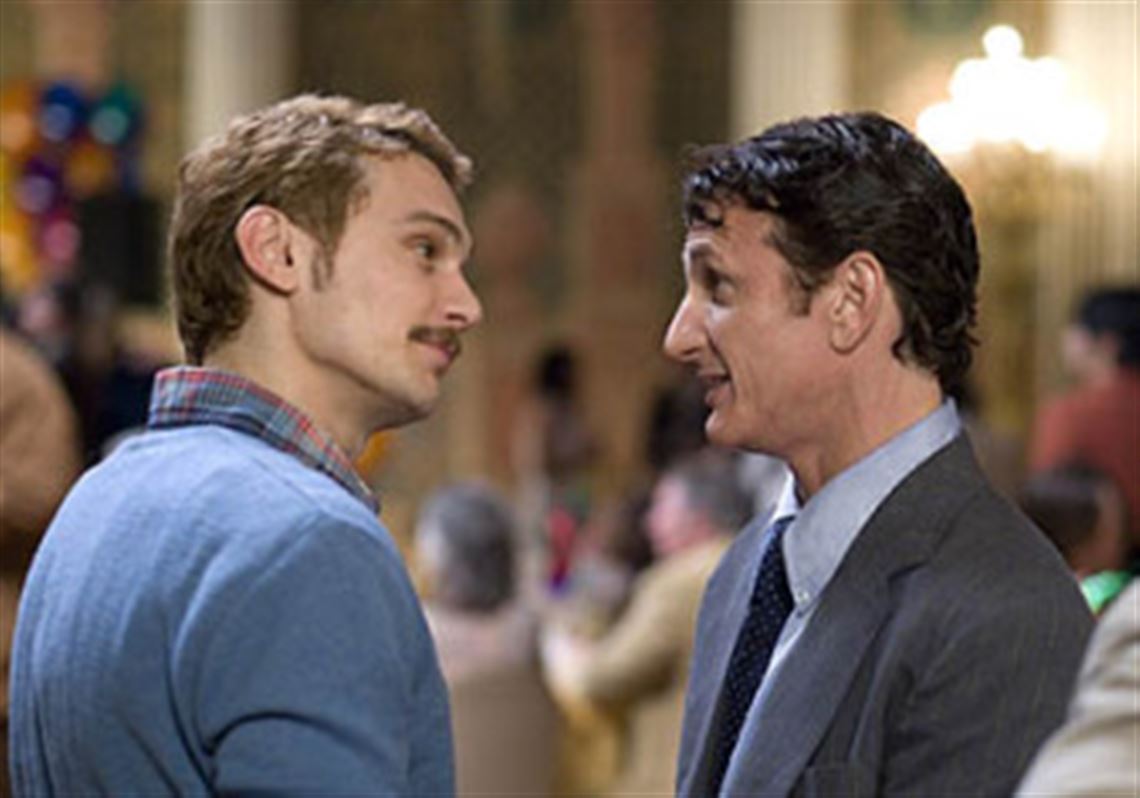
James Franco-It’s highly possible James Franco could have gotten earlier considering Spiderman was such a big sensation when it broke the $100 million mark in 2002 and he had a big presence in all three films. He also did headline his first film Annapolis in 2006, but 2008 is when he starred in Milk (garnering significant  Oscar buzz) which was a BP nominee and showed off his comic (pot-smoking) side in Pineapple Express.


Mathieu Alarmic-Rose to prominence the year before with The Diving Bell and the Butterfly (hello, indie cred) and then was a Bond villain (ironically, in one of the franchise’s more arty attempts with its en media res beginning and brooding pathos) so the commercial box is checked as well.  


Oliver Platt-Frost/Nixon was a BP nominee that featured four character actors who had not been nominated. Michael Sheen, Kevin Bacon, Oliver Platt, and Sam Rockwell. I’m assuming Bacon (who has been acting since the 80s) would have made the cut by now. Although a lot of people like to reverse engineer Sam Rockwell’s career since his Oscar win to suggest he was always hot shit, he was more of a cult figure who was consistently reliable but rarely on the top of the marquee. Sheen’s biggest roles required him to be overshadowed by a bigger personality (Queen, Frost/Nixon). Platt has been one of the Three Musketeers and headlined his own TV show but has he ever had his day in the sun?


Karen Allen-Without checking IMDB, can you name the highlights of Karen Allen’s career outside Indiana Jones? It’s actually not a bad list: Starman, In the Bedroom, Malcolm X, National Lampoon’s Animal House, The Perfect Storm and the Sandlot, although these roles are all pretty small. Still, being a solid working actress for the preceeding 25 years combined with one certifiable pop culture icon as Marion Ravenwood is enough to get her in.


Shia LaBeouf-The only disadvantage would have been youth in 2008. As the heir apparent to Indiana Jones and the leading man of Transformers, LaBeouf was killing it commercially and still made room for a number of smaller films like Eagle Eye, Disturbia, Bobby, and a Guide to Recognizing Your Saints over the past three years.


Thandiwe Newton-Playing Condolezza Rice in W. was a pretty high task even if it didn’t garner Oscar nomination (that director Oliver Stone peaked between 1986 and 1991 all but ensured that none of the actors from W. would never be considered). There wasn’t as much of a push for racial diversity, but there was still some and she was the female lead in Run Fatboy Run the year before and had appeared in the best picture winner Crash. She'd go on to win an Emmy for Westworld.

Runners-Up: Scott Glenn, Emile Hirsch, Christina Ricci, Tina Fey, Amy Poehler, Sam Rockwell, Michael Sheen, Omar Benson Miller


2009:
Danny McBride, Emily Blunt, James Gandolfini, James McAvoy, Joseph Gordon-Leavitt, Maya Rudolph, Melanie Laurent, Michael Stuhlbarg, Melanie Lynskey, Ryan Reynolds, Sam Rockwell, Zoe Saldana

Runners Up: Paula Patton, Rachel Harris, Daniel Bruehl, Dianne Kruger, Rachel McAdams, Bradley Cooper, Rosamund Pike

2010:

Andrew Garfield, Daniel Radcliffe, Dwayne the Rock Johnson, Emma Watson, Emily Mortimer, Jason Schwartzman, Jon Hamm, Mila Kunis, Paul Rudd, Rachel McAdams, Vincent Cassell, Zach Galifianakis

Runners-Up: Olivia Williams, Michael Cera, Patrick Wilson, Steve Carell

2011

Anthony Mackie, Armie Hammer, Beth Grant, Bradley Cooper, Emma Stone, Jay Zhao, Justin Timberlake, Ian McShane, Kristen Wiig, Michael Fassbender, Steve Carrell, Tom Hardy

Runners-Up: Olivia Wilde, Wendy McLoven-Coverly, Matt Lillard, Judy Greer, Ed Helms, Missi Pyle, Rose Byrne, Chris Dowd

2012:

Anne Dowd, Amanda Seyfreid, Aubrey Plaza, Ben Whishaw, Eddie Redmayne, Jason Schwartzman, John Ortiz, Kerry Washington, Martin Freeman, Matthew McConaughey, Rashida Jones, Suraja Sharma

Runners-Up: Billy Connolly, Andrew Sachs, Kyle Chandler, Carmen Ejogo

2013:

Benedict Cumberbatch, Channing Tatum, Daniel Bruehl, David Oyelowo, David Warhofsky, Dwight Henry, Jennifer Garner, Lake Bell, Margo Martindale, Michael B Jordan, Michael Kelly, Simon Pegg, Steve Coogan

Runners-Up: Idris Elba, Joel Edgerton, Isla Fisher, Sarah Paulson, Charlie Day, Burn Gorman, Jason Sudeikis, Will Forte, Kathryn Hahn, Greta Gerwig, Sharlito Copely

2014:

Chris Rock, Chris Pratt, Gugu Mbuthu-Raw, Kim Dickens, Lindsey Duncan, Neil Patrick Harris, Oscar Isaac, Peter Dinklage, Riz Ahmed, Rene Russo, Scoot McNairy, Timothy Spall

Runners-Up: Kristen Stewart, Charles Dance, Matthew Goode, Paddy Considine, Sienna Miller, Jeremy Strong, Merritt Weaver


2015-2022

I'm going to keep this part of the list under wraps for now because I want to either invite guests or submit this elsewhere

Thursday, March 22, 2012

Why do honorary Oscars count as less?

Please click on this link

Something that bothers me more than anything else about Oscar Season is the rarely questioned assumption that Honorary Oscars don't count as much as Oscars in competition.

I'll look at one of USA Today's (or one of many other publications) 10,000 pre-Oscar articles (the newspaper's arts section has a policy of milking every major event in the entertainment cycle to death to compensate for lack of original ideas) and their umpteenth event preview will read something along the lines of "Will director Mary Scorsese win an Oscar in competition or will they be relegated to the less prestigious honorary award?"

And this brings me to the troubling question: Who decided that the honorary awards were worth less than the regular Oscars?

The actors who have won honorary awards (except Peter O'Toole), by and large, are happy to have won Oscars and don't really care whether it was in competition or not. In fact, many of the people who won Academy awards (i.e. George C. Scott, Dustin Hoffman, Marlon Brando, Alexander Payne) detest competition to begin with.

It's even a better experience to win an honorary award because you don't have to go through the trouble of competing. Wouldn't you feel much more esteemed to be acknowledged for an entire lifetime of work then have one good performance?

It strikes me that winning an honorary award is a much greater compliment because they determined that it's not just one role but a person's entire body of work to be of the highest standard.
 Besides, Some of the people who won Oscars in competition were only on screen for less than 10 minutes, and some of the people who won an Academy Award for acting weren't even actors to begin with. Haing Ngor was a doctor who was recreating his life experiences in the Cambodian genocie, Jennifer Hudson was an aspiring gospel singer and Jon Houseman was an acting teacher who filled in for one of his former student's when the original guy cast in the role backed out.
If Sidney Lumet, Blake Edwards, Gene Kelley, Lillian Gish and Charlie Chaplin all treasured there awards, who are we to say that there award is worth less?

I think it's part of our obsession with competition and the athletic aspect of it that informs this view of ours.

Friday, September 30, 2011

Four-time Oscar nominees Most Likely to be Five Timers

Here's my list and rankings in order from most likely to least likely
The Actors:
1. Ed Harris (nominated: Apollo 13, Truman Show, Pollock, Hours) He does so many character parts and still is prolific and is gaining a great reputation in Hollywood after having directed more of his own stuff. He still hasn't won and he's historically been able to score noms for very small and minor stuff. He also chooses roles wisely.

2. Ben Kingsley (nominated Gandhi, Bugsy, Sexy Beast, House of Sand and Fog) He's too brilliant, too prolific, and is getting too many juicy parts not to have something happen soon. He doesn't overdo it but he's had a leading rule in at least one film a year.

3. Geoffrey Rush (Shine, Shakespeare in Love, Quills, King's Speech)-There's a big danger of him being overshadowed by other Brits like Collin Firth, Clive Owen, Jude Law or whoever the next big one is but I think he's fairly hot again after being in the King's Speech so in the next year or two he might get #5 (and I say that with no clue what he's doing next)

4. Daniel Day-Lewis (My Left Foot, In the Name of the Father, Gangs of New York, There Will be Blood)-He's clearly capable of brilliance that makes everyone's jaw drop. The argument against is he's so sporadic and he can turn in a brilliant performance and just have it be in a highly competitive year or whatever. He's not making as many proverbial plate appearances

5. Jon Voight (Midnight Cowboy, Coming Home, Runaway Train, Ali)-He is a little bit over the hill, but I'd say he's one of the 2 or 3 most capable actors over the last decade for someone of his age range. He's in a lot of films and while a lot of them are Blockbusters (i.e. Transformers, National Treasure) I don't see him selling out to the levels of Robert De Niro (unless you consider his comedic acting a virtue). Also, unlike De Niro or Pacino, he doesn't have to fight a former image of himself and run into the wrap that he's doing a caricature of his former self. As a character actor, he gets better as he's less tethered than those two, and on top of that he acts pretty regularly and even in mediocre movies (Enemy of the State, Transformers) he steals scenes.

6. Anthony Hopkins (Silence of the Lambs, Remains of the Day, Nixon, Amistad)-I see it as unlikely. Even though he's been prolific and chooses varied roles, he hasn't got any buzz for anything he's done since nomination 4. I suppose it's not his fault that Bobby, Hearts in Atlantis, Proof, or All the King's Men didn't pan out well.

7. Robin Williams-I think he's already done dark performances and comic performances and inspirationally uplifting performances and there's not a whole lot he can do. There's not the same novelty to Robin Williams bringing out his (still incredible by any standard) rapid-fire multiple-voice comic persona that got him his first nod for Good Morning Vietnam.

8. Warren Beatty (Bonnie and Clyde, Heaven can Wait, Reds, Bugsy)-Already had his Oscar and lifetime achievement award and as Bullworth showed, he's more likely to get it in the directing or writing category these days.

Of the Actresses:
1. Julianne Moore (Boogie Nights, End of the Affair, Hours, Far From Heaven)-Way overdue for a nom on top of being overdue for an Oscar. Great actress who is regularly doing quality work and usually one of the 3 or 4 people anyone producing a film with potential Oscar buzz will go to first.

2. Helen Mirren (Madness of King George, Gosford Park, The Queen, The Last Station)-She's highly popular and is still getting prime roles and she's not as old as people think she is (she's just 66). Her being positioned up this high on my list, however, signifies my lack of confidence for anyone on this list other than Moore.

3. Annette Bening (Bugsy, American Beauty, Being Julia, The Kids Are All Right)-She's still due for an Oscar but I don't they'll nominate her unless there's a good chance she'll win. I also don't think it's likely that her next project will get her a nomination. It might might be a couple years before she's on the radar again.

4. Frances McDormand (Mississippi Burning, Fargo, Almost Famous, North Country)-She's still doing really good work and working with lots of inventive directors. She's older but hasn't been held back in any way by aging as some actresses are (i.e. Michelle Pfieffer, Meg Ryan).

5. Emma Thompson (Howard's End, Shadowlands, Remains of the Day, Sense and Sensibility)-Thompson was much bigger in the 90's than she is now but she still does quality level work, although it is now in films that are less visible (see "Brideshead Revisited). If the Academy is all of a sudden willing to go back to women like Redgrave and Close who haven't been considered for an Oscar in years, then there's no reason that if Thompson does something really impressive, it will go unnoticed

6. Holly Hunter (Broadcast News, Piano, The Firm, Thirteen)-She's been nominated far more recently than Thompson and is a favorite of the Coen brothers (who have lately been producing more Oscar nominees) but she works pretty infrequntly and is drawn to indepedent below-the-radar films. It was a wonder many people caught on to her fourth nomination in "Thirteen" at all.

7. Dianne Keaton (Marvin's Room, Annie Hall, Reds, Something's Gotta Give)-She already got her nod for showing that old people can be attractive, sexy, and appealling in movies. She can't play that card again.

Saturday, March 27, 2010

Pet Peeve of mine with the Oscars

I wish the Oscars wouldn't waste their precious best picture nominations (although admittedly it's expanding) with films that are solely based around the basis of one performance.

I would put Erin Brockovitch, Ray, Capote and arguably The Queen in this category as well as My Left Foot, Shine and Tender Mercies.

Just as we decide the basketball MVP by taking into account the effect of one team without that player vs. the team with the player a strong film is one that I would define as engaging outside of the performance of one actor. That's what acting categories are for. Giving a film a best picture nomination as a way to secure it a place in history and ensure that many movie buffs will check out that film because it's been recommended as one of the five films of the year. The above-mentioned films already get their place in film history because people want to check out the best actor performances in these films. So if these films are not up to par, it's just a waste.

Examples:
Ray would still be a strong movie if Ray Charles weren't in it: The film certainly does a good job at positioning Ray's life within the context of history and the ups and downs of the story had a certain emotional resonance. However, if you replace Jamie Foxx with a slightly less capable actor, the film would have probably dropped to 7th or 8th in the best picture voting behind "Hotel Rwanda" or "Eternal Sunshine of the Spotless Mind".

Erin Brockovitch was an especially unnecessary choice with Soderbergh already getting a nom for Traffic that year. Ask yourself if the film's very existence is even justified without Julia Robert's performance. That was probably the pitch to the studio: Julia Roberts as a skanky, poor and plucky legal assistant, it's Oscar Gold. I would have recommended Oh Brother Where Art Thou, Contender, 13 Days or Almost Famous in its place.

Capote is what I consider to be the worst best picture nomination of the decade. The premise itself of exploring a fish-out-of-water flamboyant urban gay writer in the heartland of America finding himself in the middle of a murder case is gold. But Capote never capitalized on this nearly enough. In fact, a better film with the exact same story came out the year after and it had better performances and lead films. Constant Gardener, History of Violence, New World, Match Point, Walk the Line (which boasted not one but two great lead performances) and Syrianna would have all been better choices.

The Queen is arguable since it's an astute look at politics behind the scenes but would it have lost enough stature to Dreamgirls or Pan's Labyrinth had Mirren not been such a revelation in the film?

Wednesday, September 10, 2008

So anyone who thought ET should have beat Ghandi in '82....

Got some validation today from the winning filmmaker himself....
http://news.bbc.co.uk/1/hi/entertainment/7604095.stm

Sir Richard Attenborough (actor from the Great of Escape) who won an Oscar as director of the film Ghandi recalled seeing E.T. in a theater before the ceremony and thinking that he would most certainly lose the award.

It would be an interesting parlor game to think of how many directors would own up to the fact that they did not consider their film the best of the competition. Most winners are trained to be gracious by their PR reps and will readily admit it, but Attenborough seems genuinely sincere in this interview. Roger Ebert also recalls that in the previous year's Oscar race, David Puttnam and Jake Ebberts being genuinely surprised that their film, Chariots of Fire (which went on to win the Oscar) even got nominated (For the record, I like Chariots of Fire enough to put it in my top 100, even though On Golden Pond and Raiders of the Lost Ark are also in my top 100 and superior films):
http://rogerebert.suntimes.com/apps/pbcs.dll/article?AID=/20030323/OSCARS/33010301/1023

It would be more unheard of in this day and age for a director of an Oscar-winning film to flat-out admit that an opposing director's film is better lest he hurt his own film's marketability. A twenty-six year waiting period, on the other hand, seems like a pretty acceptable time to admit that you weren't the best in the competition, which means that we only have to wait 5 years or so until Bruce Beresford publishes a press statement along the lines of "What the hell were you thinking choosing Driving Miss Daisy over Born on the Fourth Of July, Glory, Crimes and Misdemeanors or Do the Right Thing?"

Another thought that comes to mind is if a filmmaker publicly admits that he felt another film was more deserving, do you think that we can rewrite Oscar history and bump Spielberg up to the 3-time Oscar winner category (placing him 2nd all-time behind John Ford)? That would really piss off the film snobs out there who tend to thumb their noses at Spielberg and Lucas for their plebeian films and the Blockbuster culture they're partially responsible for.

Saturday, March 01, 2008

The Oscars becoming too predictable

Ratings declined for this year's Oscar ceremony but I don't see that as too big of a deal. It was a year in which a humongous number of like-minded pictures on the Iraq war entered into the theater and it was a little too hard for audiences to differentiate between them. The volume of Oscar contenders was incredibly high: Atonement, Juno, Michael Clayton, There Will Be Blood, No Country for Old Men, Assassination of Jesse James, 3:10 to Yuma, In the Valley of Elah, Gone Baby Gone, Persopolis, Eastern Promises, Hairspray, I'm Not There, Into the Wild, Sweeny Todd, Great Debaters, American Gangster, Charlie Wilson's War and Zodiac all got such great reviews and entered the theaters with such great ambitions behind them, I imagine the average moviegoer thought, "oh screw it, I'm just gonna go watch National Treasure II, Transformers or I Am Legend instead."

That was what I think happened with the Oscars this year and that can be remedied next year if the slate of films becomes more favorable.

But nevertheless, I think another problem with the Oscars these days that I'm sure won't be prevented next year is the growing prevalence of websites dedicated to predicting the outcome of the Oscars.

Few people probably know that once upon a time, the Academy would issue press releases to the newspapers announcing the winners before the Oscars were presented but in 1939 when some of the greatest films ever created up to that date (Stagecoach, Mr. Smith Goes to Washington, Gone with the Wind, and Wizard of Oz) were locked in a tight race and the results got leaked to the press which ruined a considerable amount of the suspense and excitement of the night. In 1940, the Academy decided to go with a policy of complete secrecy which is tightly kept to this very day.

Today, however, the Oscars have reverted to the 1930s where the winners are basically known in advance and that's a good reason why they're considerably less exciting. This past year, according to oscarcentral, 59 out of 63 film critics correctly predicted the best picture winner, 61 of 63 predicted best actor, 61 of 63 picked best supporting actor, 60 of 63 film critics picked best director, 57 of 59 picked best original screenplay, and 47 out of 59 picked best adapted screenplay. Last year, best picture was up in the air and the best supporting actor category was an upset, but Mirren, Whitaker, Scorsesee, William Moynahan (for Departed) and Michael Ardnt (for Little Miss Sunshine) were pretty much locks.

It's true that this is better than in the 1930's because the studios aren't announcing the winners beforehand, but is that really much of an improvement? Today an army of Oscar bloggers and prediction-oriented websites analyze historical trends and trace the momentum of awards season so they can virtually guarantee who will win in some race. Even the Los Angeles Times (theenvelope), Toronto Star (Peter Howell's blog), and the New York Times (carpetbagger) have joined in the phenomenon with highly popular websites dedicated to the Oscars and other awards races that utilize Hollywood connections to enhance what will be voted on. Are these online Oscar trackers perfectly accurate? No, but they are all usually very similar which makes the case that the sheer number of them is excessive. When the Oscar bloggers are wrong, they're usually all wrong together as well, so it's little improvement. For best actress, all but 10 of the Oscar pundits predicted Julie Christie.

The only one of the major races that was truly exciting to follow this year was best supporting actress, because Ruby Dee of American Gangster, Amy Ryan of Gone Baby Gone, Tilda Swenton of Michael Clayton, and Cate Blanchett of I'm Not There all had legitimate chances at winning and when my preferred choice Tilda Swenton won it, that was the highlight of the night for me because there was genuine suspense and subsequent joy. I, Imagine thirty or forty years ago, that existed in every race. I remember loving last year's race much more than this year's because I didn't bother to read the suspiciously accurate Entertainment Weekly Oscar Prediction issue.

I think this excitement-diminishing epidemic is spreading to the casual viewer as well. Your average casual viewer will probably involuntarily come across three or four of these sources telling them who will probably win by the time Oscar time comes around. A special Oscar section will be printed at least two or three times before the ceremony in USA Today and their daily newspaper, they'll probably see the Golden Globe Results on the CNN ticker and their Morning news program will feature the entertainment correspondent telling them who will win. When it all adds up, you're average viewer will already know who won just as much as I am.

Solutions I am proposing?
-Guild awards should not take place or if they do, that should happen after the Oscars. It's a fairly dead giveaway who will win when a great number of the same people are voting in both contests. Revolutionary thought: Just because you have a guild doesn't mean you have to have an awards ceremony. I'm sure other professional organizations like the American Institute of Engineers or the Meatpackers' Union doesn't give annual awards with nominees and a red carpet celebration. Your writing, cinematography, acting, directing and producing professions are already honored through the Golden Globes and Oscars, this is clearly redundant. Especially, the producers guild. You guys own movie studios, you make millions of dollars, you have the town of Hollywood at your hands, do you really need statues and awards to make you feel pretty?

-Critics awards groups, the Golden Globes should make efforts to present different awards: Best family comedy, best breakout performance, best low budget film, best ensemble. The Golden Globe adds suspense to the ceremony because it nominates 10-12 actors, movies, and actresses, and sometimes an additional supporting actors, supporting actress, or director so that they will give you a broad field but narrow enough that you know who is likely to win

-I think we need less Oscar writing out there of the same sort where people have websites that rank the candidates in order of likelihood. It's become too much of a good thing and there are so many different angles you can take on the Oscars that aren't being covered as much. For god's sake, there are so many different things to write and explore about the current state of films that doesn't even have to do with the Oscars.

Sunday, January 06, 2008

Best Picture Oscar Winners

This has been kind of a labor of love for me that I've been chipping away a bit at each day. I got the inspiration from 79bestpictures.blogspot.com, a very creatively planned-out blog. An asterick means I haven't seen the whole thing from start to finish. I've seen Lawrence of Arabia pretty much all the way to a point near the end, I'm pretty sure. All I know is I was watching that for hours on end and it still didn't end.

Anyway, I've got just a few more pictures to go.

Best Picture Winners I’ve Seen:


No Country for Old Men (2007)-Massively overrated film. I know the Coens have been in kind of a slump with Intolerable Cruelty (good but not great and even worse, not ambitious), Man Who Wasn't There (technically good but had no soul), and Ladykillers (misguided and crass) but let's not award them for the first thing they do that's good. But that's assuming that this is a good film. If it has a plot, the film doesn't really care much about it. Or characters. It basically offers three things: 1) an innovative choice for the villain's weapon 2) a couple very good actiing performances (Tommy Lee Jones and Javier Bardem) and 3) cool scenery.

Departed (2006)-I wrote about Departed so much in other entries that just click on departed down below for a couple interesting posts on Departed and the Indiscriminate Nature of the Gun and how I think as a genre film, Departed might be in danger of not having a long shelf life because it's such a straight genre film. Departed, though, was my third favorite picture of the year (behind Little Miss Sunshine on Flags of Our Fathers)

2003-2005-Haven’t seen any of these three best picture winners but I have seen 10 of the 12 other best picture nominees from these three years. I’m not ashamed of it either. A picture has to appeal to me to get me to see it. I rarely see a picture that I don’t want to see unless I like it. I gave up on Lord of the Rings after Part I.

Chicago (2002)-Chicago won because it successfully revived a lost genre that was very integral in the history of film. Some might argue that Moulan Rouge did that the year before, but Moulan Rouge was more like a musical on crack. It was a lot of glitz and glamour, songs burst out of characters with little motive, and the average shot length was a disorienting 1.5 seconds in the musical numbers. To me, Chicago was much more in the spirit of the film musical and worked a lot better.

A Beautiful Mind (2001)-2001 was a very week year and A Beautiful Mind was deservedly the best of them. I felt that despite being at the center of the film’s marketing campaign (as in the love scenes were featured in the trailers) the romantic subplot between Connelly and Crowe was pretty weak, but other than that it was a film I liked. It dealt with issues of how to deal and cope with life after success. Most of the movie wasn’t about a man’s rise to greatness. He accomplished the greatness early in the film, and he had to deal with rediscovering himself.

Gladiator (2000)-Gladiator had everything that I like to see in a best picture or a best picture for that matter: an epic feel, a grand ambition, big production values, a marquis star, pathos, and theme that’s relevant to the present. Gladiator’s theme was about perceptions of power and how power through the masses is dependent only on what those who are in power chose to filter to the masses. The emperor and Aerelius derived their power through a mandate from the masses and that was dependent on what the people saw in the arena. You could have somewhat easily drawn parallels between the Emperor, Marcus Aurelius, and the Colliseum with Bill Clinton, Kenneth Star, and CNN. Traffic might have been a more innovative picture and when that happens it really hurts the legacy of the best picture and inspires hatred never before seen by movie buffs (see Forrest Gump, English Patient, Dances with Wolves, Shakespeare in Love).

American Beauty (1999)-I lost my objectivity as a film critic when I saw this. I wasn’t a film critic back then, of course, but just the same. The film was just depressing beyond belief and affected me to the point where I really couldn’t make a judgement on it. It captured the uniformity and despair of suburban life to such a realistic extent it was scary and gave me less hope in finding meaning of my own suburban existence. Some might think that’s silly to become so affected by just a movie, but if I didn’t get so much into movies in the first place, than I wouldn’t want to be a film critic. Ironic.

Shakespeare in Love (1998)-Like Gladiator, my film professor told me it had a very poetic theme: that love can exist on stage and be created through art. It’s a self-reflexive postmodern romantic comedy so it can be seen as the evolution of the post-modern comedy. It’s a good film, but in terms of grandeur, I felt it lacked the greatness of a best picture oscar winner.

Titanic (1997)-While something like L.A. Confidential was hailed by film critics as the better picture in retrospect, Titanic was just a massive unstoppable phenomenon at the time, and I like it today in retrospect. It broke every box office record conceivable and was just something like “The Ultimate Movie.” At the same time, it wasn’t really included on many “best of the century” lists in the next couple years and a lot of mega blockbusters have come along since then with equally big production values. The closest big budget blockbuster in recent years to have a chance of getting the attention of the Oscars as a picture (not just a technical awards extravaganza) was King Kong and it only won the technical awards, and wasn’t even considered for anything like story, actor, director, or picture. The times are now different than when Titanic was around: You can be a big budget high money grosser or an oscar winner, but not both.

Forrest Gump (1994)-Forrest Gump is a sentimental favorite that plays on emotion and nostalgia rather than innovative reworkings of genre material. A critic who thinks with his head will favor Pulp Fiction 9 times out of 10 over Forrest Gump. The problem with Forrest Gump is it’s not a film people want to see twice which is why its shelf life withers in comparison to Shawshank Redemption and Pulp Fiction, but we have to put ourselves back into 1994 when Forrest Gump was both the must-see movie of the year for the movie going public and an enormous critical hit. I’ve written about this in other posts and have even published an article on this.

Schindler’s List (1993)-“The Color Purple” aside, Schindler’s List was Spielberg’s coming out party as a serious filmmaker. The truth though is that among the academic community and art house types, Spielberg is considered the #1 person to blame for the supposed decline in the state of film because it can be argued that his enormous commercial success (mainly Jaws & Indiana Jones) had the accidental effect of restructuring Hollywood towards relying more on one big blockbuster to carry studios’ loads and leading to this sequelitis-infected blockbuster-oriented era we’re currently living in. Schindler’s List was Hollywood’s way of saying, “You know, you really are a good filmmaker after all.” The art house community still hasn’t caved in despite the fact that Spielberg made the two most revered films of the 90s in Schindler’s List and Saving Private Ryan, but oh well.

Unforgiven (1992)-This could arguably be considered the only Western ever to win a best picture Oscar. Most sources will tell you that three Westerns throughout film history have won best picture awards: 1930’s Cimarron, and 1990’s Dances with Wolves (which I’ve seen about 2/3 of) are frontier stories but aren’t really true Westerns in my opinion. This is a shame, considering The Searchers and High Noon are the two best Westerns ever made, and there are a small handful of Westerns that might be considered better than Eastwood’s film, but it’s a very small number. Eastwood’s picture stands out as a great personal statement from a former actor reflecting on the genre that made a name out of him. It’s a very intelligent and concise film on many levels.

Silence of the Lambs (1991)-This film is the reason I didn’t follow the Oscars in any capacity whatsoever until approximately 1999. During the 1992 Oscar ceremony, I was 8, and my mom said I was not adult enough to watch the Oscars but I did and the short clips of Silence of the Lambs the ceremony showed were enough to scare the hell out of me. From there, I concluded that the Oscars were about terrifying and disturbing movies that I was too young for. Nevertheless, this movie still scares the hell out of me and is a film I find disturbing on a base emotional level, but I suppose that’s a testament to the power of the film, I suppose. I have more of a Frank Capra attitude on films and prefer their power to uplift people, rather than scare the shit out of them with disturbing images of guys who want to eat and torture each other, but, yeah, I suppose there’s a wide range of films out there, even the films on the darker end of the spectrum and it’s better than a film like Sin City that’s dark and nihilistic just because it’s cool. I would just find it odd that in the glamorous eternally optimistic Tinseltown, people would vote for a film about a disturbed cannibal of all things. If Silence of the Lambs won an Oscar, what’s next? Resident Evil?

*Dances with Wolves (1990)-I’ve seen about 2/3 of the film, so I’m not the true expert, but it looks like a film that’s like a serious evening at an upscale theater where you pay upwards of $100 a seat: a rich cinematic experience provided you’ve got the patience to stay with it. It’s essentially an epic. If you watch it on TV, you’d probably call it boring because you’re not getting the full experience. For his part, Kevin Costner, knew it was a risky project, but he said he liked the epic and I applaud him for that. Of course, people will always compare it to Goodfellas and it will suffer for that, but now that Scorsesee has his Oscar, can’t we put it all behind us?

Driving Miss Daisy (1989)-This film certainly doesn’t feel like a best picture winner and raises the question of whether there’s a certain requirement of a picture to deserve the honor of best picture. History has shown that there’s an incredibly wide range of pictures to get the honor and no real formula. Still, I tend to think that all the best pictures have a boldness in vision which includes a certain thematic gravity. I feel like Driving Miss Daisy brushes on ageism and interracial themes but at too much of a distance to feel like a profound statement has been made. I am pretty sure that in this decade’s Oscar-oriented November and December templates, Driving Miss Daisy would never have stood a chance at a nomination. It would be considered a pleasant character-driven film that would get some good reviews but would get drowned out by more ambitious films. Matchstick Men, Interpreter, The Weatherman, and Secondhand Lions are films that come to mind in this category. This is made all the more odd when we consider how great of a year 1989 was with Crimes and Misdemeanors, Henry V, Dead Poets’ Society, and Do the Right Thing.

Rain Man (1988)-I think this film also lacks a little bit of the ambition I spoke of with Driving Miss Daisy but the acting is so impeccable here that it puts the film on a different level. Dustin Hoffman gives the performance of a lifetime and Tom Cruise and Dustin Hoffman have such convincing chemistry. Another thing to consider is that Barry Levinson was on a role at the time with hits like Diner and Good Morning Vietnam, and in a decade increasingly oriented toward testosterone-laced blockbusters, Levinson’s films brought a deeper exploration to the masculine hero.

*Platoon (1986)*-I’ve only seen parts of this film. We watched it during a couple periods of my 11th English class in the last week of the school year. It felt like a very gritty war film that put the viewer into his point of view.

Out of Africa (1985)-A good epic film that features one of Robert Redford’s great performances. Sidney Pollack is only the 2nd best director named Sidney from the last 30 years, and it’s a shame that the great Sidney Lumet never won an Oscar.

Chariots of Fire (1981)-I’ve reviewed this film before, but essentially I felt it was a film that didn’t get the credit it deserved. My theory: Too often we expect a sports film to feature characters set against each other, and the fates of the two protagonists, who were rivals to some extent, do not end up in a climactic moment where they must compete over the same medal. I felt the film was a great character study and the stylized tone made for a great period piece.

Annie Hall (1977)-Woody Allen never made a truly great film in my opinion. He made a number of very good films. Annie Hall isn’t my favorite film of his: I appreciated some of the innovative gimmicks he uses to tell his story, but I found the storyline annoyingly disjointed.

One Flew Over the Cuckoo’s Nest (1975)-I’ve seen the film two or three times, and this time, I'm just going to nitpick: Somehow the ending doesn’t seem right to me. I mean, do we really think that Chief is self-conscious enough to know what he’s doing? Remember: everyone but Randall McMurphy was, in fact, retarded. In a symbolic sense, there’s a lot to be read into this story with themes of oppression of independent-minded people, but in practicality, does the story really make sense? What makes the evil Nurse Ratched tick? In real life, why would she care about lobotomizing Murphy?

French Connection (1971)-Well, if anyone’s going to accuse the academy of being high brow, don‘t forget they gave an Oscar to the movie with the most kickass car chase ever. It’s a neat movie and I once attended a Q & A with William Friedkin about the film, so having heard his opinions on what he was trying to do I now respect the film that much more. Nowadays however, stories about cops are a dime a dozen from Shoot ‘em Up to We Own the Night to Narc to The Recruit to Training Day to whatever, but Friedkin’s film stands out for being a product of its era, at the very least.

In the Heat of the Night (1967)-The film competed against counter-culture pictures such as Bonnie and Clyde and The Graduate, which might have made In the Heat of the Night the less hip choice. I think, however, that this film marginally deserves to be considered one of the greats. Of the four Sidney Poitier films I've seen, it has his most meaningful performance. I don't say "best" because he's pretty much the same in everything but more that it's a great use of Sidney Poitier (Not to knock Poitier's acting, but I don't see him an actor giving a performance as a civil rights pioneer carrying the weight of African-American actors on his back and making choices designed to give blacks dignity on screen. That's at least at least how he's been framed historically). The film has a palpable sense of danger, two strongly defined characters, two great performances, and a chemistry between the two leads that is definitely something.

Sound of Music (1965)-Julie Andrews + Adorable Children + Sweeping vistas + Music + Backstory involving Nazis and WWII = Oscar. What else can you say?

My Fair Lady (1964)-With Born Yesterday, Bringing Up Baby and Philadelphia Story going unrecognized, I think My Fair Lady was a career achievement award for George Cuckor than it was recognition for an innovative film. The film has some great musical numbers and great performances by Audrey Hepburn and Rex Harrison but does fall a little short of the bar expected of an Oscar-winning musical. I also wonder if it is fair to judge My Fair Lady on the fact that the songs, one of the film’s main strengths, weren’t originally written for the film, anyway.

Lawrence of Arabia (1962)*-An epic among epics. Peter O'Toole imbues Lawrence of Arabia with traits of an uneasy man who's been pinned for a loser his whole life but who's also taking the biggest risks of his life. It's a performance where you're just trying to think "What's making this guy's head tick." Let me just say, holy crap, is this a long movie. Watching it was like a marathon that I dropped out of at mile 21.

West Side Story (1961)-This is a film for the ages as far as I’m concerned and as the kind of musical innovative enough to break the mold of its genre to be deserving of a best picture (unlike My Fair Lady). For someone who isn’t in to musicals, I’m sure that they can appreciate the quality of the dance sequences even if it’s not their thing.

Apartment (1960)-According to Cameron Crowe’s book “Conversations with Billy Wilder,” When Billy Wilder accepted his Oscar, the guy handing it to him said “you know, you’ll probably never top this one” and he was probably right. The Apartment is not only an absolutely amazing film and personal favorite that I could go on for hours about, but it’s one of the few comedies to ever win best picture and that’s hard to do. I’ve also never seen a comedy that so effortlessly provided social commentary and satire. I'm not really someone who is strongly aware of mise-en-scene (the way the scene is framed in th camera) when I'm watching a movie, but this is one of the first instances where the art of it jumped out at me. Particularly, the way the cubicles in the Office call to mind a modern-day equivalent of Fritz Lang's Metropolis.

Bridge on the River Kwai (1957)-Like Apartment and West Side Story, I’m not judging them on the level of Oscars but films among the best ever made and this transcends the question "did it deserve an Oscar." For me, the question is can you possibly shower it with enough Oscars and praise? It is my second favorite war film (we’ll get to the first in a couple minutes) and easily one of my 20 favorite films of all time, approximately. The protagonists are so interesting, with Alec Guiness forming such an interesting contrast to William Holden and such startling similarities with Sessuye Hayakawa, (Guiness and Hayakawa give two amazing performances too). The score and scenery is top notch, the ending is one of the most shocking I've ever witnessed.

Around the World in 80 Days (1956)- I can't help but acknowledge the sentiments that the selection of this picture almost single-handedly strips the "best picture" club of its integrity, but I think in examining why this film was so unfit to join the ranks of Oscar-winning films, then we get somewhere in terms of establishing what we expect from the Best picture winner. Perhaps, the lack of a theme? The lack of importance? Was it too enjoyable? Too little dramatic tension? The cameos cheapen the experience? In any case, it's certainly an enjoyable film of considerable scale if you don't think too hard about what the award means. I think of it as a spectacle of places and people and there's the certain extravagance to it that classic film buffs might look back to the olden pictures for with nostalgia.

From Here to Eternity (1953)-My favorite war film. Some might dismiss too loose of a narrative with two stories that have little to do with each other, but I think it paints interesting portraits of five unique characters and it's a very captivating epic. Montgomery Clift's character in particular makes such a strong impression. What would prompt a man to that level of stubborness, that he won't box or play the trumpet unless he does it his way? I often think when I watch it, that that trait is parallels the entire military structure.

Greatest Show on Earth (1952) - Greatest Show on Earth is grouped in with Around the World in 80 Days as one of those films that should never be uttered in the same sentence with the other winners but I found it a very good story and I think there's a lot more to be remembered from the film than the train crash scene. It is somewhat of an ensemble piece and I'm not sure if the way that, say, James Stewart isn't really relevant to the story but takes up screentime in a pleasantly time-consuming way is what makes the film feel irrelevant.


American in Paris (1951) - American in Paris was pretty much MGM and the Arthur Freed Unit at the top of their game. Gerswhin's score, Minelli's escapist sensibilities, and Gene Kelly's charm are the perfect combination, and Levant and Caron are good additions as well, although the guy who replaced Maurice LeChavilier as the French man was really quite a pushover. The problem which couldn't have been anticipated back in 1951 was that in 1952, an even greater film came out, "Singing in the Rain," which is now remembered as the highwater mark of the MGM Musical era, but again they didn't have a time machine, so let's not fault them. Also, worth noting: 1951 was one of the most competitive years in film history with three other films from AFI's top 100 (A Place in the Sun, Streetcar Named Desire and African Queen) coming out that year, so American in Paris gets a bad rap for that.

All About Eve (1950) - A cynical and twisted picture that's so marvelously done. These days, to explore the dark side of human nature, filmmakers need to incorporate murder or some other crime into a plot. I love how All About Eve is so dark yet no one is really doing anything "wrong" in a sense. Anne Baxter stands out as the conniving Eve who's loved by everyone except for the one person who's career she is destroying. Ironic that this came out in the same year as Sunset Boulevard which is the only other dark satire of Hollywood that comes close to this one.

Gentlemen’s Agreement (1947) - I've seen this film twice and each time it hits me in a very funny way. I like the thematic content but the actual storyline becomes dull somewhere along the way. Gregory Peck might have given one of the best performances in cinematic history in To Kill a Mockingbird but he's a little dry and unconvincing here. When he talks about how someone's trying to pick a fight "with his girl," like he's John Trovolta in Grease, it just makes me cringe. It's a film with too much exposition and talking away as well. It's certainly curious how Elia Kazan never came under fire in the way Stanley Kramer did for having films that were overly preachy.

How Green was my Valley (1941)-Yes, it beat Citizen Kane, but it's actually one of John Ford's best films and shows the master at his best. Orson Welles revered John Ford and watched Stagecoach 30 or 40 times in preperation for making Citizen Kane, so I imagine if his masterpiece was going to lose out at the Oscars, he wouldn't have wanted it to lose to anyone but John Ford.

Rebecca (1940)-Hitchkock did stick entirely to one genre which was a self-created one, but in within his work he takes his Hitchkockian qualities and makes textbook examples of other genres with a Hitchkockian spin: Strangers on a Train is a perfect example of noir, Psycho is the precursor to all those horror movies that flood our theaters, and the lavish Oscar-winning book adaptation is Rebecca. In other words, I think that while other Hitchkock pictures might have been better, Rebecca might have been the film with the most grandeur to it. It also helps that Joan Fontaine and Lawrence Olivier turn in two of the best performances of Hitchkock protagonists I’ve seen and Mrs. Danvers is quite a villain. I’d probably rank Rebecca as one of my top five or six Hitchkock films.

Gone with the Wind (1939)-Gone with the Wind WAS the biggest picture ever. It outranks Titanic in terms of intake when you adjust for inflation and THEN you have to realize how little a ticket cost back in the day as well. It might be argued that until Gone with the Wind, movies weren't that big of a deal. All the things from Gone with the Wind, the music, the color, the scope and scale of the images on screen, the performances, and most importantly the impact of the story and dialogue took audiences to a level they'd never seen before. That doesn't mean it's the one must-see film we all should be dying to see in present day because it's so awesome, but it still gets plenty of commendation which is important because nothing really can compare to Gone with the Wind in terms of public impact. I notice that lists generated by users, like the 2 online top 100 polls polling internet critics and regular movie fans as well as the imdb top 250, it doesn't rank particularly high.

The Life of Emile Zola (1936) - A fairly run-of-the-mill 30's film. I wouldn't call it anything particularly special. I'd say it's interesting if you're interested about learning about the person of Emile Zola. Good crib notes for a history essay.

It Happened One Night (1934) - Like Gone with the Wind, it's impact on the general public can't be underestimated. This film single-handedly made Columbia Pictures and Frank Capra's career. The film was the pinnacle of screwball comedies: Through a romance of two different classes, it gave hope to audeinces struggling during the Depression but the movie didn't just connect to audiences back then, I think more than Gone with the Wind, even, It Happened One Night is timeless. It's handling of the battle-of-the-sexes theme still reads well today and it's a great deal of fun. Truly, an underrated film.

Grand Hotel (1933)-See "Grand Hotel" tags. I absolutely adore this movie.

Monday, December 03, 2007

Reflecting on the Elia Kazan controvoursey

Most of my knowledge on the Elia Kazan controversy comes from Brad Damien's "Inside Oscar 2 1996-2000" (Which covers the controversial 1998 Oscar ceremony where Kazan was presented with an honorary Oscar and many in the audience including Ed Harris, Nick Nolte, and Barbara Streissand refused to stand up) and Nick Clooney's "The Movies that Changed Us."

The background is that in the 1950's the most popular and successful director was Elia Kazan. His greatest works were literary adaptations like Streetcar Named Desire, A Tree Grows in Brooklyn, and Cat on a Hot Tin Roof. He also made socially conscious pictures which I personally think went a long way toward exposing issues on anti-semitism and racism such as Pinky and Gentleman's Agreement.

A terrible chapter of our nation's history that I hope people don't take lightly in which Jews, foreigners, radicals and anyone who wasn't in the WASP establishment was persecuted on the grounds of being Communist was the McCarthy witch hunt hearings. If anyone's ever read the Crucible about the Salem Witch trials, they were inspired by the McCarthy hearings. The McCarthy hearings targeted Hollywood and made them testify before the House Unamerican Committee, and many lost their jobs as a result.

A lot of people felt that in the wake of this, Kazan betrayed a lot of colleagues by going to the committee and naming names. To the day of his death, Kazan defended his actions saying that he felt that the communists were a danger to the country. It is widely believed that Kazan had enough grounds to break the blacklist.

A lot of the condemnation was that he did something wrong, and the debate is over whether he was wrong or right. I think the debate should be whether he did what he thought was right vs. whether he didn't care about wrong or right but just sold out to commercial interests. It's well-known that Kazan was the hottest filmmaker at the time of the hearings and that only he could have broken the blacklist and still retained a career because he had that much clout. So I ask if he still would have retained a career, weren't his motives not financial?

Also, does it factor into your judgement of Kazan that even if he did that one rotten thing, he still contributed to society by making message pictures like Gentleman's Agreement and Pinky? From what I know, I have to think that even if he did something dumb, he did what he thought was the right thing (which he vehemently defended against his death and went to the trouble of making a whole movie about it) on the basis of the fact that making GA and Pinky demonstrates that he was a guy with a social conscious.

I asked this on a message board and it got a lot of interesting responses. Many people defended him pointing out that Ronald Reagan named names as well, and he got to be president. Someone said and I agree, that we should point more fingers to the institutions, the Catholic Church, Congress, the movie studios, the press (who waited too long) that was complicit in this dark chapter on the nation's history.

There was also an opinion that the Oscar was unnecessary since Kazan had been awarded enough Oscars during his lifetime while people he ratted out like Dalton Trumbo got none until after his death. I pointed out in response to that, that Trumbo died in the late 1960's, 30 years before Kazan, so it's hard to say if they wouldn't have come to their senses eventually and given it to him while he was alive, and an Oscar posthumously is better than none at all.

I think the important thing is that we all remember what happened and don't forget that dark chapter in our nation's history.

Thursday, March 15, 2007

How the Academy has scored over the years on best picture

Here's a big, grand list of how the Academy did year by year. If another film isn't listed, it means that in retrospect that film still has the critical consensus as the best film of that year.If it isn't the best film, than i mark approximately what that film is ranked among that years entries and what other films are ahead of it. This isn't my personal list, but an effort at establishing critical consensus. It would be pointless to debate "well, Crash was only my 9th favorite film of 2005." We all have different opinions. My conclusion is that we all complain a lot but the Academy has never done worse than 7th by my count.


Wings/Sunrise 3rd (Jazz Singer)
Broadway Melody of 1929
All Quiet on the Western Front
Cimarron/Little Ceaser 2nd
Grand Hotel
Clavacade/42nd Street 3rd (I Am a Fugitive from a Chain Gang)
It Happened One Night
Mutiny on the Bounty
Great Ziegfield/Dodsworth 3rd (Mr Deeds Goes to Town)
Life of Emile Zola/Awful Truth 3rd (Lost Horizon)
You Can’t Take it With You/Bringing Up Baby 4th (Jezebezel, Adventures of Robin Hood)
Gone With the Wind
Rebecca/Grapes of Wrath 3rd (His Girl Friday)
How Green was My Valley/Citizen Kane 4th (Maltese Falcon, Sullivan’s Travels)
Mrs Miniver/Yankee Doodle Dandy 2nd
Casablanca
Going My Way/Double Indemnity 5th (Laura, Meet me in St Louis, To Have and Have Not)
Lost Weekend
Best Years of Our Lives
Gentleman’s Agreement
Hamlet/Treasure of the Sierra Madre 3rd (Lady from Shanghai)
All the King’s Men
American in Paris/Streetcar Named Desire 5th (Place in the Sun, African Queen, Strangers on a Train)
Greatest Show on Earth/Singing in the Rain 3rd (High Noon)
From Here to Eternity
On the Waterfront
Marty
Around the World in 80 Days/Searchers 5th (Giant, 10 Commandments, Lust for Life)
Bridge on the River Kwai
Gigi/Vertigo 5th (Touch of Evil, Cat on a Hot Tin Roof, Defiant Ones)
Ben Hur
Apartment
West Side Story
Lawrence of Arabia
Tom Jones/Hud 7th (How the West Was Won, Lillies in the Field, Great Escape, 8 1/2, Cleopatra, Lillies in the Field)
My Fair Lady/Dr Strangelove 4th (Mary Poppins, Topaki)
Sound of Music
Man for All Seasons/Who’s Afraid of Virginia Wolff 2nd
In the Heat of the Night/Bonnie and Clyde 3rd (Graduate)
Oliver!/Lion in the Winter 4th (2001: A Space Odyssey, The Producers)
Midnight Cowboy
Patton
French Connection
Godfather
Sting/Exorcist 6th (American Graffitti, The Way We Were, Sleeper, Mean Streets)
Godfather II
One Flew Over the Cuckoo’s Nest/Nashville 2nd
Rocky/Network 4th (Taxi Driver, All the Presdietn’s Men)
Annie Hall/Star Wars 2nd
Deer Hunter
Kramer vs Kramer/Apocolypse Now 4th (Alien, Being There)
Ordinary People/Raging Bull 4th (Shining, Tess)
Chariots of Fire/Reds 4th (Raiders of the Lost Ark, On Golden Pond)
Ghandi/Tootsie 2nd
Terms of Endearment
Amadeus
Out of Africa
Platoon
Last Emperor/Broadcast News 2nd
Rain Man
Driving Miss Daisy/Born on the 4th of July 6th (Crimes and Misdemeanors, Dead Poets Society, Do the Right Thing, Glory)
Dances with Wolves/Goodfellas 2nd
Silence of the Lambs
Unforgiven
Schindler’s List
Forrest Gump/Pulp Fiction 2nd
Braveheart/Apollo 13 2nd
English Patient/Fargo 2nd
Titanic
Shakespeare in Love/Saving Private Ryan 3rd (Thin Red Line)
American Beauty
Gladiator/Traffic 2nd
A Beautiful Mind
Chicago
Lord of the Rings: ROTK
Million Dollar Baby/Aviator (3rd, Sideways)
Crash/Brokeback Mountain (3rd Munich)
Departed/Little Miss Sunshine (3rd, Babel)

Monday, December 25, 2006

Congratulations, you've won the oscar: now what


I think one thing movie fans care about more than anything else is the oscars. That has become as of late become the way that movie fans who like quality movies get into movies. The oscars have the fun competition aspect that sports have. But I don't think the oscar is the ultimate prize for a film to get.

If you win best picture you get held up under a very close microscope. It's a lot of pressure. I wouldn't equate it to winning an olympic gold medal or the superbowl or a set in congress because you've won at that point. I would equate winning a best picture to being in the lead of a marathon or winning the big 10 basketball championship. Yeah, that's great and all but your goal is to make the final four.

Because, when you think about it, what's the ultimate prize? Being remembered in history. Having your picture be thought of as a classic, making AFI's top 100 or BFI's top 100 if you're British, or the Library of Congress's national film registry, or just being on video store shelves 10 or 20 years from now. The best picture gives you a good shot of being remembered in history but I think A Place in the Sun, MASH, or Raging Bull are remembered a lot better than Life of Emile Zola, Ordinary People, and Marty.

Also, my point of being put up to a lot of scrutiny is that a lot of people like to dissect, analyze, and knock down pictures which most of us can agree are at least good pictures but which we now hate for winning best picture over some other personal favorite of ours like Forrest Gump, Chicago, A Beautiful Mind or whatever else. I personally want no part of those discussions because that's pointless. Those are all good pictures and while the winner isn't guaranteed the best picture in absolute terms, it's very very often one that's good, at least. I think that's what a best picture oscar is: a seal of guarantee that the picture is at least good