Showing posts with label Mighty Ducks. Show all posts

Friday, May 14, 2021

What I'm Watching: Mosquito Coast, Girls5Eva, Mighty Ducks, New Girl, The Monkees, Psych


Mosquito Coast (Apple TV) (through two episodes)-Based on a novel in the 1980s that was adapted into a Peter Weir film starring Harrison Ford, Helen Mirren, and River Phoenix. The protagonist, Allie, was inspired by novelist Paul Thoreaux's self-reliant father (who would often take his kids dumpster diving) along with American cult leaders like Jim Jones and Joseph Smith (father of Mormonism and all-around wild and kooky guy) who wanted to take what they viewed as the American ideal and create that utopia with it somewhere else. 

Fortunately, Allie does not want to kool-aid a thousand people to their deaths or marry dozens of women. He has a family and just wants to live off the grid in Central America where he can test new societal theories or something or other. That's all in the book, which I didn't really read or in the faithful film adaptation (which, coincidentally, I haven't watched yet).

In this series, Allie (played by Paul's nephew Justin coincidentally) isn't so much wanting to leave as he happens to be the most wanted man in America based on how many federal agencies are after him. Why he and his wife are on the run isn't revealed, which is perhaps the smartest adaptational move. We're left guessing how severe their transgression must have been if cops and feds must care about them so much. In the tradition of "Lost", it's always nice leave the audience piecing a puzzle together. The series is well-paced and the family dynamic keeps this story above the level of a standard narrative thriller.  

Girls5Eva (Peacock)-This is more in the "what I'm giving a chance to" thread but will soon quit if I don't see some results. This take on 90s girls groups juxtaposed with current times is well below the level of the Fey/Carlock creations Unbreakable Kimmy Schmidt, 30 Rock, Mr. Mayor. I'm trying but it's not grabbing me even though it's kind of an interesting cast (Paula Pell, pop singer Sara Bareilles, Eliza from Hamilton, Busy Phillips). Perhaps, it's just that shows about entertainers making a comeback are stale.

Also, maybe it's time that Tina Fey stop leaning so heavily on Fey's husband music director Jeff Richmond for his trademark boinkiness. It's ok, Tina, let him down gently. 

I instead recommend the Comedy Central Show "The Other Two." 

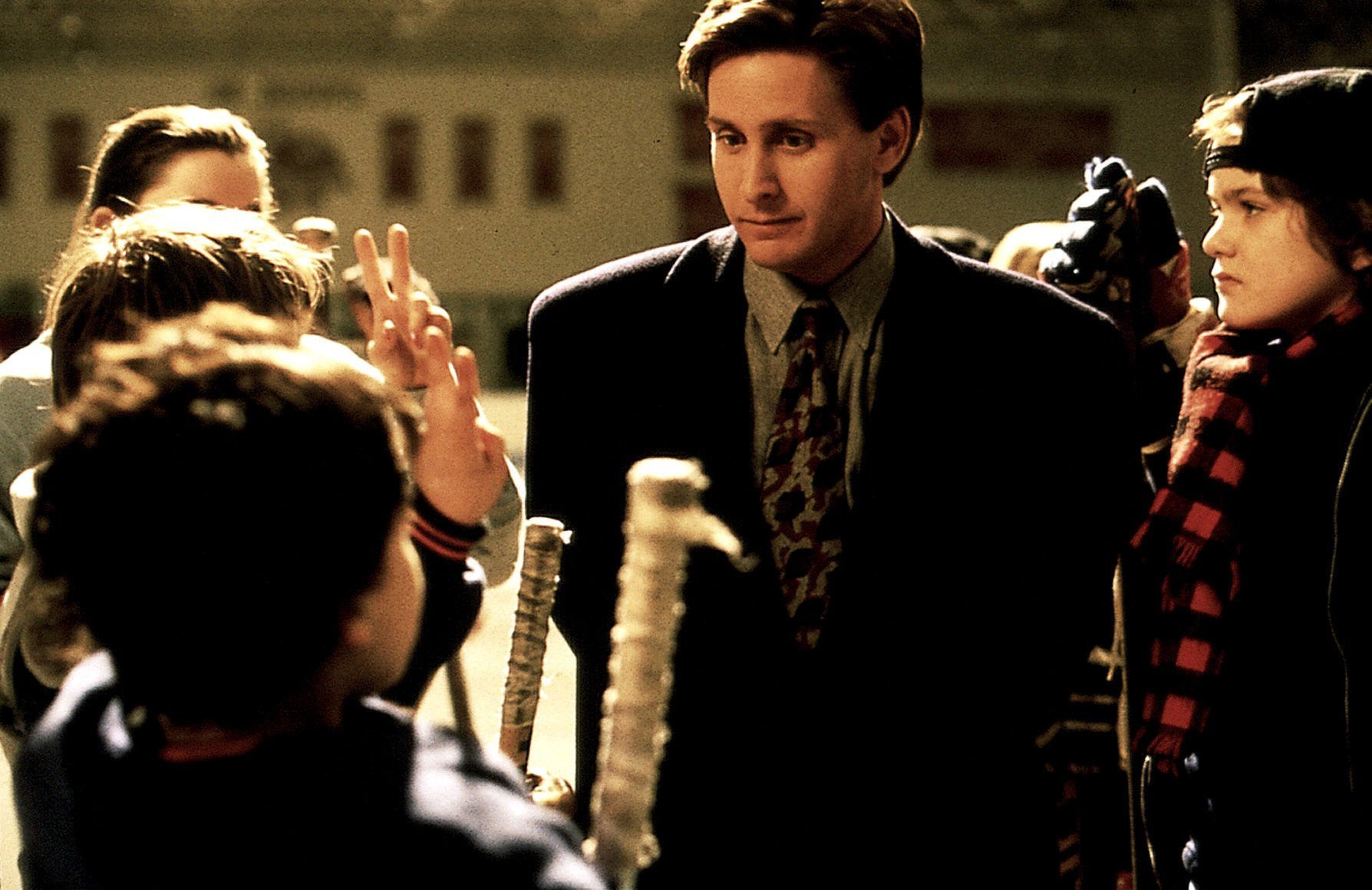
Mighty Ducks (Disney Plus) -It's in the tone of the 90s film and it's more of a pre-teen drama than a teen drama which is an interesting dynamic that evoked nostalgia for the 10 year old me who watched this in the movie theater. In other words, it's a capable reboot if you can put yourself in the shoes of the audience. The show mostly works on the dynamic between Lauren Graham and Emilio Estevez. As original coach Gordon Bombay, Estevez begins his narrative arc pretty far down at the bottom of the well. He appears to have PTSD'ed out of the sport. Graham, like Zooey Deschanel or Kristen Bell, is all-purpose sitcom gold. She brings a spunk and energy that has worked in everything she's been in so she's a welcome infusion here.

The End of the F***ing World (Netflix)-A British high-concept show about two teenagers who are both uniquely disturbed. James considers himself a psychopath who feels like he needs to kill someone to come of age. Alyssa's the epitome of a goth girl. What she lacks in outer appearance (eye shadow, black ensemble, ripped stockings, etc.) she makes up for in top-notch bluntness and a vocal timbre that's as varied as a barnyard cow. Alyssa wants to run away and takes James with him and the two form an awkwardly pubescent Bonnie and Clyde with no real idea where they're going or what they're doing.  Highly recommend.

New Girl-(Originally ABC, now Netflix)-I've been re-watching the first season and impressed how the show is so low-concept. Jess Day being "new" or a "girl" isn't really much to build a show around. The concept is basically "let Zooey Deschannel go full Zooey Deschannel" and her outlandish personality is hilarious enough  in an absurdist way to carry the show. The three other leads--Jake Johnson, Max Greenfield, and Lamorne Morris--all got a big boost visibilitty-wise from this show but they are mostly replaceable archetypes of fun-loving single guys. Although the show has a different creator (Elizabeth Merriweather), this show seems to be a commercial successor to "How I Met Your Mother" in that some of the humor comes from the characters inside jokes (or at least that's what the dialogue aims for).

The Monkees (originally NBC, then MTV, now YouTube)-This is an extremely charming 60s series that was made to emulate the success of the Beatles 1964 film "A Hard Day's Night" (a comic film in which the Beatles played themselves getting into exaggerated hijinks at a tour stop) with four goofy guys trying to make a living as a rock band. As someone who has seen "A Hard Day's Night", I can certifiably say this improves on the original. Rater than have the band just be naturally goofy in a cute "they don't take themselves too seriously" winky way, the Monkees are full-throttle anarchy akin to the Marx Brothers. Being defiant of authority and order is intrinsic to who they are, far more than being handsome me who want to seem relatable. Reality-breaking tricks like fast-forwards a la Keystone Cops, over-the-top musical cues and the gang breaking into song (the reason that the group existed) cements the comic climate that this is a world where anything goes. It also helps that A) the band was not famous in-universe or at the start of the series and B) the four have distinct personalities. Davy is the love-struck front man, Peter is most child-like, Mike is aloof, and Mickey is the silly one.

Psych (USA now Peacock)-I remember watching one episode when it came out and thinking it was over the top and ridiculous. It's in the mold of other USA shows at the time about exiled geniuses who worked outside the system (sidenote: it's incredible that the network built an entire slate of shows with the same exact premise). The protagonist is a guy with a militaristic dad  who, for reasons beyond me (possibly OCD), wanted to imbue his son with the gift of being able to notice things really well when he was young. As an adult, Shawn pretends to be psychic so he can be hired as a police consultant and he drags his friend, Gus (Dule Hill) along for the ride.  I've heard people cite the pair as a great example of BFFs but Hill often comes off as a pushover in relation to Shawn and while the character is supposedly anti-authoritarian in a fun way, he often comes across as annoying. This especially the case when he's theatrically pretending he solved the case. If not for the chemistry between Shawn (James Roday Rodriguez) and Juliet (Maggie Lawson), this show is still terribly over-the-top. I could however see the outline of a better show if James Roday Rodriguez was just given some network notes to dial it back 10-20%.

Bless the Harts (Fox)-As good as always. I've reviewed this plenty of times before. The show is on the brink of cancellation so now's a great time to support it and get in on the letter-writing campaigns. 

Wednesday, June 10, 2015

The Quintessential Minnesota Film: The Mighty Ducks

This is part of a series I worked on at one point combining my geography major with my film writing to discuss the quintessential film for each state. 

The Quintessential Minnesota Film: The Mighty Ducks


My Minnesota Credentials:
I spent a summer studying in Minneapolis and visited my sister multiple times when she lived in St Louis Park for 6 years. This is the same Minneapolis suburb that the Coen brothers are from and my sister's synagogue (where my niece was christened) happened to be the shooting location of "A Serious Man". My time in Minnesota was spent as a gangly 20-year-old trying to get a new start halfway around the country (my hope was to finish college there) and as such I became acutely aware of the differences between myself as an East Coaster and the nuances of the "Minnesota nice" mentality. While I was never able to convince my parents to pay the out-of-state tuition to restart my life in Minnesota, I will always have an appreciation for the state where I learned to roller blade, where I learned what it means to be be resourceful in Wintertime, where I rode a rollercoaster indoors, where the evil eye of Walmart is replaced by the mildly conspicuous conglomerate of Target, and where no one gave me weird looks for cross-country skiing.

My Pick:
The films of Joel and Ethan Coen have a strong sense of place as evidenced by their portrayals of Mississippi ("O Brother Where Art Thou"), Hollywood ("Intolerable Cruelty"), a quasi-modern day Louisiana ("The Lady Killers"), Texas ("No Country for Old Men") and Washington DC ("Burn After Reading"). They are perhaps best known for their portrayal of their home state of Minnesota in 1996's "Fargo."

The Oscar-winning film veers towards the darker end of the Coens' dark comedies with graphic images of murder juxtaposed by the offbeat and cheery nature of the characters involved in the case. Since premiering, it has been claimed by many in the state as a quintessentially Minnesotan work of art. When Minnesota Governor Jesse Ventura got into a public feud with another state cultural institution, Garrison Keillor's "Prairie Home Companion", in 1999, he offered up "Fargo" as a better example of Minnesota humor than Keillor who he described as "high-brow and boring."

In "Fargo", there's much to appreciate in the spot-on accents and the portrayal of the bitter cold of Winter. It truly is a kind of cold that demoralizes the population and one gets the sense that these people are committing murders because they have nothing better to do. That's where "Fargo" goes wrong: The portrayal of Minnesota as a bleak and dull winter land is inaccurate.

Minnesotans are among the healthiest, happiest and most civically active people (they actually rank #1 in voter turnout) in the nation. Minneapolis as a breeding ground for backwater hicks also seems incongruous with the version of Minneapolis I've experienced as one of the most urban and fast-moving cities I've ever lived in.

In light of these virtues, what could better representative Minnesota than a sports film about Minnesota's most beloved sport? "The Mighty Ducks" is not the only film ever made about hockey but it might as well have been if you were growing up in the early 90s. For a kid like me, few things would have made me (a kid who always got assigned right field in Little League) feel more fulfilled than bonding to my peers on a diamond or ice rink as a valuable member of the team. I didn't find my athletic niche until 10th grade but in the interim, the movies of the 90's seemed pretty hell-bent on selling me fantasies I could live vicariously through. There was a a high school outcast who suddenly becomes eligible for the Chicago Cubs on a freak accident ("Rookie of the Year"), a kid who unites his broken home through enlisting heavenly aide to help his beloved Angels ("Angels in the Outfield") a boy who becomes a hero on the Iditarod because he's good to his dog ("Iron Will"), and most beloved of all, that kid from Notre Dame who just wanted to play ("Rudy").

Labatt Blue US Pond Hockey Championships
In "The Mighty Ducks," Emilio Estevez's Gordon Bombay, is a disgraced ex-hockey player ordered by the court (see the civic pride tie-in) to coach a youth hockey team. This is a state in which nearly every Minneapolis suburb (that I saw) has its own community center with a hockey rink so it's more than fair to say that many a Minnesotan defined themselves as a budding hockey star before moving onto adulthood.

A lawyer on the go with only a tinge of Minnesotan drawl in his speech, Bombay seems like the archetypal Twin Cities urbanite but he's contrasted with his mentor Hans (Joss Andros) who is an ambiguous Upper Midwestern version of Yoda or Mr. Miyagi if green alien or stereotypical Japanese was replaced with stereotypical Scandinavian.

It's also worth noting that in the land of 10,000 lakes, ice skating isn't just done in the ice skating rinks but on frozen lakes as well. Minneapolis has hosted the U.S. Pond Hockey Championships annually since 2007. It's an ubiquitous part of state culture and Bombay first meets his time as they're playing on a pond. It also must have made many a Minnesotan must have swooned when the film's primary romantic spark occurs as as Bombay is stroking his love interest's hair as the St. Paul's ice carnival is featured in the background.

Thursday, June 14, 2007

If the AFI chose to expand their top 100 list, rather than redo it.

This Wednesday, the AFI is updating their Top 100 list in a CBS series which is a somewhat monumental event for me because it was the release of the original AFI 100 Years.…100 Movies list in 1998, that led to me wanting to become a film critic.

Back in 1998, when I heard a list was being released of the top 100 films of all time, I tried to guess what might be on the list based on what films I had seen and liked. I thought of films like Cool Runnings, The Mighty Ducks and an obscure Vincente Minnelli musical called Kismet. When I actually looked it up, I was completely taken aback to learn that pretty much all of the films on the list were not only movies I hadn’t seen but movies I hadn’t even heard of. I suddenly wanted to know what exactly these films could possibly have that the Mighty Ducks didn’t have. When I didn’t find a job the following summer, I spent a lot of my free time going to the library and checking out films on the actual list like Guess Who’s Coming to Dinner, The African Queen, The Graduate and Network.

It most likely was not just myself who might have a gained a new appreciation of film history around this time. The AFI list came in the middle of a craze occurring around the turn of the century in which every major media outlet came up with some definitive list to mark the year 2000. Between 1995 and 2002, the Time Out Film Guide, The San Fransisco Chronicle, The LA Daily News, the British Film Institute, Video Detective, and the National Society of Film Critics, in addition to Premiere, Empire, Movie Line and Rolling Stone magazines published either top 50 or top 100 film lists recapping choices for the top films of the century.

Despite cynics who might say that these lists are just an arbitrary gimmick, the fact is that they have performed a very useful function in the promotion of classic film: They act as a reference for sorting between the quality films and the generic drivel for those who dare to venture beyond the new release sections of the video store. Before 1995, the Library of Congress’ National Film Registry, the Oscars (along with countless other film critics’ awards) and Sight and Sound Magazine’s decennial film poll were the only guides to the history of films and they were all insufficient. The Library of Congress list isn’t particularly well-publicized and the Sight and Sound polls which only polls for ten films, doesn’t nearly go far enough in promoting the great diversity of choices within each decade and each genre. The Oscars and all other awards that single out great films by the year can often fall into the trap of thinking about what’s big at the moment and selections like Around the World in 80 Days, Gentleman’s Agreement, and The Ziegfeld Follies can become dated very quickly.

Of these lists, the AFI remains the most well-known and I've come to consider it as a sort of definitive authority on film history which is way I hate to think of the concept of it being tampered with. I can't say the list is perfect but I would say that all but 2 or 3 (My Fair Lady, Wuthering Heights, and Guess Who's Coming to Dinner) are pretty safely in the realm of classics and 97 out of 100 is a pretty good mark. The list is also pretty inclusive of all time periods, major actors, significant directors, and runs 8 or 9 films deep in every major American genre. It has everything from recent Oscar winners (i.e. Forrest Gump, Dances with Wolves), popular crowdpleasers (i.e. Rocky, Raiders of the Lost Ark), film milestones (i.e. Birth of a Nation, Jazz Singer), cult monster movies (Frankenstein), literary adaptations (i.e. To Kill a Mockingbird, Grapes of Wrath), and the most anti-war (i.e. Mash and Apocalypse Now) and pro-war (i.e. From Here to Eternity) films ever made. A few major directors such as Spike Lee, Blake Edwards and Douglas Sirk are left off the list but special consideration is made to make sure that Sidney Pollack, Oliver Stone, Sidney Lumet, Woody Allen, Rob Altman and Clint Eastwood each get a film in the 100.

The tragic thing of redoing the AFI 100 list is that some great films will inevitably be left off to make room for the new which makes us want to consider the question, why should we delete any films from the list at all or tamper with the original order? A case could be made for the rare film like Orson Welles' Touch of Evil whose original cut was finally released in 1998 or the political 1960's thriller "The Manchurian Candidate" that was only introduced to audiences around 1990 after being withheld from circulation for controversial content. Other than these rare exceptions, it seems to be catering to popular trends to reorder the films. Citizen Kane hasn't gotten any worse over the last 10 years, after all.

Why don’t they just add 10 films, and call it 110 films, 110 movies. Even if the sound of 100 Years…100 ____ has a catchy marketing ring to it, it’s no longer 100 years. The lists should have been 102 Years, 102 Comedies or 103 Years, 103 Movie Songs. That brings the interesting question of what to add for the 10 films for the past 10 years. Here might be a good example of a workable list. There aren't my personal favorites but 10 films that have established themselves as future classics over the past 10 years. I deliberately veered away from films in the last year or two because I think there needs to be a little more breathing room to determine the merits of the film:
1. Saving Private Ryan, Stephen Spielberg, 1998-This stirring war film has established itself as a classic by this time. It came along at a time when no one thought there was anything left to say over World War II, and it's loss at the Oscars to Shakespeare in Love was almost universally decried as a mistake.
2. The Matrix, Larry and Andy Wachowski, 1999-Iffy only because the AFI has snubbed such innovative sci-fi films in the past as Blade Runner, Alien, and Brazil, the Matrix was a film like no one had ever seen before and it reset the bar for special effects and cinematic action.
3. Gladiator, Ridley Scott, 2000-Critics might have denounced the throwback to the sword and sandals epic as not being innovative enough to merit an Oscar, but it's hard to forget when watching it how well-crafted the film is and how phenomenal Russell Crowe and Joaquin Pheonix are in.
4. Traffic, Stephen Sodebergh, 2000-The bold ensemble piece on the drug trade was both entertaining and topical and let's not forget how much of an effect Sodebergh's inventive visual styles have had on the current landscape of movies.
5. The Lord of the Rings: Fellowship of the Ring, Peter Jackson 2001-This decade has been dominated by big-budget blockbusters, CGI effects, and stories that take us into other worlds. The Lord of the Rings trilogy, popular with hardcore fans, casual audiences and critics alike, was seen as the best example of this.
6. Pianist, Roman Polanski, 2002-Roman Polanski's personal and deeply moving epic about a pianist and his struggle throughout the war was virtually critic-proof and nabbed a long overdue Oscar for its director.
7. Lost in Translation, Sofia Coppolla, 2003-The fact that the film was made by Francis Ford's daughter might have a little to do with the inclusion, but the bare-budget film was a very imaginative look at modern alienation, mid-life woes, and the romances that are never meant to be, resonated with audiences and critics alike.
8. Mystic River, Clint Eastwood, 2003-With three oscar-nominated films in the last four years, Eastwood will be remembered alongside Scorsese as the preeminent director of the decade and he's just too hot right now not to be included on the list. Mystic River was a film with great emotional impact that
9. Sideways, Alexander Payne, 2004-Payne who has honed his hybrid of character-based comedy and realism since Election and About Schmidt created a critical darling out of a dark comedy featuring an unlikely quartet of character actors. Like Lost in Translation, it's a film of small-scale but of great resonance.
10. Brokeback Mountain, Ang Lee, 2005-It's success in turning a controversial topic into the must-see critical hit of the year should bode well for Brokeback's chances at making the AFI's new list. Aside from breaking new ground in featuring two gay cowboys in a love story, it also was the first time a non-Caucasian director won the Oscar.

Runners-Up:
1. Thin Red Line, Terrence Malick, 1998-The extremely unproductive director was one of the few great innovators of the New Wave to be left off the original list and the reintroduction of this mood director to the big screen in Thin Red Line was quite a grand event.
2. Chicago, Rob Marshall, 2002-By being nominated for an Oscar, Moulan Rouge! was a great first step in bringing the previously outdated musical genre to modernity. By winning the Oscar, Chicago is said to have actually accomplished it. In retrospect, critics point to both films as being great turning points for the reinvention of the modern musical. Since I personally found "Moulan Rouge!"'s glitz, glamour and 2 second ASL obnoxious, I'm inclined to go with Chicago, which featured its share of showstopping numbers along with great performances from Rene Zellweger, John C. Riley and Richard Gere.
3. Sixth Sense, M. Night Shamylan, 1999-The reason that this Oscar-nominated film, wouldn't make the cut is because the public has become increasingly more and more disappointed with each movie he's released, but that shouldn't be cause to forget how captivated we were by his debut.
4. Kill Bill Volume 1, Quentin Tarantino, 2003-Another homage to the movies that inspired him as a kid, Tarantino's piece was no doubt violent but in a stylized way.
5. Gangs of New York, Martin Scorsese, 2002-If we were to add another Scorsese film to the list to complement Taxi Driver, Raging Bull, and Goodfellas, our choice could go one of three ways: The period piece and personal dream project, film historian Scorsesee's tribute to the Golden Age, or the classic cops-and-robbers film that won him the Oscar. For pure boldness in vision, I will go with Gangs of New York.
6. Master and Commander, Peter Weir, 2003-Considering that Dead Poets' Society and Witness were undeservedly left off the original list, it would be a crime if either Truman Show or Master and Commander were not added to this list. Master and Commander, if nothing else, was the single most historically realistic film I've ever experienced.
7. Babel, Alejandro Gonzales Inarritu, 2006-Another film by a foreign language director, Babel was a sweeping epic of truly global porportions.