Showing posts with label Dirk Gently. Show all posts

Monday, October 14, 2019

Dirk Gently's Holistic Detective Agency Season 2: A very belated review


As someone who has historically not been an enthusiastic novel reader, Douglas Adams stands as one of the few people to open me up to the delights of the form. Whether it’s the Hitchhiker’s Guide to the Galaxy series or Dirk Gently, his delightful absurdity is sprinkled nearly everywhere in the book whether it’s the larger plot points (the answer to life, the universe and everything being 42, an alien race torturing people through bad poetry readings) or clever dialogue (“flying is throwing yourself at the ground and missing”).


The idea of “Dirk Gently’s Holistic Detective Agency” (I’ll have to add an IIRC caveat, I’m too lazy to look this up) is that the protagonist is a thoroughly amoral and lazy detective who calls himself a “holistic detective” so that he can bill anything he does to the case. Since everything’s related to everything, there’s no telling that anything he does isn’t related to the case.


He manages to capture the whimsical absurdity of Douglas Adams’ book series. The TV series takes on a more mystical approach while keeping the absurdity confined largely to the character of Dirk character himself (Samuel Barnett). Gently is a classic cuckoolander with recently-fired bellhop named Todd (Elijah Wood, hitting the same beats of schlubby directionless as “Wilfred”) as the straight man keeping him in check. Both series have been populated with a wide array of characters with the most Dirk-like being a female holistic assassin named Bart (Fiona Dourif) who takes casual violence to such extremes that the gore is placated by (what TV Tropes refers to) as crossing the line twice. Others like black wing officer Hugo Friedkin (Dustin Milligan of “Schitt’s Creek”) have the lone character trait of being a little dense. Mildly humorous but mostly blah. At least there’s a variety of tonal flavors in this awkward-yet-charming character stew.


The key emotional relationship is between Todd and his sister Amanda (Hannah Marks) and while two young adult siblings bonded by their shared directionless (“Casual” and more recently “Lodge 49” have done it well), the two have an affable chemistry. It also helps that the relationship is complicated by random chronic illness and Amanda having superpowers making her more than just another audience surrogate.


Both seasons of the show are serialized and zany but don’t necessarily match the profound zaninesss, say, of the source material. The second season, which I saw recently, revolves around a traumatized child in rural Montana (as ideal for a fish-out-of-water vibe as any Western state) with telekinetic powers who creates an entire imaginary world that has been operating on its own for thirty years.


The mystery unravels gently enough for the slower viewers (AKA me) not to get lost in all the technobabble. As such, there’s some catharsis when the loose strings get tied together at the end, but it’s mostly about watching zany characters navigate tight situations in a way that’s a bit more fun than the average serialized crime story.   


The second season’s chief villain, Suzie Borden (a nod to Lizzie, perhaps?), is a bored housewife with a rebellious teenage son, who gets a little taste of supernatural power and goes to town. She’s curiously sympathetic at first: One can easily see her as the mildly put-upon housewive trope getting her revenge against society for putting her into a box and stripping her (and perhaps all domesticated women) from their dreams. However, our audience sympathies cleverly switch when we learn that while Suzie sees herself as Carrie (a movie I recently reviewed), her peers see her as more in line with a plastic from Mean Girls.


Like many ensemble series, the level of interest in what’s on screen changes with whether we’re following a good character and a good storyline. Suzie’s one of the bigger draws here.


The series’ first season was such a freaky lightning in a pan that it’s pretty impressive for lightning to strike twice as it did here.

Wednesday, December 13, 2017

My Week in TV: Mom, American Dad, Orville, Marvelous Mrs. Maisel

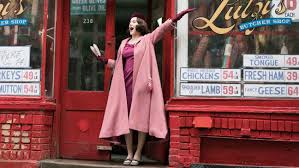
Marvelous Mrs. Maisel (AMC)-First three episodes
Step aside, all other shows about stand-up. You think a stand-up comedian playing themselves as a sad sack is novel? You think going all the way back to the 1970s is novel, you schlemiel Ari Gaynor show (http://www.imdb.com/title/t... Try an Ashkenazi Jewish 1950s housewife who kvetches her way to stardom, with Lenny Bruce as a side character, and dialogue stylized courtesy of Amy Sherman-Pallanido (Gilmore Girls, Bunheads) and then come back to me. Raise your hand if you didn’t even knew stand-up comedy existed in 1958…my point exactly!

This show is all that and a bag of matzah brie. Yes, it’s a little heavy on the Ashkenazi Jewish stereotypes (and by, the way, mazels to Tony Shalhoub on your recent conversion to Hollywood Judaism, was Alfred Molina taken?) but it also has an endearing cultural specificity and a strong cast. While the show is about comedians, it’s very comfortable with its dramatic beats. The stakes are high – the protagonist goes from being excited about landing the rabbi for Yom Kippur to losing her husband, her home, and getting arrested in the span of a few days—and the episodes so far end on icy cliff-hangers.

The show is feminist but not in a way that hits you over the head but it has more leeway to do so without being cloying as a period piece. There’s less debate that gender norms were pretty crappy in this era, so it’s more easily read as an examination of this decade in all its facets. More so, it’s a testament to the pluck of a woman trying to do something extraordinary when pressed in from all sides. Midge Maisel (Rachel Bronsahan)

The show also works as an interesting examination of the end of Jewish self-isolation in the United States. As someone whose father was within spitting distance of these communities on Long Island and whose own generation marked the bridge between the old guard and a current state of Judaism that's desperately trying to hold off the next generation's apathy (exhibit A: Birthright), a lot of the tension between the titular Midge Maisel (Rachel Bronsahan) and her parents (Shalouhb and Hingle) is not just laced with the typical radicalized-60s-generation-rebelling-against-their-parents overtures, but tells a much more specific story about these people.

The electric Alex Bornstein (Mad TV, Family Guy) also does great work here.


The Mick (Fox)-The Teacher
Sabrina has a crush on her teacher. Because this is Sabrina, we know she’s going to go after him like she owns him. Because it’s The Mick, we know something disastrous in a boundary-pushing way is going to happen from Point A to Point B. Because a great comedy is about subverting expectations, I can admit to being thrown for a couple big curves.

In this case, Mickey tries to stop Sabrina by wagging her finger at the teacher but he seduces her. That this happens before the episode’s first commercial break is the cleverness of the episode. It’s no longer a sexless comedy of errors (although I’ve often read that ALL screwball comedies are primarily based on romantic attraction without sex) but rather a game of Mickey trying to rub it in Sabrina’s face that she had sex with her teacher and using everything at her disposal to get the teacher to admit it. That and it’s a comedy about a crazy ex-girlfriend from the POV of the confused teacher. The episode also demonstrates the growing rapport between Mick and Sabrina: We’re past the phase where Sabrina thinks she can simply roll her eyes past her aunt’s existence.

The B-plot involves Chip paying Jimmy $200 to enhance his reputation after he gets listed #42 out of 50 among the hottest guys in his grade. The idea of Jimmy charging $200 to a child when he’s living rent-free in his great-grandmother’s mansion for no discernable reason (being an occasional sex partner of Mickey doesn’t seem to qualify) is a perfect summation for what makes the guy a comic stand0out.

Mom (CBS)-Fancy Crackers and Giant WomenIf a show like “Superstore” can attain semi-respectability by portraying working class people, that audience needs to check out “Mom.” Detailing the comings and goings of an AA group and a mother-daughter pair (Allison Janney as Bonnie and Anna Faris as Christy) within that group, it’s truly about people who have a long way to go before they can achieve relative normalcy.

Case in point: Christy has to apply for law school but the application fees are so high, Bonnie has to cut the internet bill. Sizeable plot holes abound: If the price of an application is going to bankrupt Christy, how big of a hit will the cost of law school be? Do law schools have financial need applications?

I’m personally most curious what most of us would do in the neighbor’s (character actress Amy Hill) shoes if my landlord explained to me that they had to forgo internet for such a noble cause. Would we expend a free resource  and fork it over? It's underlooked how often the show asks us to critically examine the lack of breaks that befall people in this echelon of society

The other plot is all about Jill (Emmy winner Jaime Pressly) and her new weight gain, which has now segued from an excuse for a bunch of fat jokes into an actual emotional moment. Jill is now aware that she’s put on weight. I’m not sure the show handled it particularly delicately, but what’s more pressing to me is the whether the actual line jokes of this show are up there with the rest of golden age TV standards for humor. This show has very sophisticated character work for a multicamera sitcom and the format allows the show to aim for zingy one-liners in a way that single camera comedies would be more reluctant to pull off, but I wonder if those zingy one-liners don’t have room for improvements. 

American Dad (Fox)-The Long Bomb, The Bitching Race, A Nice Night for a Drive, Casino Normale
Since purchasing an episode on a whim last week, I started rediscovering this show and realizing it’s a pretty dependable source of sophisticated humor although it still tends to live or die by the episode.
The “Nice Night for a Driver” sounded like a knight rider parody but was more a retread of the Klauss-Stan relationship. Stan started out as a flanderized aloof unemotional dad who openly disliked certain members of his family (Hailey, Klauss, Roger) but has gradually come around on Hailey (“Long Bomb” is a wonderful example of this) while considering Roger a worthy foil. Klauss is still an outliar for the family but it’s nice they occasionally have a bonding episode.

“The Bitching Race” was a surprisingly enjoyable half-hour despite the curious fact that I’ve never seen the source of the parody “The Amazing Race.” It follows classic sitcom tropes of an aloof dad learning to be more intuitive to his family. It’s ironic that Sean O’Neal, in an essay on the mothership, called Home Improvement (the godfather of the aloof dad sitcom trope) casually misogynistic when shows like American Dad generally have character arcs that spin the other way.

“The Long Bomb” mixes action and humor adeptly enough that I think it’s fair to say Seth MacFarlane doesn’t get enough credit for. The characters introduced solely for this episode – the singing guy on the trapeze, Johnny Concussion, etc—reminds me of one weakness of this show: By being overly dependent on Roger (in an interview, the show runners mentioned they realized the potential of the show when they figured Roger could be the guest star of the week), the show doesn’t have as many recurring characters as some of its cartoon cohorts which requires too much comic buildup for many of the characters we see each week.


Dirk Gently’s Holistic Detective Agency (BBC)-Little Guy Black Hair
Watching season two is kind of like when my dad attempts a humorous anecdote at a party or other family gathering. Because he’s my dad and I have a good relationship with him, I want his story to succeed but I also am cringing with embarrassment when he tries to be funny.

DGHDA is undeniably ambitious but when it falls flat—when the female deputy who wears her hat backwards (honest to God, I made a solid effort to look up her name) overemotes, or when someone in the realm of normality has to react to the weirdness of Bart or Dirk-- there’s a cringe to bear. The show can feel tonally jarring, especially now that Dirk and Todd are being thrown into a fantasy novel this season (or as Todd aptly puts it “a murder acid-trip ren-fair nightmare”). There’s also a far-off blackwing plot which provides little of interest unless guys in military outfits speaking in conceptual techno-babble (to borrow a Star Trek term) is your thing.

But lo and behold! Dirk ties everything together in this episode with a rousing speech that pieces together all the disparate parts of the season thus far. About 90% of our “huh?” questions have been solved at this point and the explanation (that Windemoor was dreamed up by telekinetic traumatized kid a few decades back) is actually quite groovy. If only they peppered in the hints a bit more heavily, I might have been more invested at this point, but this hasn’t been the worst investment of a season I’ve had this year. The core commitment of the show to abstractist absurdity is still there. Plus, the growth of Todd as a friend to Dirk and a sibling/caretaker of Amanda has been quite sweet.

The Orville (Fox)-New Dimensions

This show pretty much falls under “What were they thinking!?” and rather than engage with  it years later on a podcast like “How Did This Get Made” or Nathan Rabin’s “Year of Flops” it’s hard to deny how interesting it is to watch a train wreck as It’s happening. The show’s main crime is not putting enough jokes in what is supposed to be a comedy and mirroring Star Trek way too closely but I’ll call BS on that: Galaxy Quest, the occasional Saturday Night Live skit, Thank God You’re Here and 10 Items or Less (off the top of my head) all had pretty exact Star Trek parodies,  and no one cared whether it mirrored the source material too closely.

But yes: The show is mostly boring and oddly focused on a bickering domestic couple at the center without being unaware that they are getting tired. At the same time, it’s kind of nice to re-imagine a version of Starfleet where people will get drunk and pull pranks on each other. The distant cordiality between the seven principals on TNG, and the exponentially greater emotional distance between the senior staff and everyone else on the ship, made for an extremely stuffy adventure.   And hey, Penny Johnson (who was great on Deep Space Nine) is here and she seems to have joined the cast voluntarily rather than, say, being kidnapped.

The last time I reviewed this show was an episode in which John LaMarr (aka the token black guy) got into trouble with the local populance of a social media obsessed planet for humping a statue (honestly, it wasn’t as crude as it sounded). I thought it was the high point of the troubled series to date and went over to the AV Club and one other site’s review of the episode and people couldn’t get over how dumb it was that Lamarr would go out and hump a statue, and my main reaction is: What show did you think you were watching?!

This show has mostly been muddled in its execution, but when it does work, it shows that Star Trek: The Next Generation, with its air of stuffiness, is pretty ripe for mockery. MacFarlane is not particularly well-liked among the critical community but he clearly has an intelligent voice and I can see this as a platform that tells solid science fiction stories with a nice comic distance from the TNG format. At the same time, if it were cancelled tomorrow, I wouldn’t lose any sleep.

This week’s episode is another John LaMarr episode and I know I’d be the laughing stock of the critical community if I were writing this for a Rotten Tomato-accredited site, but the episode actually had some salient dramatic moments: LaMarr’s speech about how it’s his responsibility that the group screwed up and that makes him not a leader was actually a powerful and insightful. I’m still not saying this is a good show, but credit where credit is due.

It’s also worth mentioning that they somehow managed to snag Norm McDonald to play the part of a (I’m not making this up) ball of slime who’s up for the position of chief engineer. I can’t ever say McDonald is miscast in anything, so it’s a plus.

This is also a good episode if you’ve gotten tired of Adrianne Palicki’s character being walked all over by the Captain for cheating on her once. Why are these two in a toxic relationship with each other?


Thursday, November 30, 2017

Dirk Gentley's Holistic Detective Agency: Start of Season 2

This show might have gotten unfavorable "the book was better"comparisons, it might have gotten lost in the shuffle, or critics pain didn't like it, but this was one of my favorite shows last year. It was wonderfully bizarre, the characters were outlandish and well-cast (they strike me as inhabiting a universe where everyone’s just a little out of tune, like the types who pop up in Terry Gilliam films) and the serialized plot built towards something. But this series is more anthology-like, so it’s really a more a question of whether lightning can strike twice than a continued interest.

So far, I have no idea what to expect and the exposition is more like homework. You need to absorb the information of seeing and characters before you can them intermingle, but then again that's standard (at least for me). We're not at the proverbial drop point in the roller coaster, but it’s getting close.

Dirk Gentley desperately needs some forward progress. Like Dwight of The Office successfully demonstrated and Dina on Superstore is failing to do, there’s nothing particularly pleasant about watching an annoying character continue their irritating ways without gradually becoming aware of how annoying they are. We see Todd bending towards Dirk, but that doesn’t fully break the illusion that Dirk is getting any less useless. At the same time, Douglas Adams’ work is rooted in exposing the ridiculousness in our world (or, rather, a slightly off-center fantasical version of it) and Dirk solving crimes while doing godawful detective work is one of those oxymorons this kind of material thrives on.
Elijah Wood’s screen persona is that of a blank slate a la Tobey MaGuire: His go-to acting move is reacting with wide-eyed wonder with
a little more frustration laced in.

So far, it’s hard to tell what’s going on and this is a series that relishes in taking a while to connect the dots. I can barely remember anything plot-wise except the character work. The two stand-out characters that keep things interesting so far are an oddball police officer who somehow see things on the same bizarre spectrum of causality as Dirk; and Suzy, who is a submissive housewife and secretary to a white trash husband and corrupt boss that is suddenly on the grips of getting some superpowers.

Tuesday, October 31, 2017

Dirk Gently's Holistic Detective Agency Review: First Two Episodes of Season 2

Source: Salon


Dirk Gently's Holistic Detective Agency might have gotten unfavorable "the book was better" comparisons, it might have gotten lost in the shuffle, or critics pain didn't like it, but this was one of my favorite shows last year. It was wonderfully bizarre, the characters were outlandish and well-cast (they strike me as inhabiting a universe where everyone’s just a little out of tune, like the types who pop up in TerryGilliam films) and the serialized plot built towards something. But this series is more anthology-like, so it’s really a more a question of whether lightning can strike twice than a continued interest.
Slogging into a serial drama like this can be a reminder that (at least for me), the early episodes can be like homework. You need to absorb the information of seeing and characters before you can properly enjoy those elements intermingling. With this show, we're not at the proverbial drop point in the roller coaster, but it’s getting close.
Dirk Gently desperately needs some forward progress. Like Dwight of The Office successfully demonstrated and Dina on Superstore is failing to do, there’s nothing particularly pleasant about watching an annoying character continue their irritating ways without gradually becoming aware of how annoying they are. We see Todd bending towards Dirk, but that doesn’t fully break the illusion that Dirk is getting any less useless. At the same time, Douglas Adams’ work is rooted in exposing the ridiculousness in our world (or, rather, a slightly off-center fantasical version of it) and Dirk solving crimes while doing godawful detective work is one of those oxymorons this kind of material thrives on. 
Elijah Wood’s screen persona is that of a blank slate a la Tobey MaGuire: His go-to acting move is reacting with wide-eyed wonder with a little more frustration laced in. Elijah Wood has two things characters in his situation ordinarily aren't saddled with: A hint of a stable relationship (with Farrah) and a definitive goal (searching for his sister). Both of these are positive developments. 

There's also Dustin Mulligan (Schitt's Creek) who was an airhead last season is now apparently running some top-secret prison torture operation to extract information out of Dirk Gentley. The other leftover is the holistic assassin Bart (Fiona Dourif) who sounds a lot like Jerry Lewis. There was a certain novelty to her in the first season but it's going to wear thin soon.

So far, it’s hard to tell what’s going on but this is a series that takes relishes in taking a while to connect the dots. I can barely remember anything plot-wise except the character work. The two stand-out characters that keep things interesting so far are an oddball police officer who somehow see things on the same bizarre spectrum of causality as Dirk; and Suzy, who is a submissive housewife and secretary to a white trash husband and corrupt boss that is suddenly on the grips of getting some superpowers.

Wednesday, July 12, 2017

Last Minute Emmy Wish List in the Comedy Categories


Here are some last minute predictions for the Oscars in the comedy categories using only shows I've seen. Seven shows get nominated in the comedy category and in the writing and directing categories the shows generally go to specific episodes. In this case, I listed overall writing and directing and then picked twelve episodes I really liked in hopes of picking them up. On the drama side, I don't really have many hopes except hoping that Bates Motel gets honored and that Aubrey Plaza gets a supporting nod in Legion.


Credit: Deadline.com
Best Comedy
Good Place
It’s Always Sunny in Philadelphia
Trial and Error
The Real O’Neals
Lady Dynamite
Schitt’s Creek
Those Who Can’t
BoJack Horseman

Directing
The Good Place
It’s Always Sunny in Philadelphia
Trial and Error
Dirk Gentley’s Whollistic Detective Agency
I Love Dick
Brockmire

Writing:
Dirk Gentley’s Whollistic Detective Agency
It’s Always Sunny in Philadelphia
The Good Place
BoJack Horseman
Trial and Error
Brockmire

Lead Actor:
Hank Azaria, Brockmire
Randall Park, Fresh off the Boat
Pete Holmes, Crashing
Eugene Levy, Schitt’s Creek
John Lithgow, Trial and Error
Andy Daly, Review

Lead Actress:
Lily Tomlin, Grace and Frankie
Maria Bamford, Lady Dynamite
Kathryn Hahn, I Love Dick
Constance Wu, Fresh off the Boat
Kristen Bell, The Good Place
Amanda Peete, Brockmire
Ellie Kemper, Unbreakable Kimmy Schmidt

Supporting Actor:
Danny DeVito, It’s Always Sunny in Philadelphia
Fred Melamed, Lady Dynamite
Sam Waterson, Grace and Frankie
Kevin Bacon, I Love Dick
Tituss Burgess, Unbreakable Kimmy Schmidt
Ted Danson, The Good Place

Supporting Actress:
Martha Plimpton, Real O’Neals
June Diane Raphael, Grace and Frankie
Lauren Lapkus, Crashing
Mary Steenburgen, Last Man on Earth
Jayma Mays, Trial and Error
Catherine O’Hara, Schitt’s Creek

Guest Actor:
Adam Scott as Trevor, The Good Place
Daveed Diggs as Perry, Unbreakable Kimmy Schmidt
Ray Liotta as Paulie Fiuccillo, Unbreakable Kimmy Schmidt
Stephen Tobolowsky as Jack Barker, Silicon Valley
Aasif Mandvi as Parshwall, Another Period
John Gemberling as John Hancock, Making History

Guest Actress:
Cheri Oteri as Cattie Goodman, Those Who Can’t
Annie Mumulo as Jill Kwatne-Adelman nee Kwatne, Lady Dynamite
Christine Rose as Josie Davis, Trial and Error
Ramona Young as Allison, The Real O’Neals
June Dianne Raphael as Eleanor Roosevelt, Another Period
Sandy Martin as Mac's mom, It’s Always Sunny in Philadelphia

Saturday, December 31, 2016

Annual 12 Best Shows of the Year List

This hasn't been a particularly productive year in terms of keeping up my blog, so it's helpful to briefly discuss why I have still been blogging for such a long time. Considering a few professional writers I know stopped blogging after they became published elsewhere because it's difficult to maintain content on multiple platforms, it does seem like at the very least, I can't logistically  put my very best content on this blog if I'm writing for other places. 

Contrary to popular belief, I don't write here to build a fan base. If you came here and are a fan, thank you (donate if you want!). My blog is used to showcase my writing for people that make their way over here, to develop ideas, to test promotional strategies and on rare occasions: Because there's something I just want to write. My 12 best shows of the year is strictly for me. It's literally something I think about every time I write a TV show: Will this show make my top 12? It pushes me artistically to broaden my horizons as a viewer and pushes me critically as well. I also just want to highlight what I think is great TV.


1. 11.22.63, Hulu  (Season 1)-This TV show recalled the work of Frank Darabont (not the "Walking Dead" era, of course) in telling a historic fable that retains its sense of sepia-soaked nostalgia without shying away from the era's darker elements like the casualness of domestic violence or the disenfranchisement of immigrants that could partially show how someone like Lee Harvey Oswald could fall through the cracks in the first place. Through it all, the show plays with all the logistical tropes of a loopy time-travel scenario (essentially, going down all the roads of the Hitler Time Travel Exemption with Kennedy's murder) and centers around a romance (with Sarah Gadon) and fragile alliance/friendship (with George McKay) that's played with utterly convincing sincerity by James "my life is a perpetual art experiment" Franco of all people. Between this, "Timeless", "Agent Carter", and "The Man in the High Castle", 2016 was a good year in television for sun-drenched nostalgia and the year's best show took this on with a singular vision.

2. People v. OJ Simpson, FX (Season 1)-Rarely has a docudrama aired on TV like this with so little wiggle room in the imaginations of its viewers (or, at least the portion who was alive in 1995): If you made the choice not to live under a rock back then, the events of the OJ Simpson trial were simply an inescapable part of daily life. With so much of this history so ingrained in our collective consciousness, it's a wonder at all that a narrative with any sense of suspense or discovery can be crafted at all. But "People v OJ Simpson" doesn't just do that; It weaves together found art to tell what might be the definitive tale of present-day Americana with explorations on the self-imposed tensions around race, our national obsession with celebrity, the fallibility of public opinion, and the curious way fame has a way of magnifying mistakes (although the show got admittedly clunky when trying to posit Robert Kardashian as a lesson in irony). Sarah Paulson, John Travolta, Courtney Vance and Sterling Brown are excellent as lawyers dead set on winning with varying degrees of moral integrity and at the hollow center of it all is OJ Simpson (played with a childlike misunderstanding of his own actions by Cuba Gooding Jr) who ultimately turned out to be the least important part of the equation.

3. BoJack Horseman, Netflix  (Season 3)**-BoJack is rolling in the animal-based puns and
pathos with more self-assurance and ambition than ever before. BoJack's depression is portrayed with such a level of realism that it wouldn't be surprising to know that a mentally-ill person could find comfort here. BoJack's universe continues to expand with the recurrence of his castmates and the reintroduction of Kelsey Jannings (BoJack's efforts to repair this relationship made for 2016's most popular and dissected episode). This is also a great year for Todd, who discovered he was asexual (quite possibly the most underrepresented sexual subset on TV), and for BoJack discovering who his real friends are: It turns Sarah Lynn was really reliable after all (while she was in the "alive" category) and Dianne had a nice moment or two. If the show didn't botch the ending, it would have topped the list.

4. Lady Dynamite, Netflix (Season 1)-My initial difficulty with this show wasn't because there was nothing like it on TV but because I saw traces of nearly everything else on TV: The cutaways of "30 Rock", the awkward attempts at social justice statements from "Master of None", the use of a comedic veneer to mask trauma that's shown on "Unbreakable Kimmy Schmidt", the fourth-wall randomness of "Man Seeking Woman", and the feminist celebration of woman as proudly dysfunctional adult from "Broad City." Within a couple episodes, however, Maria Bamford and crew are able to master all these tricks and weave them together into a coherent tone. At its heart is Maria Bamford as Maria Bamford (I know that comedians playing themselves is as old as time, stick with it): A modern-day Mary Tyler Moore if Moore's neuroses were slightly more severe and had clinically-defined labels that she wore on her sleeve.


5. The Good Wife, CBS (Season 6)-To be fair, I never watched a single episode before this year. Once I caught it on a domestic flight, I was immediately hooked and have since been gobbling up the last three seasons when I'm looking for a dependable dose of intellectual excitement. Rarely have I encountered a procedural with such purpose beyond going through the same rote motions. Rarely have I ever seen characters whose intelligence and sense of conviction can come across on screen so well without resorting to blatant Sorkinist cheats.

6. Orange is the New Black, Netflix (Season 4)**-In an era where your average high-profile TV includes an Oscar winner or two, "Orange is the New Black" is still the medium's strongest ensemble. As such, so many balls are being juggled in the air, that there are always going to be plots that will strike the viewer. This year, Soso and Poussay's relationship along with Pennsatucky's liberation from Coates were among the strongest in my eyes, but there were a lot of directions the writers went in that got traction. While I maintain that the season finale resonated with social activists because of erroneous connections, it's good to know that people draw inspiration from the show in whatever ways they see fit. Although cruel guards (have we forgotten "Pornstache" already?) are relatively familiar territory for this show and "Orange is the New Black" seemed relatively unaware that Season 4 was not a particularly new shade of evil, Brad William Henke made a memorable villain as Piscatella nonetheless.


7. Another Period, Comedy Central (Season 2)-For me, “Another Period” is proof positive that with a couple tweaks, a show can really grow on you. During first season, I thought the show was broad and -- because I had trouble finding anything likeable about the two sisters who anchored the show -- quite cruel. The second season has benefited from a grand karmic leveling with the girls being upstaged by Harriett Tubman and Hortense, along with Chair being a serious threat to Dodo's power upstairs. Of course, Blanche still isn't getting any human dignity from Peepers or the universe in general, but here's hoping she channels her inner craziness enough to flat-out stab him soon. The increased maneuvering for power and the *gasp* hidden Belacourt family secret(s) has posited "Another Period" more in line with the upstairs-downstairs class drama (likely "Downton Abbey") it's made to skewer with a more American twist. One jarring thing about the show is its mix of humor. It takes a while to appreciate because the jokes are so intricately plotted, yet there is no limit on how low-brow these guys are willing to go for a joke. Watching this meticulously crafted blue humor delivered by some of the straightest men on TV-- stoic Victorian personalities like Peepers (Michael Ian Black) and the adorably naive Garfield (Armen Weitzman)-has been one of my biggest guilty pleasures this year.


8. Those Who Can't, TruTV (Seasons 1 and 2)-This is an entry in which my head is telling me that it’s absurd to rank this show ahead of some 55-60 other TV shows I saw this year, but my funny bone simply can’t resist. From Denver-based comedy trio Grawlix (Ben Roy, Andrew Orvedahl, and Adam Clayton-Holland), "Those Who Can't" looks at secondary education through the world of three lazy teachers enabled by a dysfunctional school administration. The show is striking in how confident it is of its comic tone right out of the gate and how deeply it dives into that joke no matter how dumb or smart it is. The characters come fully-formed and what’s underlooked is how the episodes have an escalating complexity in their plot that leads to a eureka moment akin to “Seinfeld” (although that’s admittedly a pretty lofty comparison to make). The show also boasts a lot of supporting roles with unsung actors including Sonya Eddy as the off-again on-again principal, Mary Lynn Rajskub as a loopy drama teacher, Rory Scovel (full disclosure: I have no idea who he is and don’t even want to check his IMDB page to find out he’s not particularly Quinn-ish in real life) as a touchy-feely principal, and Maria Thayer (who looks like she’s having the time of her life here) as a librarian desperate to fit in.

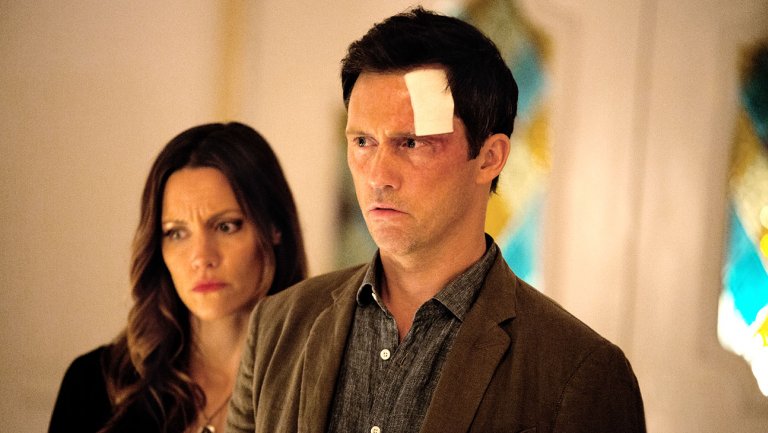
9. Shut Eye, Hulu (Season 1)-A breezy noir that has explores the world of psychics with a little bit
of magic, hypnotism, and gypsy mafia culture for good measure. Jeffrey Donovan plays a variation of his character from "Burn Notice": level headed under pressure and always thinking two steps ahead. Donovan plays a former magician Charlie Haverford who reluctantly operates as middle management under a mother-and-son mafia threat. Charlie's ambitious wife (KaDee Strickland) wants to stake out a bigger piece of the pie for herself by going after a wealthy mark. From there, the narrative spirals in all sorts of directions as the couple juggles all sorts of external threats while keeping law enforcement at bay, doing damage control on a drug overdose on their premises, and trying not to let a lesbian tryst with a hypnotist (Emmanuelle Chiriquí) threaten their trust in each other.

10. The Good Place, NBC (Season 1)-The always-game Kristen Bell helms one of the year’s most ambitious sitcoms as a self-absorbed slacker of outrageous proportions who accidentally ends up in Heaven and has to bluff her way through it with the aid of an ethics professor. Helmed be Mike Schur (“Parks and Recreation” “The Office”), the show has a very self-evident sense of fun exploring surprisingly deep moral conundrums under a comic guise while doing an excellent job at building a world. Ted Danson is one of TV’s best characters as a nebbish celestial architect from above constantly fretting over his creation and newcomer D’Arcy Carden is a wonderful bundle of contradictions as an android personal assistant who takes every command too literally. Who knows how long the show can keep up these cliffhangers, but so far, it’s a great ride.

11. American Horror Story: Roanoke, FX (Season 5)^:  "American Horror Story" best functions as a supernatural whodunit of sorts: A regular Joe with a healthy dose of skepticism gets thrust into something otherworldly, and the exact nature of the evil perpetrator is revealed to them (and us) over the course of the season. The first season executed this to a T but the first season was just a house in LA with a bunch of ghosts. It didn't have the same potential for fun as a 1950s asylum or a tourist trap freak show. On the other end of the spectrum, the show became overloaded with excessive plotlines and camp as it set its sights higher. The second season alone had an evil Nazi doctor, a sadistic nun, some freaky form of beasts out in the woods AND a malicious monsignor who all just coincidentally happen to be doing their dastardly deeds in the same cul-de-sac of horrors.

Season Six was a return to form with the best of both worlds: Set within the context of the haunted ground of Roanoke’s Lost  Colony and the racially-tense modern day backwaters of North Carolina, this season exudes a great sense of place while maintaining the scale of a tightly-wound  narrative.

12. Schitt's Creek, Pop TV (Season 2)-Co-created by Eugene Levy and son Daniel (who's apparently semi-famous or, as we like to say, famous in Canada), the show centers around an obscenely rich family with stunted adult children (Levy and Annie Murphy) being stripped of all their assets and being forced to move to a backwater town. The show initially was watchable but didn't really deliver on its potential of a small-town comedy with characters eccentric enough to be engaging. It also didn't help that central character David (Levy) was mostly a sad sack whose lone emotional M.O. was cosmopolitan disgust at his surroundings. In fact, the show's only real source of delight in the first season was Stevie  (Emily Hampshire) bringing David back to reality.

In the second season, we had a David-Stevie relationship that was as fresh as ever, but it also helped that giving the kids jobs enabled their rough edges to be sanded off every so slightly while Moira (Catherine O'Hara) went in the opposite direction. She became more overtly aloof which drew more out-loud laughter from me. The TV landscape is shifting more toward soft-laugh dramedy and Moira's absurdist demeanor keeps "Schitt's Creek" out of that trap. There was also a greater sense of familiarity with the characters that enabled the show's character-based humor to shine more. I enjoyed the sweetness of David and Steevie's evolution alongside each other, but I also found myself suddenly becoming enamored with Twyla's tangential  blabbing, Jocelyn's eternal reservoir of patience and  Bob's creepy intrusions into  Johnny's space. Like "Another Period," this show had one of the best sophomore season spikes I've ever seen.

Honorable Mentions:
Agent Carter, ABC-This action show really nails down the aesthetics and feel of a 1950' action serial but delivers it with a knowing wink. It never failed as a straight-up action story while simultaneously keeping the subversive meta-commentary in the picture.
Billy on the Street, TruTV*-Billy Eichner's refusal to abide by pedestrian social norms as he grills contestants on minute pop-culture details isn't just hilarious, it's also incredibly creative. Look at how Escaping Margo Robbie's moment satirizes the zero-sum game of staying on Hollywood's A-list or how the "This is Olivia Wilde, aren't you hideous in comparison?" segment satirizes the way tabloids encourage us to worship celebrities.
Casual, Hulu**-For a show tonally stuck between drama and dramedy, "Casual" managed to be one of the most engaging programs on TV without a net of laugh-inducing moments to fall back on. If it hadn't lost steam around the last three episodes, it would have made the list again. Why it doesn't just take the leap into "drama" like the recently-concluded "Parenthood," I'm not sure. 
Dirk Gentley's Holistic Detective Agency, BBC-There was some criticism that this wasn't particularly faithful to the source material, but if the source material is as non-linear as Douglas Adams, what would have been the point? This show was one of the most unique television entries and I understand how it could be a your-mileage-may-vary type of series, but it managed to keep me engaged enough in its narrative to keep me involved in the story's endgame. Within an eclectic ensemble of characters, there were enough winning storylines to smooth over any rough patches.
Fresh off the Boat,  ABC**-Nahnatchka Khan continues to use her immigrant experience (though from a different part of the Asian continent) to consistently provide a mix of aw-shucks moments, subversive humor and 90's nostalgia each week. Although this is typical sitcom fare, few sitcoms are as consistently inventive on a weekly basis.
Grace and Frankie, Netflix*-Move over young'uns. Lily Tomlin and Jane Fonda can still out-act the Julia Louis-Dreyfuses and Lena Dunhams of the TV world with their hands tied behind their backs. The second season was more of a lateral move narrative-wise than a stakes-raising season. Some of the big developments like Grace's new relationship or Frankie's business idea splattered with a thud but the new directions the show has taken have been interesting nonetheless.
Gravity Falls, Disney-An extremely rare breed of children's show that can be enjoyed straight by adults rather than the way Pixar likes to layer kid-friendly comedy (with references only adults can get). The difference with "Gravity Falls" is that you find yourself rooting for the kids and laughing on their level. The show's strong conclusion was an indication of just how far Dipper and Mabel have come as people and into our hearts. That last sentence was corny, I know, but this show has a way of eliciting those kinds of sentiments.
Late Night with Seth Meyers, NBC-The late night wars were a particularly cut-throat battle for eyeballs this election season, and Seth Meyers' unexpected ascension to must-watch commentary was great validation for those who watched him on Weekend Update and always admired his edge. As the Trump campaign got more ridiculous, Meyers just said "screw it" to fair and balanced and pummeled Trump with every "A Closer Look" he could come up and never surfaced for air until a somber post-election concession speech.
Silicon Valley, HBO^-Mike Judge's show is about how Murphy's Law is always conspiring against America's latest incarnation of the rags-to-riches myth in dot com start-ups. It's a different type of show with less emphasis on the characters' personal lives and more about them as a single (and rarely functional) work unit. This season, Stephen Toblowsky's deceptive billionaire provided the show with its best nemesis to date.
Unbreakable Kimmy Schmidt, Netflix**-Like "Grace and Frankie" this show didn't raise the stakes, but not all great TV has to make the narrative more intense from season to season. Kimmy and Dong didn't turn into Kimmy and Dong 2.0, for example, but that doesn't take away the merit of the interesting directions the show took. Having Tina Fey play a character again is just showboating, but there were plenty of positive developments with Titus's new romantic relationship being key among them.


**=Made my top 12 last year
*=Made my honorable mentions last year
^=Has made my top 10 or top 12 before  (Silicon Valley here and American Horror Story here) 
To give you an idea of how deep the field was, here were the other shows I saw this year (many of which were very good, but just didn't make the cut):
Adam Ruins Everything, TruTV; America's Got Talent, NBC; Archer, FX; Atlanta, FX; Braindead, CBS; Conan, TBS; The Characters, Netflix; Crazy Ex-Girlfriend, CW; Daredevil*, Netflix; Difficult People*, Hulu; Documentary Now!, IFC; Falling Water, USA*; Full Frontal with Samantha Bee, TBS; Flaked, Netflix; The Get Down, Netflix; The Great Indoors, CBS; Grinder, Fox; Haters Back Off, Netflix; Idiot Sitter, Comedy Central; Impractical Jokers, TruTV; It's Always Sunny in Philadelphia, FX; Last Man on Earth, Fox; Last Week Tonight with John Oliver, HBO; Lost and Found, Netflix; Mad TV, CW; Modern Family, ABC; Mozart in the Jungle; Amazon Prime; Night Manager, AMC; One Mississippi, Amazon Prime; The Path, Hulu; Plebs, Hulu; Preacher*, AMC; Real O'Neals, ABC; Saturday Night Live, NBC; Search Party, TBS; Small Business Revolution, Hulu; Sing it Off, Pop TV; Son of Zorn, NBC; Strange Calls, Hulu; Supergirl*, CW; Speechless*, ABC; South Park, Comedy Central; Superstore, NBC; Time Traveling Bong, Comedy Central; Timeless, NBC

The asterisk means I didn't get around to watching the full run because in the case of most of these, I wasn't intrigued. In the case of "Supergirl," I watched it out of order.