This blog is sporadically maintained by freelance journalist Orrin Konheim (he regularly writes at http://www.patreon.com/okjournalist) who has been professionally published in over three dozen publications. Orrin was a kid who watched too much TV growing up but didn't discover the joy of film writing until 2003 when he posted his first IMDB user review and got hooked. Orrin runs adult education zoom courses on how to be published, as well as a film of the month club
It might be a bit overkill for the Academy to have awarded Olivia Colman three Oscar nominations in four years, but the multi-layered ball of repressed pride that Colman plays just might be the performance of the year.
The film is set in a theater in a small English town in 1981 and though it focuses on Olivia Colman's character of Hilary, there's a rich slice-of-life quality to it.
Sam Mendes has long had a knack of capturing the atmospheres of time and place: The suburban purgatory of American Beauty, the sepia-toned Depression-era Midwest of Road to Perdition, the hellish warscapes of Iraq in Jarhead and World War I in 1917.
At the same time, Mendes tries to equate a cinema in 1981 as the height of theater going, when he's at least 40 years removed from the era of movie palaces and event screenings. Although it could be argued that Jaws and Star Wars might have jump-started a new weekened-centered craze of moviegoing, that's not what's really being portrayed (unless the original cut of Chariots of Fire had space lasers or sharks I am unaware of). There's a curious vagueness here from a director who's generally so exacting with his settings. It's also hard to get a grip on exactly what kind of an English town this is: Vaguely somewhere that's not London is as much as I can gather.
The crust of Hilary's arc is that it throws her into two relationships: A numbing dalliance with her cheating boss (Colin Firth) and a May-December romance (Michael Ward as Stephen) that's as dreamy as the movies that Hilary and her crew never actually get around to watching (irony alert!). Colman plays the self-loathing with the former and the genuine affection with the latter beautifully.
There's also the obligatory referencing of the times (the Thatcher era) and the racism involved in Ward's character. It's a sure bet that any film that attempts to discuss race (particularly by a White director) will have loud critics whatever you do, so it's best to just ignore that: This isn't a film with any profound proscribed solutions to race, but the existence of a Black character in a more racist era than the present is dealt realistically and in a way that serves the story.
The film picks up significantly in the second act with two or three strong twists that are cleverly deployed. It's revealed halfway through the film that Hilary suffers from a certain mental illness but the foreshadowing is subtle enough to provide a true a-ha moment that pieces together the story retroactively.
It's certainly not one of the best works of Sam Mendes but the film has a certain charm that keeps the film fresh.
I went into this for a project I was doing on best supporting actress winners (Margaret Rutherford), but I stayed because I love a good ensemble film.
The film follows four storylines: A dramatic love triangle involving a woman (Elizabeth Taylor) who is planning on leaving her husband (Richard Burton) for an idle playboy (Louis Jordan) but wants to dodge confrontation through a Dear John note; a Yugoslavian director (Orson Welles) needing to leave England to dodge tax laws; an Australian magnate (Rod Taylor) with assistant (a not-yet-famous Maggie Smith) who needs to head to the board of directors before his company is bought out; and a loopy Duchess (Margaret Rutherford) who is trying to raise money to save her castle.
Unlike most ensemble dramas where there are a lot of intersecting characters, there's an urgent need for everyone to go in the same direction which is out of London's Heathrow airport which means the tension gets ratcheted up to 11 in one foul sweep, when a case of fog (this is a thing?!) delays all flights.
The film is at its most compelling when focusing on the Burton/Taylor/Jordan plot which has enough heft to support its own dramatic mid-century melodrama like the Douglas Sirk or Elia Kazan film.
Burton and Taylor were a tabloid phenomenon on screen and the pair had just come out of a film shoot where they just discovered each other's bodies (TCM reported that this film was rushed into production to capitalize on the tabloid). It was over the shoot of this film that an internally tortured Burton decided to leave his wife and marry Taylor: An idealized glamour that six other men had fallen under the spell of over the course of Taylor's life. It's not hard to imagine how viewers in 1963 felt watching the two act out a heated marriage spat felt like a glimpse of the tumultuous affair between two of the most beautiful and idolized people on the planet.
But the scene-stealer here is Louis Jordan. Referred to as a "gigolo" by a jealous Richard Burton, he's the kind of idle gentleman who casually walks through life bedding women and never thinking about his next meal. He's a gambler as if there's any profession cooler than that. He's properly vulnerable with Liz Taylor and he shows an intriguing splitting of the difference between empathy and verbal one-upmanship to the man whose wife he's stealing.
The Australian magnate plot is a solid B-story with the contrasting sense of gravity by Maggie Smith (another scene stealer) and the "Oh well, my life's over, might as well have champagne" attitude of Rod Taylor. There are a couple sweet twists and the story feels emotionally robust.
The Orson Welles and Margaret Rutherford plots are mostly filler. Welles dons an Eastern European accent and some fine character affectations and Rutherford shows a penchant for physical comedy as she constantly looks lost and fiddles with her hat a lot.
The upsetting thing is with the richness of the performances of Elizabeth Taylor, Richard Burton, Louis Jordan, and Maggie Smith, Rutherford walked away with the 1963 Best Supporting Actress Oscar. Still, I'm glad this film won an Oscar of some sort so I had the chance to discover it.
You can view my 10 Honorable Mentions here and all the editions of this list dating back to 2009 here. And support me on Patreon here
White Lotus (HBO) –The second season of White Lotus brings us characters who run the gamut from naive (Albee); to hypocritically judgmental (Harper); to lonely to the point of selfishness (Tanya); to just-plain shallow (Daphne). And then, of course, Cameron has a shade of all seven deadly sins in one package. However, unlike the first season with irredeemable brats Shane and Olivia, writer-director Mike White managed to navigate their fates and give them enough of a tinge of self-awareness so that they’re all ripe for satire in this grand comedy of manners.
The show is set in Sicily and benefits from the lack of identity politics (they’re all White, no need for grand-standing speeches about White privilege). Ironically, the series is still about identity, but about how we see ourselves in our relationships — largely romantic, but also our subordinates (Tonya-Portia, Valentina-Isabella); and superiors (Jack-Quentin, Albee-Dominic) — and what that says about us. The characters with the highest ideals (Harper, Ethan, Albee) get their asses handed to them by fate, while the two resident prostitutes come out the weeks’ big winners for already having the self-awareness at the beginning of the week that relationships are transactional.
This is the kind of multi-layered character study that sparks endless discussion and the kind of pre-emptive murder mystery that provides endless intrigue.
2.Winning Time (HBO) — This docudrama about the beginning of the Magic Johnson era is apparently completely detached from the historical record. At the same time, maybe it’s better in this age of hyper scrutiny to throw documented history out the window and rely more on the “based on a true story” moniker at the start of each episode? The advantage is that it allows producer Adam McKay to tell the most exciting story his imagination can muster, and it’s pretty damn exciting. Watching this show is a reminder of how little of the narrative in the sports world we get through filtered press conferences and surface-level sports writing: The rivalries, the competitive dynamics, and the struggle to trust one another when the stakes are high.
3.Resident Alien (SyFy)- Alan Tudyk hits the right notes of absurdity as an oblivious alien who improbably manages to integrate into a small town in Colorado. The show is endearingly hokey, rich in character, and features a marshmellowshly portrait of small-town life with plenty of scenery porn in the background. The show also features a sizeable Native American cast and delves into those but doesn’t resort to being pedantic. It’s also harder to find a richer group of scene stealers, whether it’s a true alien believer in Deputy Liz Baker (Elizabeth Bowen) or a former Olympian battling the type of true-to-life depression that comes from being past their prime (Alice Wetterlund). Most importantly, the show is never limited by its science fiction roots. It aims to entertain on a deeper level.
4.Yellowjackets (Showtime) — The series — a cheerful group of high schoolers get decidedly less cheerful and more insane over 18 months as they get stranded in the Canadian wilderness — hasn’t yet gone full “Lord of the Flies.” For now, the first season has laid the groundwork with Lost-like levels of multi-layering and the game of foreshadowing was one of the best interactive experiences on TV this season. On top of that, there’s a lot to be said for the diversity of the characters: The avid outcast Misty (Christina Ricci/Samantha Hanratty), the overly driven Taissa (Tawny Cypress/Jasmin Brown), the guilt-ridden Shauna (Melanie Lynskey/Sophie Nelisse), and the rebellious goth Natalie (Juliette Lewis/Sophie Thatcher) all have polar opposites.
5.Acapulco (Apple Plus): A sort of “How I Met Your Mother” with international flavor and ample doses of scenery porn. Eugene Debenez is Maximo: A tech entrepreneur with his own private island and a bank account with several zeros at the end. He narrates to his nephew how he started his rags to riches story working as a pool boy in one of the most high-caliber resorts of Acapulco. Set towards the dawn of a more globalized North American economy, the 80s time capsule is a love letter to a culture where people have big hearts: Towards their crushes, towards their families, towards their friends, and even towards their enemies (how much homoerotic hugging do we have to endure between Hector and his hazes?).
6.Ghosts (CBS): Eight ghosts from different eras (the 60s hippie movement, the Guided Age, Wall Street excess, the Revolutionary War, etc) inhabit an upstate New York mansion with the ability to talk to just one of the home’s two owners. But as anyone can tell you, it’s the delivery that makes the difference. The eight actors (largely unknowns outside of Rebecca Wiscocky) create comically rich characters with rife potential for great comic dynamics (imagine a Victorian Age snoot interacting with a free-wheeling Prohibition Era jazz singer: You get the idea), and the dialogue never fails to exploit these possibilities. The eight ghosts provide the laughs while the couple at the center (Rose McIver and Utkarsh Ambudkar) provide the TGIF-ish heart.
7.The After Party (Apple TV)-Although we like to tell ourselves and our peers that we’re past high school, I suspect the abundance of TV shows about high school with adult audiences is good evidence that we never completely leave those formative years behind. It’s for that part of our identities that “The After Party” hits on the nose so well. Sure, we don’t spend every waking moment thinking about high school by the time we are 15 years out. However, put us in a room with our high school cohorts and I have no doubt that there are always unresolved threads — an unexpressed attraction, a latent inferiority complex, a what-if ticket to stardom, a misbegotten grudge — that is rife for drama fifteen years later. That’s essentially where the show places us. And there’s a murder mystery on top of it, because why not? That the show could function well enough without a murder to solve, bodes well for how solid the show’s comic infrastructure is. It also doesn’t hurt that the cast is a pretty solid blend of random comic talent (Ben Schwartz, Tyia Sinclair, Ilana Glazer, Tiffany Haddish, Ike Barinholtz among others).
8.Central Park (Apple Plus) The third season of this Apple TV show came with the good news that Kristen Bell was returning to a new role as Aunt Abby. Few can deny that Kristen Bell is always a plus and her over-eager aspiring actress didn’t fail to deliver. Not that this show needs any new characters with the hilarious gender-switched due of ultra-rich snoot Bitsy (Stanley Tucci) and her overstressed lackey Helen (Daveed Diggs) providing such great laughs. In the interim, the interracial Tillerman family — Owen (Leslie Odom Jr.), Paige (Kathryn Hahn), Cole (Titus Burgess), and (Molly) Emma Raver Lampman — provides the heart. Just watch the Mother’s Day episode and try not to tear up.
9.Welcome to Flatch (Fox): It’s a key ingredient in small-town comedies that you have to add a healthy dose of quirk but few shows have been able to find the comic sweet spot in those peculiarities as well as this show. The show uses a mockumentary style that might evoke comparisons to Parks and Recreation but the characters are much less universally relatable. The show’s protagonists are a pair of aimless cousins (likely around age 20) who are the product of a lack of parental supervision, a little bit of suppressed cabin fever, and hyper-active imaginations. Joining them is lovelorn small-town newspaper owner Cheryl Petersen (Aya Cash) who came to Flatch from the big city as the significant other to the town pastor (Seann William Scott) but got dumped immediately thereafter. Cheryl, forever upbeat but often frightened at the change to small-town life, is an apt audience surrogate (and on a side note, my hero as a small-town journalism admirer). There’s also an uptight town historian, a perverted blind man, and a love interest for Shrub (one of the cousins) who is emotionally catatonic. Very few character beats are wasted on this show.
10.Killing It (Peacock) — Two broke Floridians, Craig (Craig Robinson) and Jillian (Claudia O’Doherty), team up in a contest to kill an invasive species of snakes. As the season goes on, the plot places its two protagonists within a web of the type of opportunist Floridian characters that originally showed up in Elmore Leonard or Dave Barry novels and have now become meme-worthy. At its best, the series is a modern-day Glengarry Glen Ross for how the gig economy is all too often a never-ending spiral of doom.
11.Ramy (Hulu): The show bungled the ending of last season and its central character badly enough that it’s hard to know where Ramy Yousef could take things next. As Dianne Nguyen suggests to BoJack Horseman whose arc ends in tragedy “or you can just go on living.” Like Robert Altman taught us with his notorious abrupt movie endings, life doesn’t have neatly compartmentalized movie endings; let alone unhappy ones. That’s 2022 Ramy in a nutshell: Still trying to seek enlightenment but fully aware that he’s now a few steps more removed from societal acceptance. While Ramy navigates his new purgatory, the show continues to deliver moments of brilliance with tangents to its side characters. Like some of the middle-of-the-series temporary breakthroughs of BoJack, the season ends with Ramy doing something that’s foolishly stupid and truly honorable.
12.As We See It (Amazon)-The story takes place in the Bay area with three autistic people with wildly different wants of life and situations sharing a house under one roof with the guidance of their ridiculously awesome life coach Mandy. Half the appeal is watching Sosie Bacon be understanding, committed, and loving in ways that I’m not even capable of in the presence of other autistic people, and I’m on the upper end of the spectrum myself. The story progresses well and trisects with the three central autistic characters diverging towards different paths, of which the other two are only marginally aware of at any given time. I do have to give a knock that the romance between the neurotypical person and the disadvantaged guy, which would likely not have been anywhere near as easy in real life.
Ten Honorable Mentions: Adventure Beast (Netflix) S1, Cobra Kai (Netflix) S4–5, Derry Girls (Netflix) S4, Dicktown (FX) S2, Dropout (Hulu) Miniseries, Marvelous Mrs Maisel (Amazon), Resort (Peacock) S1, Reboot (Hulu) S1, Shantaram (Apple Plus) S1, True Story with Ed and Randall (Peacock) S1
And for reference, everything else I watched this year (write-ups for most of these can be found on my profile): Abbott Elementary (ABC), Alaska Daily (ABC), Blockbuster (Netflix), The Bear (Hulu) (3 ep), Bumper in Berlin (Peacock), Cat Burglar (Netflix), Disenchanted (Netflix), Dollface (Hulu), God’s Favorite Idiot (Netflix), Hard Cell (BBC →Netflix), House Broken (Hulu), Home Economics (ABC), Human Resources (Netflix) (2 ep), Inside Job (Netflix), Inventing Anna (Netflix) (3 ep), Loot (Apple Plus), Minx (HBO) (1 ep, would have watched more), Mr Mayor (NBC), Mosquito Coast (Apple Plus), My Unorthodox Life (Netflix), Never Have I Ever (Netflix) (2 eps), Orville (Hulu), Our Flag Means Death (HBO), Outlaws (Apple Plus), Pentuverate (Hulu), Quantum Leap (Peacock) (2–3 ep), Righteous Gemstones (HBO), Rutherford Falls (Peacock), Severance (Apple Plus), Shining Faces (Apple Plus) (2 ep), Single Drunk Female (Freeform) (3–4 eps), Solar Opposites (Hulu), Space Force (Netflix), Star Trek: Lower Decks (Paramount), Strung (Freeve), Tommy and Pam (Hulu) (2–3 ep), United States of Al (CBS), Upload (Amazon), We Need to Talk About Cosby (Showtime), What We do in the Shadows (FX), Welcome to Wexhingham (Hulu)
I saw three classic films. I was going to write a little bit about all of them. The other two were Little Foxes (blah, too melodramatic, but Teresa Wright was good in it) and Lust for Life (the score was overdone and Douglas is at his hammiest here, but I appreciated Vincente Minnelli's work), but I thought I'd write about the third and I ended up writing a full review.
In Old Chicago (1937)-I knew Alice Brady won an Oscar for it, and it was about two brothers torn apart by Chicago politics (which is a pretty intriguing city to explore as opposed to, say, Orlando or Knoxville politics). I don't believe this film is well-remembered today but it certainly was pretty epic in its time. The film was Fox's response to the MGM film San Francisco in which fictional lives intersect with a major historic event. Because that event is the San Francisco earthquake it's as great an excuse as any to make things go boom and combine a period piece with a psuedo-disaster film.
In this case, the story is the Chicago Fire. I also vaguely knew about Mrs. O'Leary's cow supposedly starting the Chicago Fire (not really true), but I didn't know that the Chicago Fire figured into the story when I was watching the film. I can't speak to whether the film was advertised that way, but I saw that her name was Mrs. O'Leary (Alice Brady) from a sign of her laundromat and she owns a cow, so I did spend quite a bit of time wondering if the pieces will fit
What I later learned from the production notes is that the story was reverse-engineered from the Mrs. O'Leary character. Because there's not a lot of history to draw from, O'Leary is a symbol from which Alice Brady can act her heart out to an Oscar and from which the writers can lay the symbolic groundwork. She represents a certain Yankee ingenuity. Her establishing character moment is when she reacts to an unpleasant encounter with a snooty socialite by offering to clean her dress for a price.
Her sons represent the dark and lighter sides of that ingenuity, and there are references made to the fact that the O'Learys are a special kind of clan. The older son (Tyrone Power) is a lawyer who leads a life of service. The middle son (Don Ameche, kind of funny because I've only ever seen him as an octeganarian in Cocoon) is a lot more fun but he's a pretty bad guy. He makes his living as a gambler with the capacity for some pretty devious (and clever) schemes for taking power through the city. The younger son does almost nothing except marry a Swedish girl and identify a dead body at the end, which makes me wonder why he was even included in the script. Her her children are pretty much entirely fictionalized anyway, right? Also, I believe it's Andy Divine who's in there somewhere with this uniquely squealy voice. Did anyone inform him this wasn't a comedy?
In a lot of ways, this film reminded me of Gangs of New York right down to one of the shots of two marching armies approaching each other on the street. It's about a city coming of age and characters morally doing the same.
I found it refreshingly devoid of genre trappings. It was about crime but it wasn't a generic gangster film, it was about family dynamics but it wasn't a sappy melodrama. It was appropriately epic.
Adventure Beast (Netflix)-I tuned into this show expecting edu-tainment
in the vein of Magic School Bus or Carmen Sandiego, but did not expect such an
absurdist R-rated delight. One way that animation can surpass live action
comedically is that blood and gore can be used without the squick factor. This
is Adventure Beast's bread and butter. The show
centers around a kooky zoologist (based autobiographically on star voice over
actor Bradley Trevor Greive) who's such an enthusiastic nature lover, that he
repeatedly lets himself be mauled in all sorts of entertaining ways just to
protect them. Joining him are two sidekicks who couldn't be any more different:
Hypochondriac Dietrich and foolhardy Bonnie. Each episode is a different part
of the world, a different biome to learn about, and a different close brush
with death.
Cobra Kai (Netflix)-Season 4 was a master class in story logistics
and character plotting. Considering this is all based on 80s cheesiness, I was blindsided
by how well the show developed so many character arcs and collided them in such
ass-kicking combinations. With the richness of Tori and even Hawk, there’s now
enough spacein our empathy to root for
entirely new and unexpected people to champion in the sport of karate (except
Robby: He’s a snooze-fest). Of course, the trauma that define our favorite
characters arcs is largely at the expense of different characters who happen to
also be our favorite, so it’s a bit of a circular cluster-f*ck at this point.
Season 5 showed some pretty strong signs of how the momentum is slowing down
with characters so archetypically evil as to be cartoonish. Season 4 was
perfect, but factoring in the disappointment of the 5th season, this
falls into honorable mention territory.
Derry Girls (BBC4
-> Netflix)-The seven-episode arc of the
show’s final season sees our central quintet continue to work themselves over
various minor crises while displaying significant growth in spite of that
teenage shallowness. In one of the best episodes of the series, the older
generation shows they can be just as prone to Murphy’s law and handle their
dilemnas with equal pettiness at a class reunion. Also, newsflash: Two
characters kiss (one of them is James and considering the group consists of his
cousin, a girl who might be mentally disabled, and a Lesbian, you can guess
who)! But, no matter, Michelle wisely intercedes that it would be horrific to
have to deal with a short-lived romance, so they wait. Well-played, Michelle!
And well-played Lisa McGee and crew for such a wonderful regionally specific
show (you almost need subtitles to understand their Irish brogues).
Dicktown (FX)-John Hodgeman
and David Rees pitched this show with the concept "What if Encyclopedia
Brown never adulted as he grew up?" As the two central characters,
John and David are a pair of 40ish detectives who aren't taken seriously
by anyone except high schoolers. It would be sad if David weren't self-deluded
into thinking his life is going well, and John wasn't so good at what he does.
The second season offers some upward progress for the pair, so that's a plus.
Dropout (Hulu)-The limited series docudrama covers the true story of
Stanford dropout Elizabeth Holmes who invented a way to diagnose multiple
diseases through blood or something like that, and then cut corner after corner
to the point where she went from wide-eyed dreamer to over-stressed manager to
someone who could unequivocally be classified as the bad guy. Played by Amanda
Seyfried in a new career high water mark, Holmes is a figure we can never quite
seem to pick apart as she’s not even honest with herself about her transforming
personality. The show also has an excellent co-villain in Naveen Andrews as
Elizabeth’s subtly threatening lover, and a wonderful All the Presidents’ Men
angle with two sleuthing interns(Dylan
Minnette and Camryn Mi-young Kim) coming from contrasting ends of privilege.
Marvelous Mrs Maisel (Amazon)-Perhaps, “Marvelous” should be replaced with “Plucky”
because Miriam continues to get sidelined but she never stays down for very
long. Still, with only one season left, it’s a pretty long road to comic
immortality. I’m getting the feel that career advancement in comedy for women
or anyone in the 1950s was not a linear progression, which is a pretty good
recipe for future tension. This season had two of the show’s best scenes:
Miriam breaking the news to her family that she got fired on a Coney Island
ferris wheel ride, and the congregation ganging up on Abe during a bar-mitzvah.
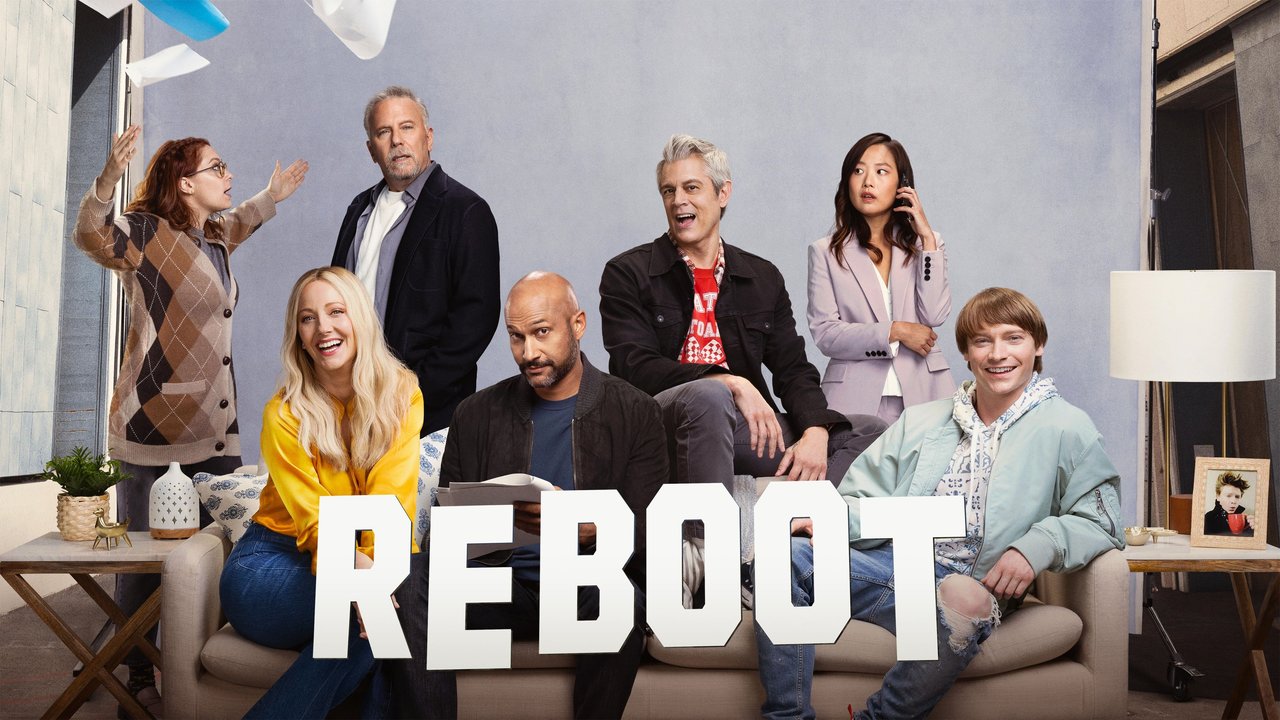
Reboot (Hulu)-Shows about show business
are a tired trope from unimaginative writers, but occasionally something pops
through that’s worth fighting against that bias. Created by Steve Levitan (Just
Shoot Me, and more recently Modern Family), this show contains some of the more
wholesome relics of old-school sitcoms while still maintaining a sharp
subversiveness. Three has-been actors (Johnny Knoxville, Judy Greer, and Callum
Worthy) and one classically-trained has-been in denial (Keegan Michael-Key) are
recruited to revive a multi-camera (AKA old-school, laugh-track) sitcom in a
comedic landscape of more advanced comedy. To make matters more complicated,
the new executive producer is an avant-garde (Rachel Bloom) who’s only doing
the show to get back at her father (Paul Riser) who sorta kinda abandoned her
as a child and he refuses to relinquish the rights without getting involved in
the day-to-day trappings. Like Levitan’s previous hit, Just Shoot Me, this is a
sharp comedy centered around a (forgive me for using such a gooey word)
beautiful father-daughter relation.
Resort (Peacock)-Sit in the Mexican tropics, a married couple (Christine
Milioti and William Jackson Harper) attempts to cure their rut by taking on a
15-year-old mystery of two teenagers who disappeared on a dark and stormy night
(cliché as that sounds). The pair join forces with a kooky local heir who
fancies himself a film noir detective. With one of TV’s best sidekicks in tow,
the journey of this jaded couple is intercut with the pair of love-drunk
teenagers (Skyler Gismodo and Nina Bloomgarten). Filled with needle drops and time jumps
upon time jumps, the show is ambitious and even effortlessly shifts genres into
the supernatural as it picks up steam.
Shantaram (Apple TV)-Charlie Hunnam stars as an escaped Australian convict who gets caught up in the criminal
underworld of Bombay. Only he can’t make a very good criminal because he seems
too morally upright. In fact, he got in prison in the first place because he
stopped mid-robbery to attempt triage on a cop trying to stop him. Lin’s story
to find of finding redemption and do good in a lawless society echoes the
narrative arcs of Buddha and Jesus. The symbolism is a bit more obvious when
you consider that the title of the series takes its name from what the Hindu
villagers give him: "Man of God's peace." But if this is an elaborate
religious allegory, it’s a very gritty and sexy one. Although it was shot in Thailand during COVID, the film is at the production level of a David Lean epic.
True Story with Ed and
Randall (Peacock)-Ed Helms and Randall Park host people with cool stories. They
range from the kind of anecdotes that would get picked up by a local paper (One
person crashes the Super Bowl locker room), to the personally meaningful (a guy
wins a high school state championship in a sport he never tried before to
impress his crush), to the bizarre (a man getting caught stopped by the same
traffic cop three times in one night in a mad dash effort to satisfy his
pregnant wife’s craving). Each story is acted out by known talents like Terry
Crews, Marc Evan Jackson, Sharon Woodard, and Lauren Ash that intercut with the
storytelling. In addition, Ed and Randall compliment the ordinary Joe storytellers
perfectly as enrapt listeners who share in their delight and probe with the
right questions. When it comes to unscripted TV, the art is in how you present
the material, and this show is a master course.