Showing posts with label White Lotus. Show all posts

Tuesday, July 08, 2025

Seven Notes on the Surreal Third Season of the White Lotus


Credit: Global Watch Times

Notes on The White Lotus:
1. Patrick Schwarzenegger setting himself up for cancellation

If cancel culture and sites like Jezebel and Salon held more sway in today’s culture, Schwarzenegger would have been more hesitant to take the part of single-minded douche, considering the associations of the charges against his father. For those who don’t remember, the elder Schwarzenegger faced charges of sexual harassment when he was running for governor and he’s often been associated with a debatable brand of machoism. However, it warms my heart that Arnold Schwarzenegger has grown and is often seen as a voice of reason and compassionate masculinity in the press.

2. The naming of Saxon Ratcliffe is no coincidence

Patrick Schwarzenegger’s Saxon is a character you love to hate. He reflects the state of rich republicans and it’s certainly a fitting moment that even Duke University was quick to disown the Radcliffes publicly. It seems to have a broader context? Isn’t UNC always the more populist pick in the storied March Madness rivalry whereas Duke is the most hated college in the country for non-alumni? It’s also fitting that Saxon is his name, considering the Saxons are the tribe that conquered Great Britain, so this is the purest version of European whiteness one can get. Sidenote: By far, the richest and snootiest school district in Northern Virginia where I grew up is Langley High School which is home of the Saxons.

White Lotus is advertised with a tabloid/reality-TV veneer of “Come and get an inside look at the lusty lives of the mega-wealthy.” In the case of Saxon, his single-minded sex drive is connected to his power and desire to win at life. In molding his younger brother, that’s pretty much the only value he is instills in him.

Credit: Southern Living

3. Victoria: The show’s flattest character?

As much as I can’t stand Saxon as a character, he at least serves a purpose, which makes him watchable. In fact, I count three: 1) He’s a foil to Lochte, 2) He’s amusingly awful 3) We need someone to root for to get their comeuppance.

His mom, Victoria, (coincidentally a name intrinsically linked to British history), is just too caricatured to be realistic. To not know what country she’s in, or to not realize the benefits of her daughter having an alternate path to success (having “studied as a monk in Thailand” on your resume could look really good), makes her the worst character here. Parker Posey has received tremendous praise as an underground comedy darling, but this performance is miles below that reputation she’s cultivated. There’s no nuance here: She’s just a one-dimensional snoot.

4. Sam Rockwell: Unnecessary Cameo?

Alternatively, couldn’t Sam Rockwell’s character have been cut out entirely? The bizarre exploration of his kinks appeared overly tangential to the main plot, and it must have been quite the budgetary expenditure to get an Oscar winner on board. His only functional use was to keep Jim’s wife occupied while Rick had a moment alone with him. This could certainly have been bypassed in any number of ways considering Rick did 80% of the leg work.

Credit: Screenrant

5. The season seemed to have a rather casual view of suicide.

It’s rare to see suicide treated as a viable plot point in fiction, rather than an abnormal act of desperation. I’ve had suicidal thoughts (and no, I hardly care about the social stigma of admitting it) and I’m largely socialized to see those moments as my brain not working. However, there might also be value in acknowledging that it’s a practical solution, even if we still shouldn’t do it.

It might be interesting to analyze this suicide plot thread through the various religions that are explored in the show. The Ratliffe family becomes entangled in Buddhism through this journey, so it’s worth pointing out that suicide doesn’t fall in line with Buddhist teachings if you believe in karma. If the purpose of suicide is to escape your bad fortune (the exact reason for Timothy), then suicide doesn’t end the cycle of karma.

If we jump over to the origins of the church weighing in on suicide, my cursory research shows it was originally related to the seven deadly sins. The aesthetically focused church of the Middle Ages was about refraining from over-indulgence, and suicide came from despair which was the sin. This is ironic because Victoria instills her daughter Piper in a mild sense of hedonism: It’s a sin to go even a year of your life forgoing life’s modern amenities.

6. Belinda Turns into Tanya

I’ve always felt uncomfortable blaming Tanya for anything for oh so many reasons: 1) Belinda shouldn’t be praying on guests to help them out with her big investment; 2) Tanya gave her a fat envelope of money, that should be something; 3) If you’re trying to sell investors, you have to accept that if no contract is in place, they could back out at anytime; 4) If Tanya was an investor, she woItuld have had a say in the business, so Belinda dodged a bullet anyways.

On top of that, the Belinda-Tanya relationship was unfolding alongside the overriding narrative of Black Lives Matter. This was a movement I personally viewed as warping reason and putting Black people on too high of a pedestal. Under these optics, the criticism of the day was that Tanya HAD to be in the wrong because she was a White person not going out of her way to do right by a Black person.

It was refreshing in this season to have Belinda, the ghost of Tanya, and Pornchai simply be people and not stand-ins for the color of their skin.
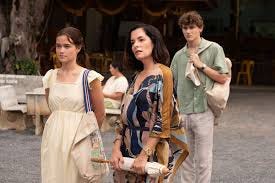
7. The Ratcliffes Face the Most Open-Ended Fate in White Lotus History
With such high stakes and intertwining fates, a few people are bound to come on top in each season. I can appreciate the show’s feel good moments, but the Ratcliffe plot ended with a “What am I supposed to feel?” moment.

Timothy, Victoria, and Saxon are about to have their world blown to bits. Then again, it’s been pointed out that white collar criminals usually get off easy in this country, so maybe not. Whether Saxon learned anything from his incest scare is up for debate, though Patrick Schwarzenegger has said he tried to imbue things with a dramatic character arc. Lochte will probably be grateful to be alive. Therefore, Piper appears to be the biggest question mark.

Thursday, July 03, 2025

Top 12 Shows of the First Half of 2025


1. Resident Alien (Syfy) – Long one of my favorite series on the airwaves, the increased entanglement of characters in the alien storyline has the potential to improve the sprawling ensemble piece into a tighter catharsis. It's only four episodes, but the infrastructure is really coming together.

2. The White Lotus (HBO) – The first three episodes were too slow of a burn for an eight-episode season. There were minor character tics that didn't quite land: The power lady trio never got hooky enough, the Scott Glenn character's actions made no sense, Sam Rockwell's relationship to his sexual and drug wagon were too tangential, and a White Lotus Parker Posey was more over-the-top than even a Christopher Guest Parker Posey. Still, this is by far, the best thing on TV and has so much ambition and craftsmanship at every step.

3. The Four Seasons (Netflix) – Unfairly compared to the original film by the critical sphere. Steve Carell, restless from his marriage (to Kerri Kinney), experiences a mid-life crisis and subsequent May-December romance that threatens to throw off the long-standing equilibrium of the friendship between three couples. The show's format of rotating over four vacations is clever. The show is largely populated with comedic actors, but it's oh so sweet, and the automatic reaction by the gang to the May-December romance is surprisingly salient.

4. Deli Boys (Hulu) – The show operates at that dark comedy level around Good Girls or the TV version of Fargo, but I'm not sure if I've seen a dark comedy that's so funny despite the WIDE proliferation of this genre. Poorna Jagannathan as the aunt steals every scene, and it's a blast seeing Brian George take on something new (speaking of something new, the Pakistani member of Queer Eye debuts as an Indian mobster). Aasif Ali and Saagar Shaikh handle every turn with this unique comic energy as if they've just boarded a roller coaster that they didn't know was going to be so intense.

5. Poker Face (Peacock)-Leans on the same three tropes every episode -- accidental murderer, detective in the right place at the right time, and deus-ex-machina to get the hero kicked out of her home every -- BUT Riann Johnson imbues every episode with movie-level quality. That's a pretty high level of consistency for a show that switches settings every episode

6. Ghosts (CBS) – My iTunes bill can confirm that I can't get enough of this show even when I think I've quit it. It's a rare sitcom that harkens back to the whimsical comedy of the mid-2000s as laugh tracks were getting left behind. It keeps expanding its world without losing charm: The show is the most evenly balanced and strongest ensemble.

7. Grosse Pointe Garden Society (NBC) – Even with a flat murder twist, the show delivers a compelling take on adulthood adrift and the intersecting plots are doubly rich. Two actors that have been begging for meatier work --Melissa Fumero and Josh Radnor -- turn in career-high work here.

8. America’s #1 Family (Amazon Prime Video) – Ramy Youssef pivots fully into comedy, shedding introspection for a breezier, punchier sitcom approach. It's an animated family sitcom and it fully uses the capacity of animation to make characters visually funny.

9. Black Mirror (Netflix) – Three episodes this season—Hotel Reverie, BĂȘte Noire, and USS Callister: Into Infinity—were fully realized, while one episode (Eulogy) came close but ended up more of a downer than a provocative episode. Still, going four for six at this level of ambition this late into an anthology show's run is highly impressive.

10. Running Point (Netflix) – A sports-family sitcom powered by inspired casting—Kate Hudson, Drew Tarver, Justin Theroux, and Scott MacArthur—as siblings who inherit a basketball team. It moves fast, cleverly segments certain episodes to tangential stand-alone shots, and features a great array of guest stars.

11. Going Dutch (Fox) – Military culture gets a sharp satire here. The humor is a little broad at the dialogue level, but the basic premise-- a military support base that's exclusively designed for bowling, laundry, and cheese-making -- is pretty hilarious. The chemistry is so great between Taylor Misiak and Dennis Leary as a headstrong father and daughter working out their baggage years after childhood has ended, I'm here for it. Catherine Tate is miles better as a foil than she was on The Office.

12. Krapopolis (Fox) – Animated show set in a city adjacent to the glory of Athens. The show gets endless mileage out of reality-bending plots and mythology gags. There's plenty of amusing in-fighting within this clan, but it's more along the lines of a family sitcom, making it a kinder and gentler cousin to the nihilistic-leaning Rick and Morty and Solar Opposites.

Friday, December 30, 2022

Best TV Ensembles of 2022

 I contributed a couple entries to this TV Fanatic crowd-sourced article about best ensembles on TV.

My top pick: Reboot (Hulu)

Reboot is about the coexistence of different generations of artists. In that vein, who could be better epitomize that clash than Paul Reiser and Rachel Bloom as an estranged father and daughter entrusted with co-running a sitcom?

Reiser is an old-school 90s sitcom star with a comic delivery that borrows a little from Borscht Belt comedy. Rachel Bloom made her way to TV fame as the star and co-creator of Crazy Ex-Girlfriend via YouTube stardom that turned musical theater conventions on their head.

The pair is complemented by a writing room that echoes Bloom’s Gen Z approach to artistic merit with Riser’s Borscht Belt big laughs approach, and the combination is hilarious.

Meanwhile on the show’s set, Keegan-Michael Key, Judy Greer, Johnny Knoxville (who thought of that casting choice?), and Calum Worthy play a quartet of has-been actors who form a found family with healthy doses of comedy and heart.

Other picks:
Ghosts (CBS): The eight actors who play the ghosts weren’t particularly hot on casting lists before this show. In an ideal world, they should be now. Each member of the octet provides such pitch-perfect character beats to create this great whirlwind of humor. It’s like your favorite comedic duo expanded by six with the rat-a-tat banter still operating like clockwork. Of course, credit goes to Sam (Rose McIver) and Jay (Utkarsh Ambudkar) for bringing the heart and grounding the plots. (I also wrote about Ghosts here)

Star Trek Picard (Paramount Plus): Alison Pill, Michelle Hurd, and Santiago Cabrera bring a sense of visceral edge that I’ve never seen in Star Trek before. Pill’s displays an antsy-ness at being in space that seems pretty logical for most humans, but somehow Star Trek has never shown that side of the 24th century populance before. It makes sense: Star Trek: The Next Generation was designed to appeal to a broad audience in the 1980s so the actors weren’t aiming for high drama, but when the TNG cast is introduced they also are up to that higher bar.

Yellowjackets (Showtime): The show centers around a plane crash involving a teenage soccer in the 90s, and the way the survivors are traumatized all the way through their adulthoods. How fitting that the show cast three of the most promising ingenues of the 90s as the roles of the four main survivors: Melanie Lynskey, Christina Ricci and Juliette Lewis. All three have long been underrated actresses and deserve to be attached to one of the hit shows on television. But that’s half the battle: The show also succeeds in casting matching teenage versions of these characters with all their drama.

Winning Time (HBO)-When you have two Oscar winners in your cast (Adrien Brody and Sally Field) and neither of them are central characters, then you’ve got a pretty deep talent pool. This docudrama about the Lakers 1980 championship features John C. Reilly in one of the most complex roles of his storied career as larger-than-life team owner Jerry Buss. Quincy Isaiah shines here in his first screen credit playing Magic Johnson as a bright-eyed superstar that’s still in the incubation phase. His main rival for the starting position is Norm Nixon played with swagger by the real-life figure’s son, DeVaughn. Surrounding them are a murderer’s row of character actors in Jerry West, Hadley Robinson, Jason Segel (did not see that coming), Tracey Letts, and the aforementioned Brody alongside Field who makes a strong impression with little screen time.

Ramy (Hulu): Ramy Yousef just plays a less self-assured version of himself, but there’s so much idiosyncrasy in the characters around him that this show deserves a place. Watching this show and not knowing the names of all the actors is a good reminder of the scarcity of Middle-Eastern actors with name recognition. Ramy’s parents are played by Amr Waked (Syriana, Salmon Fishing in Yemen) and Hiam Abbass (The Visitor) who have both done enough good work to be names among more astute American audiences, but everyone on this show deserves a brighter future. It also helps that the show format gives characters like Dena (May Calamaway), Uncle Naseem (Laith Nakli), and Ahmed (Dave Marheje) an episode in the spotlight or two.

The White Lotus (HBO)-This one is going to pop up on a lot of my lists because you can't make a TV series that works on so many layers without doing so many things right. This show has Lost/Arrested Development levels of Easter Egg placement and you better believe that the actors are in on the intricacies of each character. The show's brightest star is Emmy-winner Jennifer Coolidge but deserves a lot of credit for finding a new tone of deadpan for Aubrey Plaza, and making spaces for the largely unknown-to-American-audiences Italian newbies.


Wednesday, December 28, 2022

Top Ten Character Arcs in TV in 2022


10 Best Character Arcs on TV in 2022

I contributed a number of entries to TV Fanatic where I am currently writing:

Tori Nichols (Peyton List) Cobra Kai, Netflix-Tori caught the audience’s attention the first day when she walks into Cobra Kai and challenges anyone in her way to a battle royale. In 2002, she became a capable anti-hero that provides a welcome counterpart to Samantha’s privilege. Although we expected to cheer an eventual Samantha win at the tournament this year, it felt unexpectedly right to see Tori triumph at the end of the day (Even if there was a technicality involved).

Gordon (Paul Reiser), Reboot (Hulu): The best thing about Gordon is that he isn’t that much different from where he was at the start of the season. He makes insensitive jokes and doesn’t appear to have changed his ideas of what’s funny or what isn’t. But, he has formed a genuine relationship with his daughter and a genuine appreciation of the people he works with. With that, every insensitive joke he makes has a little more good intent behind it.

Al (Adhir Kalyan), United States of Al (CBS)-South Asian characters on TV are typically either ambassadors of cool (the personas of Kumail Nanjiani or Utkarsh Ambudkar) or sheltered nerds. Adhir Kalyan first became known through the 2007 TV series Aliens in America as an exchange student who was doomed to high school nerdom the moment he entered the school in his traditional South Asian garment. Most of Kalyan’s roles have been like that, but Al is a wonderful exception as he has started to change and (more importantly) assimilate to the better opportunities of his culture. He even gets a make-out buddy (Jayma Mays) and squares things better with his non-traditional love interest (Azita Ghanizada).

If I were to round out the list to a clean top 10, I would say:
Craig (Craig Robinson), Killing It (Peacock:) Learning to stop chasing some bourgeoisie vision of success is empowering (If I didn’t believe that, I wouldn’t be writing these words). And learning to appreciate a good person (Claudia O’Doherty) for her faults and strengths takes a lot of growth as well.

Eli “Hawk” Moskowitz: (Jacob Bertrand), Cobra Kai (Netflix): It’s not just Tori that was a tournament winner that no one predicted. It’s also an ending we didn’t know we wanted until it happened.

Emma (Cristin Milioti), The Resort (Peacock): A determinator of a character, nothing will stop Emma from finding out what happened to these two random strangers 15 years ago. But she learns about herself and her marriage in the process. Sort of like that hackneyed “the treasure was friendship all along” trope, but tonally the show managed to work out Emma’s arc.

John Hunchman (John Hodgeman), Dicktown (FX): The stunted Encyclopedia Brown John Hunchman finally earns an iota of self-respect when he solves a 20-year-old high school case. The second season of Dicktown was more serialized than the first and it worked y to John’s favor.

D’Arcy Bloom (Alice Wetterlund), Resident Alien (SyFy): The idea of watching a Winter Olympian try to retain her former glory is always an interesting arc. It’s also a great anti-ship: Her relationship with Elliott didn’t work because she’s not there yet, but her efforts towards intimacy count for their own sake. It’s also unclear if a Season 1 version of D’Arcy would have apologized to Kate.

Portia (Haley Lu Richardson), The White Lotus (HBO): A lot of fellow fans of this show saw Portia as suffering from some sort of character defect for rejecting the vanilla Albie in favor of the bad boy. But, come on, she needed to go over to the dark side a little before valuing him properly. And what a wild episode it was: Surely more than the ennui-laden zoomer wished for when she wanted to feel alive.

George Shultz (Sam Waterson), Dropout (Hulu): Having unfortunately lived in the US during the last six years, it’s easy to see how evil is perpetuated by powerful people not wanting to admit they’re wrong. I’m not familiar enough with the real-life story of Elizabeth Holmes to know what George Shultz actually did but the idea of him is nice and we need to know more. And he’s pretty damn effective in Sam Waterson’s hands

Friday, February 04, 2022

Top 12 TV Shows of 2021


1. White Lotus (HBO) Season 1-Mike White’s astute tableaux of human shallowness explores whether people on vacation can truly escape who they are through three interlocking groups of vacationers in Hawaiian paradise. For those who still mourn the cancellation of “Enlightened”, this is sweet redemption (More here and here)


2. Wanda Vision (Disney Plus) Limited Series- With such mind-boggling layers of symbolism, this is as if the world's best escape room writers were tasked with writing a sitcom that entrusts viewers to be active rather than passive participants in decryption. The series takes the viewer on a journey through various sitcom tropes on a decade-by-decade journey with underlying storylines dealing with grief, manipulation, and escapism as a form of evil. With all the painstaking detail that the prodution team implants its easter eggs, this is a sure contender for the most intricate show on television if not its most ambitious. I have little familiarity with the MCU (full disclosure: I hate the MCU) but was able to peace most details together.


3. Resident Alien (SyFy) Season 1-Alan Tyduk hits the right notes of not-to-be-believed silliness, as an oblivious alien who improbably manages to integrate into a small town in Colorado. In its own hokey way, the show is endearing, rich in character, and features a marshmellowshly  portrait of small-town life with plenty of scenery porn in the background. The show also features a sizeable Native American cast but doesn't resort to being pedantic. (More here)


4. 
We Are Lady Parts (Peacock) Season 1-A six-episode inaugural season takes us into the often unseen world of Muslim urbanites in Europe. The diverse quintet of women in London are united by their love of punk rock. If Dewey Finn’s mantra (whose words, ironically were written in “School of Rock” by Mike White of “White Lotus”) that “one great rock show can change the world”, these hijab-clad women are rocking their way to just that. (More here)


5. The Great (Hulu) Season 2-The spiritual sister to “The Favourite” (Show runner Tony McNamara also wrote that film about the decadent court of a European royal) is set in the glorious decadence of the court of 18th Century Russia with bored aristocrats feeding their basest desires. In “Hamilton”, Washington says to the titular character, “Winning was easy young man, governing’s much harder” which is an apt description of this season as Catherine the Great has won.  Now what? This is a slate of psychologically multi-layered characters who are constantly re-evaluating which side of the fence they sit on.  (More here)


6. Never Have I Ever (Netflix) Season 2- Never Have I Ever tells the story of a teenage girl breaking away from the mores of a traditional Indian-American family grieving for her late father, and discovering boys. This year, the show proved the epitome of how a show should expand its side characters and mix up the dynamics in its sophomore season.


7. Doctor Death (Peacock) Limited Series-Adapted from a podcast, this is a high-takes parable of a medical narcissist (played by Joshua Jackson, yes, that Joshua Jackson) who left a trail of paralyzed patients in his wake while the medical establishment took way too long to catch up with him. It’s a tale of bureaucracy working exactly as it should and still leading to classic nightmare fuel. It’s also a tale of the upstream battle two doctors (Alec Baldwin and Christian Slater at the top of their game) must take to stop an atrocity.


8. What We Do in the Shadows (FX) Season 4-It’s been the best of times (for Colin Robinson who appears to have made at least one trusty comrade) and the worst of times (geez Nandoor, you need some Prozac) for our gang of Staten Island-based vampires. The joke here is that as the quartet (plus everyone’s favorite lackey, Guillermo) ascends the ranks of the vampiric council, they continue to be tripped up by the banalities of life (chain letters, toy store, neighborhood meetings).


9. Mr. Mayor (NBC) Season 4-Another entry in the canon of Tina Fey and Robert Carlock that's a little more "30 Rock" than "Unbreakable Kimmy Schmidt." The humor is clever but skin-deep. Don't expect pathos-driven growth with the narrative highs of Kimmy, Titus and Jaqueline. At the same time, the show, set in the Mayor's office of L.A., has much less of an insider vibe. As it's mostly episodic, the show lives or dies by the episode but it's hard to deny that the show has been hitting a lot of home runs in the back half of the season.


10. Bless the Harts (Fox) Season 2-Though the show was cancelled, we can at least celebrate how the show got a lengthy second season run. The brainchild of ex-SNL writer and former North Carolina native Emily Spivey, the show split the difference between homage and parody of small-town Carolinian life. The show is about a lower-class family in small town North Carolina features a waitress with modest aspirations to rise within her station, her sly mother (whose primary motivations in life are besting her rival, feeling young enough that she can flirt with construction workers, and pulling off semi-fraudulent schemes), her boyfriend (a trucker persona with a teddy bear persona underneath), and her dead panning daughter. It’s an extremely strong quartet of characters who exhibit great chemistry.


11. American Crime Story: Impeachment (FX) Season 3-As a child of the 90s, I knew very little about this incident other than feeling my heart broken by Bill Clinton when  he went on TV and flat-out admitted to saying he did the thing he previously said he didn’t do a million times. Boy, would 8th grade me loved to have heard all the juicy details (for educational purposes about sex, if nothing else). Better late than never! ACS is essentially found art: Monica and Bill is such a juicy news story, that even in mediocre hands it would make good TV. However, the credit goes to Ryan Murphy and crew for such adept casting and editing.


12. House Broken (Fox) Season 1- Lisa Kudrow plays a poodle, Honey, who leads a therapy group for all the neighborhood pets. There’s a lot of low-hanging fruit here for the jokes—simply imagine what your pet would say if they could talk to a therapist and viola! – but the jokes really hit and the large ensemble of characters (for example, Will Forte voices a turtle who’s in love with a croc shoe and Clea Duvall plays a rescue cat in desperate need of validation) establishes their comic beats with an extremely impressive speed. (More here)


Honorable Mentions:

AP Bio (Peacock) Season 4, The Chair (Netflix) Season 1, Cruel Summer (Freeform) Season 1, Ghosts (CBS) Season 1, Locke and Key (Netflix) Season 2, Kevin Can Go F*** Himself (AMC TV), Maid (Netflix) Limited Series,  Studio C (BYU TV) Seasons 13 and 14, Saturday Morning All-Stars (Netflix) Season 1, Schmigadoon (Apple TV) Season 1


Everything Else I Saw:

And lest you think I’m being hard on these shows, this is everything else I watched this year that didn’t make my top 12 or Honorable Mention list that these shows rank above:
Abbott Elementary (ABC)^,  Animaniacs (Hulu), AP Bio (Peacock), Attack of the Movie Cliches (Netflix), B Positive (CBS)^, Call Me Kat (ABC), Call Your Mother (ABC), Cobra Kai (Netflix), The Circle (Netflix), Disenchanted (Netflix), Frank of Ireland (Amazon), Explained (Netflix),  Great North (Fox), Inside Job (Netflix), It’s Always Sunny in Philadelphia (FX), Home Economics (ABC), Kevin Hart’s Olympic Show (Peacock), Kim’s Convenience (CBC), La Brea (NBC/Peacock), Lost Symbol (Peacock), Love Death and Robots (Netflix), Mr. Mercedes (Amazon), Mighty Ducks (Disney Plus), Miracle Workers: Oregon Trail (TBS), Mosquito Coast (Apple TV), McGruber (Peacock), Mr. Corman (Apple TV), Mythic Quest (Apple TV), Nora From Queens (Comedy Central), Nine Perfect Strangers (Hulu), Only Murders in the Building (Hulu), The Premise (Hulu), Rebel (Amazon Plus), Reservation Dogs (Peacock), Rutherford Falls (Peacock), SNL (NBC), Solar Opposites (Hulu), Squid Game (Netflix)^, To Tell the Truth (ABC), Young Rock (NBC)^


^ means I watched just one or two episodes. I didn’t necessarily watch every episode of a show if it’s not marked


Tuesday, January 25, 2022

A non-woke take on the White Lotus finale


Very often, my enjoyment of a series is different from my annoyance at the reaction to that series by a critical class that is often highly committed to seeing the world through a lens of identity politics.

Case in point: The HBO series “White Lotus” was my favorite show of 2021 but this interpretation of the first season finale by Jen Chaney at Vulture is far off from my world view which acknowledges the problems of homophobia, sexism and racism, but cautions against treating them as defining attributes or of every socio-economic problem that is encountered in fiction or the real world.

In interviews about the show like this New York Times profile, White talks about being influenced by the colonial history of Hawaii and the performative (and what can be seen as degrading) nature of cultural tourism. At the same time, White seems to be emphasizing privilege in a general sense and power dynamics. “A lot of rich people are just used to being catered to. I don’t think they realize how overwhelming their needs are and how they’re so oppressed by their needs,” he says. 

From White's words and his own legacy ("Chuck and Buck", "Beatriz at Dinner", "Enlightened"), I’d make the case that the primary interest of the show is classist combined with a desire to balance out self-interest with altruism, whereas color and gender are secondary concerns. In "Enlightened", the “man” consisted of an Asian-American HR head who clearly wanted to exile Amy Jellicoe on her own volition and there was also little text or subtext that the show was interested in exploring the specific obstacles to the person of color on the downstairs level (Jason Matzoukas). At the same time, identity politics was hardly in the national lexicon in 2013 to the degree it is today.

[DANGER: SPOILERS AHEAD!]. In the hands of today’s critics, it’s impossible not to see the Belinda-Tanya dynamic is emblematic of one between a Black employee and a White woman. By this lens, Belinda is the victim: “Poor Belinda, who dared to believe that….,” writes Chaney in what could pass for a Shakespearean soliloquy. Firstly, why no mention of the big fat envelope that Belinda gave Tanya in cash? How do we know she couldn't start a business off that? Secondly, I agree that Tanya should not have jerked Belinda around, but it generally falls on people trying to launch their own business to convince the investors and not the other way around. Do you know how many editors or partners in other business ventures I’ve had bail on me?

Bold projection here: I wonder if the salaried writers at Vulture are themselves too privileged to write from Belinda's perspective? In order to land jobs at Vulture, they probably got liberal arts degrees which indicates a certain family security. My Persian cousins  couldn’t afford to get anything but business degrees with their state college educations.

Additionally, how is Belinda any less justified in bailing on Rachel in her moment of need (an event that sends her back into the arms of a far crueler man) than Tanya is to Belinda. Sure, we can debate about how the strain of being a woman in the service industry (and if you want to go that route, a Black woman in the service industry). But the tragedy is unmistakably how a series of bad events beget one another—a combination of screwball comedy and upstairs-downstairs melodramas like Jean Renoir’s “Rules of the Game” or “Parasite” or “Grand Hotel” or other upstairs-downstairs melodramas. These types of stories are about classist satire which don’t necessarily encompass Black-White racial dynamics (which is separate from the commentary on Native Hawaiins, intersectionality be damned).

Instead of tackling that, Chaney writes, “But like so many white women, she’s apparently decided it’s easier to buy into a system in which she’s protected and financially supported than it is to summon the courage to work against it.” The statement is problematic because it treats Rachel as an accessory to some greater racial liberation movement rather like some reverse Magic Negro rather than a woman with very serious problems of her own.

The debate over whether these characters are defined by their white privilege is dramatized in a debate by the Mossbacher family. The parents' points that their daughter is more of an armchair activist can actually be read as somewhat valid.

At the very least, that scene and the show is exemplary precisely because it invites such thought-provoking discussion. Do the book smarts that Olivia and Paula gain equip them to properly fight for their beliefs (encouraging a poorly planned theft might not be the answer)? Is there any way to vacation to Hawaii that doesn’t perpetuate a systematic racist cycle? If there isn’t, should we not take vacations to Hawaii and deprive the state (including the natives), of that income? Does being conscious of problems preclude meaningful action?

The point is that these aren’t easy answers, though I can’t help but feel Chaney predictably sees this as more definitively an indictment of racism than it is meant to be. At the end, she surmises that Quinn didn’t get on the plane. I choose to believe that Quinn was able to bridge the gap between himself and the culture he emulated, but that's ok: We see this world through different lenses.


*Interesting side note: While writing the article, I looked up Jen Chaney on Twitter and  invited her to coffee because she's way more successful than I am and apparently lives in the same city as me. No word yet on whether she would accept and the chances might decrease if she knows I'm writing an article that's critical of her take. My hope is that a friendship can be struck between people with differing views and, perhaps, Vulture might even be impressed by a well-argued rebuttal.