Friday, August 09, 2019

Seven More Classics I Recently Saw for the First Time


The Sting (1973):

Why it’s a classic: For reuniting the two biggest stars of Hollywood four years after they made a big splash together with “Butch Cassidy and the Sundance Kid” and packaging it with excellent production values at a time when period pictures were in (think The Godfather, Chinatown, Murder on the Orient Express), “The Sting” was awarded Best Picture in the 1973 Oscar race. On top of that, the “Sting” is a positively loaded crowd-pleaser.
Did it live up to the hype? From the expansive supporting cast to the sepia-toned color palate to the complimentary age-appropriate score, there is a lot to like about this show. Even more than “Butch Cassidy and the Sundance Kid”, this is a testament to Redford and Newman’s star power and even a meta-commentary of sorts on the nature of the star. Hard to also discount Robert Shaw’s turn as a terrifying villain. The man is so still and focused, I could have easily been convinced I didn’t see him blink.


Poseidon Adventure (1972):
Why it’s a classic: In the 70’s, disaster films were among the highest grossing films of their day, had some of the best casts, and were nominated for Oscars all over the place (“Airport” and “Towering Inferno” even got BP nominations). The Poseidon Adventure, set aboard a cruise ship, pulled together five Oscar winners (Shelley Winters, Red Buttons, Jack Albertson, Gene Hackman, Ernest Borgnine) along with Roddy MacDowall and Arthur O’Connell.  As evidence of its cult status, the film has even been looked upon as a religious allegory (it features two preachers with contrasting views) and spawned re-showings and convention-type events.
Does it live up to the hype?: Like the best of Roland Emmerich’s films (the filmmaker of “Independence Day” and “Day After Tomorrow” and spiritual successor of this trend), this is a tightly-scripted action film on a scale of grandeur that’s beautifully pulled off. It also can’t be underestimated that the first time watching this film, you don’t know how it will end and it’s pretty clear that all casualties are on the table. It also helps that none of the big-name actors at the time were stars that overshadowed the rest of the cast so the film has a great even-keeled ensemble feel with an even spread among multiple compelling stories.

Carrie (1976):
Why it’s a classic: The opening tracking shot during the credits is up there with “Touch of Evil” as the greatest in history and it is the first Stephen King adaptation to be put to film (his debut novel no less). It is one of the most highly acclaimed horror films in history in terms of mainstream appeal.
Does it live up to the hype?: The film is primarily known for being such a well-told tale of adolescent carnage and while it’s tonally difficult to grapple with, I could accept that there was some heavy symbolism that would take some effort to work out with (generally a good thing).
What stuck out to me for the strong characters and relationships. Sissy Spacek (who would go on to be nominated for six Oscars) is the epitome of that feeling all puberty-ridden teenagers have of feeling alien in their own body. Carrie’s singularity is also better defined by the happy-go-lucky coterie of girls who so casually exhibit cruelty towards her and Nancy Allen (who plays the ring leader) deserves credit for that. Piper Laurie was nominated for an Oscar for her role as the fundamentalist mother but Betty Buckley can’t be underlooked for her performance as a gym teacher so sweet and understanding that I kept wanting to press the reset button on my adolescence so I could have her in it.


King Kong (2005):
Why it’s a classic: Peter Jackson followed up his blockbuster-defining trilogy Lord of the Rings and his cache of Oscars with a remake of the 1933 classic that was one of the most ambitious films of its day. Jackson cited the original King Kong as his first cinematic love and media reports suggested he drove himself to exhaustion trying to recreate it for the CGI era. Although the film didn’t deliver Titanic-levels of return at the box office and lost the December battle to “Chronicles of Narnia: The Lion, the Witch and the Wardrobe”, its $218 million domestic gross ($550 million international) was solid enough to call it a success. More importantly, it garnered excellent reviews and had enough buzz to merit an outside shot at a Best Picture nod (exceedingly hard for Blockbuster films in the 5-film era).
Did it live up to the hype? Although a little on the long side, it’s definitely worth it. The film’s first act doubles as a scene piece of Depression-era struggles (like “42nd Street” or Tim Robbins’ “Cradle Will Rock”) that could be its own movie, the second act is a cheesey romance and comedy of manners between Adrian Brody and Naomi Watts, the third act is essentially a giant monster film like Godzilla, and the fourth act is an allegory for the follies of man in thinking they have a right to cage the animals.  The quality of the film on every level ties the disparate parts together and it’s hard to understate how amazing Naomi Watts is in playing off a CGI age.


Princess and the Frog (2009)
Why it’s a classic: This late entry into the canon of animated Disney musicals is the first Disney musical to feature an African-American role in the archetypical princess character. It also made headlines for its retro method of 2D animation at a time when animated films were trying to push the uncanny valley of realism (the worst offender would be the utterly pointless “Lion King” remake a decade later). The film was nominated for two Best Song Oscars from Randy Newman’s score and competed in an incredibly deep Animated Film category (“Fantastic Mr. Fox”, “Cloudy with a Chance of Meatballs”, “Coraline”, and “Up” came out the same year).
Did it live up to the hype? Definitely! I give this film three zip-a-dee-do-dahs and a chim-chim-a-ree. The film sets itself apart through a regional specificity that comes from doing great research and sprinkling it organically into the story. The map of New Orleans, the details about Mardi Gras, the culinary and architectural delights of the city, and the mystique of voodoo (used in both the characterizations of the villain and the wise elderly savior character) are all things that have some footing. The film also dares to imbue characters with regionally speficic and often unintelligible accents, fear of backlash be damned, and it’s beautiful. The downtrodden protagonist Tianna is juxtaposed with her wealthy friend Lottie and his father Big Daddy Bouffet and the privilege of the Bouffet clan isn’t ignored while the bond between the two parties and the lesson of voluntary benevolence is celebrated.

Nine to Five (1980)

Why it’s a classic: The 2nd highest grossing film of 1980 is probably best known for its iconic title song that doubles as an anthem for punch card working life resiliency. The unlikely pairing of Hollywood royalty Jane Fonda, comedienne Lily Tomlin, and singer Dolly Parton produced a lightning-in-the-bottle chemistry that led to a lifelong friendship.  The story of rebelling against a handsy boss (Dabny Coleman) through a haphazard hostage scenario likely resonated as a feminist power ballad in 1980 and probably resonates more with the #metoo movement today.
Did it live up to the hype? The days when a simple comedy can jump that high on the box office charts are long gone so it’s hard to judge it along the scale of today’s most popular comedies which rarely crack the top 15 in yearly box office. “The Hangover” might be the best example of a critically well-received blockbuster that made a dent in the box office charts today (“Crazy Rich Asians” and “Bridesmaids” were a little more successful critically but not financially).  The chemistry between the three is a-sparking and Dolly Parton, who was likely cast as herself, brings a certain amount of welcome pluck. It’s a bit broad as a comedy but entirely pleasing. The special effects to depicting the three women’s revenge fantasies also didn’t do much for me.


Pawn Broker (1965)

Why it’s a classic:
It’s not well-known among Sidney Lumet’s repertoire but it’s one of his most personally affecting and stylistically innovative films. The story of a jaded Holocaust survivor who owns a pawn shop in Harlem is the first film to approach the tragedy from the point of the view of its survivors. It is also a massive stylistic departure from the New Wave with a jazz score, black-and-white, and raunchy realism (it’s the first film to show a topless woman in some context).
Does it live up to the hype: This film is more of a hidden gem than a classic, so there’s not as much hype to live up to and that’s a shame. The film is visually rich, meaningful, and doesn’t look or feel like other studio films from the era. It isn’t necessarily a light popcorn film but its darkness isn’t without meaning and there are slivers of a redemptive arc worth holding out for.

Friday, August 02, 2019

Top 25 Actresses of the (Last) Decade: Rehash Article from 2009


This article was originally published in 2009 on another website. It’s now being reprinted here and polished up a little bit:
With the decade nearly over, and the fact that we can get a sense of who is committed to which projects through the end of 2009, we can safely evaluate the actresses of the 2000s. The reason I'm picking actresses instead of actors, is partially because actresses are easier to compare to each other since they get the same roles (romantic interests, daughters, sisters, mothers, feminist activists, monarchs named Elizabeth, etc.), and because actresses tend to be at the peak of their careers for shorter time periods (for example, the actresses of the 90's, Meg Ryan, Demi Moore, Michelle Pfeiffer are not really stars at all today).

The criteria:
-Being prolific, as in doing a lot of movies. If you have a number of hits and some misses along the way, you still get more exposure than someone who's been in very few movies and has won Academy Awards for two of them like Hillary Swank
-Being in good movies. The actress might not be the one to get the major awards bling from the movie but they might be part of great works
-Having Oscar nominations, nominations by other major awards bodies, or generally highly praised performances
-Being a bankable movie star with blockbuster potential, bonus points for helming a major franchise

-Being present the whole decade. If you've only been hot since 2005 or 2006 like Amy Adams or Ellen Page, that's not really dominating the decade but rather 3 or 4 years.

The list


1. Nicole Kidman
Kidman is one of the most prolific and visible actresses in Hollywood and if she has had any misfires, one has to credit her for taking so many chances and diving into them headfirst: She tackled romantic comedy with one of the most innovative writers in the genre with Nora Ephron, she immersed herself into the glitz and glamour of Baz Luhrmann, she teamed up with Sean Penn and Sidney Pollack to make a classic thriller, and took a chance with a controversial innovator in Lars von Trier even if she didn’t like it enough to stick around for the sequel. Some of Kidman's less-remembered roles this decade, such as that a trouble janitor who enters into May-December romance with a professor in The Human Stain or a UN translator in Sidney Pollack's thriller The Interpreter, are roles that might have been career highlights for other stars on this list.

Dossier
Nationality: Australian
Best Role: Ada Monroe, Cold Mountain (highly subjective personal opinion on the part of the author)
Other Highlights: The Others, The Hours, The Cold Mountain, Dogville, Interpreter, Birth, Margot at the Wedding
2000s Hardware: 1 win, 2 Oscar noms, 4 Golden Globe Noms
Blockbuster/Tent pole Credentials: Golden Compass if it spawns a sequel [Ed note: It didn't], voice work in Happy Feet
Directorial Portfolio: Anthony Minghella, Baz Luhrmann, Stephen Daldry, Nora Ephron, Sidney Pollack, Lars von Trier

Credit: Rebloggy
2. Cate Blanchett
Known primarily for playing Queen Elizabeth in the last decade, Blanchett never has exhibited much of a star persona but, like Kidman, she has been highly prolific and immersed herself in a tremendous variety of work. In the last three years alone, she appeared in seven wide release pictures, she has earned Oscar nominations for three of them. In addition, she has propelled two others to Oscar nominations for Best Picture. She also has a penchant for the quirky and experimental as shown through her willingness to embrace projects like Wes Anderson's Life Aquatic and Steve Soderbergh's The Good German.

Dossier
Nationality: Australia
Best Role: Bob Dylan, I'm Not There
Other highlights: Veronica Guerin, Aviator, Life Aquatic with Steve Zassou, Indiana Jones and the Kingdom of the Crystal Skull (she’s arguably the only person acting in the film), Notes on a Scandal, Babel, Good German
The decade in hardware: 1 Oscar win, 4 Oscar noms, 6 Golden Globes Nods
Blockbuster/Tentpole Credentials: Lord of the Rings, Indiana Jones
Directorial Portfolio: Steve Soderbergh, Steve Spielberg, Martin Scorsese, Wes Anderson, Ron Howard, Alejandro Gonzalez Inarritu, Peter Jackson, Todd Haynes, Shekhar Kapur, David Fincher, Barry Levinson


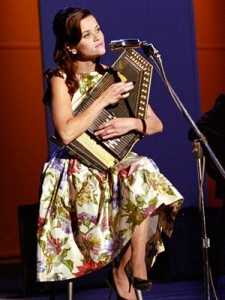
3. Meryl Streep- The preeminent actress of our era. Twelve nominations into her career, Streep is still capable of surprising audiences with new facets of herself, which is simply amazing. This decade, she's transformed into a stoic uberboss, a quaint country singer, and a sexually adventurous middle-aged writer.

Dossier
Nationality-American
Best Role: Susan Orlean, Adaptation
Other Highlights: Devil Wears Prada, Prairie Home Companion, Prime, It’s Complicated, Doubt, Manchurian Candidate
The decade in hardware: 4 Oscar noms, 7 Golden Globe noms
Blockbuster Credentials: Adventures of Lemony Snicket
Directorial Portfolio: Johnathan Demme, Rob Altman, Tom Daldry, Spike Jonze, Robert Redford


4. Kate Winslet
Winslet was in the biggest blockbuster of all time, and has done an excellent job in the 2000s of making audiences forget the name Rose Bukater and remember the name Kate Winslet instead. Her effusive personality and her able handling of Saturday Night Live the week after Ashlee Simpson was busted for lip-synching has done wonders for her public persona but it’s largely been about the acting talent with Winslet and the breadth of films. She became the youngest actress to earn 5 nominations by 2007, and finally goaded the Academy into giving her an Oscar through sheer perseverance with her role of Hannah Schmidt in “The Reader.” Interestingly enough, she predicted on a 2005 episode of “Extras” that it would take a Holocaust movie for her to win.

Dossier
Nationality: British
Best Role: April Wheeler, Revolutionary Road
Other Highlights: Secret Life of David Gale, Eternal Sunshine of the Spotless Mind,  The Reader
The Decade in Hardware:  Oscar Wins: 1, Oscar Noms: 4, Golden Globe Noms:  5
Blockbuster/Tentpole Credentials: Winslet isn't exclusively high-brow, but she doesn't have any big blockbusters to her name this decade.
Notable Directors: Michel Gondry, Sam Mendes (her then-husband), Todd Field, Marc Forster


5. Rene Zellweger
Ideal in romantic comedies or as a dramatic love interest, Zellweger has also expanded to roles of independent women with roles in Miss Potter, Cold Mountain and Bridget Jones. She scored three successive Oscar nominations with Bridget Jones, Chicago, and Cold Mountain, and with her performances in Cinderella Man and Miss Potter, was a a threat to be present in the Oscar race pretty much every year she had a major film.

Dossier
Nationality: American
Best Role: Roxie Hart, Chicago
Other highlights: Nurse Betty, Cold Mountain, Miss Potter
The Decade in Hardware: Oscars: 1, Oscar Noms 3, Golden Globe Noms: 6
Blockbuster/Tentpole Credentials: Bee Movie, Bridget Jones spurned a sequel
Directorial Portfolio: Rob Marshall, Anthony Minghella, Ron Howard, Neil LaBute, George Clooney

Source: DRWL Wordpress

6. Reese Witherspoon
Her output is more limited than some of the ladies on the list but she has been America's sweetheart since breaking out in Legally Blonde and following up with favorable romantic comedy Sweet Home in Alabama. She also is in high demand judging by the 15 million dollar paycheck she's been commanding. Most importantly, she took her sweetheart charm and turned it into a nuanced performance in one of the best performances of the decade in Walk the Line.

Dossier
Nationality: American
Best Role: June Carter Cash, Walk the Line
Other highlights: Legally Blonde, Just Like Heaven
The Decade in Hardware: Walk the Line earned her a win at the Oscars and was her sole nomination at Globes or Oscars
Blockbuster/Tentpole Credentials: Legally Blonde spawned a sequel
Directorial Portfolio: James Mangold, Mira Nair

Source: IMDB

7. Judi Dench
Proving that old age and the bob weave are not barriers, Dench continues to corner the market on juicy veteran roles and has managed to score four Oscar nominations this decade. While none of her Oscar-nominated roles were popular films at the box office, she gets exposure through playing M in the James Bond series. She also appeared in the critically acclaimed Pride and Prejudice.

Dossier
Nationality: British
Best Role: Barbara Covet, Notes on a Scandal
Other Notable Roles: Iris, The Shipping News, Mrs Henderson Presents, Casino Royale, Pride and Prejudice
The Decade in Hardware: 4 Oscar noms, 3 Golden Globe noms
Blockbuster/Tentpole Credentials: James Bond, the less successful Chronicles of Riddick
Directorial Portfolio: Stephen Frears, Martin Campbell, Lasse Hollstrom, Joe Wright, Rob Marshall


8. Scarlett Johansson
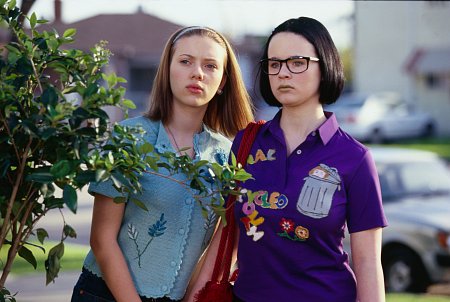
It is hard to even fathom how only five years after breaking out in Lost in Translation, Scarlett Johannson has amassed a lifetime of great performances to date. She's been in The Prestige, The Other Boleyn Girls, Match Point, Girl with a Pearl Earring, a Love Song for Bobby Long, and has even had time left over for a hearty romantic comedy like In Good Company or a sci-fi thriller like The Island. Even before breaking out in Lost in Translation, she managed to steal scenes in films like Man who Wasn't There and Ghost World. Due to category confusion (was she supporting or lead for Lost in Translation?), that career-affirming Oscar nomination eludes her but she's got plenty of time to accumulate more accolades. She also has a BAFTA (British version of the Oscars) to her name for Lost in Translation.

Dossier
Nationality: USA
Best Role: Charlotte, Lost in Translation
Other notable roles: Ghost World, Girl with a Pearl Earring, Love Song for Bobby Long, Match Point
Notable Hardware: Some Golden Globe nominations but no Oscar nods in a cruel twist of fate
Blockbuster/Tentpole Credentials: She was in Home Alone 3, Prestige made quite a bit of money and she will be added to the Iron Man sequel next summer
Directorial Portfolio: Paul & Chris Weicz, Woody Allen, Sofia Coppola, Christopher Nolan, Brian de Palma, Joel & Ethan Coen, Frank Miller, Phillip Noyce

Source: Product Placement Blog dot com 

9. Julia Roberts
The biggest starlet in Hollywood last decade has slowed down a little bit this decade but still isn’t enough to stop and say. She's considered herself semi-retired and usually enters into projects because of her friendships with Brad Pitt, Steve Soderbergh, Mike Nichols or George Clooney, which doesn't make her particularly bankable as a star any more. At the same time, she's still Julia Roberts and generates a lot of buzz whenever she does decide to do a film, such as Charlie Wilson's War a couple years ago

Dossier
Best Role: Erin Brockovich, Erin Brockovich                  
Other notable roles: Closer, Ocean’s 12, Charlie Wilson’s War, Duplicity
Nationality: American
The decade in hardware: One Oscar, one Oscar nom and 3 Golden Globe noms
Blockbuster/Tentpole Credentials: Ocean's 11 series (though she was weaned out by part 3)
Directors: Stephen Soderbergh, George Clooney, Mike Nicholls, Gore Verbinski,


10. Julianne Moore
Moore is usually attracted to only the classiest material, and sometimes these films, like Prize Winner of Defiance Ohio and Freedomland, are films that the general movie going public is rarely even aware of. In some case, however, like Alfonso Cuaron's Children of Men and the Oscar-nominated The Hours, magic has struck and her profile has been upped significantly as a result. Breaks into more lightweight material such as Laws of Attraction or Next have also helped as well.

Dossier
Nationality: American
Best Role: Cathy Whitaker, Far From Heaven
Other Notable Roles: Prize Winner of Defiance Ohio, Laws of Attraction, Children of Men, The Hours, A Single Man, Shipping News
The Decade in Hardware: Two Oscar noms, two Golden Globe Nods
Blockbuster/Tentpole Credentials: Hannibal, Next
Directors: Todd Haynes, Ridley Scott, Stephen Daldry, Alfonso Cuaron


11. Naomi Watts
With her ability to slip into and out of accents and an on/off switch with which she can bring out intensity, Watts is simply too talented to be anything but an A-list actor for long. Her performance in Mullholland Drive was one of the most notorious Oscar snubs of the decade. Two years later, she earned a well-deserved nomination in 21 Grams and a couple years later, she turned a role that nearly derailed Jessica Lange's career in a third-time remake into Oscar bait, with the role of Ane Darrow in King Kong. She often adds a lot to films in supporting roles like Eastern Promises or I Heart Huckabees and more often than not, her work goes unnoticed.

Dossier
Nationality: Australian
Best Role: Betty, Mullholland Drive,
Other Notable Roles: 21 Grams, The Ring, King Kong, Eastern Promises
Oscar Hardware: 1 Oscar Nom, surprisingly zero Golden Globe nods
Blockbuster/Tentpole Credentials: King Kong, The Ring
Directorial Portfolio: Ron Howard, David Lynch, Alejandro Gonzalez Inarritu, David Cronenberg, Peter Jackson, Gore Verbinski, Woody Allen, James Ivory

Source: North Country Charlize Theron-The Wrap
12. Charlize Theron
The Charlize Theron story is a dream come true for every B and C-lister out there with hopes of turning into an A-lister overnight. With Monster (2003), she landed that one juicy role and turned it into the performance of a lifetime. The Academy treats the best actress race like a coronation of Tinseltown's homecoming queen and more than in any other race, there is a hesitancy to give it to someone who hasn't paid her dues, but Theron was too good to deny. She later proved that she wasn't a one-hit wonder by scoring another Oscar nod in North Country and has picked up parts in Paul Haggis' In the Valley of Elah and attempted action roles in Aeon Flux and Hancock (the 10th highest grossing film of 2008). Neither showed sequel potential but a kick-ass heroine is always marketable.

Dossier
Best Film Role: Aileen, Monster
Other Notable Roles: Aeon Flux, North Country, Curse of the Jaded Scorpion
Nationality: South Africa
The Decade in Hardware: 1 Oscar win, 2 Oscar nominations, 1 Golden Globe Nomination
Tentpole/Blockbuster Credentials: An unsuccessful attempt with Aeon Flux, Hancock had a decent opening weekend but fell off
Directors: Robert Redford, Nikki Cairo, Woody Allen, Paul Haggis, John Frankenheimmer
13. Helen Mirren- The first woman over the age of 40 to win a best actress Oscar since Susan Sarandon, Helen Mirren had a big career hit with her role in The Queen and won a second Golden Globe for playing Queen Elizabeth I in the same year. In addition, she had Oscar nods for Godsford Park, The Last Station, and made respectable Oscar bait in Calendar Girls. Well into her 60s, she continues to exude an odd sex appeal and youthfulness. With the exception of her Oscar-nominated role for The Madness of King George, the actress was more visible onstage and in the British miniseries Prime Suspect. 
Best Role: Queen Elizabeth II, The Queen
Other Notable Roles: Gosford Park, Calendar Girls, The Last Station
Nationality: British through and through
The Decade in Hardware: 1 Oscar win, 3 Oscar noms, 4 Golden Globe noms
Tentpole/Blockbuster Credentials: National Treasure 2
Directorial Portfolio: Stephen Frears, Rob Altman, Taylor Hackford, Sean Penn


14. Keira Knightley
When she was cast in Pirates of the Carribean, little-known Keira Knightley might have been destined to be the female love interest in a swashbuckling epic, but as she held her own against Orlando Bloom and Jonny Depp, she gradually became the center of the story herself (and for that matter, the only remotely interesting character onscreen in the disastrous third installment of the trilogy). Rather than ride the kind of fame that one gets from being in a billion dollar trilogy into a string of roles in romantic comedies, Knightly went for more high-brow material, scoring a nod for Pride and Prejudice and starring in an Oscar-nominated film with Atonement.

Dossier
Best Role: Jules, Bend it Like Beckham
Other Notable Roles: Pride and Prejudice, Pirates of the Caribbean: Dead Man’s Chest, Atonement, Domino, The Edge of Love
Nationality: English
The Decade in Hardware: 1 Oscar nom, 2 Golden Globe noms
Tentpole/Blockbuster Credentials: Pirates of the Caribbean
Directorial Portfolio: Joe Wright, Gore Verbinski, Tony Scott


15. Jennifer Connelly- Like Watts, Connelly is so talented that it was only a matter of time before she became an A-list actress, won an Oscar or both. Her Oscar for A Beautiful Mind could have just as well been for House of Sand and Fog, and she regularly appears in highly respected films such as Requiem for a Dream, Little Children, and Blood Diamond and even her unremarkable genre films like Open Water and Ang Lee's Hulk are capable of drawing attention solely because her name is on the marquee.
Best Role: Kathy, House of Sand and Fog
Nationality: American
Other Notable Roles: Beautiful Mind, Blood Diamond, Little Children, Requiem for a Dream, Open Water
The Decade in Hardware: One Oscar win, one Oscar nom, one Golden Globe nom
Blockbuster/Tentpole Credentials: A failed attempt at The Hulk, a commercially successful but critically panned Day the Earth Stood Still
Directors: Ron Howard, Ed Zwick, Todd Fields, Ang Lee, Darren Aronofsky, Terry George


And the rest of the top 25 (All deleted from the internet forever, except 25):
16. Natalie Portman 17. Laura Linney 18. Maggie Smith 19. Catherine Zeta-Jones 20. Kirsten Dunst 21. Joan Allen 22. Halle Berry 23. Maggie Gyllenhaal 24. Cameron Diaz 25. Angelina Jolie

Monday, June 24, 2019

Rock of Ages (2012) Review

Credit: Rotten Tomatoes


Rock of Ages is a messy through-washed affair that has moments of painful cheesiness and glory in such close proximity to one
another that it's hard to take it all in with a straight face. In other words, it's an interesting film to write about.

The film's reason for existing --telling an extremely formulaic love story sprawled among random 80s
power ballads -- seems so tenuous that it makes complete sense that it's adapted from a Broadway
musical where formulaic love and carefully curated songs are more suited to live stage.


Julianne Hough plays ingenue Sherri, who’s fresh off the bus from Tulsa although she's hoping to be a
singer rather than an actress. She arrives at a concert venue on the Sunset Strip that's supposedly
legendary (sorry, this reviewer is a little less hip to 80s music outside popular car commercials and karaoke bars) where she quickly meets her rocker love interest Drew (Diego Boneta). While neither of the two leads are
particularly interesting, but it helps they are surrounded by such a cleverly assembled cast.  

Tom Cruise takes a break from his day job as a stunt man on film to act the hell out of his role as aging
rock God, Stacee Jaxx (that name alone should qualify the screenplay for awards buzz) whose big gig
at the venue could make or break them. Jaxx leans into every stereotype imaginable but displays a
self-consciousness that makes the dialogue crackle when a particularly alluring reporter (Malin
Ackerman) challenges him out of his comfort zone (leading to an extremely hot romance). Screen siren
Catherine Zeta-Jones goes against type as a pent-up politician Patricia acting as rock and roll morality
police. Alec Baldwin (perhaps the only unwise casting decision considering he’s such a good fit as
polished authority figures that it takes a lot to shake that image) plays shaggy-haired club owner
Dennis Dupree with Russell Brand finding his niche as Dennis’s side kick. 

The plot is a lot like the 90s cult classic “Empire Records” whereas there’s a really fun and happening
place that represents the purity of music and all that on one side, and there’s “the man” that wants to
get in the way of all the good fun. The creditors (the actual antagonists in the stage version, here they’re
off-screen) are closing in on the club, a greedy manager (Paul Giamatti) reneges on the proceeds, and
Patricia wants to run a moral crusade against the evils of rock and roll (I imagine this is a crusade that might have worked
around the time of “The Music Man” but the choreography is up to par on "Hit me with Your Best Shot" so I can run with it). 

“Rock of Ages” is populated with a hodgepodge of musical numbers from various 80s ballads. Some are
simply sung by characters walking down the street while a handful (particularly Jefferson Starship’s ”Any
Way You Want It” and Pat Benatar’s “Hit Me With Your Best Shot”) are elaborately choreographed show
stoppers. Director Adam Shankman was able to work some magic with “Hairspray” and does the same
thing here.

Like “Empire Records”, this is a great hang-out movie that drips with a powerful nostalgia. Most people
watching the film won’t be able to relate to the vibe of Los Angeles’s Sunset Strip in its heyday that
inspired the play’s creator. However, most of us have that special hangout of our youth that the film taps
into. With the aging Dennis and Stacee characters finding space in the fictitious realm, the film sends
the affirming message that youth isn’t always wasted on the young.

Like a power ballad, this is a film that rides on raw emotion. It’s a little spotty and non-sensical but it ends
on a clear high. 

Friday, June 21, 2019

Has the Five Picture Best System Always Been a Mistake? Yes

Between 1944 and 2008, the Oscars were reduced to a paltry five Best Picture nominees per year and the competition for those slots was intense. 

In the "races" leading up to Oscar Nomination Day, two or three films would establish themselves as clearly belonging:

2000: Gladiator-Traffic-Crouching Tiger, Hidden Dragon
2001: Lord of the Rings
2002: Gangs of New York, Chicago
2003: Mystic River, Lord of the Rings, Lost in Translation
2004: Aviator, Sideways, Million Dollar Baby
2005: Crash, Brokeback Mountain
2006: Departed, Babel
2007: No Country for Old Men, There Will be Blood
2008: Slumdog Millionaire, Milk. Curious Case of Benjamin Button

After those two or three, it was a disaster. The list of films nominated for BP in the 90s included Awakenings (about as dramatic as an episode of ER), Godfather III (considered to be a disappointment), Four Weddings and a Funeral (80% of Jon Cusack romantic comedies have more to say than that film), Il Postino (clearly has been forgotten: I just asked eight of my facebook friends if they've heard of that film: ZERO said yes), Secrets and Lies (I got one of eight on that one), Babe (how many films were influenced by that? I think Homeward Bound 2 and Zookeeper was the only other film ever to use the formula of talking animals), and The Fugitive (decent for an action film, but even a good action film today like "Source Code" or "Adjustment Bureau" is not going to make the Oscars). 

The biggest danger to the credibility of the Oscars is films looking like TERRIBLE in retrospect. For example, if  I learn that classics like "Easy Rider" and "Wild Bunch" weren't nominated for Best Picture at the 1969 Oscars, I'll be disappointed but I'll usually assume they were too radical for their time and legitimately good entries took their place. However, if I look it up and find that "Hello Dolly" and "Anne of the Thousand Days" took those slots instead, well, Academy, you've got some 'splaining to do!

When a bunch of films are going for that final spot, the Oscars are very prone to making the wrong choice. As seen in "The Reader", "Atonement", and "Chocolat", genre bias will always kick in: Period pieces, biopics, and pieces set in Britain will often win out over a variety of other genres (explaining why James Ivory, Stephen Daldry, Stephen Frears each have directed three BP nominees). The low point was probably "The Queen" which was an entire film devoted to whether someone should read a press release.

Ten years in, we've seen such tremendous genre diversity, that the number of films that the ambitions of film makers from a wider range of genres now has a chance of being able to be rewarded prestige. These films include:
Serious Man-A grim black-comedy rooted in deep philosophical underpinnings or none at all (depending on who you ask)
Martian, District 9, Gravity, Her, Arrival-Science-fiction ranging from adventure-oriented (Martian) to hard-core (Arrival) 
Beasts of the Southern Wild-A cross between fantasy and science fiction
Amour-A foreign-language love story
Django Unchained-A spaghetti western set in the South (genre film maker Quentin Tarantino's stats have fared much better in the 10-picture era statistically)
Call Me By Your Name-A queer love story stylistically in the mold of a European indie film
Black Panther-Alas, a comic-book film!
Up, Toy Story 3-Cartoons. The only other time an animated film made the short list was "Beauty and the Beast" in 1991
Shape of Water, Boyhood, Black Swan, Inception, Grand Budapest Hotel, Black Klansmen-Auteurs like Guillermo del Toro, Darren Aronofsky, Spike Lee, Richard Linklater, Spike Lee, and Guillermo del Toro who wouldn't have broken through in the past have benefited and often won big at the Oscars with an expanded field. 
Room-Somewhat of a horror film in the first half with an experimental structure by auteur Lenny Abrahamson


In the years before the Academy expanded its field:
 

Almost Famous, Mullholland Drive, Memento, Royal Tenenbaums, Far From Heaven, Adaptation, About Schmidt, Road to Perdition, Eternal Sunshine, History of Violence, Children of Men, Pan's Labyrinth, Dream Girls, United 93, Into the Wild, Sweeney Todd, Wall-E, Dark Knight, and Wrestler all had a good chance of being included if they expanded the nominee slate.

Would it have made up for questionable choices like Chocolat? Most definitely. I think more movie fans were happier with 2011's choices than 2000 because all the good nominees were included and Extremely Loud and Incredibly Close (according to RottenTomatoes.com, it was the lowest rated 21st Century BP nominee at the time) will just be seen as a quirky anomaly in retrospect.

Saturday, June 15, 2019

Seven More of My Favorite Articles in the Field of Journalism

For more of this series, click on the "My Stories" tag


Spelling Bee Double Dip- Skagit Valley Herald and Zebra Magazine (2019)
I have been covering the spelling bee for five years now (story of how I got this gig) and it's been one of the highlights of the year. You're mingling with a wide variety of other interesting journalists, you're trailing children and their families having the time of their lives, the media people treats you seriously and gives you your own room with gourmet snacks, and it's this strange subculture where intellectualism is celebrated. On top of that, the competition has turned me onto word nerdom.


But, hey, why not go to your favorite event and make some extra money with a double dip? I'm not sure how embedded this term is but a double dip is when you cover the same event for two publications.

The problem was that unlike previous years where I started querying in advance, I only thought of double-dipping the day before. So on the first day of the Bee I called a couple places I knew were short of coverage in previous years, than local publications in Richmond, Arlington, and Alexandria where I wrote previously and in the interim I introduced myself to the Spelling Bee contestants from those cities.

Olivia Coleman (same name as the Oscar winner, how cool is that!) was half Brazilian, one of the younger contestants in the Bee and the first contestant from Alexandria City Public Schools in their history. After everyone else turned me down, Zebra Magazine (which covers Alexandria) bit. Negotiations and timing were a little hard to nail down on short notice, and I had to go down an extra day (but I'm such a word nerd, I would have gone down anyway). On the upside, the Olivia Coleman story allowed me to write a broader more comprehensive story for an audience that was less familiar with the event. After five years, my Skagit Valley Herald story was pretty much autopilot.

Link: https://thezebra.org/2019/05/31/maury-4th-grader-olivia-coleman-makes-alexandria-school-history-as-first-national-spelling-bee-competitor/

Coverage of the Metro Shutdown of the Blue and Yellow Lines-Washington Times (2019) 
n what could be the best journalistic move to happen to me (although I say that with a healthy sense of caution as nothing's guaranteed in this business) in terms of securing a steady healthy income for myself,  the Washington Times expressed an interest in me earlier this year and I passed a trial article to be their regular transportation guy.

The trial article was on an impending doomsday scenario where all metro lines south of National Airport would close for the Summer. Having been in this region through other tortuous shut downs and slow downs, I have spent many a metro ride filled with angst and frustration.

With that said, this was a good opportunity to explore the source of that frustration and find out why the people who run this system seem so incompetent. The people I talked to at Alexandria City's Department of Planning and other agencies were professional and convincing that they did indeed know what they were doing and had thought a plan as unpredictable as this one at the very least. And while I'm not sure I agree with the shut down's logic, it's not my place to editorialize.

Two highlights here were 1) that I got to have an email exchange with the anonymous Twitter source @unsuckdcmetro 2) That figuring I might as well be ambitious and outside of the box, I figured the best way to have opinion was a poll. I personally interviewed 100 people and asked them two questions. Pretty insane experience I might not want to do again but it gave the article some color.

Link: https://www.washingtontimes.com/news/2019/mar/25/upcoming-metro-repairs-irk-alexandria-area-commute/


Why Green Book is the Best Film to Discuss Race This Year-The Federalist (2019)
How fortunate that I had an opportunity to simply proclaim my esteem for my favorite film of the year in print.

More than that, this past year's Oscar race represented the high point of a particularly toxic brand of identity politics making its way into cinema's most prestigious (and simultaneously superficial) event and while this article was meant (as with much of my writing in this sphere) to directly take on the haters, I'm immensely proud that I didn't stick to the attack ads in this piece.

I discussed the other four Oscar contenders that talked about the black experience in praiseworthy terms but simply showed how they approach race in ways that aren't as brave or necessary as "Green Book" which actually forces the audience to engage with the un-PC side of interracial conversation. I believe that PC culture has created racial tension through keeping necessary conversations about race off-limits and the catharsis that "Green Book" successfully pulls off is about releasing that tension.  The erroneous argument that's become a sacred creed of Woke America: The skin color of the film maker is the determinant of appropriateness of tackling a "black film" and any other backlash that (predictably) would increase exponentially after the publication of the article, is given just passing mention so as to not dignify the inane silliness of it all.

At the end of the day, the Oscar voters sided with me which was quite the thrill.


Link: https://thefederalist.com/2019/01/03/high-profile-films-show-bravely-discuss-race-2018/


What I Learned from Running the Ten Mile--RunBlogRun (2019)


Since I discovered that I didn't necessarily suck at sports by joining the cross-country team right before my sophomore year, running has always been part of my identity. For a while, I simply followed the sport on TV and wrote about it because, hey, write about what you know.

After nine years, two of the captains of my high school team (who are brothers) had the misfortune of their mom being killed in a car accident. At their funeral, I told them I'd run a race in their honor and I thought the experience might make a good article..

The article allowed me to talk about how running shaped my identity (something I've always wanted to do) but I felt I added something new to the conversation by discussing how running was a part of me even when I was dormant or doing it poorly. By talking about running as a learning process and what I had learned, I also thought the article could have pedagogical value and I showed it to a few friends who were also thinking about running too.


Link: http://www.runblogrun.com/2018/12/the-army-ten-miler-by-orrin-konheim.html

David's Gardens --Worcester Journal (2016)


Around the time my grandfather died, my grandmother suggested I write about his life. My mom's parents, who fled religious persecution and poor conditions in Persia to be in the first generation to settle and found the nation of Israel. From there they moved around to other countries before settling to the US and as someone who grew up in the same boring stretch of suburbia, that was pretty interesting to me.

A couple years out of college (late 2008) and still in that phase when I hadn't yet broken into journalism, I was looking to give a lot of things a shot and one of those content farm sites (that THANK GOD are not in existence anymore; if anyone ever made money it was because they were putting in way too much labor) had a prompt to write about a relative who gardened. I squeezed a square peg into a round hole and wrote about my grandfather from a gardening angle since he kept a garden everywhere he went throughout his life and the idea of tilling the land figures into Israel's history. I'd call it a square peg/round hole scenario because it was more that the gardening motif was conducive to a good essay than an overwhelming need to write about gardening.

Anywho, this article was rejected in around 2008. It wasn't even a positive rejection of "come back with improvements" but I decided to send it again a year or two later. And guess what? They still rejected it. But I saw a writing prompt for a literary journal and went with that a few years later.

Coincidentally this occurred a little after my grandmother died and I was privileged to take this back to our family reunion. The story sadly didn't run in print because the Worcestor Journal doesn't do print anymore. I'm not sure what the point of such a journal is but oh well.


Link: http://theworcesterjournal.com/2016/03/09/201639tbn1py8je3xy0cudin1qcagrz9ah2z/

Ten Film Schools-TopTenz.net (2013)


You kind of hear about how USC or NYU is a prestigious film school but what else is out there? I was curious to know and did a bit of research,  bit of write up, and bam! Article delivered. I like this article because it makes for a good listicle, it's evergreen, it's service oriented (provides use) and it gives insight into a part of the film industry people don't often think about.

Link: https://www.toptenz.net/top-10-great-film-schools-in-the-united-states.php

JEB Stuart Celebrates 50 Years of Rowing-Falls Church News Press (2018)
If you seek to do all your stories remotely, you're often missing out. The job requires you to prioritize pertinent information from a list of facts and when you get up close to those facts in a sensory manner, you are able to get a feel for what's important much quicker. You also might find out stuff you wouldn't have known if you didn't go out for yourself and look. More importantly, oftentimes, the events can be a fun--particularly for someone who likes exploring other worlds and subcultures.
Fifty years ago, a local high school crew team won a world championship and I was to cover their reunion. Although the first source who called me was a little over-enthusiastic about the story he wanted me to write, I could relate as someone who probably has placed too much importance in my extremely modest high school athletic achievements. I could also relate as someone who often wants to maintain bonds from my adolescent days and I was curious to see how this group of people navigated such a feat (were some of the members of the original team forced into it more than others?).
I went and experienced a (word I don't use too often here) lovely picnic and was somewhat inspired to see the world champions, alumni from varying years, and current rowers mingling. With a support network like that, it makes complete sense that everyone who had some identification to a beloved high school sport would want in.  


Wednesday, April 24, 2019

My Week in TV: Schitt's Creek Season 5 Episode 6: "Rock On!" Review

Stevie in an Awkward Jam

When you go nine or ten months between TV seasons (as opposed to what used to be a summer break), you often lose the sensory memory of what you enjoyed about that show. For a show like “Schitt’s Creek” which had a very specific groove, it’s an even greater sense of amnesia.

Tuning into this show for the first time in a year, I felt similar to my first season experience with the show where I felt like the jokes weren’t pushed hard enough and David wasn’t that likable of a character (relying heavily on holier-than-thou expressions at his podunk surroundings). Because the characters (including curmudgeounly David) grew heavily on me on the next two seasons, it’s possible those feelings will return but it takes a certain transition.

Generally this show relies on character beats rather than outright jokes with the biggest humorous impact coming through a twist at episode’s end (“Silicon Valley” might be the very best example of this format done right).

Of the three plotlines tonight, we had one that was primarily emotional (David dealing with his regrets over letting his boyfriend Patrick go on a date), one that was primarily comical (Johnny accidentally seeing Stevie topless) and one that had a mix of the two (Jocelyn coming to terms with her lost youth on an outing with Jazzagals).

The Johnny-Stevie plot (precipitated because Stevie is making a  naughty video for her long-distance boyfriend) is an example of humor done right. The primary source of laughs is awkwardness and the pair (with the unhelpful assistance of a scene-stealing Roland) finding themselves in situations where they’re unable to avoid bringing this up despite their best efforts. The plot escalates and stays true to the characters. Johnny being a fish-out-of-water-- both with his own family and the town of Schitt’s Creek-- is pretty much the central premise of the show. It’s also a situation where no one’s really at fault so there’s a certain ambiguity that the script has fun with.

In the David-Patrick plot, Patrick gets hit on and David decides the best way to give Patrick space and strengthen his relationship in the long term is to allow Patrick to sew his wild oats with another guy just once so he can ultimately realize how great David is at the end. Cue to ten minutes later and David realizes what a mistake it's been to let that beef cake get away. Alexis unintentionally gets into David’s head and makes everything worse. Although this seems pretty funny on paper there's a lack of comedy unless you count Dan Levy making grimaced expressions and you didn't predict that Alexis would make things worse.

For the most part, however, it’s a plot that could fit on a show like “Parenthood” where the show's flow is dramatic but not in an orchestra swelling way. It’s not as relevant here to the thesis that the show often doesn’t push jokes as far as they can go, so I’ll give this subplot a seal of approval from a dramatic perspective and move on.

The Jazzagals-Jocelyn plot exemplifies where the show seems a little lacking from the perspective of someone who hasn’t watched it in a while. Jocelyn had plans to go to a Poison concert (at first I thought this was the rapper that had that song “Poison”, that’s why I’m not a rock critic) but when she hears they’re cancelled on her planned night out, she falls into a funk. The Jazzagals (other than Twyla, Moira, and Ronnie, they’re nameless extras with no lines) try to cheer up and tell her they’ll still take her to the casino. There’s awkwardness to the situation here that shows potential: Jocelyn is leaning heavily on a group of ladies with a mid-life crisis they’re not particularly prepared to deal with. The differences between what Jocelyn is expecting and the reality of her casino experience (perhaps how far removed from Poison their replacement band is, stylistically) could also be mad awkward. So is Moira interacting with anyone in literally any situation.

Instead all that happens is that Twyla kind of enjoys the fried chicken while Ronnie appears sick of it, Jocelyn pours out her disappointment verbally (but it’s not a total breakdown so it’s not particularly memorable), and Jocelyn cuts her hair like an 80s rocker. The biggest void here is that there’s not much of a payoff post-haircut-reveal. The Jazzagals board their chartered bus heading home with a collective awkwardness and amid the tension, Moira attempts to cut it by making a half-flattering comment. It’s nice for character reasons that Moira has learned not to put her foot in her mouth at EVERY opportunity, but where did this plot get us? Awkwardness isn’t an end to itself. It’s potential begging to be used kinetically.

Then again, maybe this is your thing. Maybe, the haircut was the punch line. As I get more familiar with this show, I’ll come to see where these plots land.